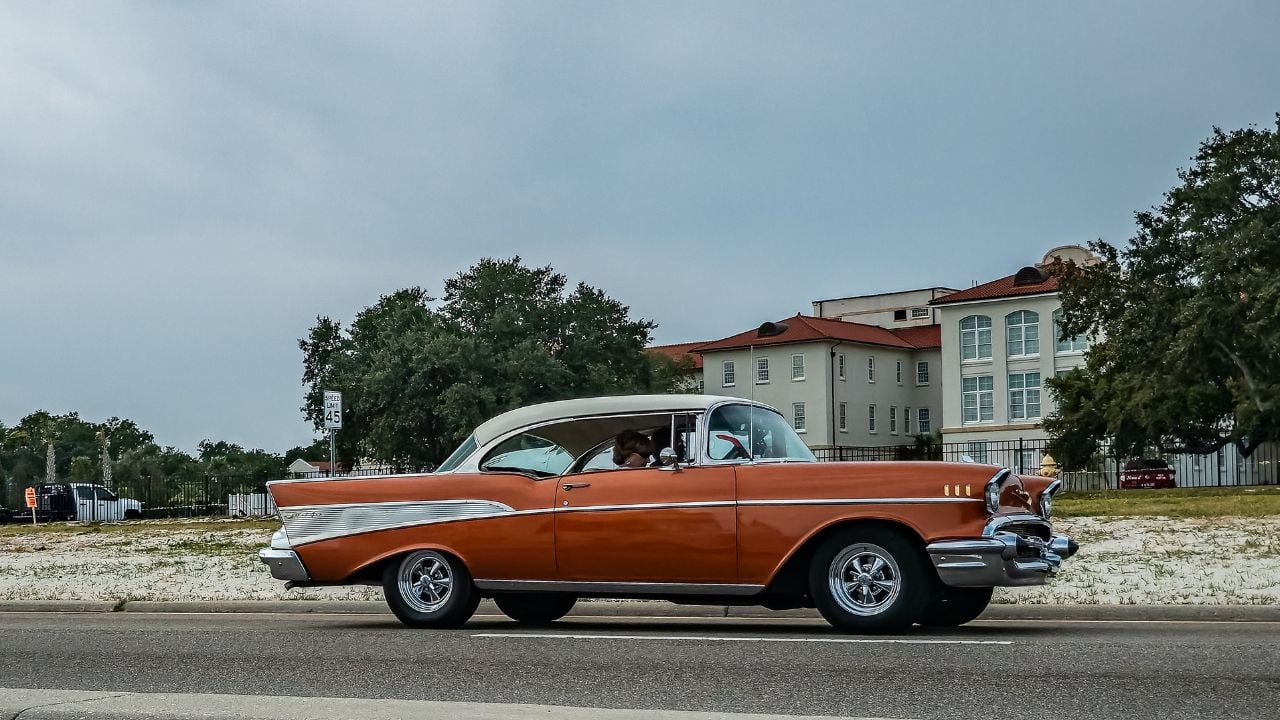
A strong car name can make a model easier to remember before anyone sees the spec sheet. When the name comes from a real place, it can bring a setting with it: coast roads, salt flats, casino lights, mountain towns, or postwar suburbia.
That only works when the car has the personality to support the badge. A place name can sound empty if it is attached to the wrong machine, but it can become part of the car’s identity when the design, performance, image, and market story all point in the same direction.
The best examples do more than borrow geography. They use the name to sharpen the car’s image. California makes an open Ferrari feel warmer and more glamorous. Bonneville adds speed. Telluride gives a modern family SUV a mountain-town personality.
These seven cars were chosen because the name and the machine support each other naturally. Each one turned a real location into a badge with lasting automotive meaning.
Why These Place Names Work

The strongest choices needed a clear connection to a real place, region, town, city, or famous location. The name also had to matter in the car’s identity, rather than simply sounding pleasant on a badge.
Cultural impact mattered as well. Some cars on this list became collector icons, some helped define a segment, and some made a manufacturer look more ambitious than it had before.
Design, performance, market importance, collector appeal, and emotional fit shaped the final selection. The best place-named cars here are memorable because the badge helps explain the car’s image, whether that image is glamour, speed, luxury, adventure, or open-road confidence.
Ferrari 250 GT California Spyder

The Ferrari 250 GT California Spyder may be the most romantic place-named car ever built. California gave the car an immediate setting: sun, wealth, ocean air, and open roads.
Produced from 1957 to 1963, the 250 GT California Spyder used Ferrari’s 3.0-liter Colombo V12 and arrived as a two-seat open sports car with competition blood beneath its elegant Scaglietti body.
The name fit because the car matched the fantasy. It was not a soft boulevard cruiser with a famous badge. It combined Ferrari performance, open-air glamour, and a shape that looked right on the Pacific Coast, at a concours lawn, or outside an expensive hotel.
The California Spyder became larger than its original market purpose. It is now one of the ultimate collector Ferraris, and the name still gives the car a clear sense of place.
Chevrolet Bel Air
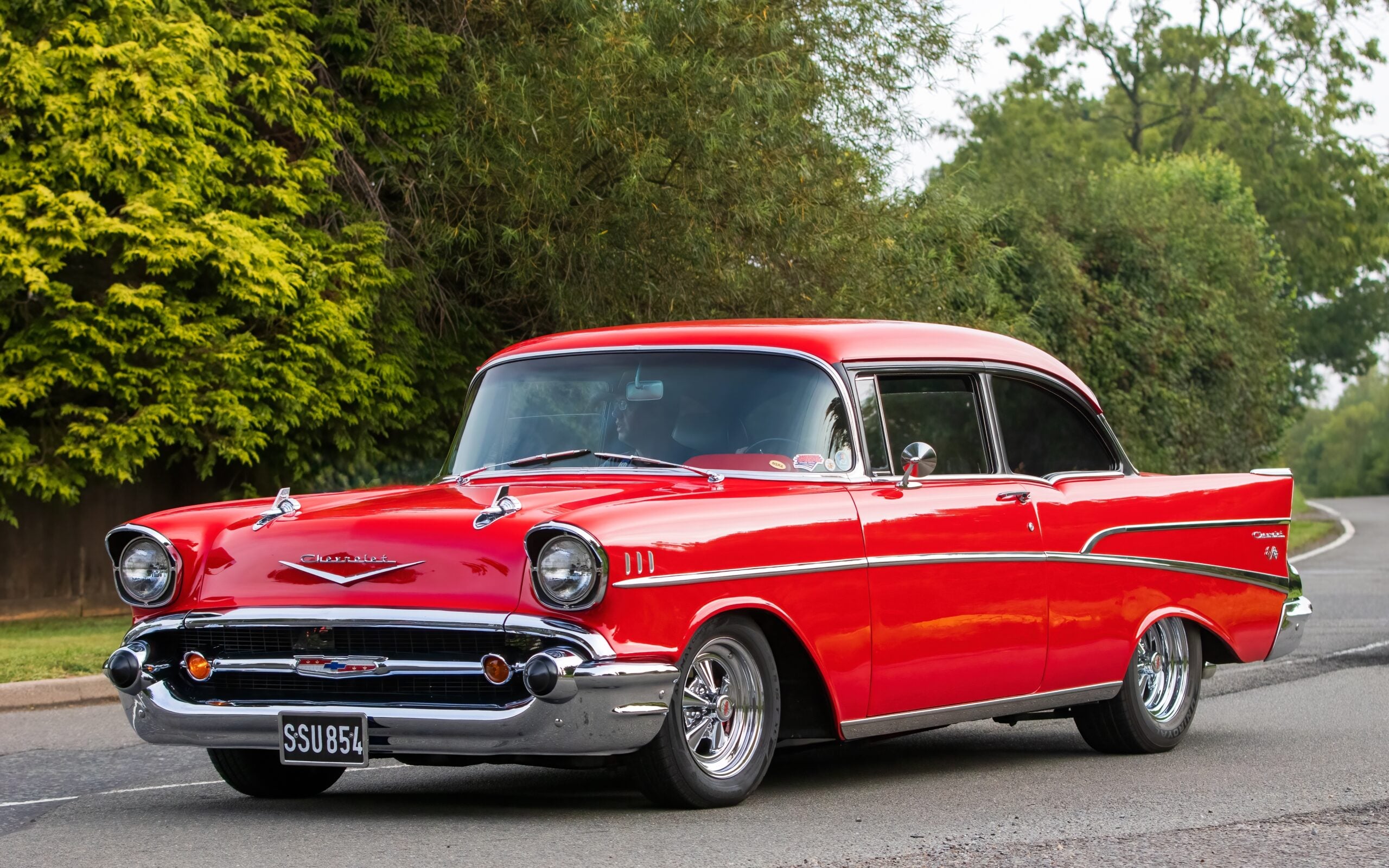
The Chevrolet Bel Air turned a Los Angeles neighborhood into one of the most recognizable American car names of the 1950s. Bel Air, on the Westside of Los Angeles, gave the badge an upscale sound before the car earned its own reputation.
The name worked especially well during the 1955 through 1957 “Tri-Five” years, when Chevrolet design, chrome, two-tone paint, and available V8 power lined up with the optimism of postwar America.
GM’s heritage collection notes that a 1957 Bel Air Convertible with the optional 283-cubic-inch small-block V8 and dual four-barrel carburetors made 245 hp. That gave the car more than style; it had credible performance for the era.
Few names fit their moment better. Bel Air sounded polished, looked confident, and became an icon for a generation of American car culture.
Alfa Romeo Montreal

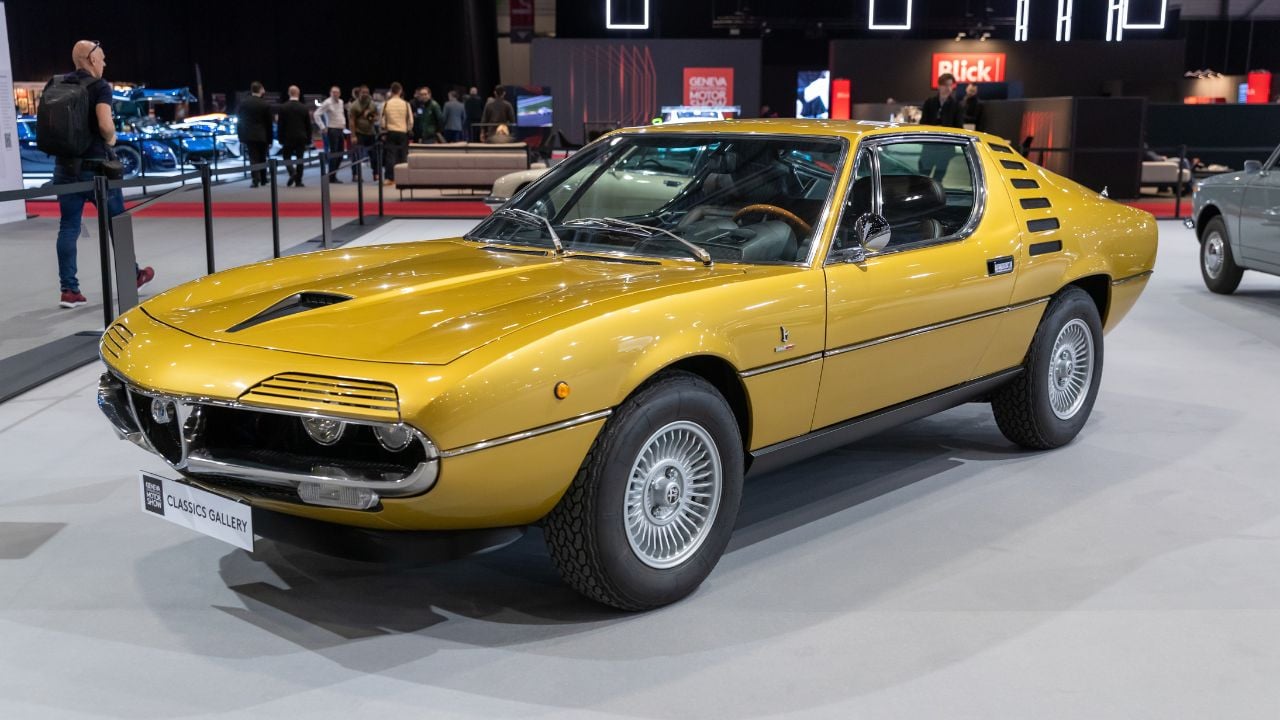
The Alfa Romeo Montreal is a rare case where the public helped name the car. Alfa Romeo’s concept appeared at Expo 67 in Montreal, Canada, and visitors began associating it with the city.
Stellantis Heritage notes that the success of those Expo cars encouraged Alfa Romeo to develop a related production coupe with upgraded mechanicals. The production Montreal later arrived with Marcello Gandini styling and a road-tuned 2.6-liter V8 based on Alfa Romeo’s Tipo 33 racing program.
The details made the name feel right. The Montreal had slatted headlamp covers, a dramatic hood, strong side vents, and proportions that looked more international motor show than ordinary grand tourer.
Montreal sounded cosmopolitan, and the car looked exactly that way: unusual, elegant, ambitious, and unmistakably Italian.
Chevrolet Monte Carlo
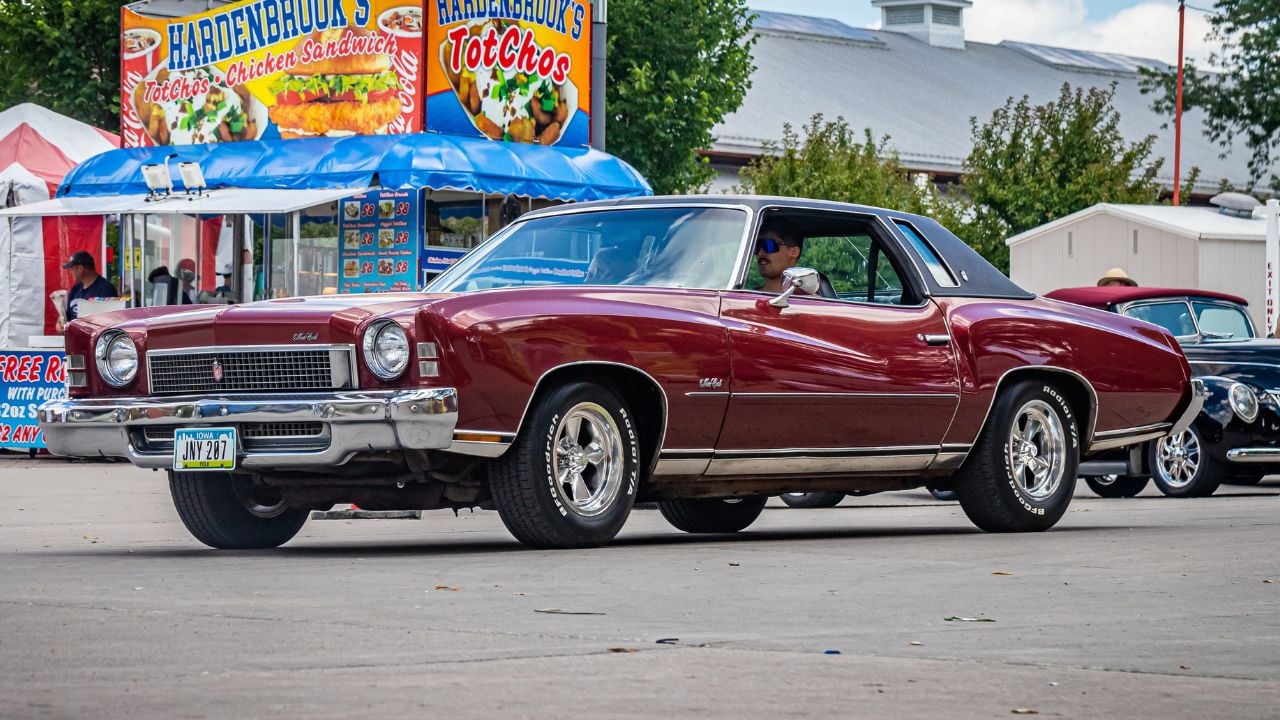
The Chevrolet Monte Carlo borrowed its name from one of Europe’s most glamorous places, then translated that image into an American personal-luxury coupe.
Monte Carlo, the famous district in Monaco, suggests casinos, coast roads, wealth, and grand touring confidence. Chevrolet introduced the Monte Carlo for the 1970 model year as its entry into the personal-luxury coupe market.
The car did not need to be a European exotic for the name to work. It gave Chevrolet buyers a long hood, formal roofline, comfortable cabin, and a badge that sounded richer than the price.
Through several generations, the Monte Carlo became one of GM’s familiar coupe names. The badge did real work because it gave an attainable Chevrolet a more elegant frame.
Pontiac Bonneville

The Pontiac Bonneville carried one of the best speed names Detroit ever used. Bonneville came from the Bonneville Salt Flats in Utah, a place tied to land-speed records and wide-open American velocity.
Pontiac first used the Bonneville name on the 1954 GM Motorama Bonneville Special concept. The name then reached production on the limited-production 1957 Bonneville convertible.
The badge later moved across full-size Pontiacs, but the original meaning stayed powerful. Bonneville sounded like distance, ambition, and horsepower on a flat horizon.
That made it a strong match for Pontiac’s performance image, especially during the brand’s Wide-Track years. Some place names feel decorative. Bonneville felt earned because it connected the car to one of the most important speed landscapes in the world.
Dodge Charger Daytona

The Dodge Charger Daytona is one of the rare cars whose place name also explains its job. Daytona points to Daytona Beach, Florida, and the Daytona 500, but the 1969 Charger Daytona was shaped for NASCAR speed rather than postcard glamour.
The long nose cone, tall rear wing, and aerodynamic body made it look extreme because the car was chasing a measurable result. This was a homologation-era machine, built so Dodge could take a more aerodynamic Charger to stock-car racing.
The NASCAR Hall of Fame notes that Buddy Baker’s record-setting Charger Daytona became the first stock car to break the 200-mph barrier on a closed course. It reached 200.447 mph at Alabama International Motor Speedway, now Talladega Superspeedway, on March 24, 1970.
That achievement gave the Daytona name mechanical weight. It was no longer only a famous racing place. It became shorthand for aerodynamic risk, NASCAR history, and one of the wildest shapes of the muscle-car era.
Kia Telluride
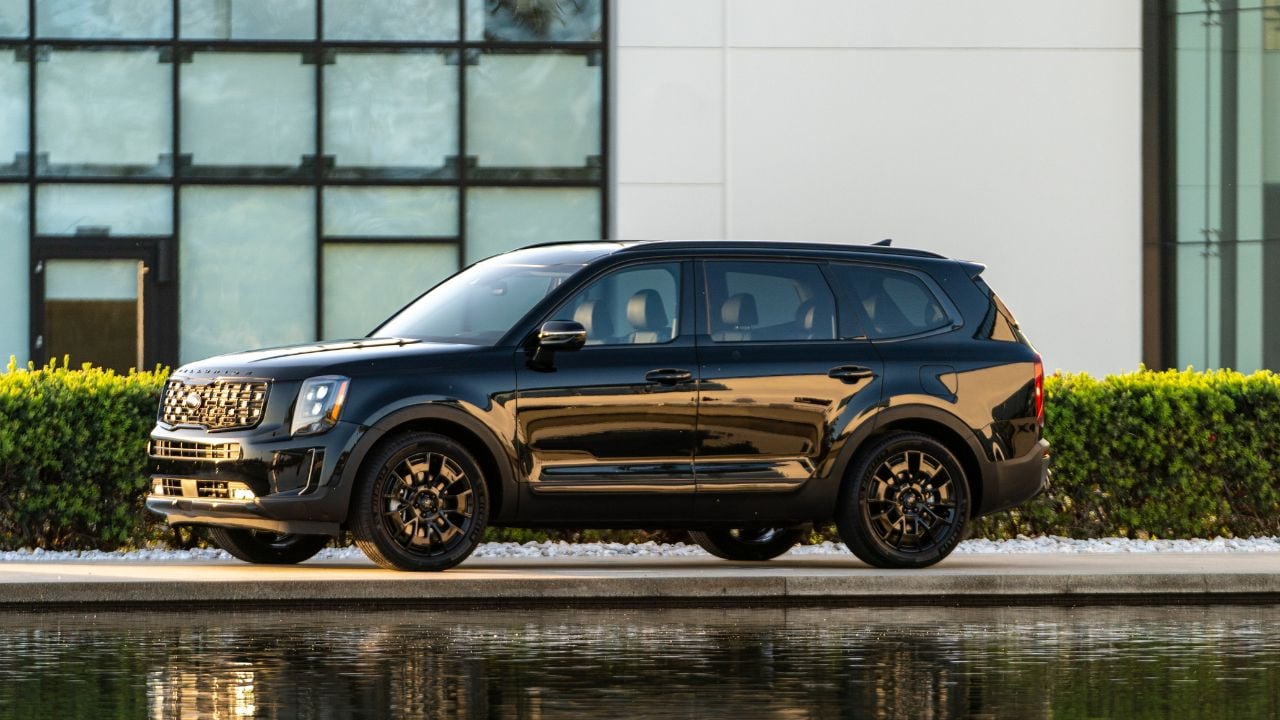
The Kia Telluride shows how a place name can still reshape a modern brand. Telluride, Colorado, brings mountain air, ski-town confidence, upscale adventure, and family road-trip imagery into one word.
Kia’s heritage archive describes the Telluride as a North America-exclusive SUV designed with U.S. consumers in mind and built at Kia’s Georgia plant. It also notes that the model helped validate Kia’s product strength by winning both North American Utility Vehicle of the Year and World Car of the Year in 2020.
The name works because the SUV carries the right posture. It is big, boxy, family-friendly, and lightly rugged without pretending to be a hardcore trail vehicle.
Kia did not simply borrow a beautiful town’s name. It used that image to announce a new level of confidence in the American market.
When A Name Makes The Car Feel Bigger
The best place-named cars turn geography into a clear identity. California makes a Ferrari feel open and glamorous. Bel Air gives a Chevrolet social polish. Bonneville adds speed. Daytona brings racing history. Telluride gives a family SUV outdoor confidence.
That is why these names last. They do not simply label a model; they make the car easier to picture, easier to remember, and easier to separate from ordinary badges.
A car can be remembered for design, performance, comfort, rarity, or cultural impact. A perfect name gives those qualities a stronger setting.
The right place name can make a car feel like more than transportation. It can make the badge feel like somewhere the driver wants to go.