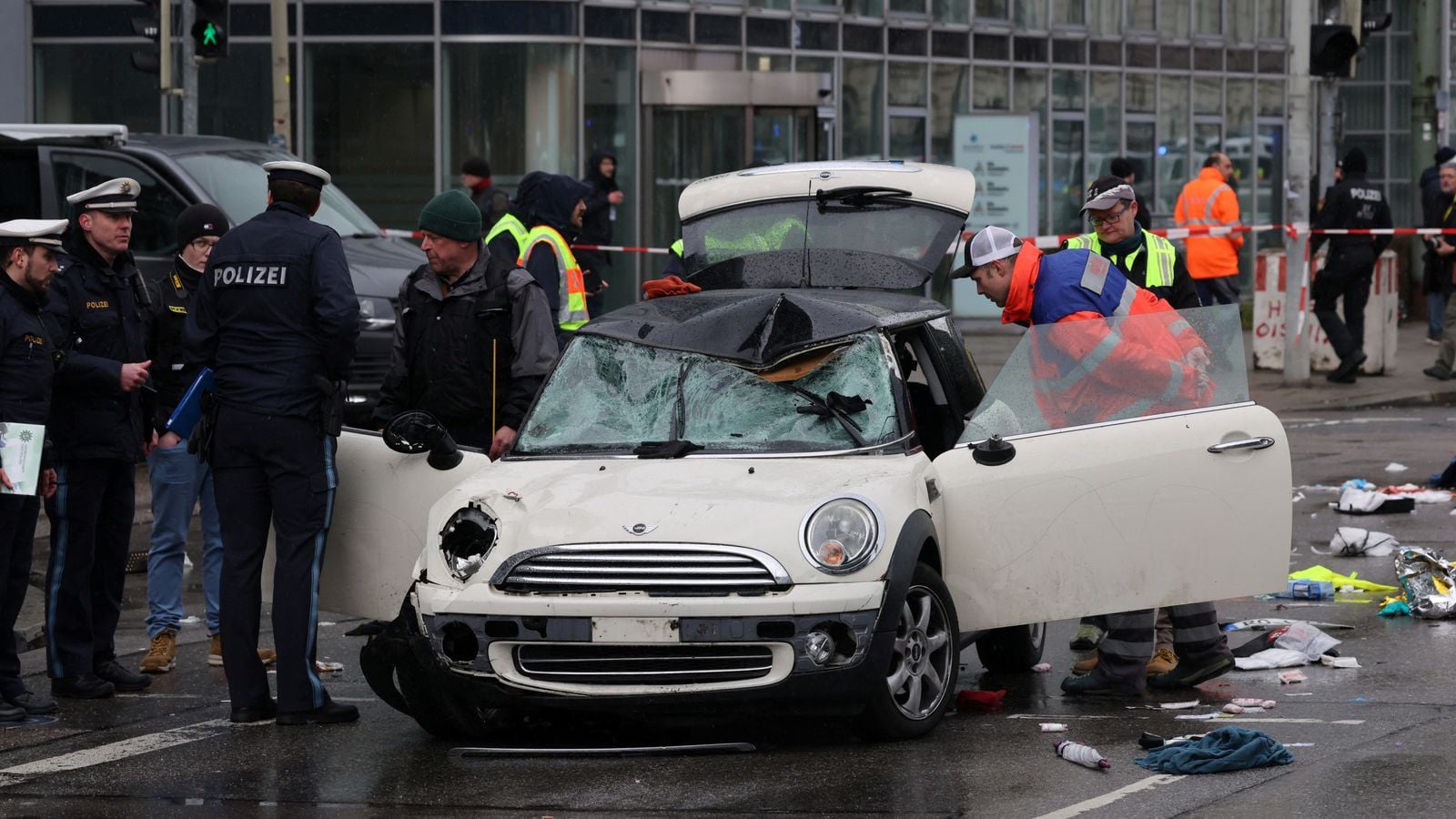
Monday turned deadly in Leipzig when a man behind the wheel made a choice that shattered an ordinary afternoon. German authorities confirmed that a 33-year-old German citizen drove his vehicle into a crowd in a busy shopping area of the city, killing two people and sending three others to the hospital with serious injuries. Additional victims sustained less severe injuries in the chaos. The suspect was found sitting in his car and was detained at the scene without a prolonged chase or confrontation.
Prosecutors have opened an investigation against the man on suspicion of murder and attempted murder, strongly suggesting this was no accident. Officials believe the attack was deliberate, though a motive has not yet been confirmed publicly. As investigators piece together what drove this individual to allegedly target strangers in broad daylight, the people of Leipzig are left grieving and asking questions that, tragically, much of the world already knows how to ask.
Vehicle ramming attacks are not new. They are not rare. And they are not confined to any single country, ideology, or type of grievance. From Christmas markets in Germany to Bastille Day celebrations in France to New Year’s festivities in New Orleans, the pattern is grimly consistent: a vehicle, a crowd, and devastating consequences that no security perimeter fully prevents.
What makes the Leipzig attack particularly chilling is how routine the setting was. A shopping area on a Monday. Everyday people running errands or grabbing lunch. The very ordinariness of the scene is what makes it so unsettling, and what makes this type of attack so difficult for authorities to stop before the damage is done.
A Grim Timeline: Major Vehicle Attacks Around the World

Leipzig does not exist in a vacuum. The past decade has produced a long and painful list of vehicle ramming incidents that span continents and defy simple categorization.
Just last summer, at least 37 people were injured when a driver deliberately steered a car into a crowd outside a Los Angeles nightclub. The suspect, a 29-year-old man, now faces dozens of attempted murder charges in a case still working through the courts. Earlier this year, a minivan was driven into a crowd of Liverpool soccer fans in London celebrating their Premier League title, injuring more than 45 people. In Vancouver, 11 people were killed and 32 injured when an SUV tore through a street festival in April 2025.
Go back a little further and the list only grows heavier. New Orleans lost 15 people on New Year’s Day 2025 when a Texas man drove into revelers in the French Quarter before being killed in a police shootout. Germany itself suffered a nearly identical tragedy in December 2024, when a car plowed into a Christmas market in Magdeburg, killing five and injuring more than 200.
The deadliest single attack in this category remains the 2016 Nice truck attack, where a driver killed 86 people along a packed waterfront promenade on Bastille Day, a number that still stuns.
Motives Vary Widely, But the Method Stays the Same
One of the most disorienting things about vehicle ramming attacks as a category is how little the perpetrators have in common beyond their chosen weapon. Extremist ideology has driven some of these attacks, including the New York bike path attack in 2017 and the Barcelona attack that same year, both linked to Islamic extremism. White supremacist violence claimed lives in Charlottesville in 2017 and in London, Ontario in 2021. The Waukesha Christmas parade attacker in 2021 reportedly acted after a domestic dispute. The Zhuhai, China attacker in 2024 was reportedly motivated by anger over his divorce settlement.
Some perpetrators had documented mental health histories. Others left detailed manifestos. Some offered no explanation at all. In Leipzig, investigators are still working to establish why this happened.
What this tells us is that vehicle attacks are not the exclusive property of any one extremist movement or profile. They are, in an uncomfortable sense, universally accessible as a method of mass violence, which is a large part of what makes them so persistent.
What We Can Learn From the Leipzig Attack
Every incident like this produces a version of the same debate: what can actually be done? Security experts have for years pointed to physical infrastructure as one of the most effective deterrents, specifically the installation of bollards, concrete barriers, and other vehicle access controls in high-foot-traffic public areas. Many European cities have added these measures in pedestrian zones and at market areas, though coverage remains inconsistent.
The Leipzig attack serves as a reminder that soft targets, meaning everyday public spaces without hardened perimeters, remain vulnerable regardless of national context or security investment. Shopping districts, festivals, parades, and bike paths share something in common: they are designed to be open and welcoming, which is precisely what makes them difficult to fully protect.
Beyond infrastructure, law enforcement faces the challenge of identifying individuals who may be planning this type of attack before they act. Unlike plots requiring specialized materials or coordination, a vehicle ramming requires almost no preparation and leaves little digital or logistical trail to detect.
What communities and governments can do is invest in mental health resources, monitor known threat indicators, maintain fast emergency response capabilities, and continue assessing which public spaces need more physical protection. None of these steps eliminates the risk. But they represent the realistic toolkit available.
Leipzig Is Mourning. The Broader Conversation Continues.
Two people went to a shopping district in Leipzig on Monday and did not come home. Three others are fighting through serious injuries. For the families affected, policy discussions and historical timelines are secondary to the immediate weight of loss, shock, and recovery.
Germany has now experienced multiple high-profile vehicle attacks in recent years, and each one reopens questions about public safety, radicalization, mental health, and the limits of what a society can reasonably prevent. These are not comfortable questions, and they do not have clean answers. But Leipzig is the latest reminder that ignoring them is not an option either.