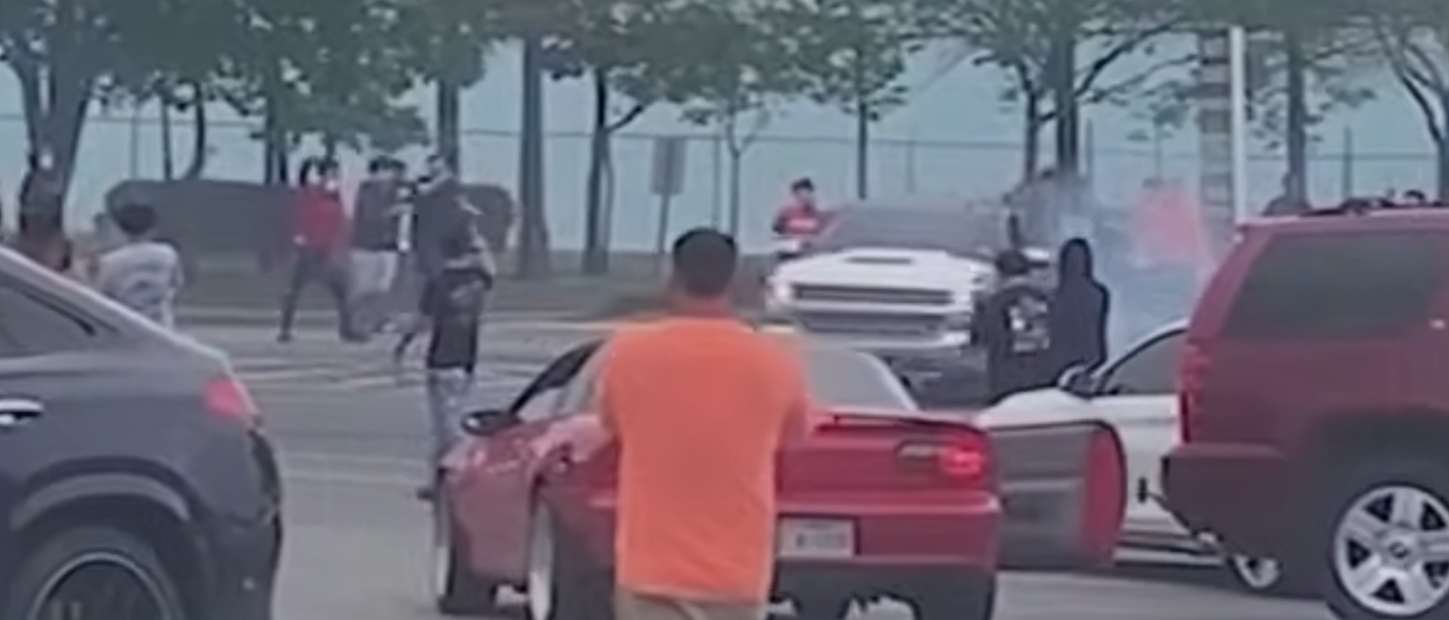
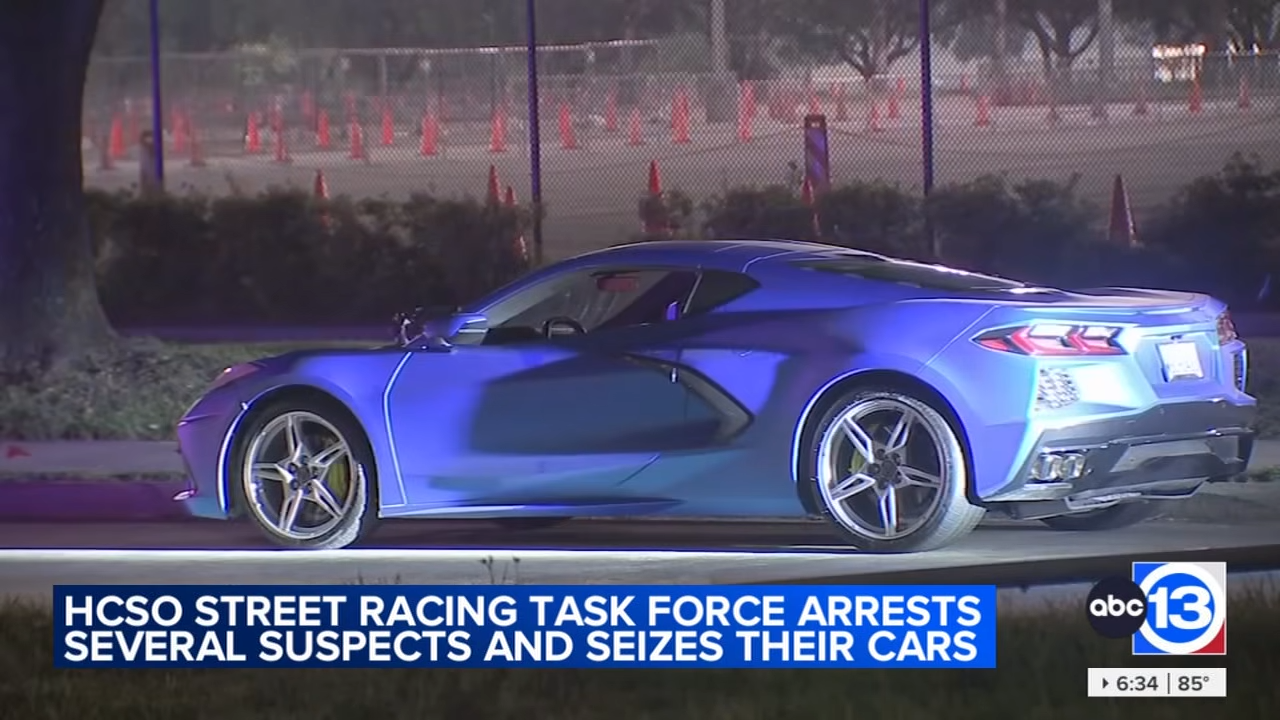
Texas law enforcement is done playing around, and a recent crackdown on the South Loop is making that crystal clear. Several drivers were arrested near Houston’s NRG Stadium after being caught street racing at speeds reportedly reaching 90 to 100 mph or higher. Five vehicles were seized in connection with the incident, including what appears to be a Ford Mustang Mach 1, a Shelby GT350, a Chevrolet C8 Corvette, and a Dodge Charger. In other words, some genuinely capable machines that absolutely did not need to be out there terrorizing public roads.
The arrests come as Texas authorities report a significant spike in racing-related cases across multiple counties. This is not a quiet uptick either. The numbers paint a pretty alarming picture of where things are headed if drivers keep treating public highways like a proving ground for their weekend warrior instincts. Prosecutors are taking notice, and more importantly, they are taking cars.
Under a Texas law passed in 2023, vehicles caught up in street racing incidents can be impounded on the spot. In some situations, the car does not come back at all. That is a steep price to pay for a few seconds of adrenaline, especially when the cars involved, like a C8 Corvette or a Shelby GT350, represent serious financial investments.
What makes this situation particularly relevant is how it reflects a much bigger cultural trend playing out across the country. Social media fame and street racing have become an increasingly dangerous mix, and Houston is far from the only city dealing with the consequences.
The Numbers Behind the Problem Are Hard to Ignore
The data coming out of Texas tells a story that goes well beyond a single incident near NRG Stadium. Montgomery County filed 51 racing-related cases throughout all of last year. In just the first four months of 2026, that number already sits at 31. Harris County’s trajectory is even more striking, jumping from 95 total cases last year to 174 cases in the first four months of 2026 alone.
Taylor Vanegas, the chief prosecutor of the Vehicular Crimes Unit at the Montgomery County District Attorney’s Office, has been watching this trend closely. The pace at which these cases are being filed suggests the problem is accelerating, not leveling off, and that enforcement alone may not be enough to reverse course without addressing the underlying motivation driving people to race in the first place.
Why Social Media Keeps Fueling the Fire
It is not a coincidence that street racing content performs extremely well online. Dramatic footage of high-speed runs, near misses, and tire-smoking launches tends to attract a lot of attention quickly. On platforms built around engagement and virality, that attention translates into followers, and followers can eventually translate into money through sponsorships, brand deals, and monetization programs.
Vanegas has pointed directly to social media as a factor encouraging drivers to take these kinds of risks. When the incentive is clicks and clout rather than a trophy or a paycheck from a sanctioned event, the calculus for some people shifts in a dangerous direction. The more outrageous the footage, the more it spreads, and the more it spreads, the more it inspires others to try the same thing. It is a feedback loop with very real consequences for everyone sharing the road with these drivers.
San Diego has taken an almost theatrical approach to deterrence, crushing seized vehicles publicly. Texas has not gone quite that far, but permanent seizure under state law is its own kind of message.
What the Real Costs Look Like for Drivers Who Get Caught
Losing a car is painful enough, but the legal fallout does not stop there. A first-time street racing conviction in Texas can carry a jail sentence measured in months. Repeat offenders or drivers involved in crashes that result in serious injuries face the possibility of years behind bars. That is before factoring in court costs, attorney fees, potential civil liability, and the lasting impact of a criminal record.
Vanegas summed up the enforcement philosophy with notable bluntness, noting that authorities may never know how many people chose not to race because of the consequences, but they do know that anyone whose car gets seized is not racing again anytime soon.
The vehicles grabbed in this particular Houston incident are not cheap replacements either. A C8 Corvette, a Mach 1, and a GT350 are all serious performance cars worth meaningful money. Losing one of them to a permanent seizure order, on top of jail time and fines, is the kind of financial hit that tends to recalibrate priorities in a hurry.
What This Incident Can Teach the Performance Car Community
There is a lesson here that goes beyond the obvious “do not street race” advice. The cars involved in the Houston arrests are exactly the kind of machines that belong on a track. Mustang variants with Shelby and Mach 1 badges, a mid-engine Corvette, a Charger built for muscle, these are not grocery-getter sedans. They were designed with performance in mind, and their owners clearly have a real enthusiasm for what these cars can do.
That enthusiasm is not the problem. The venue is. Track days exist specifically to give performance car owners a legal, controlled space to explore what their vehicles are capable of without endangering anyone else. Many tracks offer open-lapping events at entry-level price points, and performance driving schools are widely available across Texas and beyond.
The irony is that track content actually performs well on social media too. Clean lap footage, tire smoke in a controlled environment, and legitimate speed runs at organized events can attract real followings without the criminal liability attached. If more of the street racing crowd channeled that same energy into promoting track culture, they might find the audience they are looking for without handing their keys over to a prosecutor.
The bottom line is straightforward. The road is not a racetrack, Texas law is increasingly equipped to enforce that reality, and the cars paying the price right now are ones most enthusiasts would genuinely hate to lose.