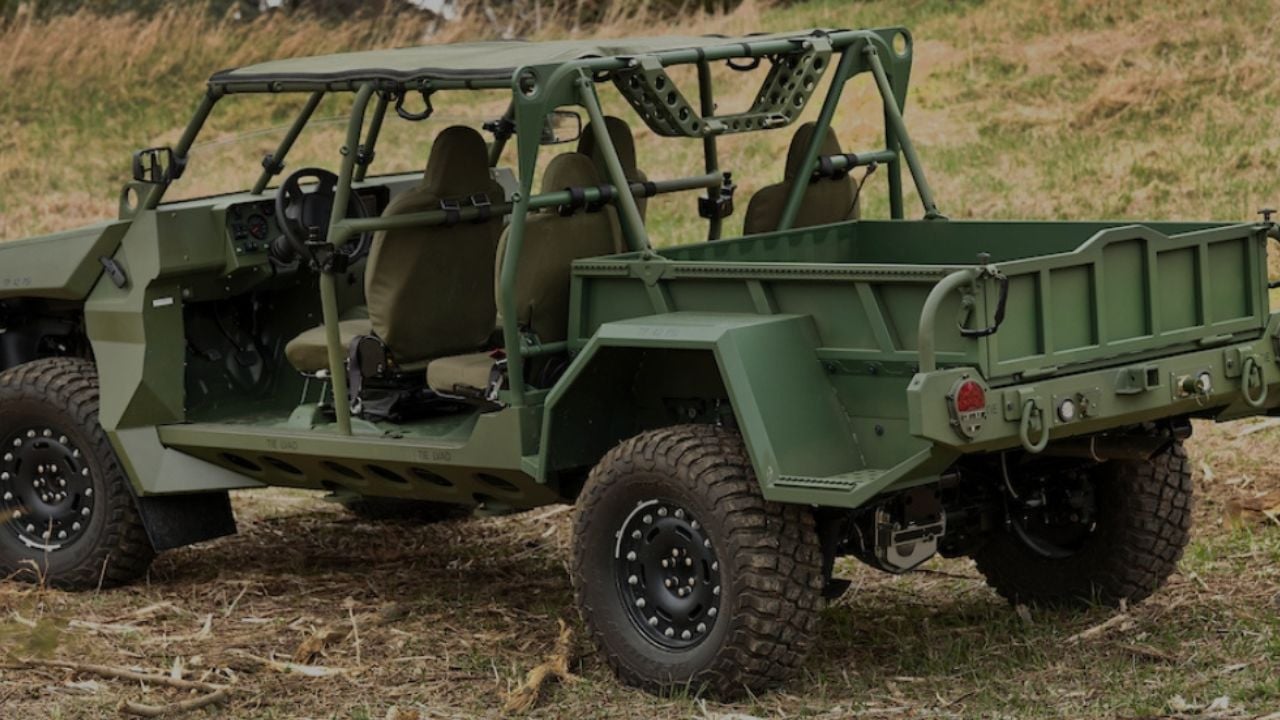

There’s something undeniably wild about seeing battlefield hardware cross over into civilian hands, and that’s exactly what General Motors is doing with its latest creation.
The company’s defense arm has taken the bones of the Chevrolet Colorado ZR2 and turned it into something far more extreme, a stripped-down, combat-ready rig known as the ISV-U.
Originally engineered for U.S. special forces, this machine is not your typical off-road toy. It’s a purpose-built mobility platform designed to move troops across harsh terrain with speed and agility.
Now, in a twist that feels straight out of a high-end auction catalog, one example is being offered to the public via Barrett Jackson auction, blending military-grade engineering with enthusiast appeal.
From Battlefield to Auction Block
The ISV-U traces its roots to the U.S. Army’s Infantry Squad Vehicle program, where speed, durability, and modularity matter more than comfort.
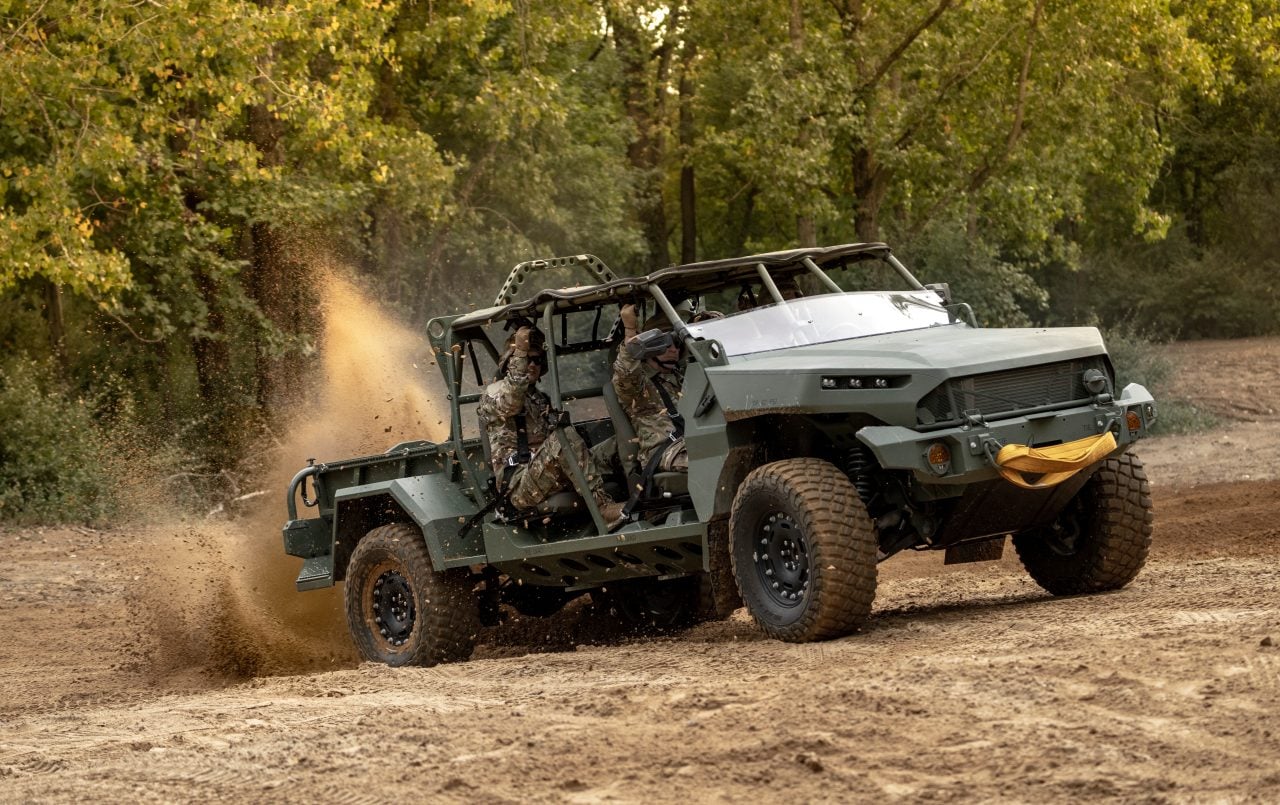
Built using a large percentage of off-the-shelf components, the platform reflects a growing trend in military procurement: leveraging proven civilian hardware to reduce costs and improve serviceability.
That strategy explains why the Colorado ZR2 sits at the core of this build.
GM Defense essentially reimagined the midsize truck into a lightweight, open-frame transport vehicle. Doors are gone, body panels are minimal, and everything about it screams function over form.
What makes this moment stand out is accessibility. Instead of remaining locked behind military contracts, this ISV-U is heading to auction, giving collectors and hardcore off-road fans a shot at owning a machine with genuine military DNA.
Built on Serious Off-Road Credentials
The choice of the Colorado ZR2 platform is no accident.
Even in factory form, the ZR2 represents the most off-road-capable version of Chevy’s midsize truck lineup, featuring advanced suspension tech, locking differentials, and a widened stance built for rough terrain.
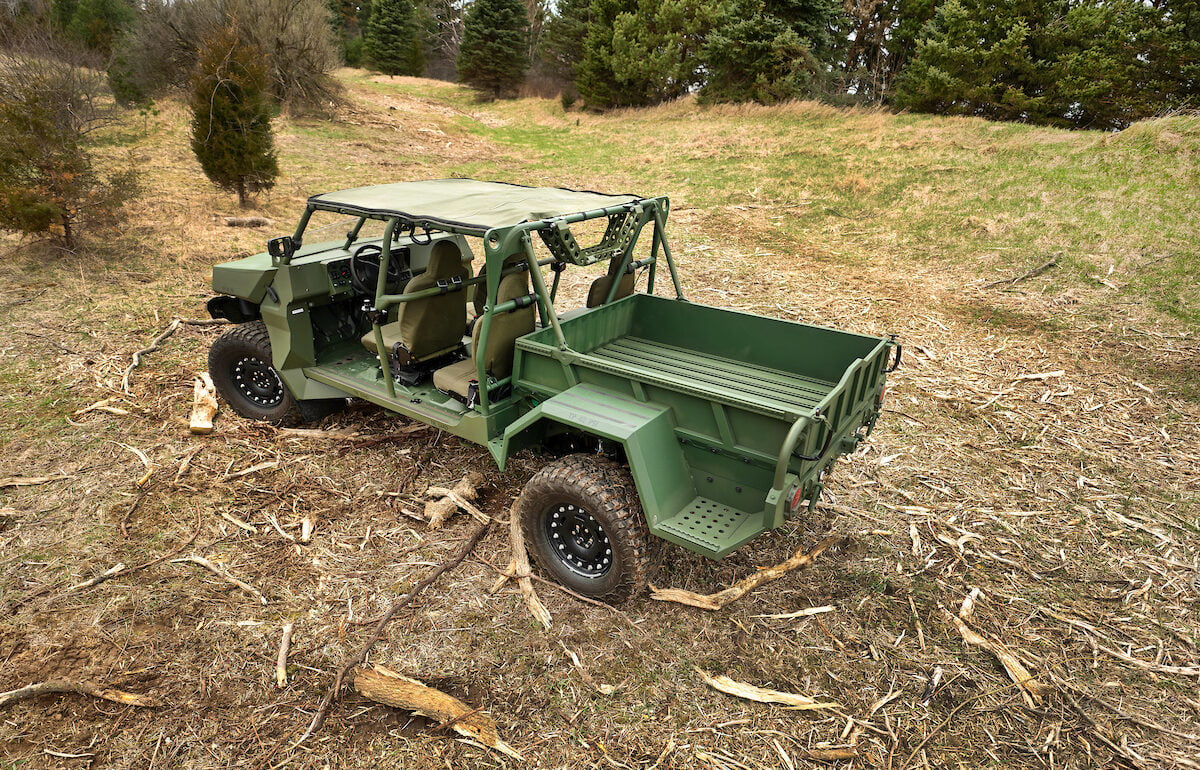
For the ISV-U, those capabilities are pushed further. It uses a 2.8-liter Duramax turbodiesel engine paired with a six-speed transmission and a two-speed transfer case. That setup prioritizes torque delivery and low-speed control, both critical for navigating unpredictable environments.
Underneath, the truck retains key hardware from the ZR2, including front and rear electronic lockers and specialized Multimatic DSSV dampers.
These components are not just marketing buzzwords. They are the same kind of hardware that allows serious off-roaders to crawl over rocks, power through sand, and maintain stability at speed.
The ISV-U’s mission profiles, GM Defense says, can include fire support, command and control, electronic warfare, counter-unmanned aircraft systems, reconnaissance and logistics.
“GM’s commercial vehicle architectures are highly flexible, enabling GM Defense to rapidly build ISV variations that accommodate diverse mission requirements,” the company notes. “The vehicle maintains the rugged, off-road performance, attributes and capabilities of the original nine-passenger ISV, a U.S. Army official program of record.”
So, What’s the Point?
This isn’t happening in a vacuum.
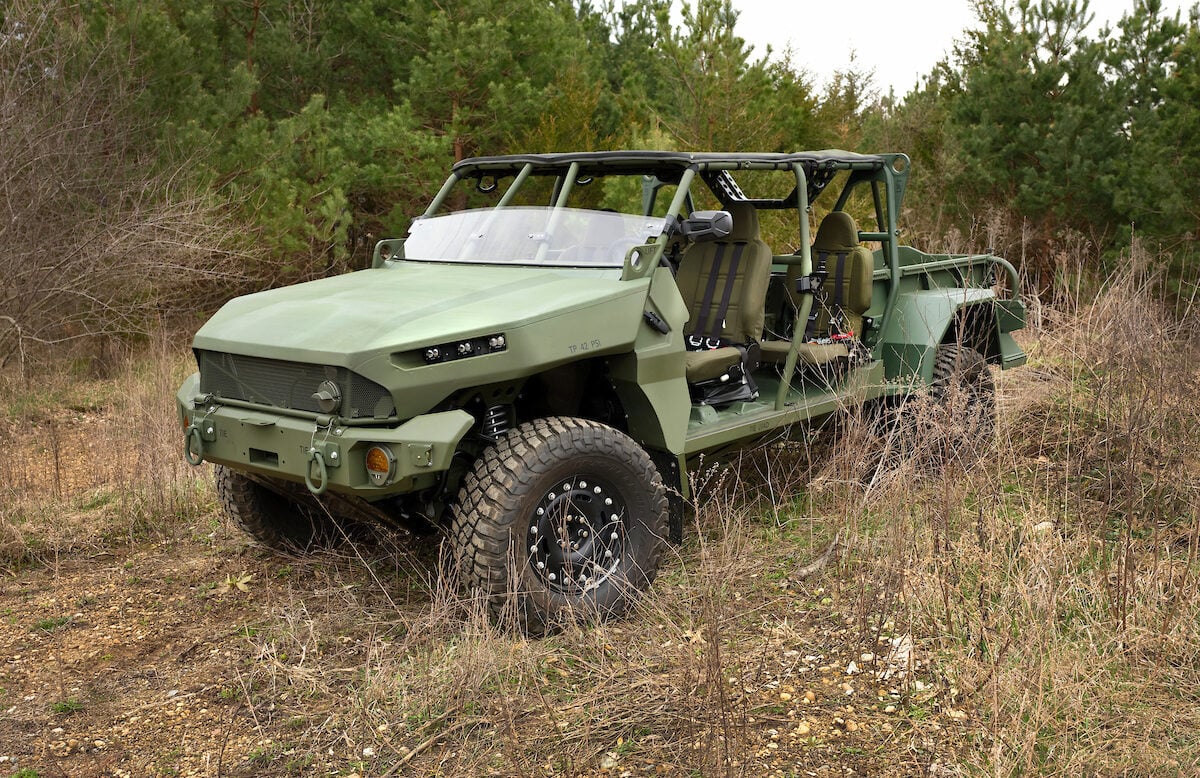
The line between military and civilian vehicle development is getting thinner, and projects like the ISV-U highlight how automakers are blurring those boundaries. Automakers are leaning into modular platforms that can serve multiple roles, from consumer trucks to tactical vehicles.
At the same time, enthusiast culture is shifting.
Buyers are no longer satisfied with cosmetic upgrades. They want authenticity, machines with real capability and a story behind them. A vehicle like this delivers both in a way few production models can match.
It also signals where off-road engineering is headed.
The modern pickup, especially something like the Colorado, can be a foundation for experimentation, capable of evolving into everything from overland rigs to military transports.
We picked up this story because the ISV-U is more than a one-off curiosity. It offers a tantalizing glimpse into a future where the toughest machines are no longer confined to the battlefield, and where the gap between defense tech and driveway builds keeps shrinking.
Sources: Barrett Jackson