The European auto industry went through a major period of technical progress during the 1970s, shaped by the spread of front-wheel drive and small, fuel-efficient engines. Several models from that period went on to define the look of European roads for decades.
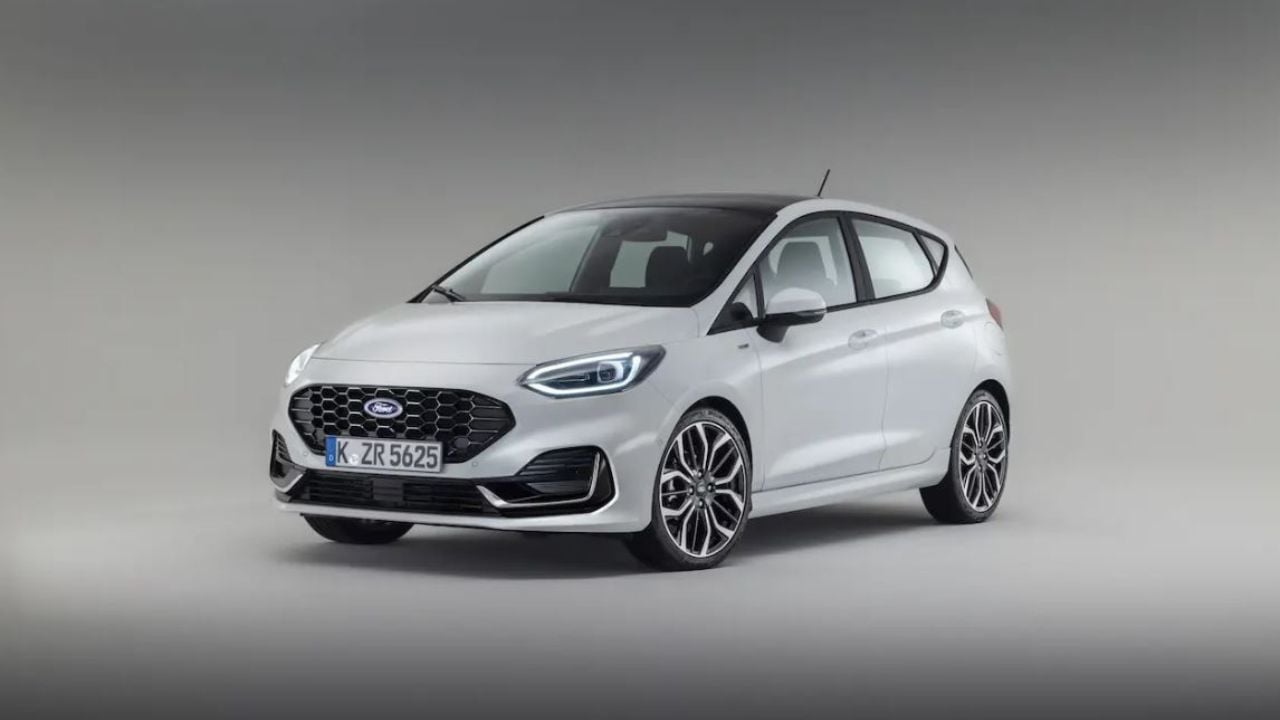
Alongside the Volkswagen Golf, which remains alive today, one of the most important was the smaller Ford Fiesta. Production began in May 1976, but unlike the Golf, the Fiesta did not reach its 50th birthday. The final examples left the production line in July 2023.
The creation of Ford’s new small car, designed around European ideas of urban mobility, is closely tied to Henry Ford II, the eldest grandson of the company’s founder.
Project Bobcat Started In Secret
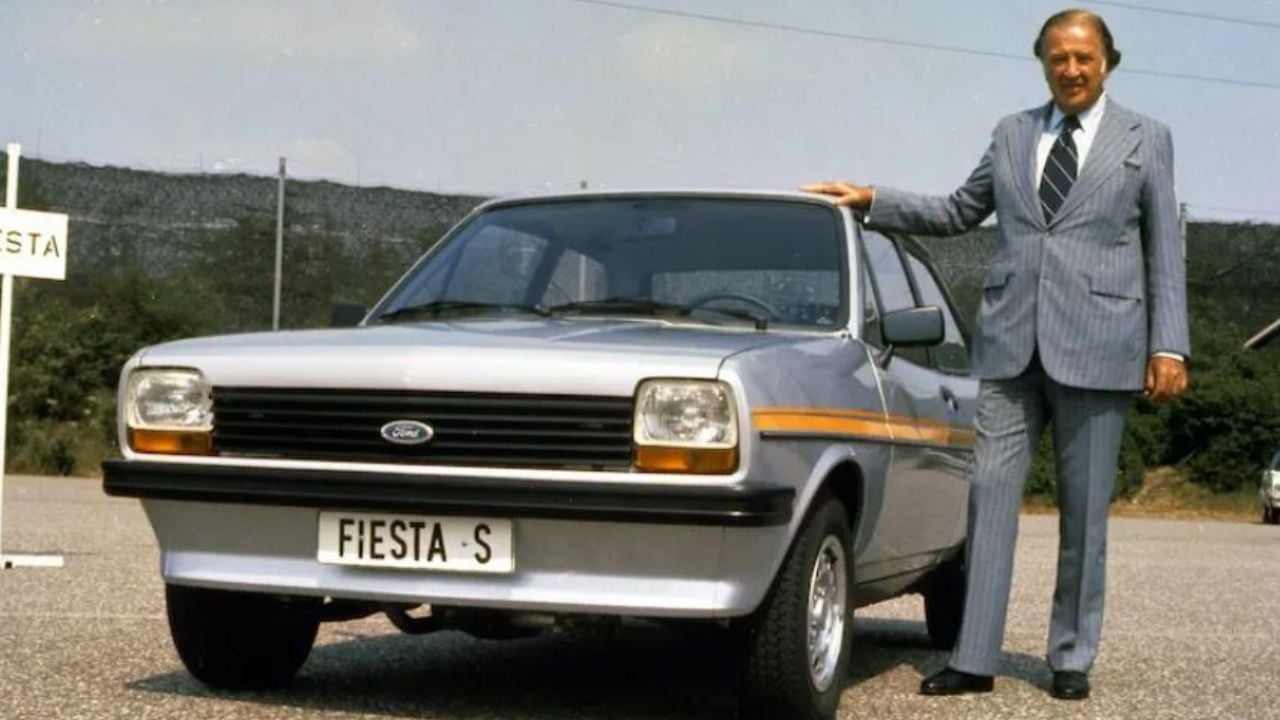
At the time, Ford did not have a car in that class. Its European range began with the Ford Escort, which still used a front-mounted engine and rear-wheel drive.
Influenced by the success of small cars such as the Fiat 127 and Renault 5, Ford launched the secret Bobcat project in September 1972. The goal was to develop a small, light, economical car that followed newer industry trends with a transverse front engine and front-wheel drive.
That layout had been introduced in Britain in the late 1950s by Alec Issigonis with the Mini, then refined by Fiat engineers with the Fiat 128. Volkswagen also used it for the Golf, although in the mid 1970s it still had not become a universal standard.
Ford had experimented with front-wheel drive during the 1960s on models such as the Taunus and the Brazilian Corcel, a relative of the Renault 12, but those cars used a longitudinal engine layout.
A New Factory And A Spanish Name
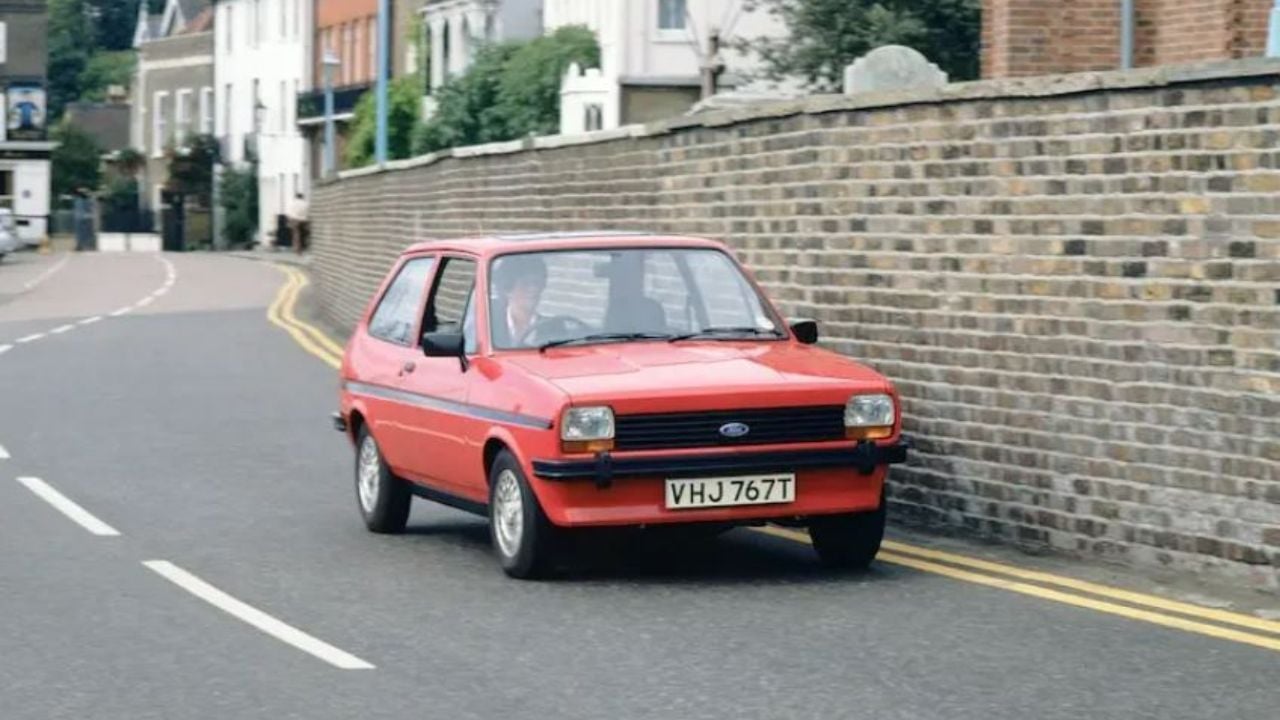
With the Fiesta, Ford entered largely unfamiliar territory. Along with the new technical concept, the company also built an entirely new factory in Valencia, Spain.
Spain, still ruled at the time by caudillo Francisco Franco, who died in November 1975, was gradually opening to the world. Ford’s investment became one of the most significant industrial projects of that period.
The factory also influenced the model’s name. Ford considered names such as Metro, Amigo, Bravo, and Sierra, but Henry Ford II ultimately chose Fiesta.
Although General Motors had used the word “Fiesta” in the 1950s for one of its large sedans, Ford managed to secure the right to use the name for its new European small car. The car was shown to the public in December 1975, but production and sales were introduced cautiously.
Series production in Valencia began in May 1976. A month later, the Fiesta was presented to the public during the famous 24 Hours of Le Mans, and the first customers received their cars in September 1976.
The Fiesta Quickly Became A Success
The Fiesta quickly found buyers and passed 1 million units by 1979. That success was helped by expanded production. Alongside Valencia, the car was also built in Saarlouis and Cologne in Germany, as well as in Dagenham in East London.
Ford’s small car was not especially cheap. In Germany, the base version with a 61-cubic-inch engine and 40 hp cost 8,500 marks, which placed it close to the Golf. The more luxurious Ghia version reached 11,000 marks, while the BMW 3 Series cost 13,600 marks at the time.
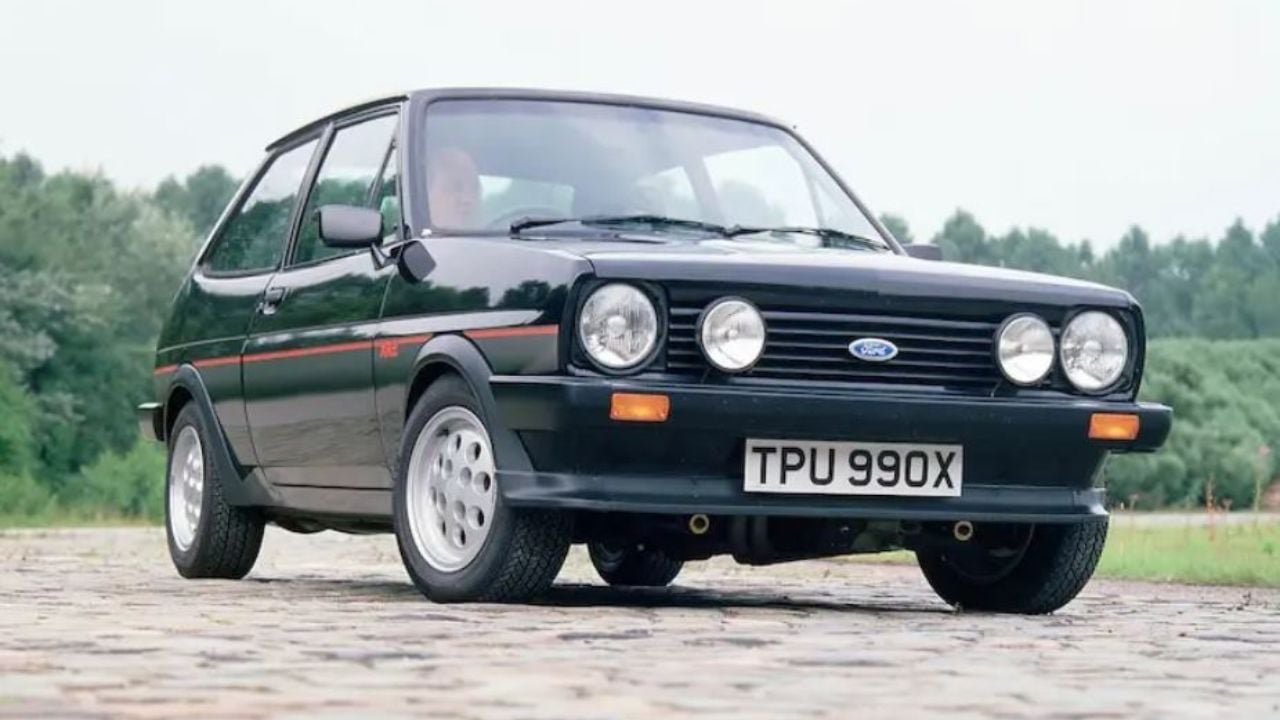
The first generation also brought a performance version for drivers who wanted more excitement. The Supersport arrived in 1980 with 66 hp, preparing the way for the XR2, which delivered 84 hp and reached a top speed of about 106 mph.
From Everyday Hatchback To Hot Hatch
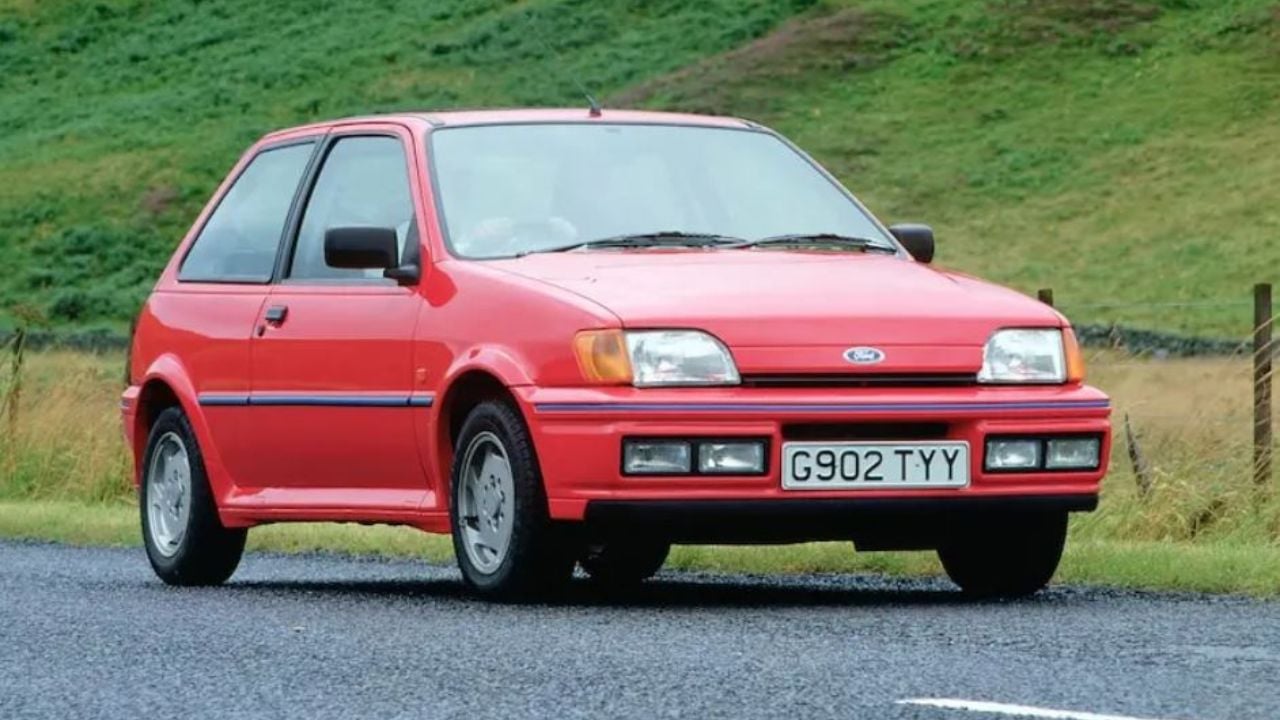
Nearly every Fiesta generation had a sporty version. The XR2 name appeared from the first through third generations, while later fifth- through seventh-generation models used the ST badge.
Power eventually rose to 200 hp, and the seventh-generation Fiesta ST could reach about 143 mph. Even so, most of the more than 22 million Fiestas sold worldwide had far more modest performance.
Over 47 years of production, the Fiesta became a symbol of the practical city car. It was especially important in Europe, where it spent many years among the best-selling models in the United Kingdom. Its penultimate generation also held second place in Europe for several years, behind only the Volkswagen Golf.
The Fiesta also sold well in Brazil, and between 2010 and 2020, it was offered in the United States. Beyond the three-door and five-door hatchbacks, other versions were created, including a South American sedan and commercial variants.
Motorsport And Shared Platforms Added To Its Story
The Fiesta also proved itself in motorsport, especially in rallying and rallycross. From the 1990s, the Ford Fiesta Cup was also held on Czech race tracks.
In the Czech Republic, the model was very popular with drivers and regularly ranked among the country’s best-selling cars. Between 2002 and 2012, Ford also enjoyed success there and elsewhere with the Fusion, a small MPV based on the fifth-generation Fiesta.
The Fiesta shared its technical basis with other models as well. The fourth generation, for example, had a close counterpart in the Mazda 121.
The final Fiesta examples left production in July 2023, marking the end of an important era for Ford’s European compact cars, much like the coming end of the Focus.
Based on a strategic partnership announced at the end of 2025, a successor, which may not necessarily carry the Fiesta name, could return as an electric model based on the Renault 5.
This article originally appeared on Autorepublika.com and has been republished with permission by Guessing Headlights. AI-assisted translation was used, followed by human editing and review.