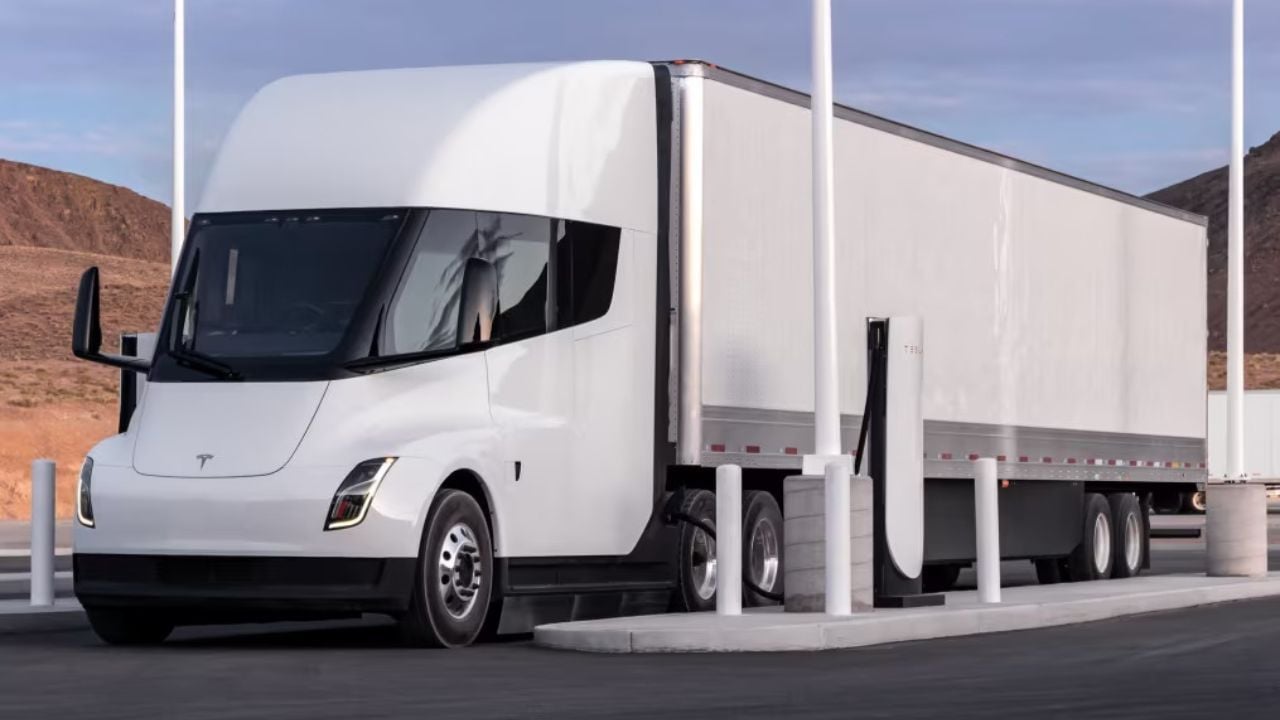
Almost quietly, without a major ceremony but with clear symbolism, Tesla has started series production of the Semi at its massive facility in Nevada. A project that spent years as one of the industry’s most famous delayed promises has finally become an industrial reality.
A photo showing the first truck coming off the production line, surrounded by hundreds of workers, represents more than the beginning of manufacturing. It is also a sign that Elon Musk’s vision, despite repeated delays, is now taking physical form.
The Semi was first shown nearly nine years ago with an ambitious promise: to redefine heavy-duty freight transport. Production was originally planned to begin in 2019, but the reality of development, technology, and market readiness pushed the timeline far deeper into the decade.
From Test Program To Real Production
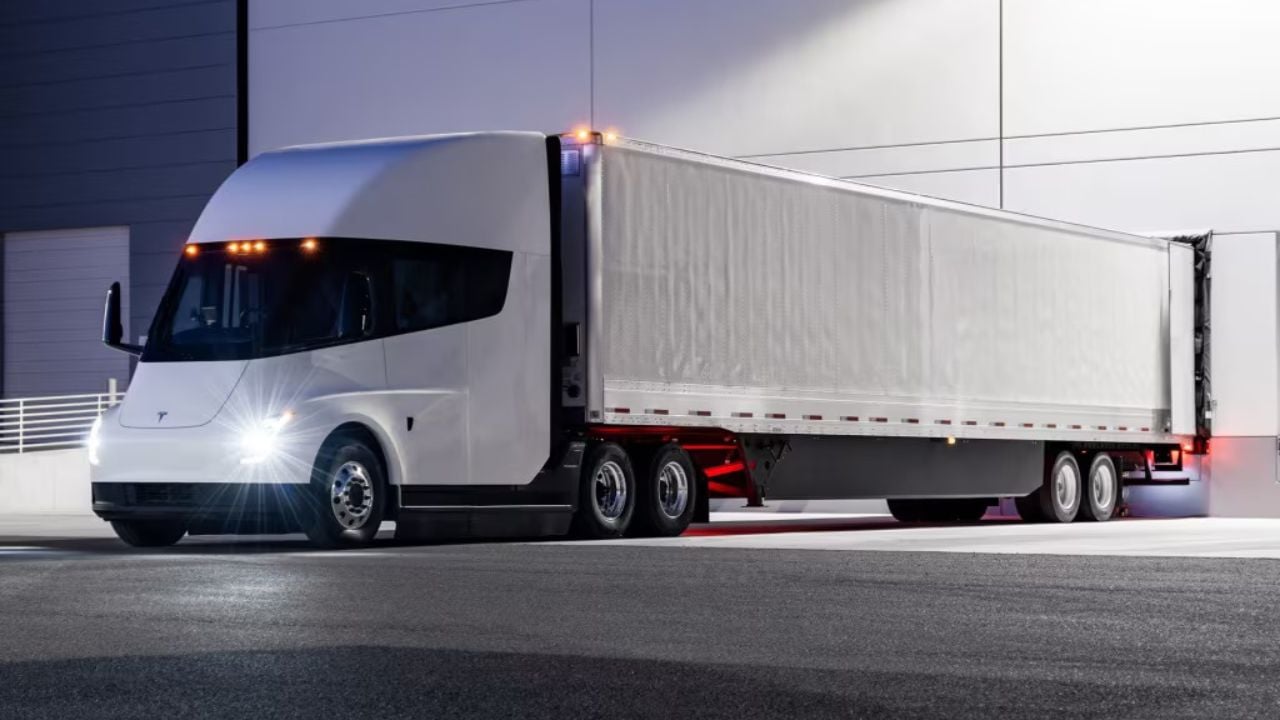
Only a few hundred examples were produced by the end of 2025, mostly through a testing program that included major companies such as Pepsi, Walmart, and DHL.
Those trucks were not used only for logistics. They also served as rolling laboratories for studying durability, efficiency, charging behavior, and real operating costs in demanding commercial use.
Now that Tesla is moving toward higher-volume production, the Semi enters a much more serious phase. It will no longer be judged mainly as a promising idea. It will have to prove itself against established truck manufacturers, fleet requirements, and the daily realities of long-distance hauling.
Two Versions And Serious Performance
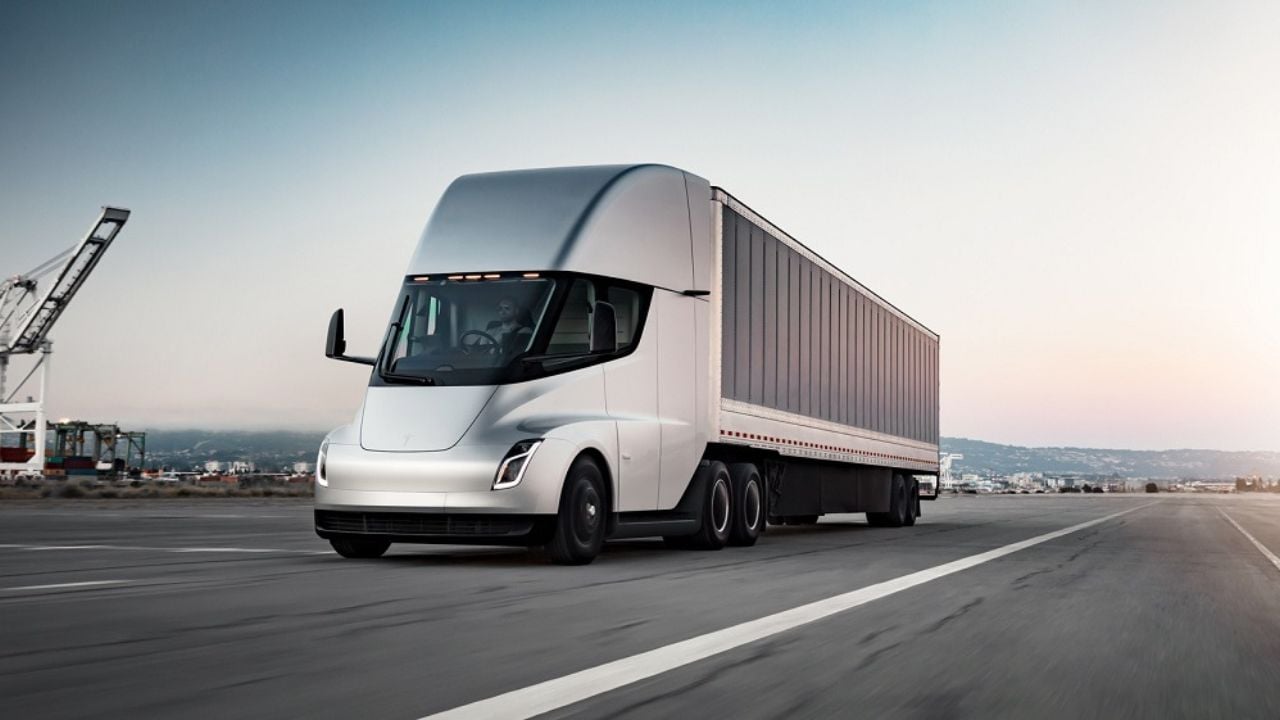
The Tesla Semi will be offered in two versions. The base model is expected to deliver a range of about 325 miles, while the extended range version can travel around 500 miles with a full load of roughly 82,000 pounds.
Both versions use a three-motor powertrain rated at 800 kW, or about 1,072 hp. That gives the Semi performance that would have seemed almost impossible for a heavy truck not long ago.
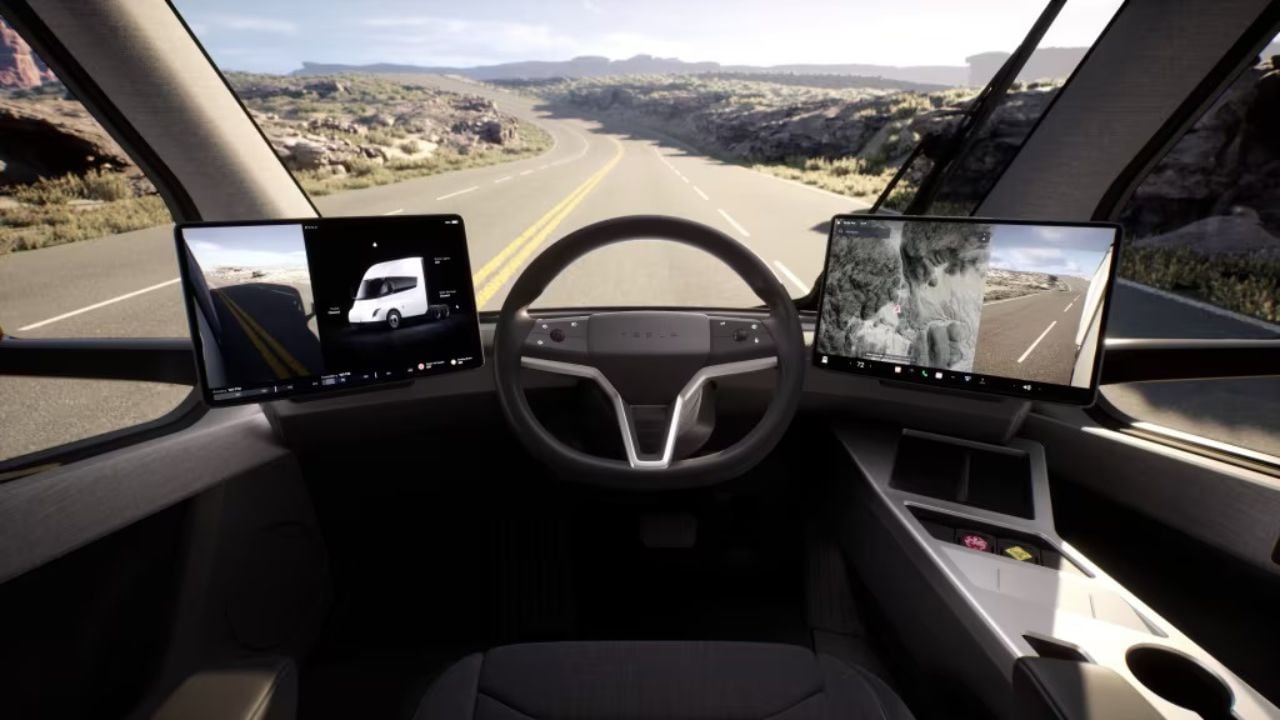
For fleet operators, however, acceleration is only part of the story. The bigger question is whether the truck can reduce operating costs, maintain uptime, and fit into existing freight schedules without creating charging problems.
Charging Could Be Tesla’s Biggest Advantage
One of Tesla’s strongest cards is its charging technology and infrastructure. With the MegaCharger system, the battery can reach 60% capacity in just 30 minutes, with maximum charging power of 1.2 MW.
Estimates suggest that the larger battery version uses a pack of about 900 kWh. Tesla is also targeting a working life of around 1 million miles, a figure that could significantly change the total cost of ownership if it holds up in real fleet use.
Tesla is trying to compete on price and efficiency against rivals such as the Freightliner eCascadia and Volvo VNR Electric. Official pricing has not been confirmed, but the longer-range version is rumored to cost around $300,000, which would make it notably less expensive than some competitors.
The market has also already lost one player. Nikola withdrew from the market in 2025 after entering bankruptcy, removing one of the better-known names from the electric truck race.
The Hard Part Starts Now
The challenges are only beginning. The Nevada factory has a planned production capacity of up to 50,000 heavy trucks per year, but actual output in the first years is expected to be far lower.
Analyst estimates of 5,000 to 15,000 deliveries look optimistic, especially given the complexity of truck manufacturing, battery supply, and charging logistics.
Tesla’s advantage lies in vertical integration. Production of 4680 battery cells is taking place at the same site, which reduces dependence on outside suppliers and could limit disruptions in the supply chain.
That factor may become crucial as Tesla tries to increase production volume.
The Tesla Semi is no longer just a concept or an experimental project. It is now a real product, ready to test the limits of an industry facing major change.
The question is no longer whether battery electric trucks have a future. The real question is who can make that future sustainable, practical, and profitable first.
This article originally appeared on Autorepublika.com and has been republished with permission by Guessing Headlights. AI-assisted translation was used, followed by human editing and review.