Some places feel tense before anyone mentions a ghost story. Empty prison corridors, old cells, battlefield markers, locked wards, and staircases that lead somewhere unexpected can make a visit feel heavy without relying on cheap scares.
The sites below have eerie reputations, but they are not just haunted-tour backdrops. Each one has real history behind the atmosphere, whether it involves incarceration, war, isolation, institutional treatment, protest, grief, or strange architecture.
This list focuses on places travelers can visit through official tours or public access, not unsafe abandoned buildings. Some sites offer paranormal programming, while others are more powerful as historic places where the facts already carry enough weight.
Before planning a trip, check official hours, ticket rules, tour formats, and seasonal schedules. Access can change, and several of these places are best experienced with enough time to understand the history instead of treating them like quick photo stops.
1. Eastern State Penitentiary, Pennsylvania

Philadelphia’s Eastern State Penitentiary is one of the most striking historic prison sites in the United States. The building admitted its first prisoner in 1829 and was designed around the Pennsylvania System, a strict model of solitary confinement and labor intended to produce penitence.
The setting still carries that history physically. Long arched corridors, small cells, heavy doors, peeling walls, and exposed decay make the complex feel raw rather than restored into something polished. The building does not need much theatrical help to create unease.
Visitors can explore through the site’s daytime admission, which includes the “Voices of Eastern State” audio tour, exhibits, artist installations, and mini tours. That structure gives the visit context instead of turning the prison into a simple scare attraction.
The most effective part of Eastern State is the contrast between design and decay. The prison was once considered innovative and modern. Today, the preserved ruin shows the human cost of a system built around isolation.
2. Alcatraz Island, California
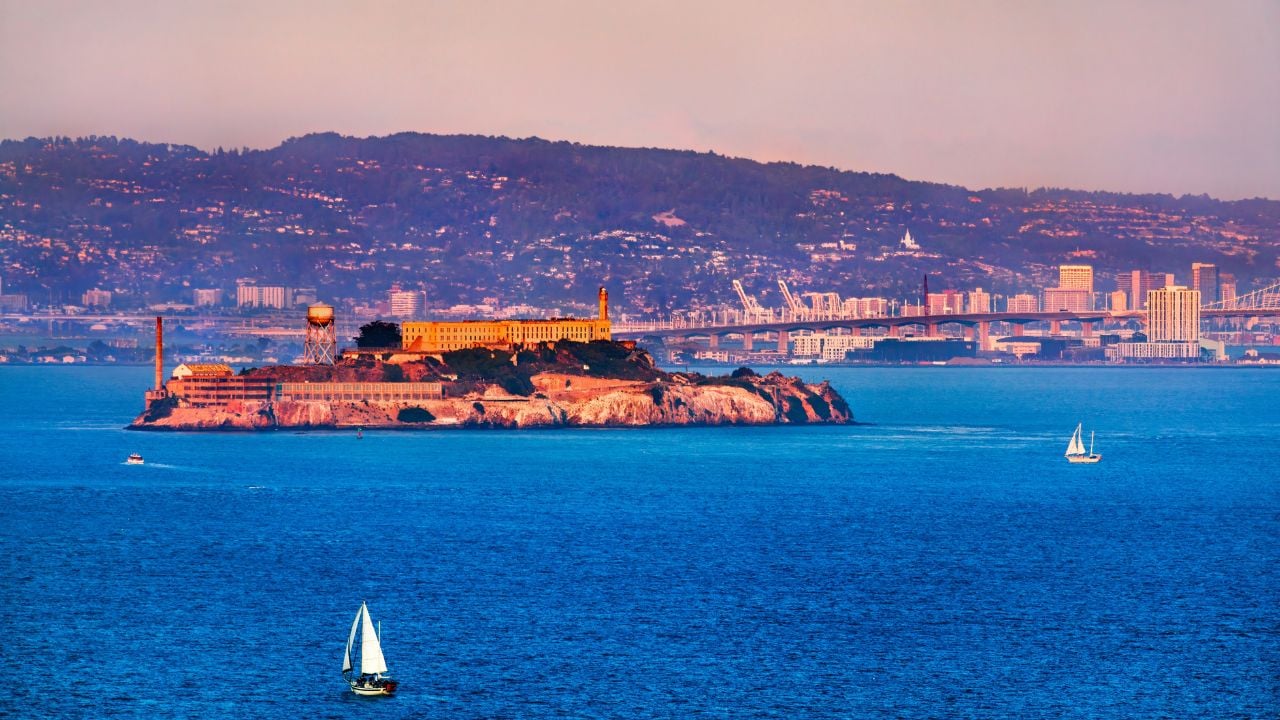
Alcatraz Island already has the geography for an unsettling visit. It sits in San Francisco Bay, close enough to see the city clearly but separated by cold water, fog, wind, and the practical difficulty of escape.
The National Park Service describes Alcatraz as a small island that was once a fort, a military prison, and a maximum-security federal penitentiary. Walking through the cellhouse makes that isolation easy to understand. The skyline is visible, but it remains out of reach.
The island also has a second major story beyond incarceration. In 1969, Indians of All Tribes occupied Alcatraz for 19 months, turning the island into a symbol of Native American activism, civil rights, and sovereignty.
That layered history keeps Alcatraz from feeling like a simple prison tour. The island carries stories of confinement, punishment, abandonment, resistance, and public memory. The ferry ride adds to the mood before visitors even step inside the old prison complex.
3. Trans-Allegheny Lunatic Asylum, West Virginia

The Trans-Allegheny Lunatic Asylum in Weston is unsettling because of its size, subject matter, and institutional layout. The massive stone building is tied to the difficult history of mental health treatment in the United States, including the long era of large state hospitals.
The site offers both historic and paranormal programming, but those experiences are not the same. Its historic tours page says historic tours do not include paranormal information, while separate ghost tours focus on the building’s haunted reputation.
That separation helps visitors choose the experience they actually want. A daytime history tour gives context about psychiatric treatment, architecture, the Civil War, and patient life. A paranormal tour is built for a different audience.
The building’s documented past is already intense enough. Long wards, institutional spaces, and the history of people who lived and worked there give the site a weight that goes beyond ghost stories.
4. Winchester Mystery House, California

San Jose’s Winchester Mystery House creates unease in a different way. It is not a prison, battlefield, or hospital. It is a mansion whose layout became famous for rooms, staircases, windows, doors, and corridors that do not always behave the way visitors expect.
The official history identifies the mansion as the former home of Sarah Winchester, widow of William Wirt Winchester. After her husband’s death, she moved to San Jose, bought an eight-room farmhouse, and expanded it for decades.
The house grew into a sprawling property with 160 rooms, 10,000 windows, 2,000 doors, 47 stairways, and 47 fireplaces, according to the attraction’s own history. Visitors move through a building shaped by wealth, grief, construction, rumor, and architectural oddity.
The Mansion Tour takes guests through part of the house with a guide, while other tour options add access to additional spaces. The strongest part of the visit is the contrast: the exterior looks elegant, but the interior layout can feel disorienting fast.
5. Gettysburg, Pennsylvania
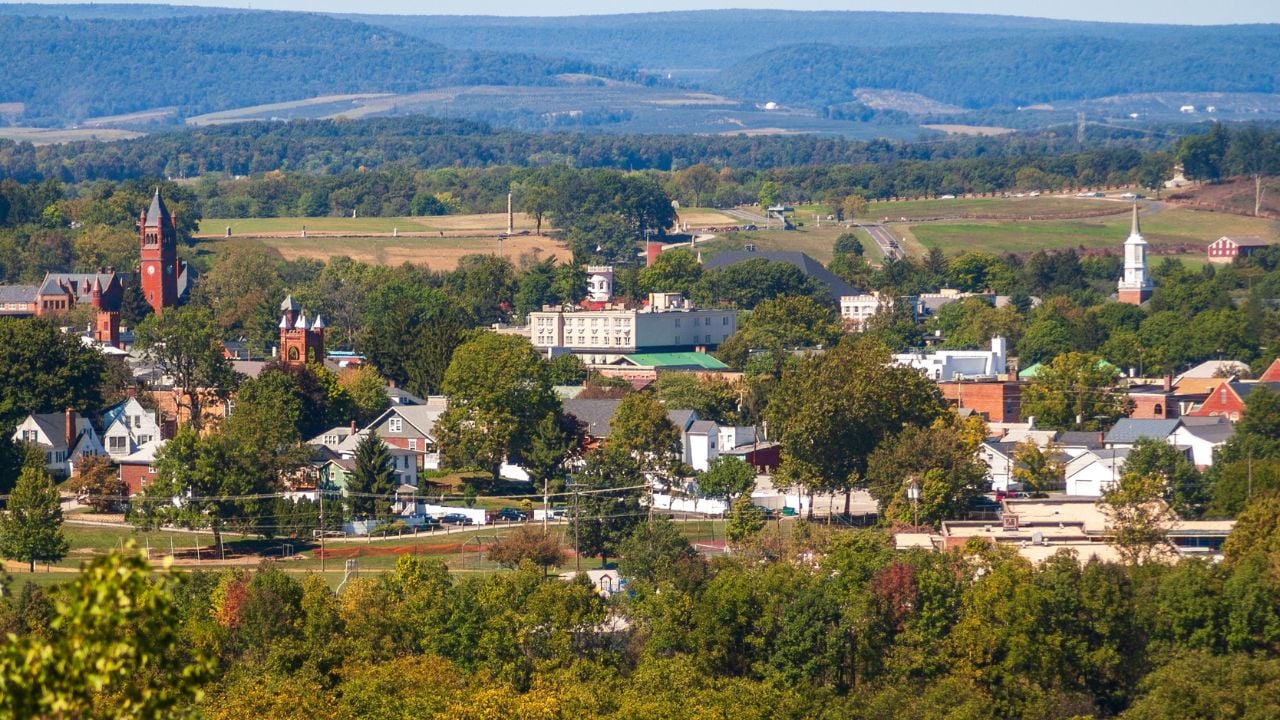
Gettysburg feels heavy because the history is documented, devastating, and spread across real fields, roads, farms, and buildings. The National Park Service says more than 51,000 soldiers were dead, wounded, or missing after three days of fighting in July 1863.
The battlefield does not need haunted theatrics to leave an impression. Monuments, markers, ridgelines, open fields, and preserved landscapes show how the fighting moved through the area. Places that now look peaceful were part of one of the most consequential battles of the Civil War.
Visitors should approach Gettysburg as a historic site first. A battlefield tour, visitor center stop, or self-guided route gives the landscape context and keeps the visit grounded in what happened there.
Its power comes from scale and memory. The quiet can feel more intense than a staged haunted attraction because the losses were real, the locations remain visible, and the story is still central to American history.