Electric vehicles get a lot of praise for their range and efficiency, but there is one thing that really changes how far you can go on a single charge: speed. A recent test looked at this in real-world driving, examining how different highway speeds affected EV range and efficiency.
The goal was simple. Find the sweet spot that lets drivers get the most out of their battery without spending all day on the road.
Forget lab ratings from the EPA or WLTP. This test focused entirely on real-world conditions. As many EV drivers know, the official range figures usually end up being higher than what drivers actually experience.
Factors such as driving habits, weather, and road conditions all reduce the advertised numbers. Among all those variables, speed turned out to have the biggest impact.
Comparing Range at 50, 60 and 70 mph

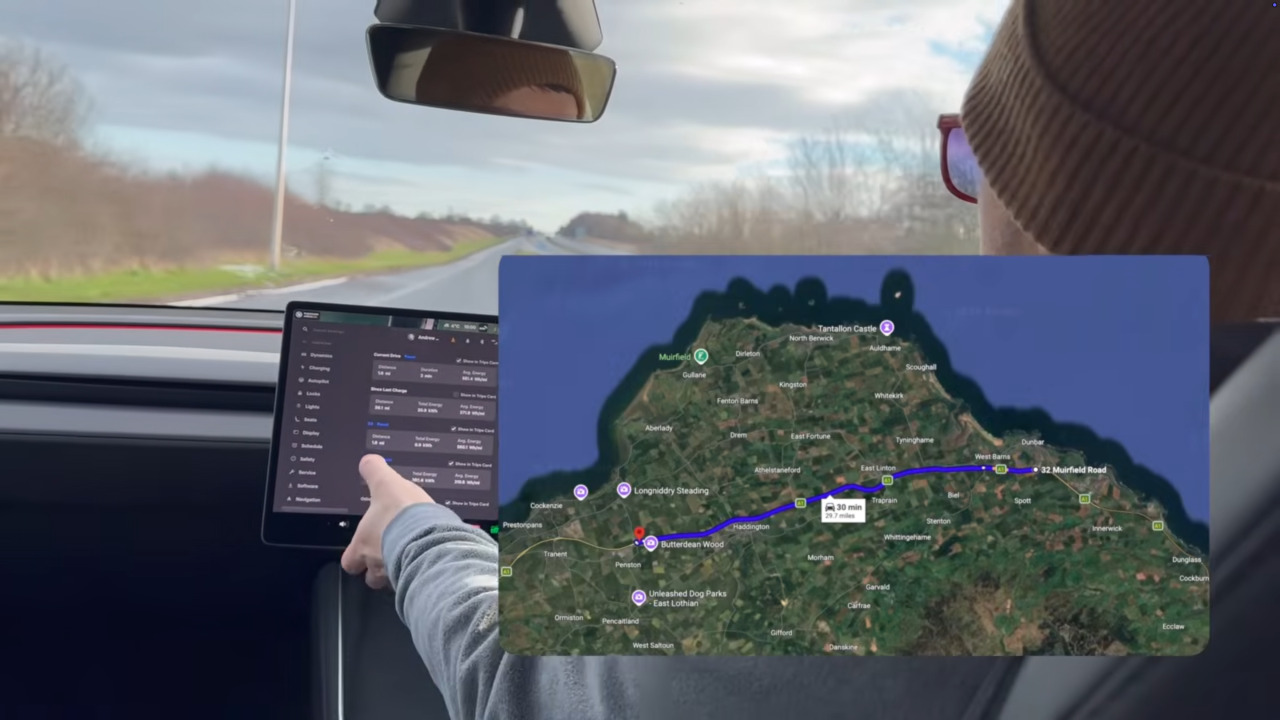
Here is how the test worked. Drivers took the same electric vehicle onto the highway and maintained steady cruising speeds of 50 mph, 60 mph, and 70 mph. YouTuber Carwire then compared efficiency, estimated range, and total travel time at each speed.
At 50 mph, the EV delivered the best efficiency and the longest potential range on a single charge. Driving slower reduces aerodynamic drag and uses less energy overall. This allows the vehicle to travel farther using the same amount of battery power.
The problem is that driving this slowly adds a significant amount of time to the journey. For most drivers, maintaining 50 mph on the highway is simply not practical unless there is no rush to reach the destination.
Increasing the speed to 60 mph created a much more balanced result. At this speed, the vehicle lost some range compared to the slower run, but it also saved a considerable amount of travel time.
The estimated range dropped by about 33 miles compared to the roughly 300-mile estimate at 50 mph. However, drivers saved about 40 minutes on the trip. For many people, that tradeoff makes sense because it keeps the drive efficient without dragging out the journey.
Pushing the speed up to 70 mph shortened the travel time even further. Drivers reached their destination roughly another 30 minutes sooner. The downside was a more noticeable drop in efficiency. At this speed, the estimated range fell to around 248 miles. While that is a larger reduction, it is still enough range for many long-distance drives without requiring an extra charging stop.
Based on the results, the ideal cruising speed for electric vehicles on the highway appears to fall between 60 and 70 mph. In this range, drivers move quickly enough to keep trips manageable while avoiding the steep efficiency losses that occur at higher speeds.
Why Higher Speeds Reduce EV Efficiency
Increasing the speed to 60 mph created a much more balanced result. At this speed, the vehicle lost some range compared to the slower run, but it also saved a considerable amount of travel time.
The estimated range dropped by about 33 miles compared to the roughly 300-mile estimate at 50 mph. However, drivers saved about 40 minutes on the trip. For many people, that tradeoff makes sense because it keeps the drive efficient without dragging out the journey.
Pushing the speed up to 70 mph shortened the travel time even further. Drivers reached their destination roughly another 30 minutes sooner. The downside was a more noticeable drop in efficiency. At this speed, the estimated range fell to around 248 miles. While that is a larger reduction, it is still enough range for many long-distance drives without requiring an extra charging stop.
Based on the results, the ideal cruising speed for electric vehicles on the highway appears to fall between 60 and 70 mph. In this range, drivers move quickly enough to keep trips manageable while avoiding the steep efficiency losses that occur at higher speeds.
What EV Drivers Should Take Away

So what should EV drivers take away from this test? The key lesson is that driving style still matters, even with modern electric vehicles that offer longer range than ever before.
Driving very fast on the highway may shorten travel time, but it also reduces efficiency and may require more frequent charging stops. Driving too slowly, on the other hand, maximizes range but adds unnecessary time to the trip.
For most drivers, cruising somewhere between 60 and 70 mph provides the best balance between speed and efficiency. This range allows drivers to reach their destination at a reasonable pace while still preserving a healthy amount of battery range.
As electric vehicles become more common and charging networks continue to expand, understanding how driving habits affect range will become even more useful. Small adjustments behind the wheel can help drivers get more miles out of every charge and make long-distance EV travel far less stressful.