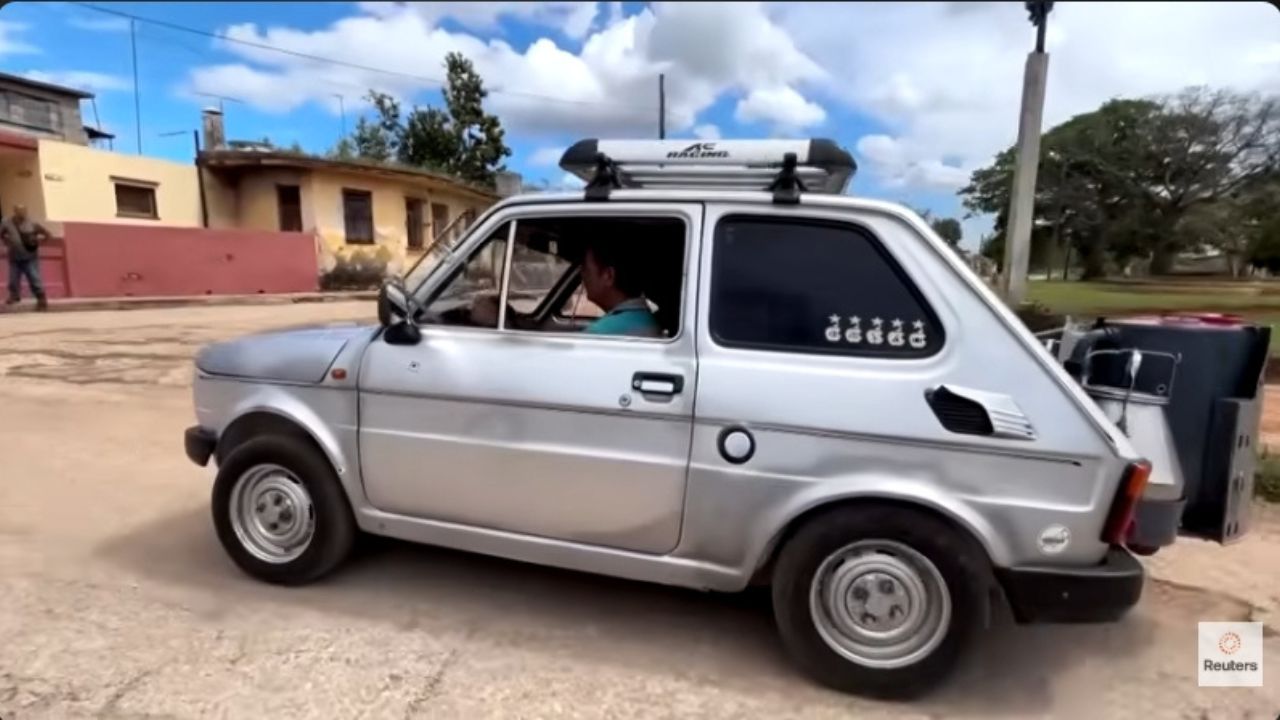

The American economic embargo has turned scarcity into a way of life on the sun-drenched streets of Cuba. Necessity, they say, is the mother of invention, a maxim that’s been proven yet again by one man’s ingenuity that has resurrected a forgotten technology.
His name is Juan Carlos Pino, a mechanic by trade and an innovator by necessity.
Faced with a fuel crisis that has left gasoline strictly rationed and power blackouts a daily reality, Pino has done something extraordinary. He has taught his 1980 Polski Fiat to drink smoke.
The paradox here isn’t lost on car buffs who are familiar with this car’s history. It is just the perfect candidate of a man’s forced ingenuity, as the car itself is a product of necessary invention.
The Polski Fiat
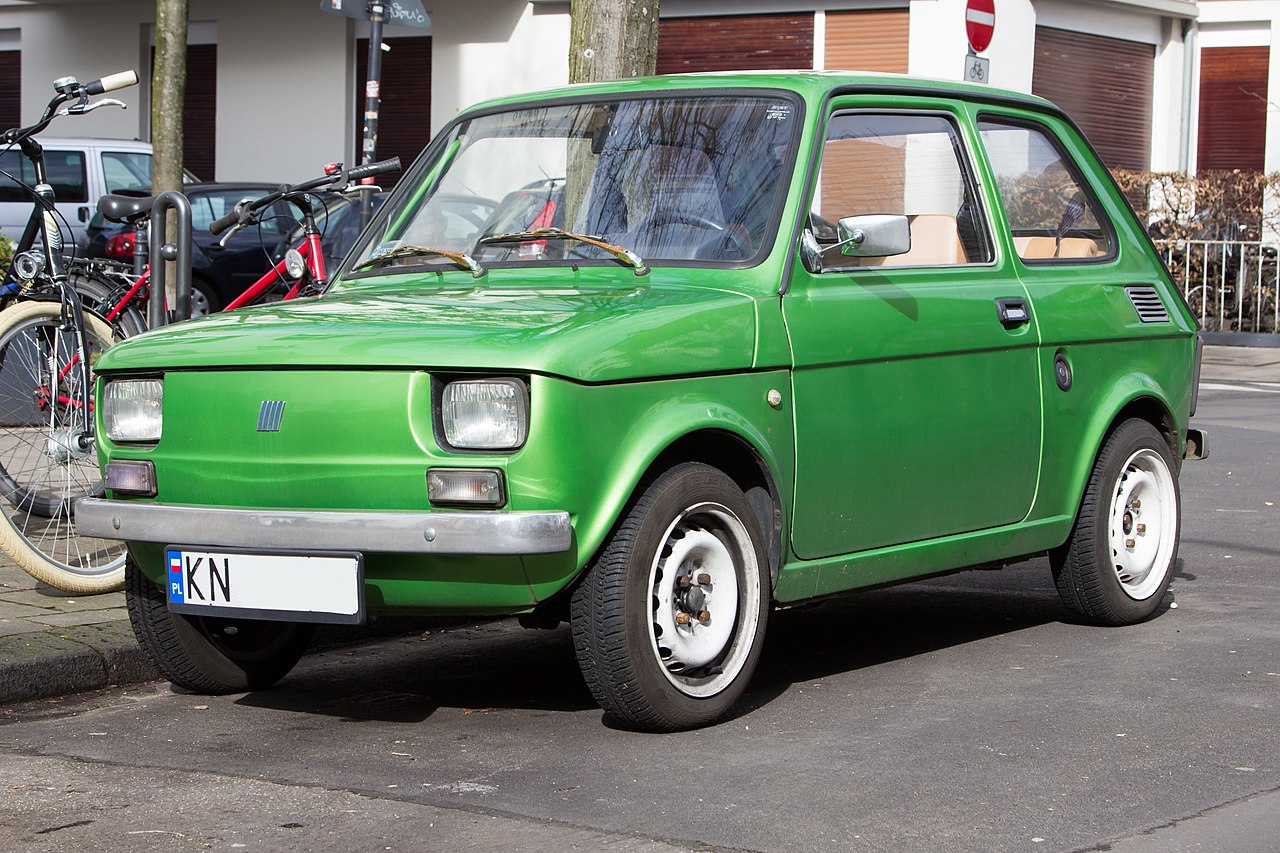
Now, a little about Polski.
The Polski Fiat, we think, is best introduced as a quirky symbol of Cold War–era ingenuity and compromise.
The car was built in Poland under license from Fiat, Italy’s famous automaker. In the 1970s and 1980s, Poland’s communist government struck deals with Western companies to produce affordable cars for its citizens, and the Polski Fiat 126p became one of the most recognizable.
It was tiny (about the size of a modern Smart car) and got motivation from a modest two-cylinder engine that struggled to keep up on highways. Yet it was cheap, relatively reliable, and gave millions of Eastern Europeans their first taste of car ownership.
To Americans, it might look like a toy compared to the big sedans and muscle cars of the same era. But in Poland, the 126p was a lifeline: families piled in for road trips, newlyweds drove off in them after weddings, and mechanics kept them alive with endless improvisation.
Its boxy design and buzzing engine earned it nicknames like “Maluch” (meaning “the little one”).
So, when Reuters spotlights someone in Cuba resurrecting a Polski with charcoal power, it tells the story of a machine that was already born from necessity; now finding new life in another corner of the world where resourcefulness is everything.
Indeed, this Polish-built version of an Italian classic now runs on charcoal.
When Survival Demands Innovation
A memory we demand you retain as you read this is that this isn’t a hack born of convenience but of survival.
For decades, Cuba’s economy has navigated the tight channels of the US blockade, but the situation worsened when American policy cut off the flow of Venezuelan oil, which had been the island’s primary lifeline.
With fuel scarce and tariffs threatening any nation that might step in to help, Cubans have learned to adapt. Pino’s adaptation, however, stands apart for its elegance and its deep historical roots.
The idea came from family lore. His uncle, also a mechanic, had told him stories of gas generators from World War II, a time when Europe faced its own catastrophic fuel shortages. The concept always intrigued Pino, but in years past, there was simply no need to pursue it.
Now, with the current crisis pressing in, he set out to see if that wartime technology could be reborn. The fuel source he needed was abundant in his area, relatively cheap and accessible. It was charcoal.
How to Make a Car Run on Charcoal
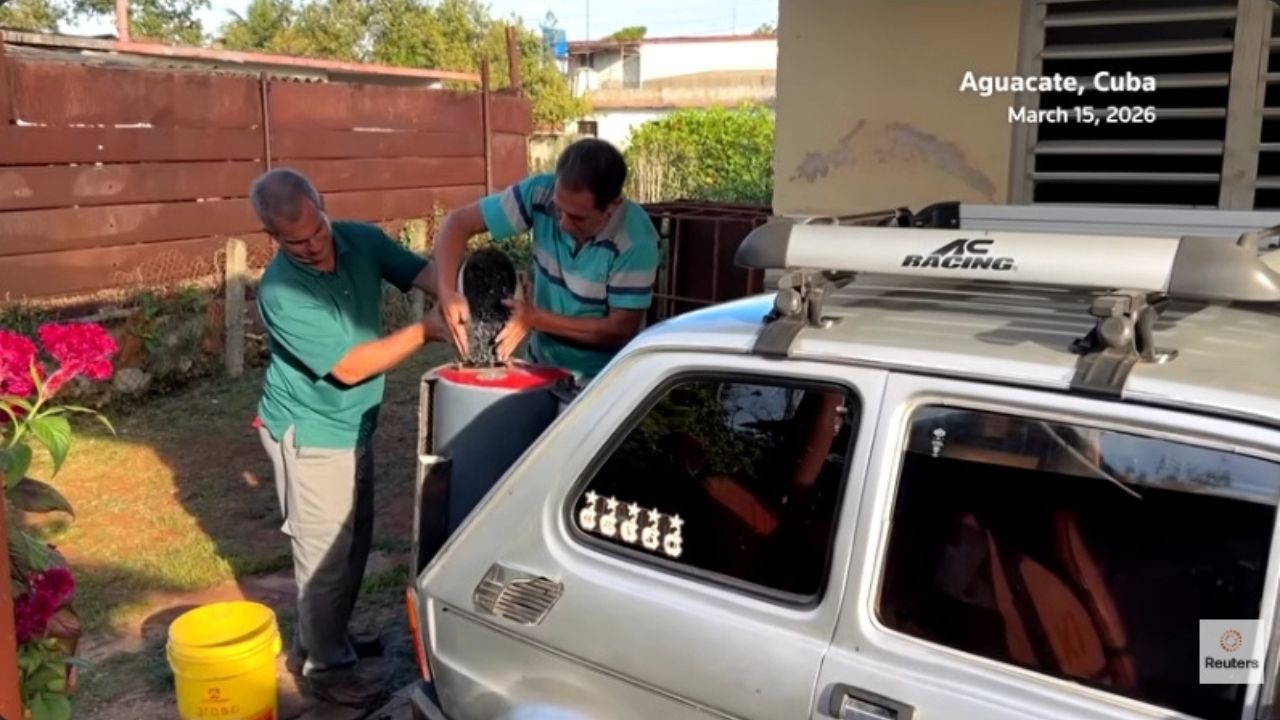
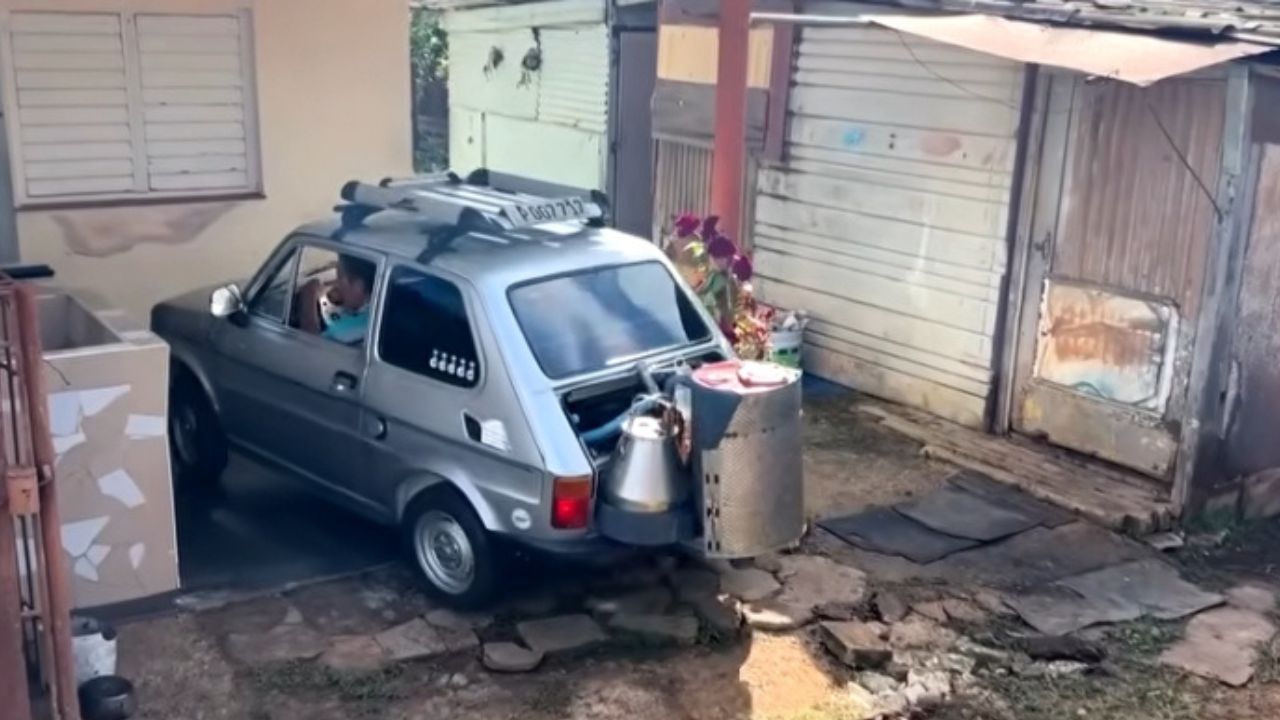
Pino constructed his device entirely from scrap and repurposed items, a testament to the maker’s art when new parts are unattainable.
The heart of the system is a converted propane tank where the charcoal burns. He sealed it shut with the lid of an electrical transformer, a heavy, makeshift cap that speaks to his resourcefulness.
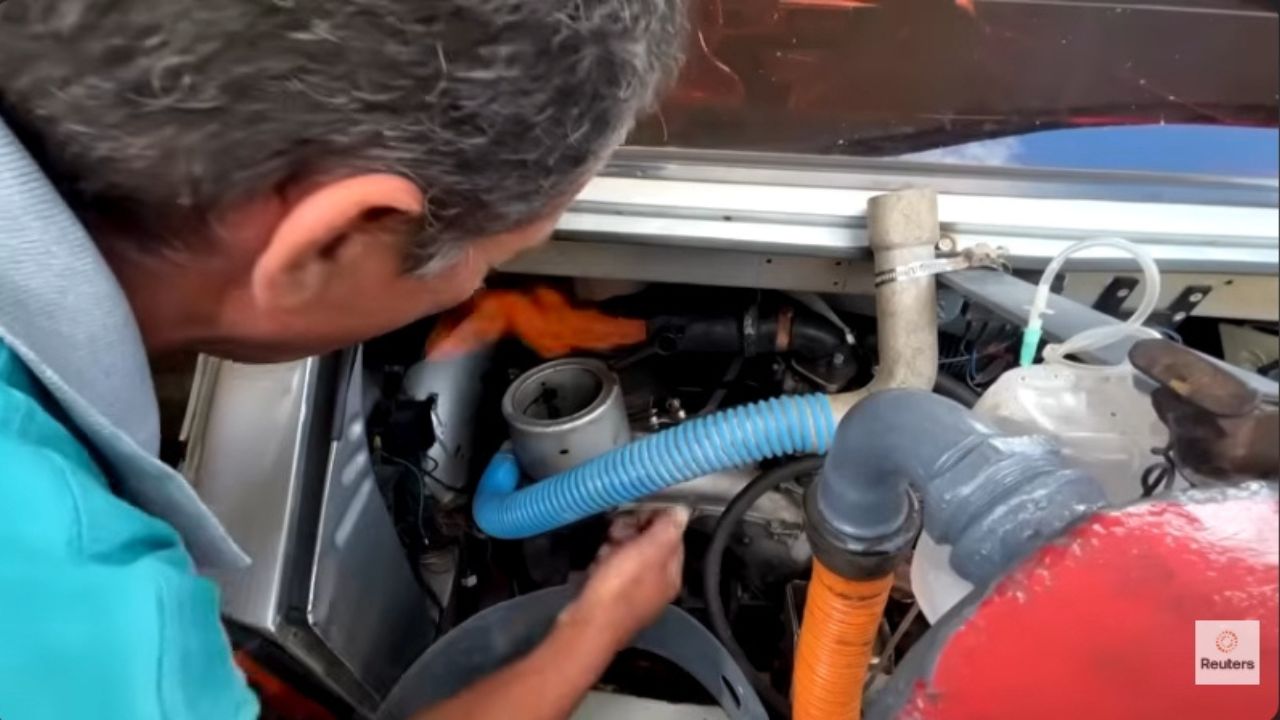
From there, the volatile gases produced by the smoldering charcoal are drawn through a filter crafted from a stainless-steel milk jug. Inside that jug, stuffed with old clothes, the gas is cleaned before being fed into the engine’s intake.
The result is a Polski Fiat that runs not on liquid fuel but on the vaporized essence of wood. In one test run, the charcoal-powered Fiat completed a journey of 53 miles, reaching a top speed of 43 miles per hour.
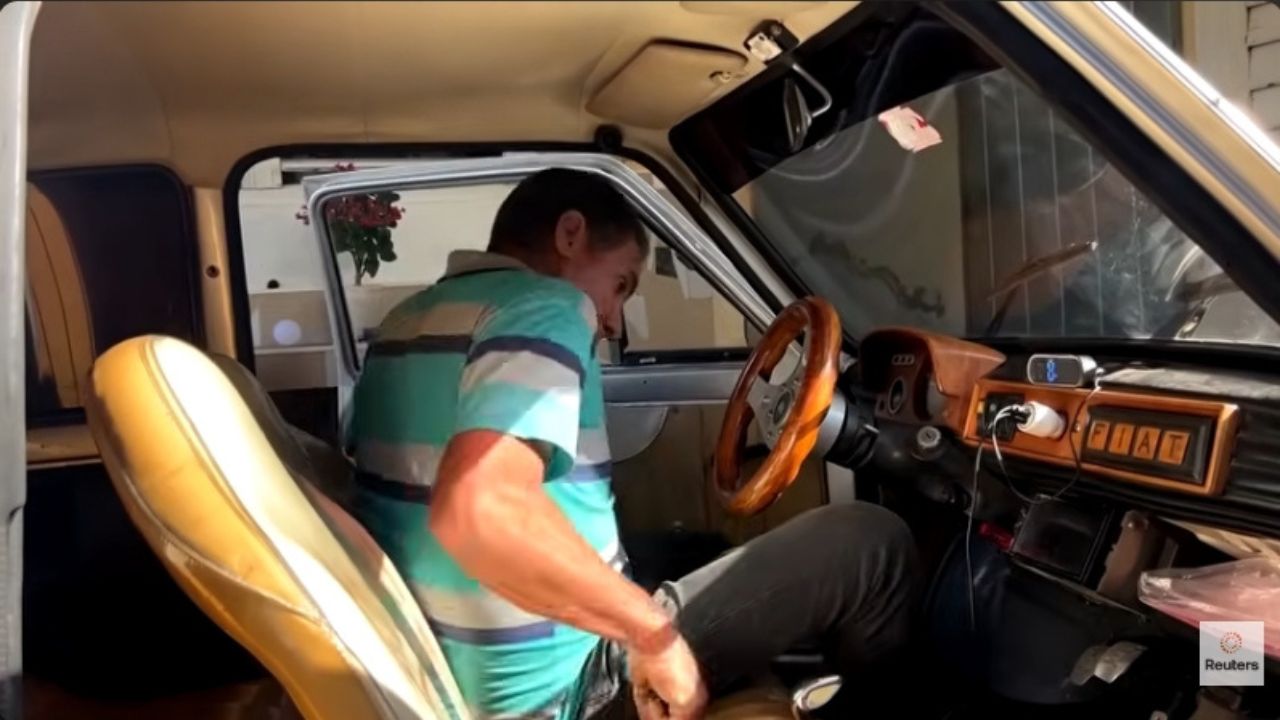
For a car built in 1980, modified by hand in a backyard, and propelled by a fuel source as old as fire itself, it is a triumph of engineering.
When Pino starts the engine and explains his work, curious residents gather. One man on a motorcycle stopped his bike and walked over for a closer look, later saying the invention had left him speechless.

To see a car from the last century, its trunk filled with a repurposed propane tank and a milk jug, quietly humming along on charcoal, is to witness the very definition of necessity mothering invention.
A Creation that Runs on Resilience
Pino himself holds no illusions. He admits with a mechanic’s honesty that he would prefer gasoline for its convenience. The charcoal technology works, it makes logical sense, but it is not easy. Yet when asked about removing the system, his sentiment shifts.
The charcoal tank has become like his own baby, a creation he nurtured from scrap metal and family memory. It is a solution born of blockade, but it has also become a source of pride. Against the backdrop of a country defined by what it lacks, Juan Carlos Pino has created something of his own, a machine that runs on resilience.