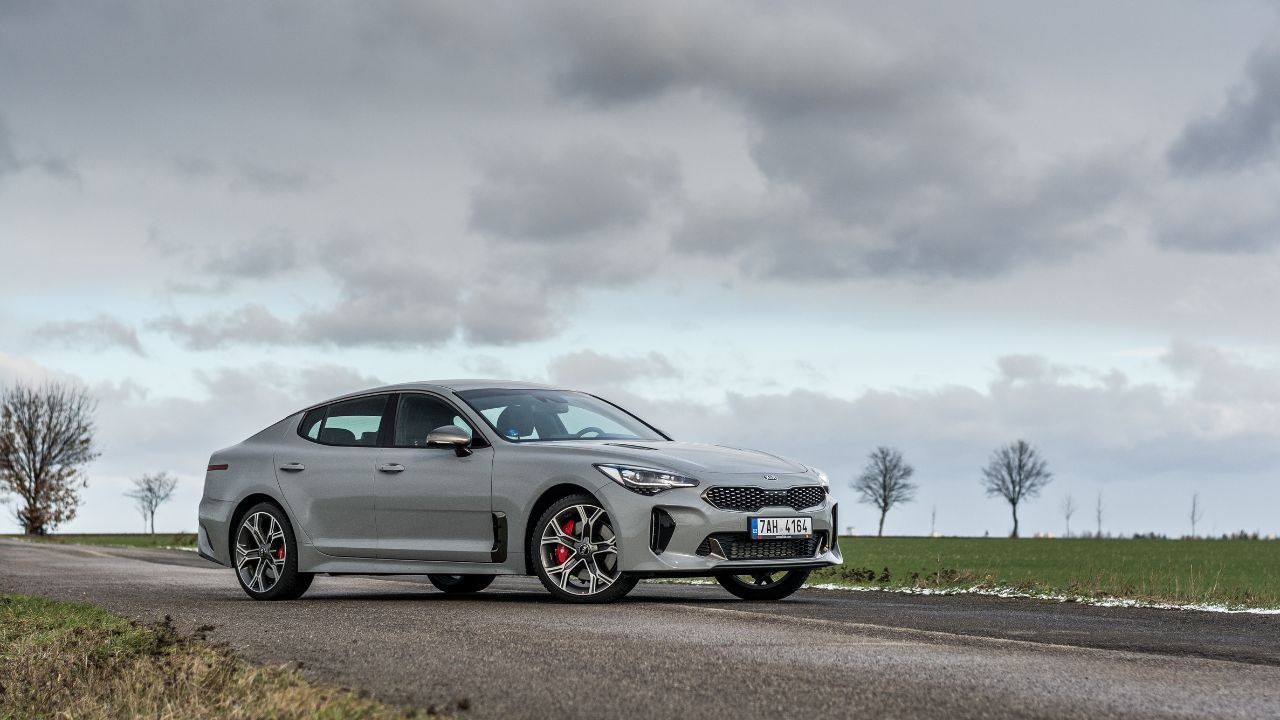
The Kia Stinger GT always made people do a double take, and not just because of the badge. It arrived in America as something Kia had never really attempted before: a rear-wheel-drive-based five-door performance car with grand touring proportions, serious power, and a clear appetite for European sport sedan territory. That alone would have been enough to make it memorable.
What made it more interesting was the way it blended conflicting virtues without sounding confused. The Stinger GT was quick, but it was also comfortable. It looked expensive, but it did not ask for luxury brand money. And unlike many ambitious one-off projects from mainstream brands, it was developed with real chassis intent. Kia’s own launch material highlighted Nürburgring development under Albert Biermann, while later U.S. spec sheets for the 2023 GT2 listed the 3.3-liter twin-turbo V6 at 368 hp and 376 lb ft, along with standard rear-wheel drive (optional AWD), launch control, adaptive suspension, Brembo brakes, and a limited-slip differential on rear-drive cars.
That is why this headline works, even if it sounds bold at first glance. The Stinger GT was never literally a Lexus wearing a Porsche costume. It was something more interesting than that. It offered a different ownership logic from the German alternatives, combining strong equipment with Kia’s long factory warranty when new. J.D. Power currently gives the 2023 Stinger an 87 out of 100 quality & reliability score, though that page notes previous-year ratings and review data are used. At the same time, its best versions carried the rear drive balance, fastback packaging, and planted composure of a car designed by people who cared deeply about how a sport sedan should move down a difficult road.
The Standard For A Claim Like This

A line like “Lexus durability and Porsche like balance” needs a stricter test than a few flattering forum posts. The point here is not that the Stinger GT matched Lexus for a long-term reputation model for model, and it is not that it delivered actual Porsche steering feel, brake nuance, or brand cachet. That would be lazy writing.
The better way to judge it is to ask whether the Kia offered a rare combination of dependability-minded ownership values and a chassis good enough to remind people of more expensive European machinery. That is a much more defensible claim, and it is where the Stinger GT becomes genuinely compelling.
To earn that comparison, the car needed three things. It needed enough engineering seriousness to feel balanced rather than merely powerful. It needed enough comfort and practicality to justify the grand touring brief. And it needed an ownership case stronger than the usual used German sport sedan gamble.
The Stinger GT could make that argument because it was developed at the Nürburgring, tuned by Biermann’s team, praised by reviewers for composed body control and balanced handling, and sold with Kia’s industry-leading warranty when new. Even years later, that combination still makes the car feel oddly singular in the used performance market.
The Chassis Was the Real Story
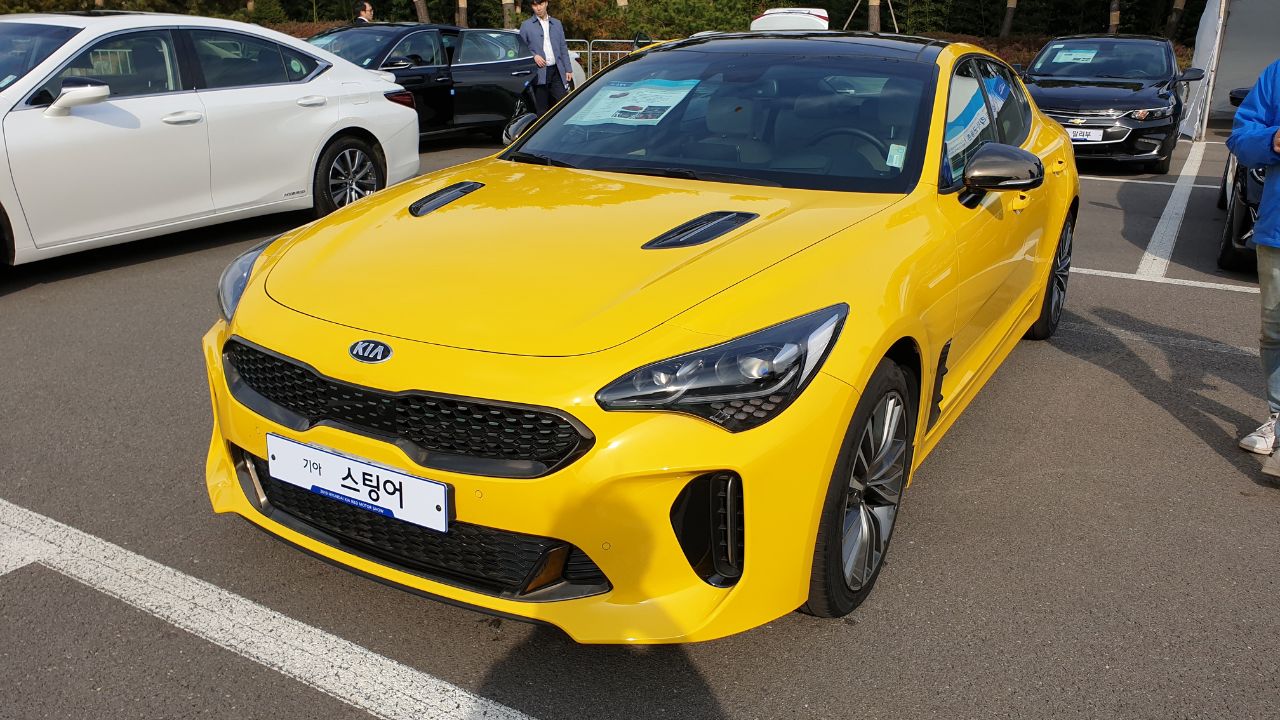
The easiest part of the Stinger GT to admire was the engine. The more important part was the platform underneath it. Kia did not build the Stinger as a front-drive sedan with extra horsepower and sporty trim. It built a rear-wheel-drive-based fastback with the cabin pushed rearward, the right visual proportions, and a chassis shaped around the idea that a big everyday car could still feel alive when asked to turn. That underlying decision matters because layout still shapes character.
A car with this long hood, rear-drive stance, and available limited-slip differential begins the conversation in a very different place from a typical mainstream sport sedan.
What made the result memorable was the way it behaved when driven hard. MotorTrend said the Stinger offered “balanced handling,” quick and communicative steering, and a planted, composed feel with body motions kept to a minimum. It also specifically recommended the rear-wheel-drive GT2 for its superior chassis balance and handling prowess. Car and Driver, meanwhile, called it a good-handling car with a surprisingly comfortable ride. That duality is the heart of the whole car.
The Stinger GT did not just corner better than people expected from a Kia. It carried itself with the sort of calm, rear-driven coherence that made the best versions feel more expensive and more carefully tuned than the badge suggested.
The Twin Turbo V6 Gave It Authority
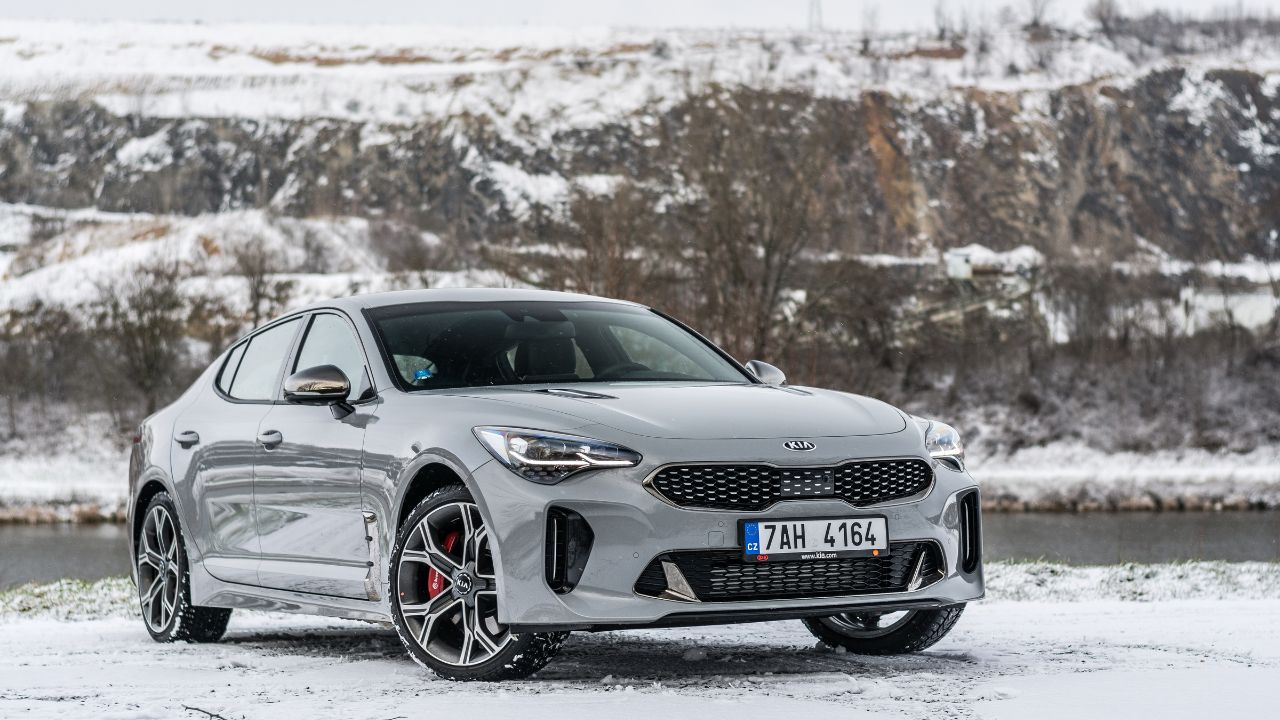
A balanced chassis is nice. A balanced chassis with a proper engine becomes a reason to keep driving after the original novelty wears off. In Stinger GT form, the Kia had that engine. Early U.S. GT models made 365 hp and 376 lb ft from the 3.3 liter twin-turbo V6, and Kia said they could reach 60 mph in 4.7 seconds with a governed top speed of 167 mph. Later U.S. cars lifted output to 368 hp while keeping the same 376 lb ft torque figure. That meant the Stinger GT always had enough muscle to move from “interesting for a Kia” into legitimately fast sport sedan territory.
The more impressive part was how usable the engine felt. Torque arrived low in the rev range; the eight-speed automatic gave the car a real grand touring ease, and the powertrain never needed to be wrung out to make sense. That suited the Stinger’s identity perfectly. This was not a nervous, high-strung machine trying to impress with one heroic attribute.
It was a big-legged fastback that could settle into a highway stride, then wake up the instant the road opened. That is one reason the Porsche comparison keeps surfacing around the car. Not because the Stinger was a Panamera on a budget, but because it understood the same basic appeal of a car that could be deeply comfortable one minute and properly serious the next. Kia itself leaned into that confidence early, noting that the GT had more power than several of its German targets and was quicker to 60 than the six-cylinder Porsche Panamera.
It Was A Real Grand Tourer, Not A Sports Sedan Costume
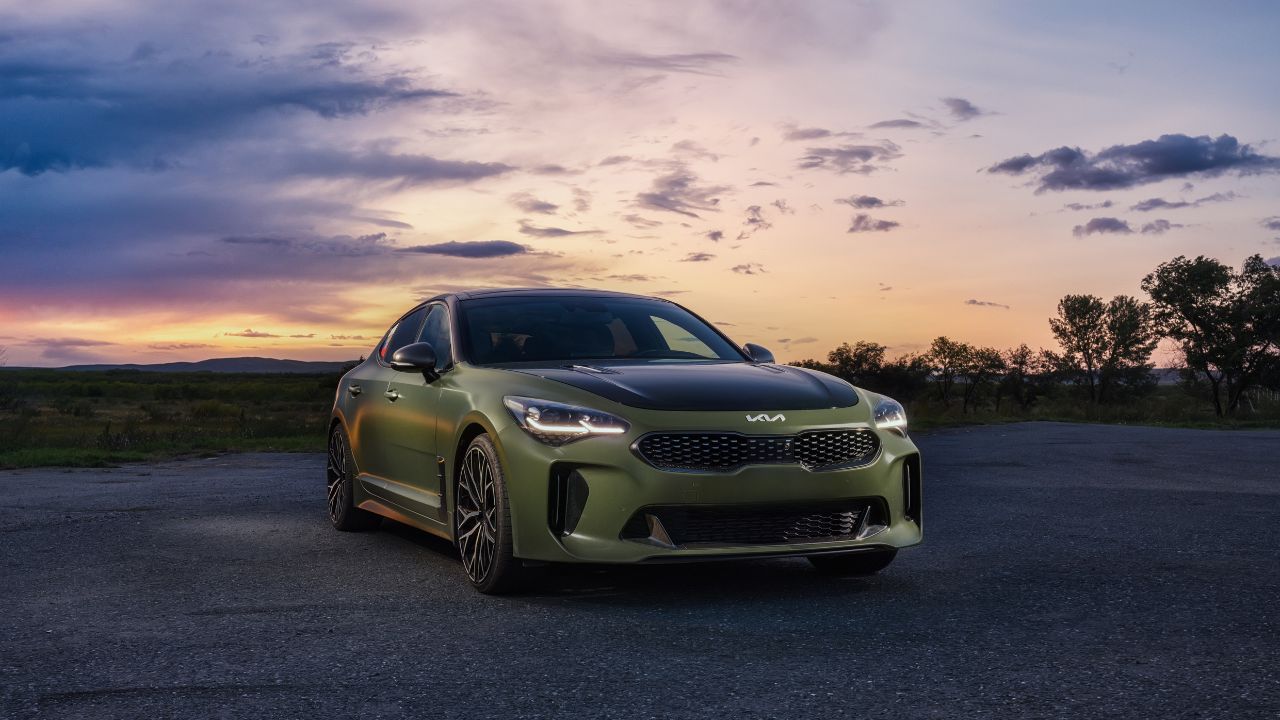
A lot of cars claim grand touring character when what they really mean is that the seats are decent and the trunk is not terrible. The Stinger GT actually understood the brief.
The five-door body gave it far more practical value than the usual compact sport sedan, and by 2023 Kia was still listing 23.3 cubic feet of cargo space, dual-zone automatic climate control, acoustic laminated front door glass, and a long feature sheet that included items like a power-opening hatch, Harman Kardon audio, heated and ventilated seats, and a 7-inch supervision cluster in GT2 form. This was a genuinely useful performance car, not a compromised toy trying to fake daily versatility.
That practicality matters more than people admit when they talk about sports sedans. A car like this wins loyalty by fitting into real life. The Stinger GT could take adults in the back, swallow luggage more easily than the average performance sedan, and still look sleek enough that nobody had to explain why they bought it. That is where the car’s personality became especially appealing.
It never felt like a stripped athlete. It felt like a handsome, well-equipped fastback built for people who like driving but also have things to do. That mix of pace, space, and comfort is exactly what turned the Stinger from a neat surprise into a car people still talk about with unusual affection.
The Durability Part Of The Argument
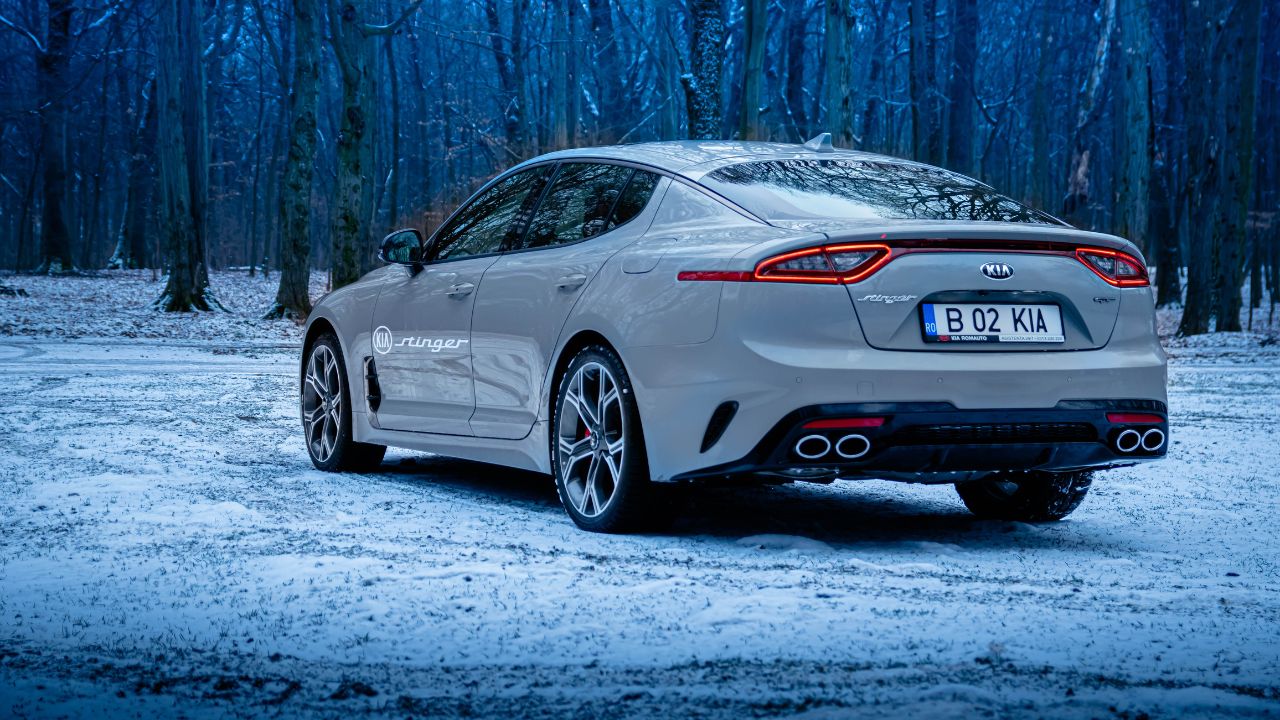
This is the section where exaggeration usually ruins a good thesis, so it is worth being precise. The Stinger GT did not earn the same historical durability reputation as a Lexus GS by magic.
Lexus built that image over decades. What the Kia offered was something different but still valuable: a much stronger ownership case than buyers usually expect from a stylish rear-wheel-drive performance car. Kia launched the Stinger with its industry-leading warranty, and much later, J.D. Power still gave the 2023 Stinger an 87 out of 100 quality and reliability rating. That does not make it invincible. It does make it much easier to consider than many used German alternatives whose repair bills often become part of the ownership identity.
That is why the Lexus comparison works best as a shorthand for ownership logic rather than mythology. The Stinger GT was never the most prestigious answer in the segment. It was often the sensible, thrilling answer, which is not the same thing. Buyers got strong performance, real equipment, a practical body, and a brand reputation that, at minimum, did not scare people the way some European sport sedan maintenance stories do. In used form today, that may be the most attractive part of the whole package.
The Stinger GT still feels special, yet it does not immediately suggest a future built around explaining service invoices to your accountant. For a performance sedan, that is a very appealing trait.
Why The Stinger GT Still Matters
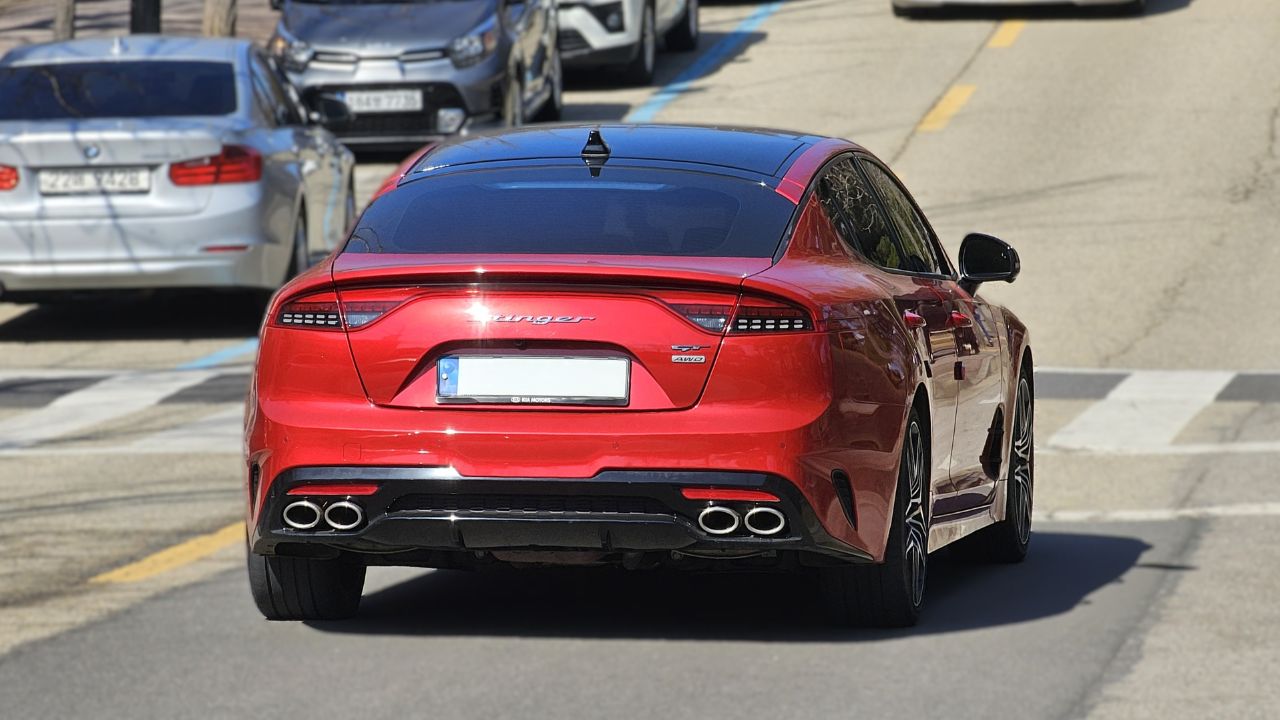
The Kia Stinger GT matters because it got the hard part right. It was not just a fast car from an unexpected brand. It was a coherent car. The engine, layout, proportions, ride quality, and practicality all pulled in the same direction. That made it feel far more mature than many badge-chasing sport sedans, and it is why the car still reads so well in hindsight. Reviewers praised its comfort, its planted character, its balance, and its value. Kia gave it the hardware to back up the image. And the market never really got another car that did this exact job in quite the same way after it disappeared.
So no, the Stinger GT was not literally a Lexus, and it was not literally a Porsche. It was more useful than that comparison game suggests. It was a rare modern performance sedan that could make a cautious buyer feel comfortable and an enthusiastic driver feel understood. That is a hard combination to engineer, and even harder to price properly. The Stinger GT did both. Which is probably why, even now, it still feels like one of the smartest and most charismatic answers the segment produced in the last decade.