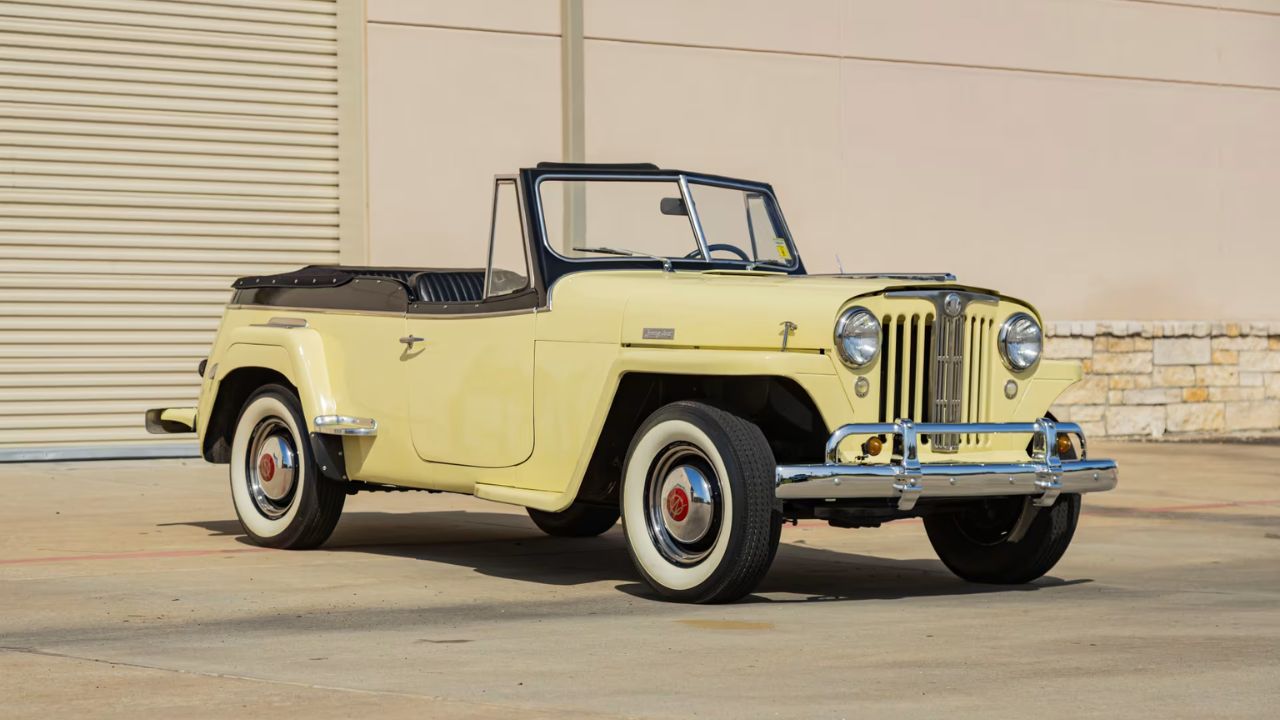
The post-World War II automotive boom produced many unusual vehicles, but few blended rugged utility and open-air style quite like the 1948 Willys Jeepster. One example is now set to cross the auction block at Mecum’s Houston auction, scheduled for April 9–11, 2026, offering collectors a glimpse into the era when American automakers were experimenting with new civilian vehicles built from wartime mechanical roots. According to the listing, the Jeepster is powered by a four-cylinder engine paired with a three-speed manual transmission, a combination typical of late-1940s models.
The Jeepster represented Willys-Overland’s attempt to expand the Jeep brand into a lifestyle vehicle. Its styling, mechanical simplicity, and relatively low production numbers have helped the model gain collector appeal decades later. Today, surviving examples continue to surface at major auctions, drawing attention from enthusiasts interested in early Jeep history and postwar American design.
A Civilian Jeep With a Different Mission
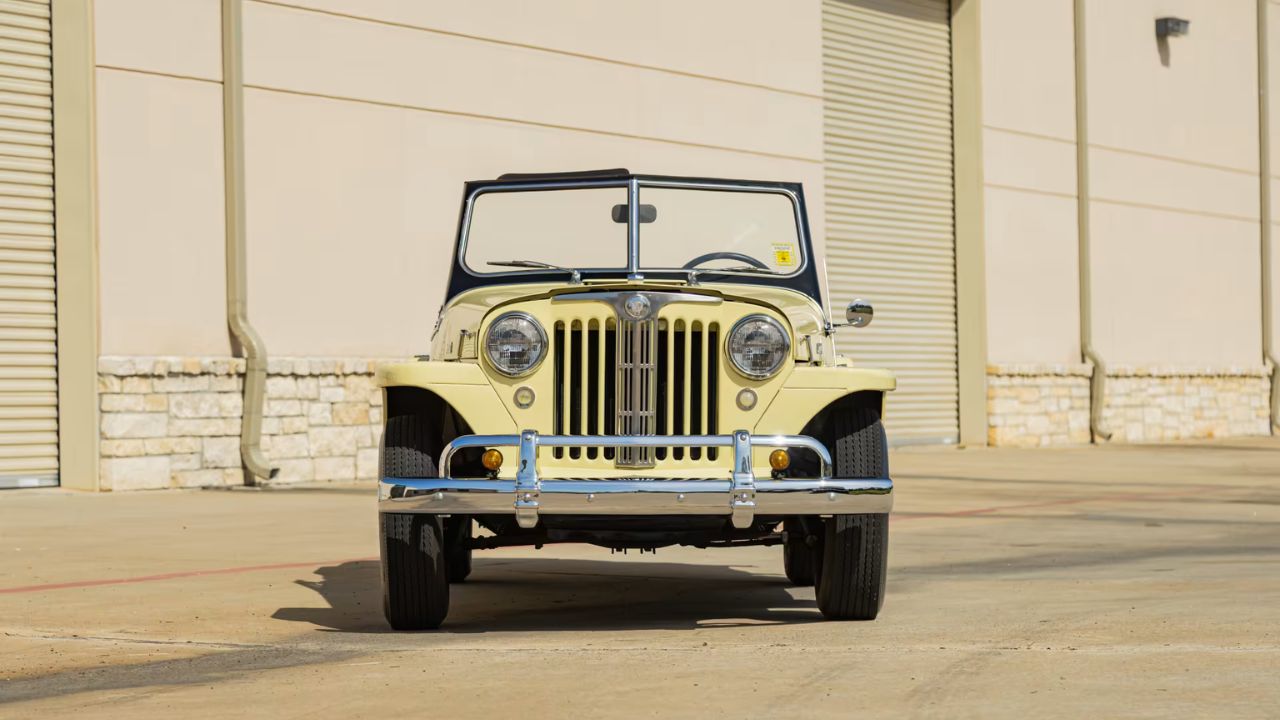
The Willys Jeepster debuted in 1948 as a civilian vehicle designed to capitalize on the Jeep name’s post-World War II recognition. Rather than building another workhorse utility vehicle, Willys-Overland commissioned industrial designer Brooks Stevens to create a sporty, open touring car aimed at recreational driving.
The result was a distinctive vehicle with flat fenders reminiscent of wartime Jeeps, but styled with passenger-car touches such as chrome trim, bright paint combinations, and a folding soft top. Unlike the rugged four-wheel-drive military vehicles that inspired it, the Jeepster was built exclusively with rear-wheel drive and was primarily intended for road use.
Production numbers remained relatively modest. Roughly 10,326 units were built for the 1948 model year, making the first-year Jeepster the most common of the three production years before production ended in 1950.
Despite its appealing concept, the Jeepster occupied a somewhat unusual place in the market. It was neither a traditional convertible nor a rugged Jeep utility vehicle. That identity gap limited its commercial success, but it also gave the model a unique character that collectors appreciate today.
Mechanical Simplicity and Classic Jeep Engineering
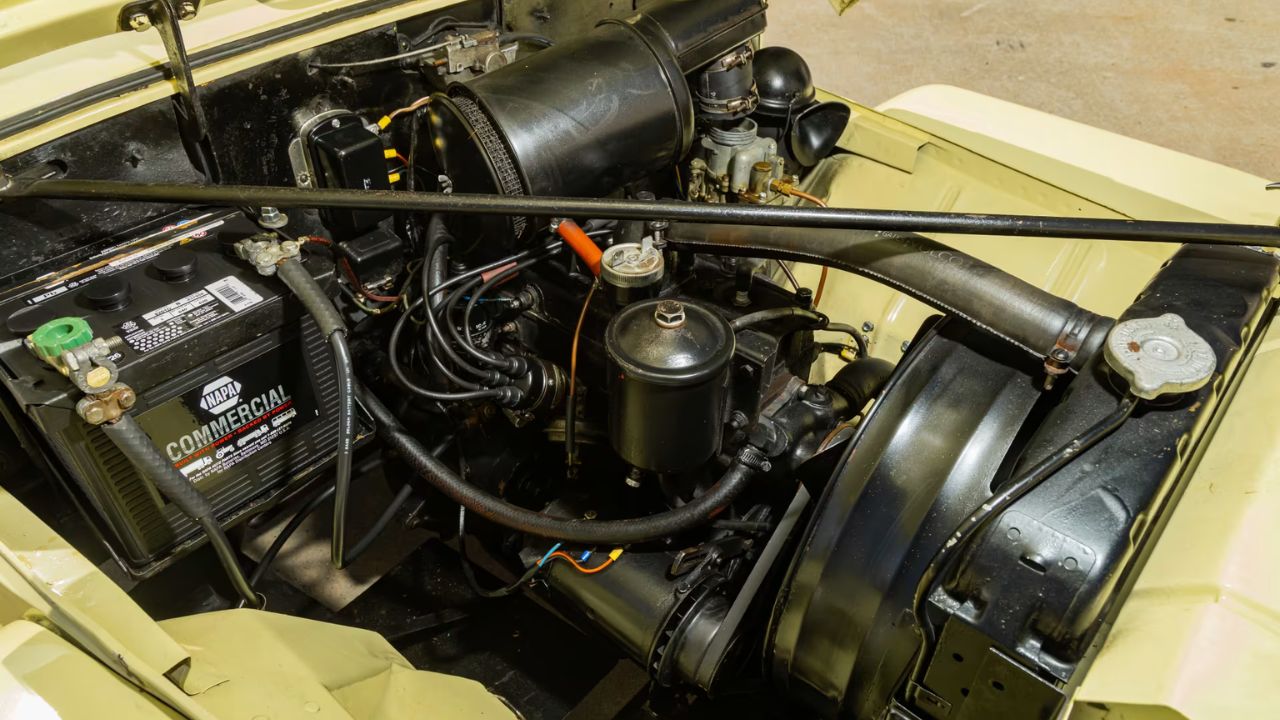
Under the hood, early Jeepsters were powered by Willys’ familiar “Go-Devil” inline-four engine, the same basic design used in wartime Jeep vehicles. The engine displaced about 134 cubic inches and produced roughly 60 horsepower and about 105 pound-feet of torque.
Power was routed through a three-speed manual transmission, often paired with optional overdrive to improve cruising speeds. The mechanical package emphasized durability rather than outright performance. Top speed was typically around 65 mph, reflecting the relaxed driving style of the era.
The chassis combined simple but sturdy components. Jeepsters used a 104-inch wheelbase and a distinctive front suspension featuring a transverse leaf spring, paired with a Dana rear axle and leaf springs at the rear.
This mechanical straightforwardness is one reason the model remains popular among enthusiasts today. The engine and drivetrain also share lineage with other Willys vehicles, meaning many parts and restoration techniques are well documented.
Collector Appeal and Auction Market Interest
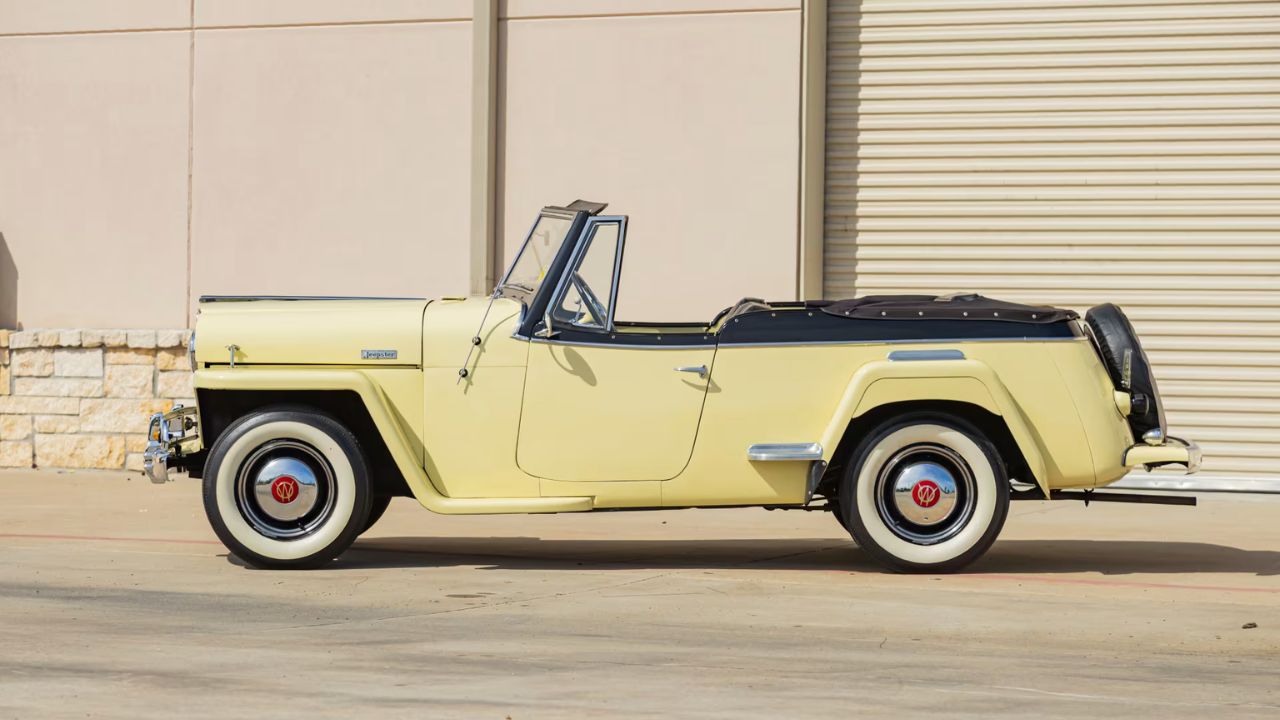
Classic-car collectors increasingly view the Jeepster as an important transitional vehicle in Jeep’s history. While the brand would later focus heavily on off-road capability, the Jeepster represented an early attempt to transform Jeep into a broader lifestyle brand.
The model’s rarity adds to its appeal. Total production across all three years from 1948 through 1950 reached roughly 19,000 units. Surviving examples are therefore relatively scarce compared with many other postwar American vehicles.
Vehicles like the example listed by Mecum highlight the enduring interest in early Jeep vehicles that predate the modern SUV boom. Collectors are drawn not only to the Jeepster’s history but also to its simple design and unmistakable silhouette. That blend of character, rarity, and historical significance is precisely why each example still attracts attention when it rolls onto the block.