The phrase “performance SUV” used to sound like an oxymoron not too long ago, but by 2026 it has become one of the most visible corners of the market. From the Ferrari Purosangue with its naturally aspirated V12 to the fully electric Rivian R1S that can claim a 0 to 60 mph time as quick as 2.6 seconds in launch mode, current SUVs are reaching performance heights that would have sounded absurd a couple of decades ago.
In the early ’90s, the automotive landscape was completely different. SUVs were not as common as they are today, and the Ford Bronco, Jeep Cherokee, Toyota Land Cruiser, and other SUVs around at the time were primarily built for all-weather and off-road use, not to chase down sports cars on the freeways. That changed in the early 1990s, when GM launched the turbocharged AWD Syclone pickup in 1991 and then followed with the Typhoon SUV for 1992, both quick enough in a short sprint to surprise far more expensive sports cars of the era.
The GMC Typhoon Is the Ultimate Performance SUV of the ’90s
In the early ’90s, as most automakers were focused on the affordable sports car market that Japanese cars had popularized, GM saw an untapped market opportunity to build a new type of performance car and decided to attack it head-on. As usual, GM pitched the idea to its performance-oriented brands, and when they allegedly refused, the top brass passed it on to GMC instead, seeing an opportunity to boost its performance image.
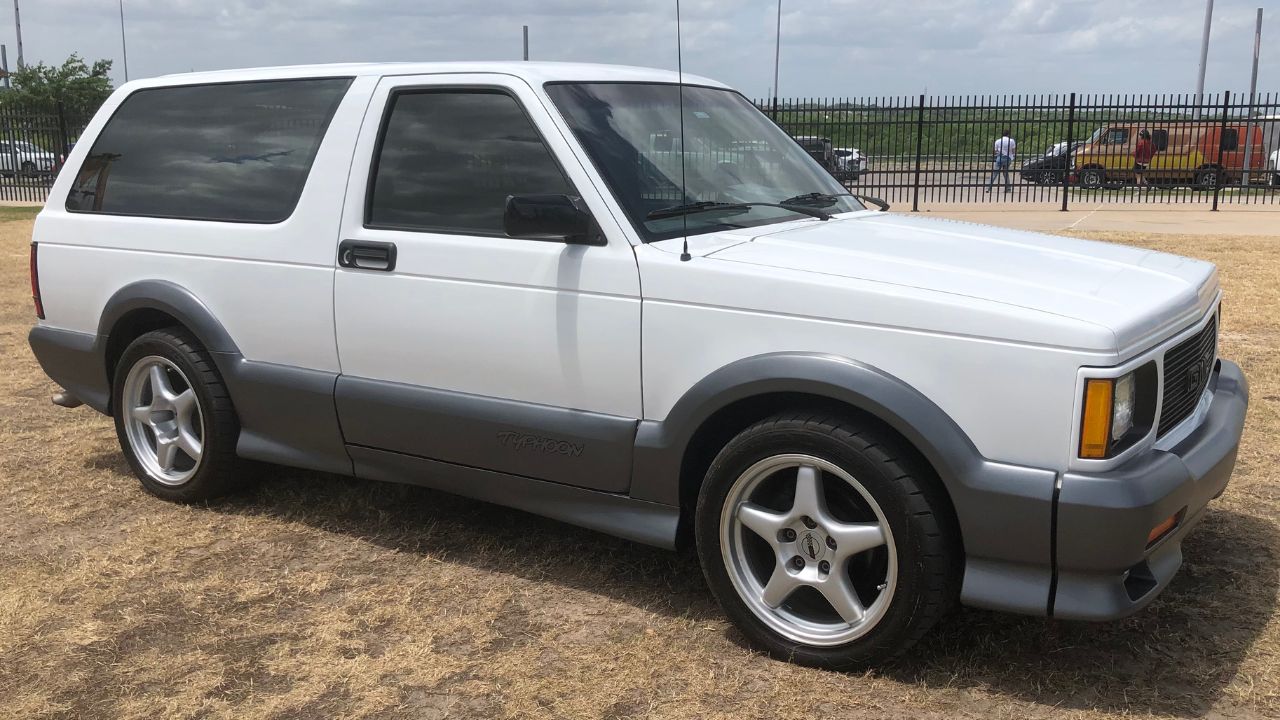
The result was the GMC Typhoon, a boxy, no-nonsense mid-size SUV that looked quite understated on the outside but was fast enough to leave the driver and passengers (including the dog in the cargo area) questioning their life choices. The Typhoon was based on the GMC Jimmy, the GMC counterpart to the Chevrolet S-10 Blazer on the S-10 and S-15 family platform, but it had a bunch of modifications that turned it into an unassuming left-lane menace that could outrun bona fide supercars without breaking a sweat.
It Was A GMC Jimmy On Steroids
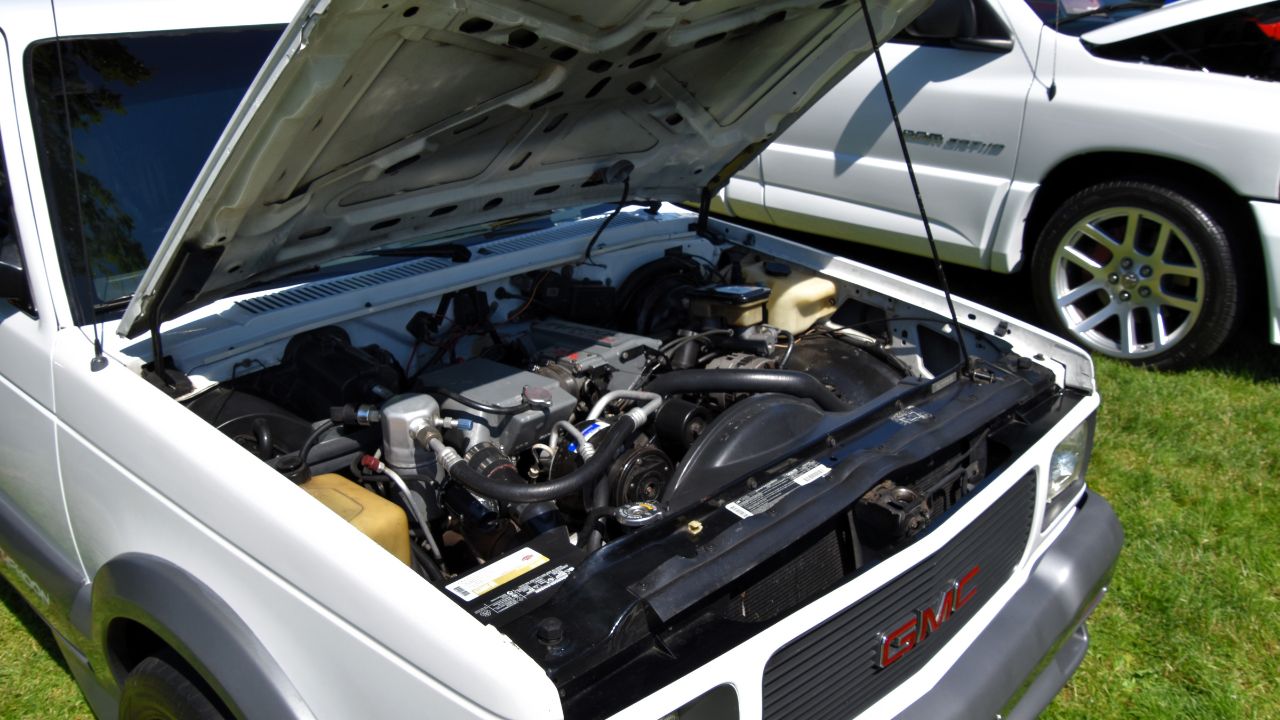
While engineers kept the Jimmy’s original 90-degree 4.3-liter V6 block, it was given the Frankenstein treatment, which turned it into a whole new beast. Engine mods included upgraded pistons and internals, revised intake and exhaust manifolds, port fuel injection, and a Mitsubishi TD06-17C turbo with a Garrett water-to-air intercooler, resulting in 280 hp and 350 lb-ft of torque, roughly 80 to 120 hp more than a standard 1992 Jimmy, depending on engine option.
To handle the power, the standard 4WD system was replaced by a BorgWarner 4472 transfer case, while a 4L60 four-speed automatic transmission handled shifting duties. GMC also made handling improvements using stiffer springs, recalibrated shock absorbers, larger anti-roll bars, a four-wheel ABS with upgraded rotors, and lightweight cast aluminum wheels wrapped in Goodyear Eagle performance tires.
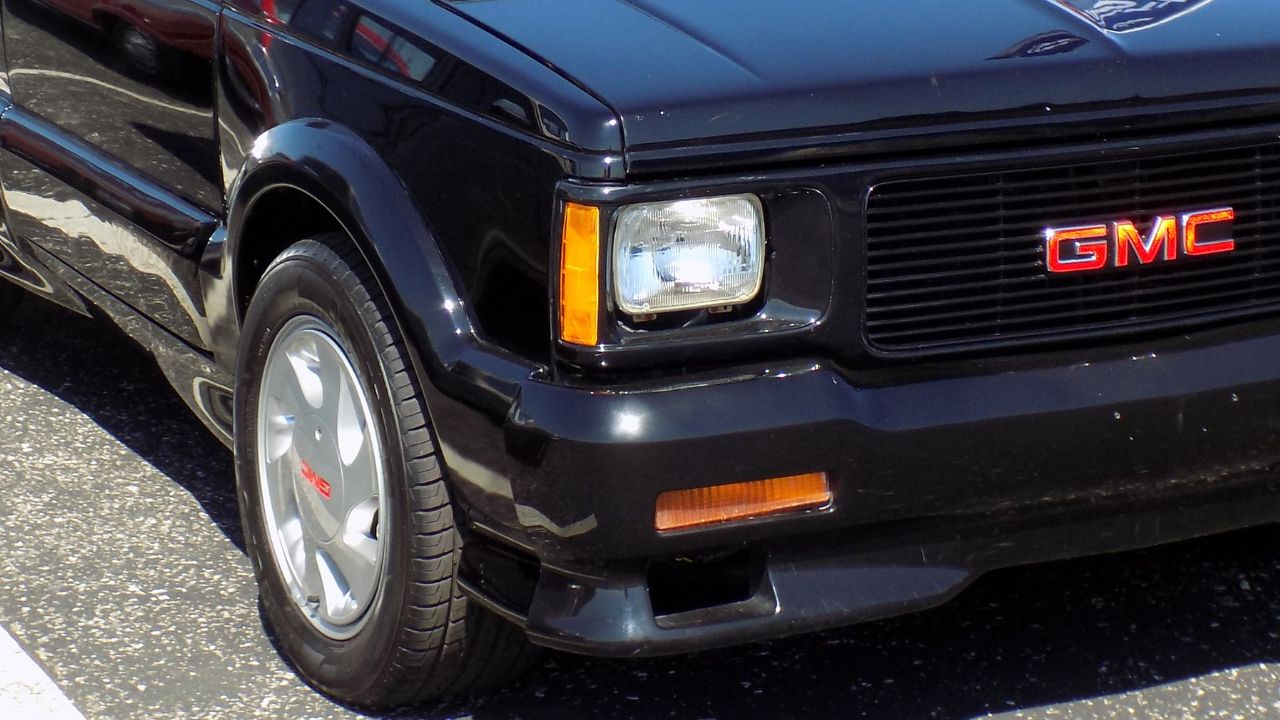
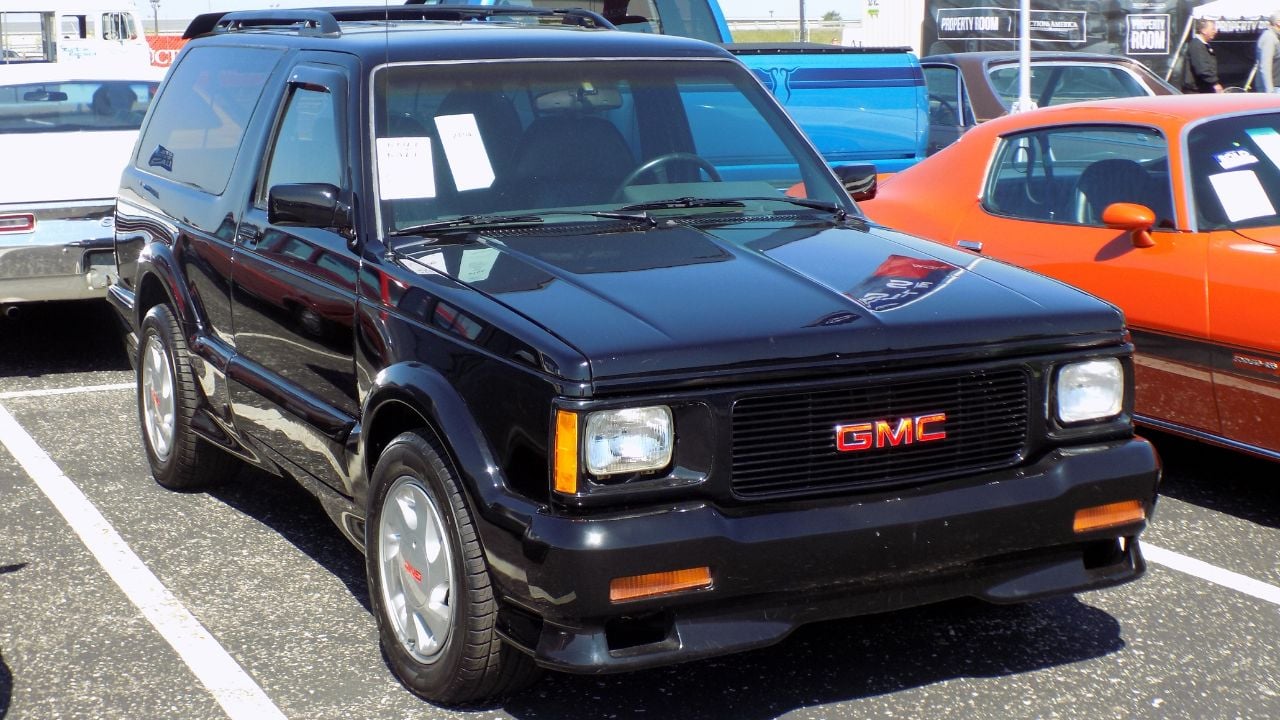
Looking at the Typhoon, one could tell that it had something up its sleeve. The body kit and beefy air dam with fog lamp bulges hinted at its performance intentions, while its lowered height gave it a hunkered-down appearance that emphasized its sports car killer performance. Still, since SUVs rarely offered such levels of performance from the factory at the time, it was still categorized as a sleeper. The spacious interior had leather-trimmed seats that gave passengers a comfortable hug every time it launched, and its air-operated self-leveling rear suspension ensured they enjoyed every bit of it. The Typhoon ran for two model years (1992 to 1993) and was built by Production Automotive Services (PAS) for GMC.
It Ate Ferraris for Breakfast
No, we’re not exaggerating. The Typhoon’s 0 to 60 mph time of 5.3 seconds was quick enough to run with plenty of early 1990s sports cars, and Car and Driver’s archive shows a Ferrari 348ts at 6.0 seconds to 60 mph in its testing. In a Car and Driver test, the GMC Typhoon recorded 0 to 60 mph in 5.3 seconds and ran the quarter mile in 14.1 seconds at 95 mph, and Car and Driver previously reported 0 to 60 mph in 6.0 seconds for a Ferrari 348ts, putting it in the realm of serious sports cars of the era.
However, it’s important to note that, while the Typhoon did have the Ferrari 348 beat in the straights, it was no match for it in the corners. It was still a relatively heavy body-on-frame truck, and even though it was lower than the standard Jimmy, its high center of gravity led to some rather dramatic (and sometimes scary) handling traits when the road got twisty.
It Pioneered the Performance SUV Space
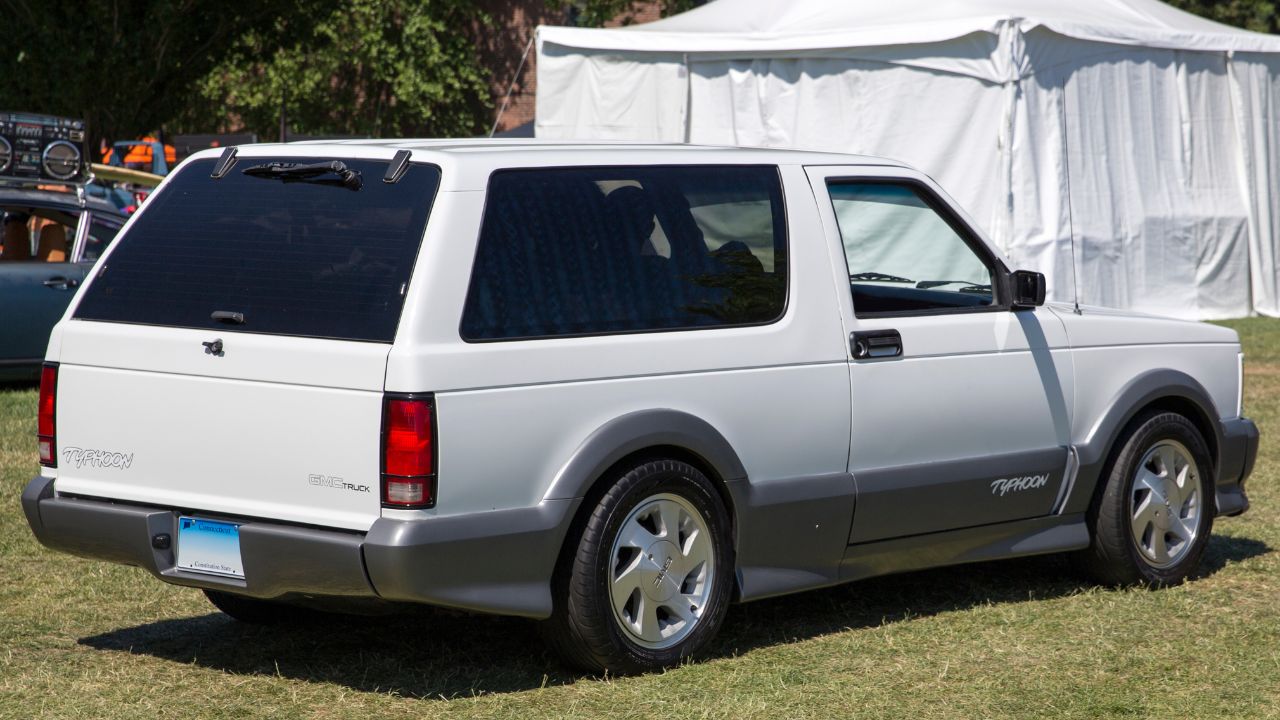
Over the last two decades or so, the popularity of SUVs has exploded across the globe, driven by the growing need for a one-car solution. SUVs offer everything—looks, practicality, off-road capability, safety, luxury, and, since the Typhoon debuted, they also offer performance. The performance SUV segment has gone from strength to strength since then, and now we have SUVs that claim 0 to 60 mph times as quick as 2.6 seconds, with top speeds that can exceed 180 mph depending on the model. And the best part? They do it without being considered to be deathtraps. It’s crazy!
Modern performance SUVs are equipped with enough power to put them within striking distance of supercars, and some of them handle corners with similar levels of finesse. Take the Audi RS Q8 performance, for example. This insane SUV lapped the Nürburgring Nordschleife in 7:36.698, which Audi and major outlets have described as the fastest production SUV lap time so far but also puts it ahead of several modern sports car icons. The Typhoon was the original blueprint; everyone’s just playing catch-up.
The GMC Typhoon Is an Underpriced Collectible
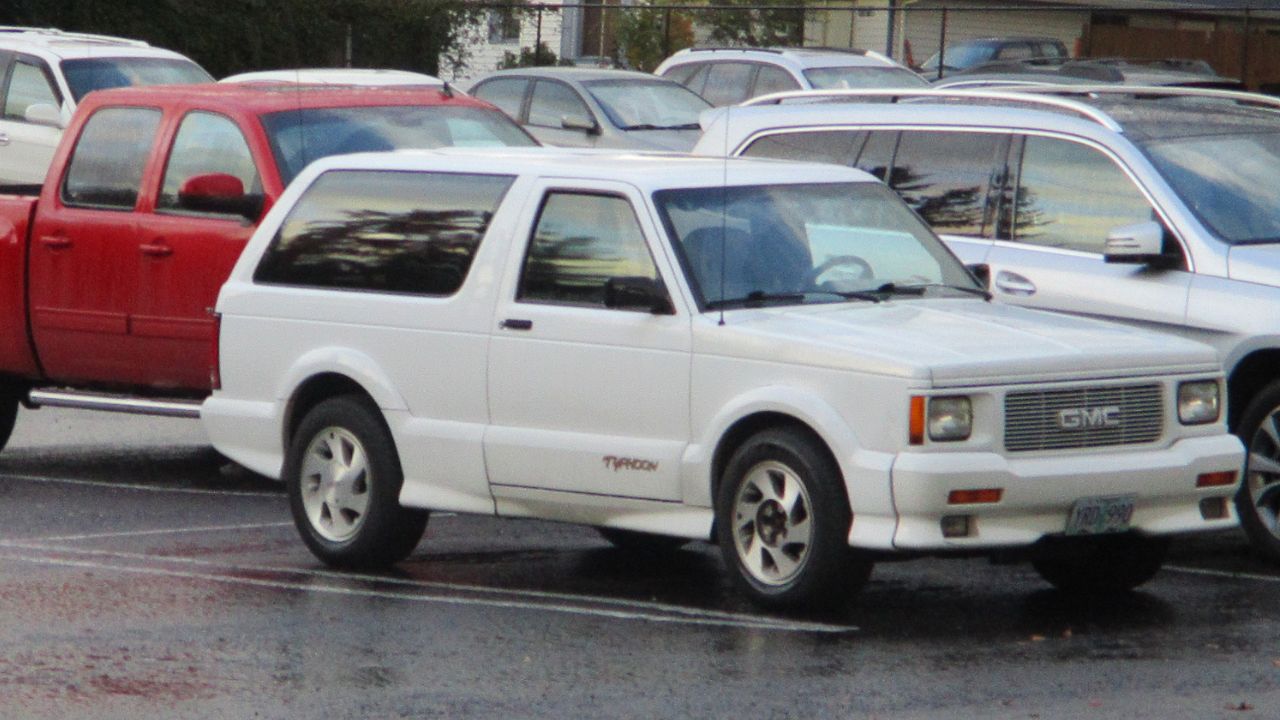
As the pioneer of the performance SUV space with enough power to run with some of the best sports cars of its era, the Typhoon already has an intriguing story that gets some collectors’ eyebrows raised. Add the fact that only 4,697 units were built, and you have a recipe for the kind of car that collectors typically fight over at auctions. However, that’s not the case for the Typhoon, as prices have remained relatively grounded.
The Typhoon originally cost around $30,000, which was a pretty penny in the early ’90s, especially considering it was priced like a specialty performance model rather than a typical compact SUV of the time. Typhoon prices vary widely by mileage and originality, with recent sales showing everything from the $20,000s into the $40,000s. Hagerty’s price guide shows $22,800 for a 1992 Typhoon in good condition, which is quite affordable for a vehicle with genuine collectibility. However, not all Typhoons will be attainable for mortals of meager means. Exceptionally low-mileage, highly original examples can surpass six figures, such as a 688-mile 1993 Typhoon that sold for $226,000 in March 2025 on Bring a Trailer.
The GMC Typhoon is not just a fast SUV; it’s a pioneer of an entire segment and a rolling reminder of a moment in automotive history when the meaning of “fast” changed forever. The Typhoon proved that performance-hungry buyers no longer had to sacrifice the space, practicality, and all-weather capability SUVs offer; they could have their cake and eat it.