Some of the most memorable stories in automotive history come from cars that looked perfectly at home in a grocery store parking lot, yet delivered surprising performance when called upon. These are the sleepers: the vehicles that mastered the art of hiding horsepower beneath practical design and understated interiors.
The appeal of a true sleeper goes beyond the element of surprise. It reflects an engineering philosophy that values substance over style and capability over appearance. These cars were built by teams who understood that speed and performance don’t always require bold styling or aggressive marketing.
Everyday Disguise, Extraordinary Soul

To build this list, we first had to define what makes a true sleeper. In our view, a sleeper car should look so ordinary that even a cautious driver would feel comfortable taking it to a weekend errand or a family gathering. Beneath that modest exterior, it should deliver performance that rivals far more aggressive-looking vehicles.
The best sleepers combine unexpectedly powerful engines with handling that matches their straight-line speed. Horsepower alone doesn’t guarantee performance. True capability means putting that power to the pavement with control and confidence. These cars were engineered with a focus on delivering real-world performance, not just impressive numbers on a dyno sheet.
Volvo 850 T-5R

Volvo surprised many by building a wagon that could rival sports cars in performance while still handling everyday family duties. The 850 T-5R was Volvo’s demonstration that safety and speed could coexist in a single, practical package.
Powered by a turbocharged 2.3-liter five-cylinder engine producing 240 horsepower and 221 lb-ft of torque, the T-5R delivered impressive acceleration for its time. It could reach 60 mph in just 6.9 seconds, comparable to a 1995 Porsche 911, all while maintaining the appearance of a traditional family vehicle.
Volvo drew from its touring car racing experience to tune the chassis, equipping the T-5R with sport suspension, larger anti-roll bars, and 17-inch wheels, which were notably large for the mid-’90s. The result was a vehicle that offered sharp handling without sacrificing ride comfort.
Inside, cream-colored leather seats and real wood trim emphasized the car’s premium feel. The T-5R proved that drivers didn’t have to choose between practicality and performance. They could enjoy both in one refined, understated package.
Chrysler 300C SRT8

The 300C SRT8 was Chrysler’s bold take on blending luxury with high performance. It paired the brand’s most refined sedan design with a formidable 6.1-liter HEMI V8 engine, producing 425 horsepower and 420 lb-ft of torque. This powertrain enabled 0 to 60 mph times of 4.9 seconds and quarter-mile runs in the high 13-second range. These figures placed it among serious performance contenders.
Beyond straight-line speed, the SRT8 featured a sport-tuned suspension, Brembo four-piston front brakes, and 20-inch wheels fitted with summer performance tires. These upgrades allowed the sedan to handle its power with confidence, offering both agility and stability.
Inside, the 300C retained its upscale ambiance with leather-appointed seating and wood trim. It also added SRT-specific elements like sport seats and a 180-mph speedometer to emphasize its performance credentials. The 300C SRT8 demonstrated that American luxury could deliver both comfort and capability in equal measure.
Mercury Marauder

The Mercury Marauder was Ford’s final entry in the full-size performance sedan segment, produced for just two model years from 2003 to 2004. It offered a bold blend of classic American power and everyday practicality, appealing to drivers who valued both comfort and capability.
At its core was a naturally aspirated 4.6-liter V8 borrowed from the Mustang Mach 1, delivering 302 horsepower and 318 lb-ft of torque. While modest by today’s standards, these figures allowed the Marauder to reach 60 mph in 7.5 seconds, which was notable for a sedan weighing over 4,000 pounds.
The Marauder stood out for its driving dynamics. Rear-wheel drive, a limited-slip differential, and sport-tuned suspension gave it a performance character that set it apart from typical full-size sedans. It offered responsive handling and a spirited driving experience that appealed to enthusiasts.
With only 11,052 units produced, the Marauder quickly became a collectible among fans of its old-school approach to performance. It marked the end of an era when automakers paired powerful engines with spacious, family-friendly designs.
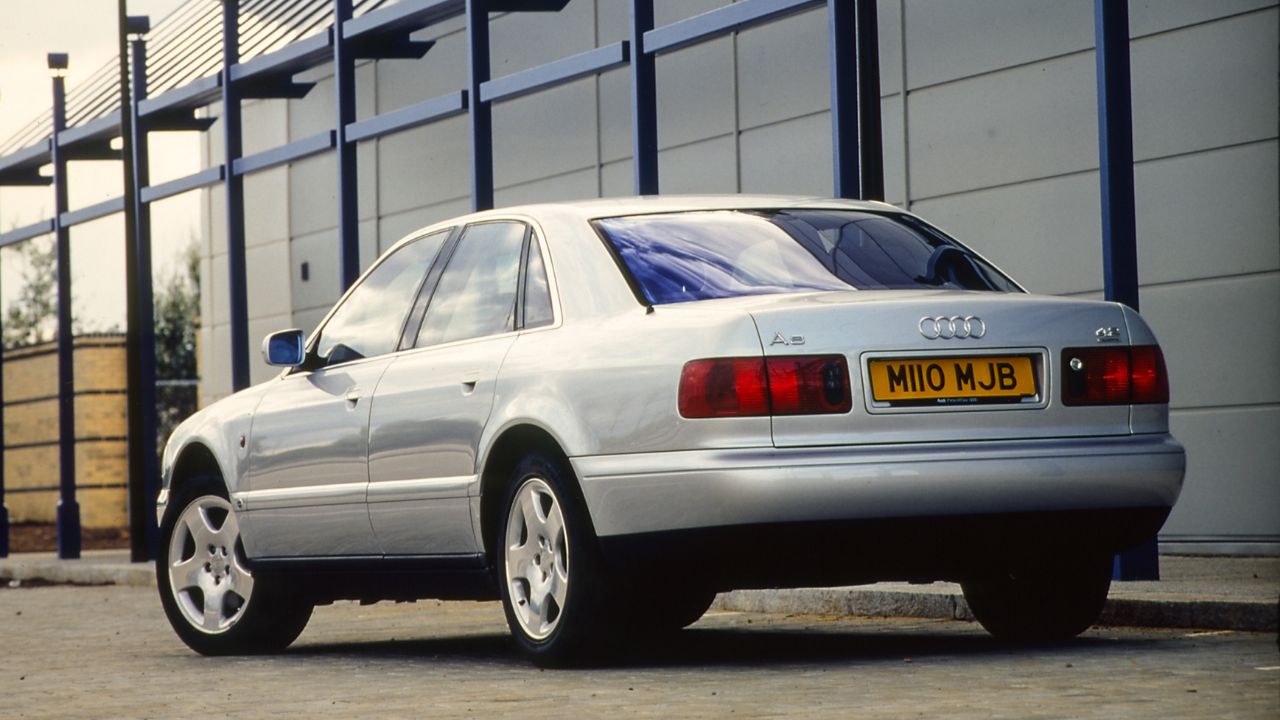
Audi S8

The first-generation Audi S8 was a showcase of German engineering at its most ambitious. Designed to deliver high performance in a refined package, it could cruise the autobahn at 155 mph while passengers enjoyed massaging seats and a premium sound system.
Beneath its aluminum hood was a hand-built 4.2-liter V8 producing 340 horsepower and 302 lb-ft of torque. Paired with Audi’s Quattro all-wheel-drive system, the S8 could accelerate from 0 to 60 mph in just 5.6 seconds. That was impressive for a sedan weighing over 4,200 pounds.
The S8 delivered this performance with remarkable composure. Quattro provided excellent traction in all weather conditions, and the adaptive suspension allowed the car to shift from comfortable cruiser to responsive performance vehicle with ease. Inside, the cabin featured high-quality materials and thoughtful design, reinforcing its luxury credentials.
Perhaps most notably, the S8 combined performance, comfort, and reliability in a way that made it a practical daily driver. It proved that precision engineering could coexist with long-term usability and understated style.
Saab 900 Turbo

The Saab 900 Turbo was an understated design that revealed impressive engineering. While other manufacturers were still refining fuel injection, Saab was advancing turbocharging technology and producing cars that could rival the performance of more expensive competitors.
The original 900 Turbo featured a 2.0-liter turbocharged four-cylinder engine that produced between 145 and 175 horsepower, depending on the model year. These figures may seem modest today, but in the early 1980s, they placed the 900 Turbo among the quickest vehicles on the road. The turbocharged power delivery was distinctive, offering a noticeable surge that defined the driving experience.
Saab’s engineers demonstrated that front-wheel drive could deliver confident handling. The 900’s chassis was well-tuned, providing grip and stability that exceeded expectations for a car of its layout and size.
Inside, the 900 Turbo featured an aircraft-inspired cockpit with design elements such as a center-mounted ignition key and a driver-focused dashboard layout. Every control was positioned with purpose, reflecting Saab’s roots in aviation. The result was a cabin that felt innovative, purposeful, and uniquely Saab.
Lexus IS300

When Lexus set out to compete with BMW and Mercedes in the compact luxury segment, they approached the challenge with serious intent. The IS300 debuted in 2001 with a 3.0-liter inline-six engine that shared its architecture with the renowned 2JZ powerplant from the Toyota Supra. The result was a sedan with a refined exterior and performance that exceeded expectations.
The 2JZ-GE engine produced 215 horsepower and 218 lb-ft of torque, enabling the IS300 to reach 60 mph in 7.2 seconds. Its robust design also made it a favorite among enthusiasts for aftermarket tuning, with many examples modified into track-capable builds while retaining their understated styling.
The IS300’s rear-wheel-drive layout was a key advantage at a time when some competitors were shifting toward front-wheel drive. Combined with near-perfect weight distribution and a sport-tuned suspension, the car delivered handling that was both responsive and composed.
Inside, Lexus upheld its reputation for craftsmanship and attention to detail. The IS300 featured high-quality materials and thoughtful design, offering a premium experience that rivaled more expensive vehicles. It was a compact luxury sedan that blended refinement with genuine performance capability.
Hidden Power, Endless Fascination

What made these cars special was not just their performance. Plenty of vehicles are fast. What set them apart was their ability to deliver impressive capability without drawing attention. These were cars that offered understated confidence and a sense of exclusivity to those who understood their true potential.
The best sleepers also provided genuine versatility. They could serve as practical family transportation during the week and deliver spirited driving experiences on the weekend. This dual-purpose nature made them more usable than dedicated sports cars, which often remained parked due to limited practicality.
Many of these vehicles were created during a time when manufacturers were willing to experiment with unconventional combinations. The concept of pairing high-performance engines with understated designs feels increasingly rare today, as modern performance cars often feature bold styling and prominent exhaust notes.
Today’s automotive landscape is different. Modern performance vehicles are faster, more efficient, and more technologically advanced than ever. However, they have also become more refined and standardized. The raw character and individuality of classic sleepers have largely given way to precision engineering and advanced driver assistance systems.
That is what makes these cars so memorable. They reflect a time when automotive design prioritized driving enjoyment and innovation. They remind us that true performance can come in subtle, unexpected forms.
For those fortunate enough to own one of these vehicles, the experience remains rewarding. There is something uniquely satisfying about driving a car that blends everyday practicality with hidden capability. It is a reminder that performance does not always need to be loud to be felt.