
There have been countless dream builds and wild engine swaps in garages around the world. But sometimes the greatest automotive what‑ifs do not come from backyard hot-rodders. Sometimes they happen inside the very companies that built the cars we love.
That was the case years ago at Mazda when a group of engineers quietly built a V6‑powered Mazda Miata.
Today the Mazda MX‑5 is the best‑selling two seat roadster in history. It has always been defined by simplicity, by balance, and by joy behind the wheel. Its light weight and nimble handling have given it a page in every enthusiast’s heart.
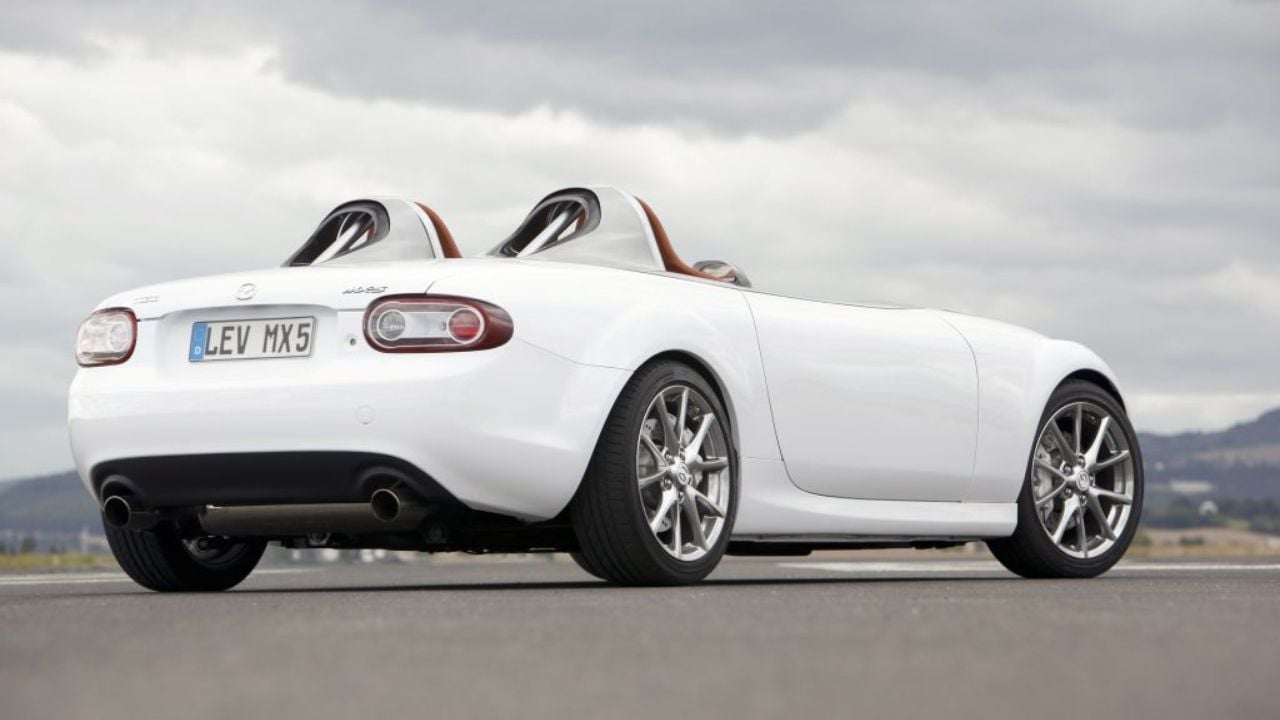
Over the generations some drivers have wanted more power. They have bolted on turbochargers, swapped in larger four-cylinder motors, and even experimented with rotary engines. But one of the most intriguing experiments was never meant to be public knowledge.
A Passion Project Hidden from Leadership
During an interview, Mazda Europe’s Research & Operations Director Christian Schultze revealed that a handful of engineers in the Japanese automaker’s development ranks took it upon themselves to explore what would happen if the little convertible got a completely different heart.
Instead of its usual four-cylinder engine, they wanted to see how a V6 would fit and behave in the tight confines of the Miata’s engine bay. The project was never sanctioned by Mazda’s senior leadership. It began as a passion project. It was engineering for the pure love of it.
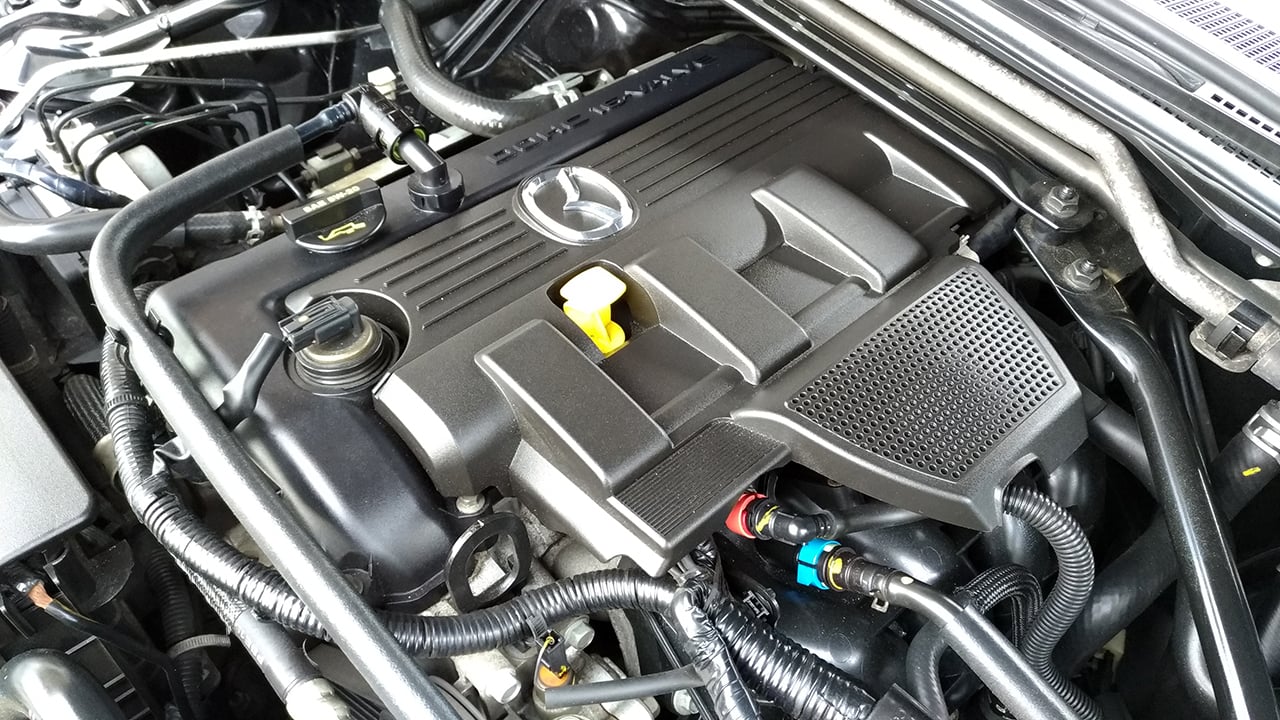
The team reportedly chose a Mazda 2.5-liter V6 from the company’s K‑series engine family. That powerplant had been used in larger Mazda vehicles in the 1990s and early 2000s. It was unnatural to stuff it inside a tiny roadster like the Miata.
For one thing, the V6 was physically larger and taller than the stock four-cylinder. This required creative thinking on the shop floor.
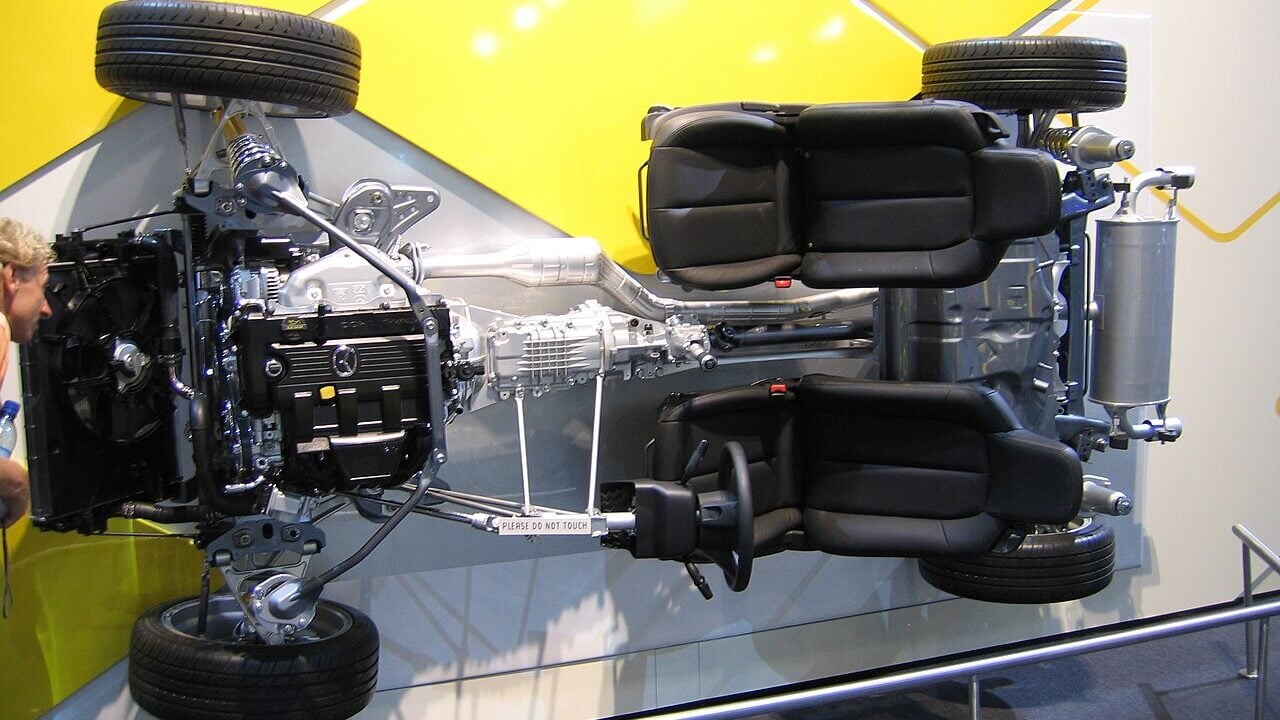
The engineers had to modify engine mounts and work out ways to fit the longer intake and exhaust components without fouling the chassis. They even had to experiment with hood designs to make room for the engine’s bulk.
More Power, But at What Cost?
Sensational is the first impression by this idea. A broad torque band and a smooth, six-cylinder growl could transform the Miata’s personality. This fact matters because this revelation came as the director discussed the next Miata iteration, and the fitting heart it would need in the era of electrification.
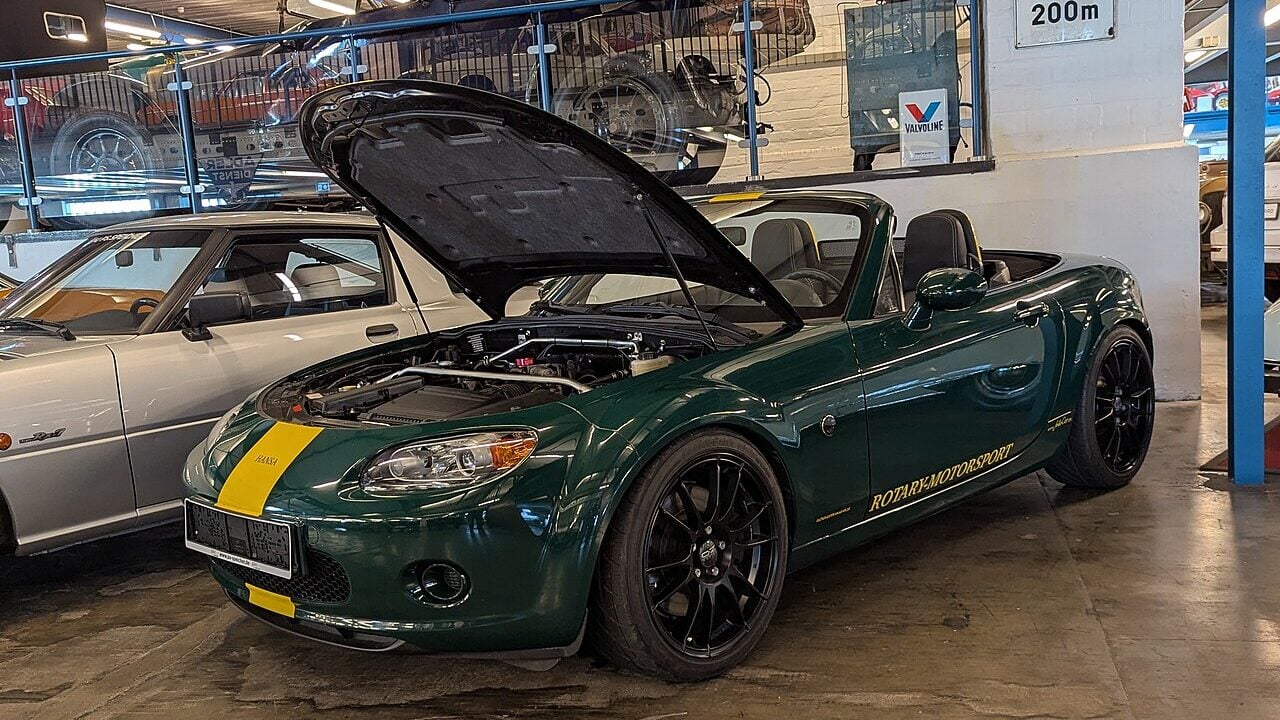
The project team managed to get the engine installed and connected to the transmission with custom adapters. They ran the prototype car on test roads. Reports from inside Mazda suggest that driving it was an eye opener. The V6 gave strong acceleration, and it felt eager to rev.
It was a reminder of how different an engine can make a car feel.
However, the deeper the engineers dug into the project the more they realized that power was just one piece of a much larger puzzle. The V6 weighed significantly more than the original four cylinder. That extra weight was concentrated up front.
Mazda’s designers had always fought hard to keep the MX‑5’s front to rear balance near perfect. In fact, Schultze had remarked during the interview that a Miata isn’t a Miata without all three of its core ingredients — fun, lightweight and affordable.
That balance was part of what made the Miata so fun and predictable in the corners. With the heavier engine up front, the car’s handling characteristics changed in ways that some test drivers described as “less pure.” They still enjoyed the power but missed the razor-sharp agility they were used to.
Why It Never Reached Production

There were also practical complications. The tall engine required changes to the hood profile that would have impacted aerodynamics and aesthetics.
The production tooling costs to make room for the V6 in a street version would have been astronomical. At a time when Mazda was trying to keep the MX‑5 affordable worldwide, such a shift would have conflicted with the brand’s strategic goals.
Schultze, who later became Mazda’s Director of Research and Development in Europe, described the V6 Miata project as “definitely interesting” and a testament to the creative spirit of engineers.
But he also made it clear that the team’s fun side project was never going to become a production model. Too many compromises were involved. Too many costs and too many alterations to the very character that made the MX‑5 legendary.
A Secret Footnote in Mazda History
That V6 Miata remains a secret footnote in Mazda history. It never saw public unveiling. It never graced a racetrack or showroom floor. Yet the story lives on among enthusiasts as a reminder that sometimes the best ideas are born when engineers let their curiosity lead the way.
It also reminds the world why Mazda’s commitment to light weight and balance has mattered more than big horsepower in the long term. The Miata we know and love today exists because every part of it was chosen with intention, even when the siren call of more power was strong.