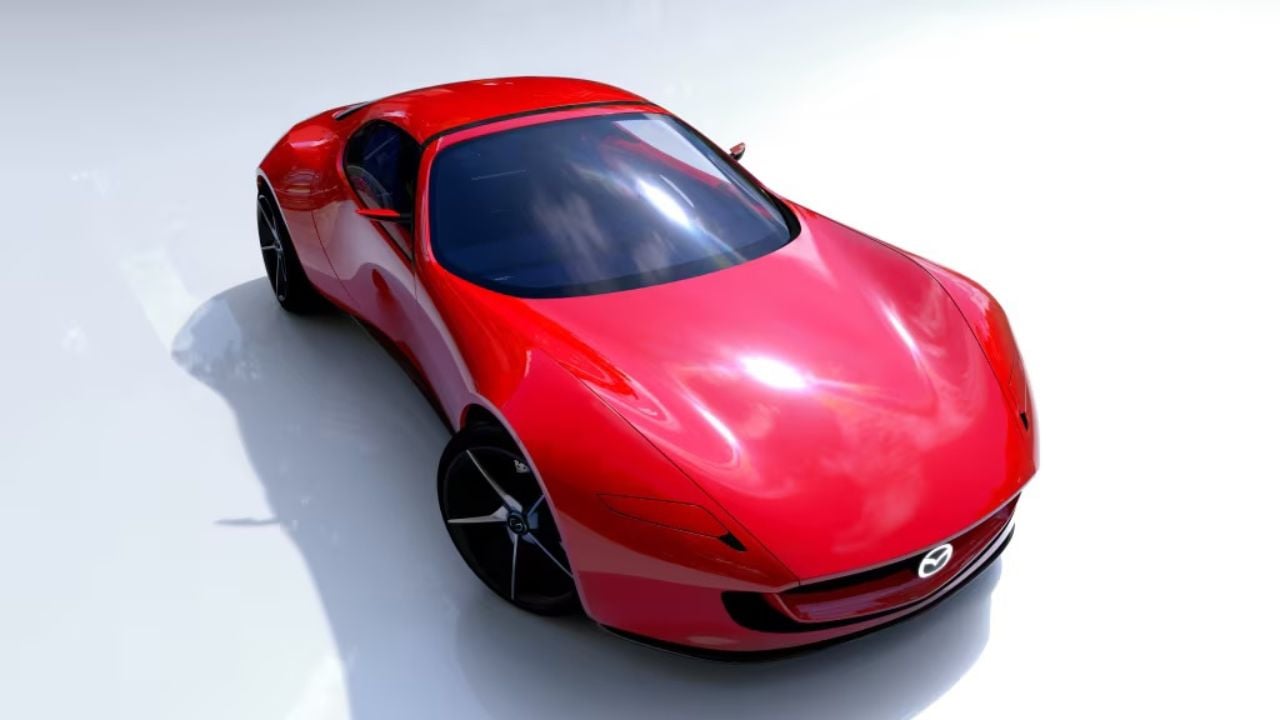
There are three certainties in life: death, taxes, and Mazda’s obsession with the rotary engine. No matter how market trends change, how regulations tighten, or how quickly electrification advances, the company from Hiroshima never seems to let go of the idea of bringing back the legendary RX badge.
While the rotary-powered range extender in the Mazda MX-30 failed to generate strong demand, the dream of a true sports car powered by a Wankel engine clearly remains alive within the company.
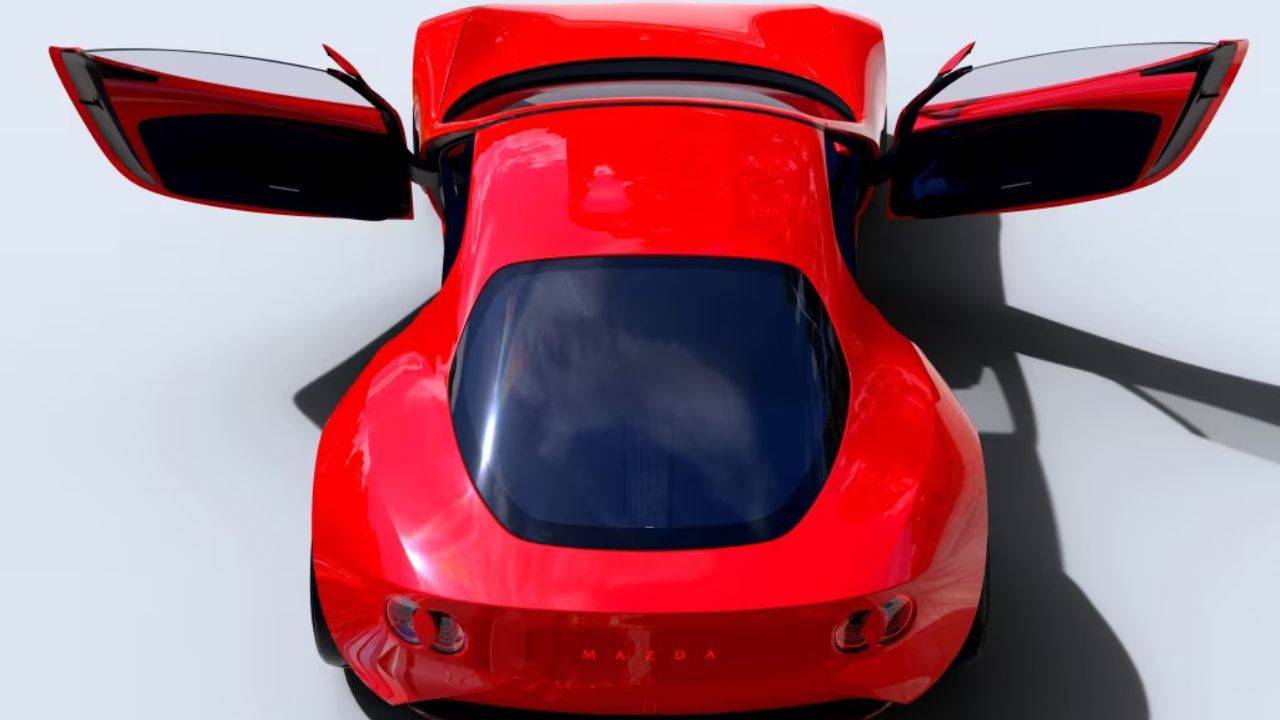
When Mazda unveiled the Iconic SP concept in October 2023, many enthusiasts interpreted it as a clear preview of a future successor to the famous RX-7 and RX-8.
The concept’s low stance, clean surfaces, and classic sports car proportions triggered exactly the kind of emotional reaction Mazda has built its reputation on. However, despite strong public enthusiasm, the project has not yet received official approval for production.
Enthusiasm Exists, But Reality Is Financial
In an interview with British outlet Auto Express, Moritz Oswald, who oversees product planning for Mazda’s European division, confirmed that there is strong internal support for reviving the RX philosophy. According to him, the number of genuine car enthusiasts inside Mazda is “incredible,” and the desire to offer an emotional, driver-focused sports car has never disappeared.
Still, passion alone is not enough. The final decision comes down to financial viability. Mazda remains a relatively small global automaker compared with industry giants, which means every large investment must be carefully justified. Developing a low-volume performance coupe with a specialized powertrain is expensive, and the return on investment is never guaranteed.
A More Traditional Rotary Experience
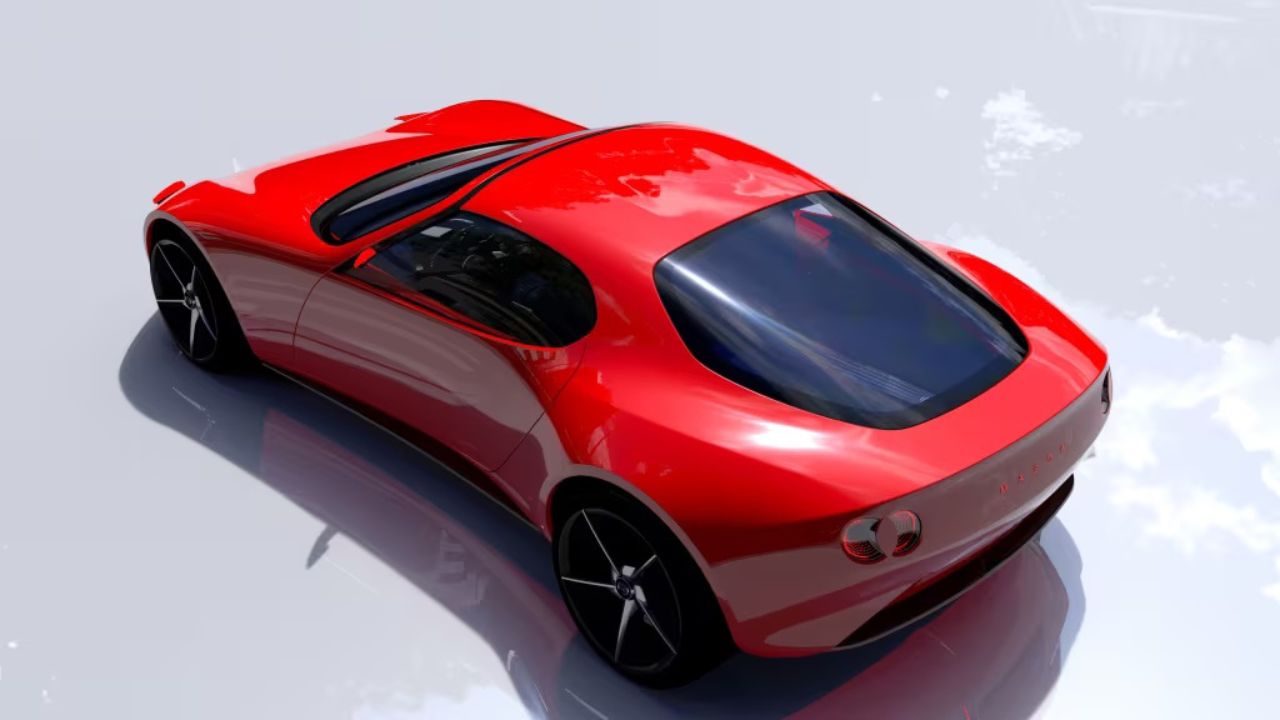
If a new RX model does move forward, it would likely differ significantly from both the Iconic SP concept and the MX-30 R-EV crossover. In those vehicles, the rotary engine functions as a generator that charges a battery while electric motors drive the wheels.
For a true RX revival, Mazda is reportedly exploring a more traditional setup, one in which the rotary engine sends power directly to the rear wheels. That approach would preserve the mechanical feel and driver engagement that made previous RX models so distinctive. In other words, Mazda wants the car to feel authentic rather than simply using the rotary engine as a technical novelty.
Concepts such as the Vision X Coupe have already hinted at this direction, showcasing plug-in hybrid systems combined with dual rotary engines. Mazda insists these concept vehicles are not just design exercises but genuine indicators of how the company is thinking about future performance models. Market reaction and enthusiast feedback are being studied closely to determine whether real demand exists.
The Rotary Dream Versus Business Reality
Mazda’s chief technology officer, Ryuichi Umeshita, recently summed up the situation clearly. The biggest unanswered question is whether the project can make financial sense. Because Mazda operates with far fewer resources than larger competitors, expensive mistakes can have serious consequences.
That is one reason the company continues to move cautiously. Even if the project eventually receives approval, a production sports coupe powered by a rotary engine is unlikely to arrive before the end of the decade.
The MX-5 Remains Safe

Importantly for enthusiasts, a future RX model would not replace the Mazda MX-5 Miata. The Miata remains the foundation of Mazda’s sports car identity and will continue independently of any larger, more expensive rotary coupe.
The current generation has already enjoyed a long life cycle, and a fifth generation is expected in the coming years. Early indications suggest Mazda intends to keep the core formula intact: rear-wheel drive, a manual transmission, low weight, and a naturally aspirated engine, possibly with slightly greater displacement but without turbocharging.
A Dream That Refuses To Fade
Realistically, Mazda cannot afford to develop two niche enthusiast cars at the same time without strong confidence in market success. That reality explains the cautious pace. Still, the fact that the company continues to actively develop rotary technology and openly discusses a future RX model is significant.
In the automotive world, some ideas take years to become reality. Mazda has repeatedly shown a willingness to take risks for the sake of driver emotion rather than pure market logic. For now, the rotary-powered sports coupe remains a dream, but it is one that refuses to disappear.
This article originally appeared on Autorepublika.com and has been republished with permission by Guessing Headlights. AI-assisted translation was used, followed by human editing and review.