
The automotive world has always been a playground for big ideas. Some of them, such as fuel injection, disc brakes, and all-wheel drive, changed everything. Others looked great in a press release and felt a little less convincing in real life.
Not every questionable idea turns into a full-blown disaster. Some quietly fade away. Others hang around longer than expected. And a few are happening right now, whether drivers asked for them or not.
These aren’t catastrophic failures. They’re the trends that make you pause. The ones that look clever, maybe even futuristic, but leave you wondering if they actually make driving better.
Let’s take a look at a few car trends we’re still not completely sold on.
Disappearing/Hidden Door Handles
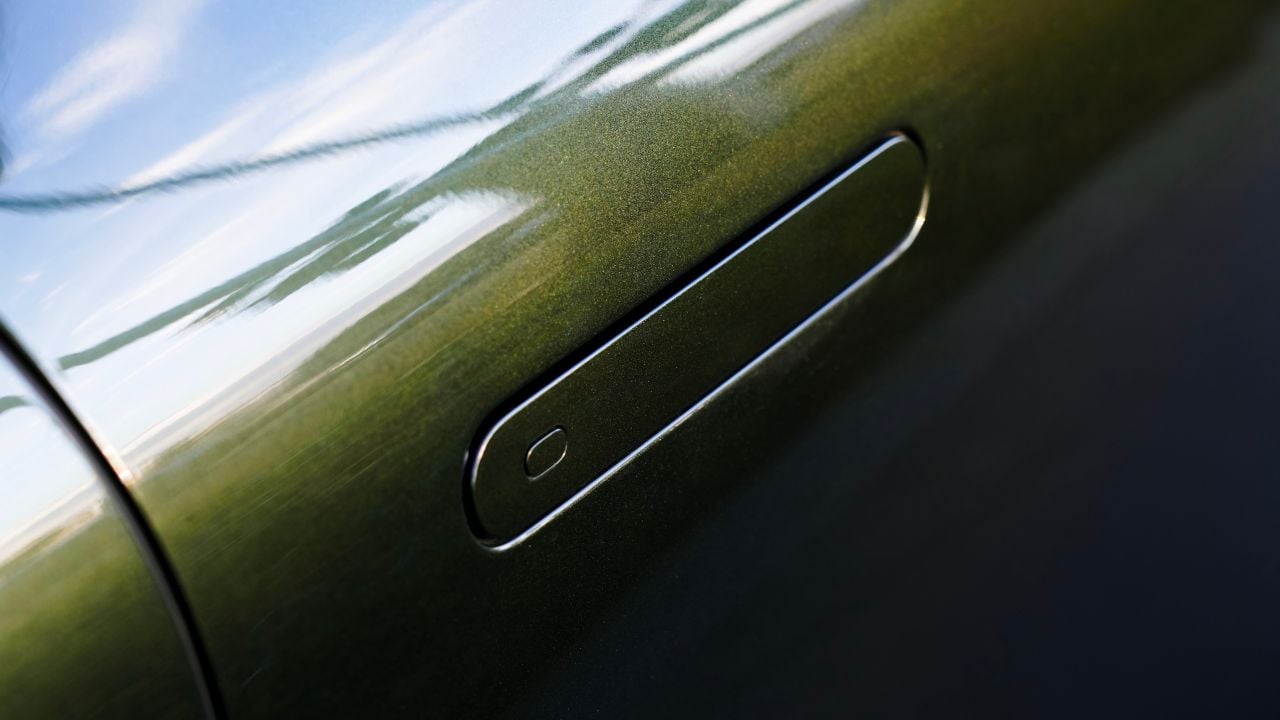
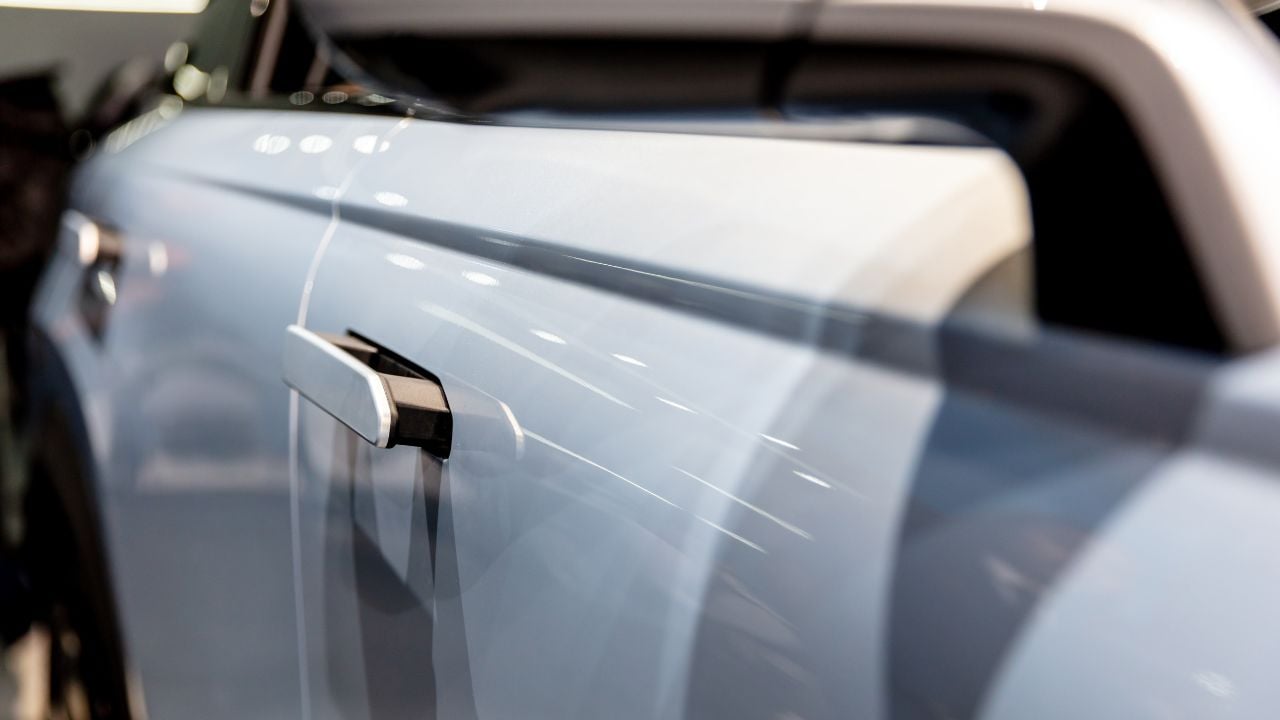
For a stretch there, automakers became convinced that flush door handles were the future.
The idea looked undeniably sleek in renderings, a smooth, uninterrupted door panel with no visible hardware whatsoever. But the real-world experience told a different story. Owners found themselves pawing at the door panel in a parking lot like they’d forgotten where they left something. Cold weather could freeze the mechanisms, leaving drivers standing outside in January, wondering what exactly they’d signed up for.
It is already facing pushback in at least one major market. China has announced a safety standard that will ban fully hidden, power-operated door handles from 2027 and require mechanical door releases that work even during a power failure. A conventional door handle is one of those things you never think about until it’s been cleverly engineered away from you, and then you think about it constantly.
Analog Gauges Replaced Entirely by Screens
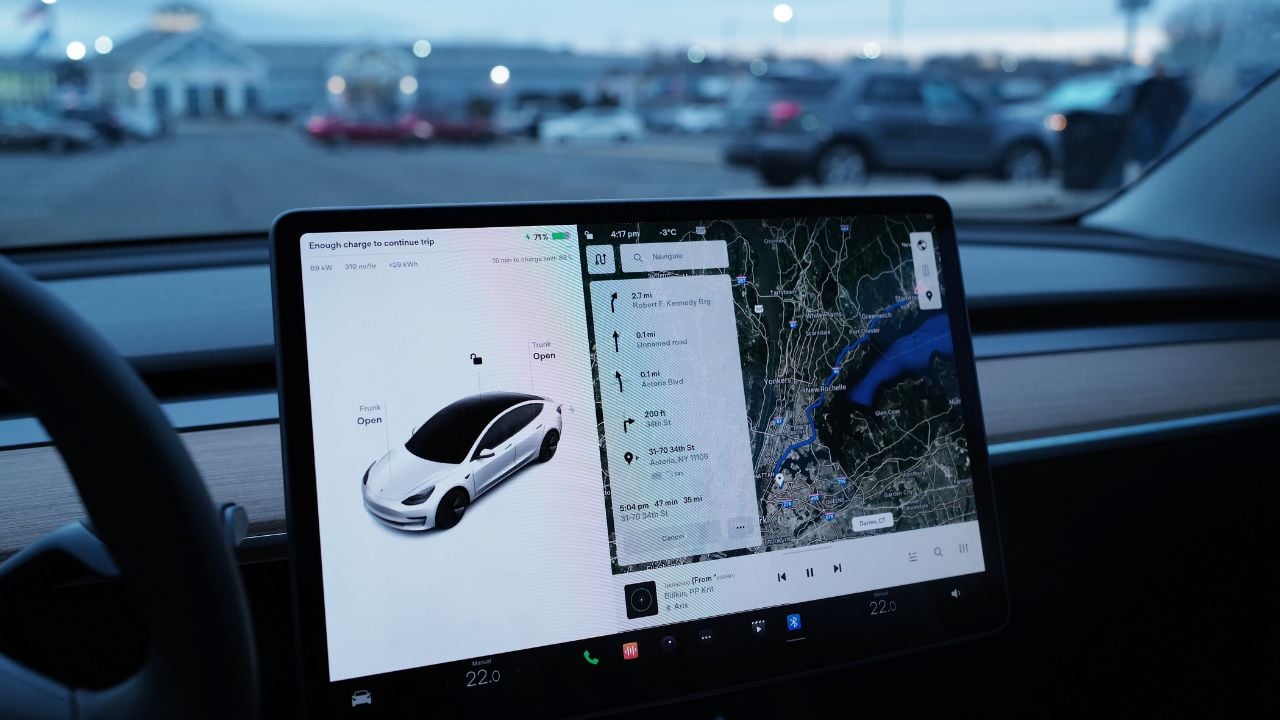
Digital dashboards have their merits; nobody’s arguing against progress here.
But the phase where some manufacturers decided to eliminate every physical gauge in favor of a single large touchscreen for everything, including your speedometer, raised some eyebrows among drivers who actually enjoy driving. There’s a reason pilots still have analog backups in the cockpit. A physical gauge gives you information with a glance; a touchscreen requires you to look at it, process a menu, and sometimes squint.
The industry has largely found a better balance now, but those early all-screen cabins felt less like the future and more like an experiment conducted at the driver’s expense.
The Polestar 4’s Lack of a Rear Window
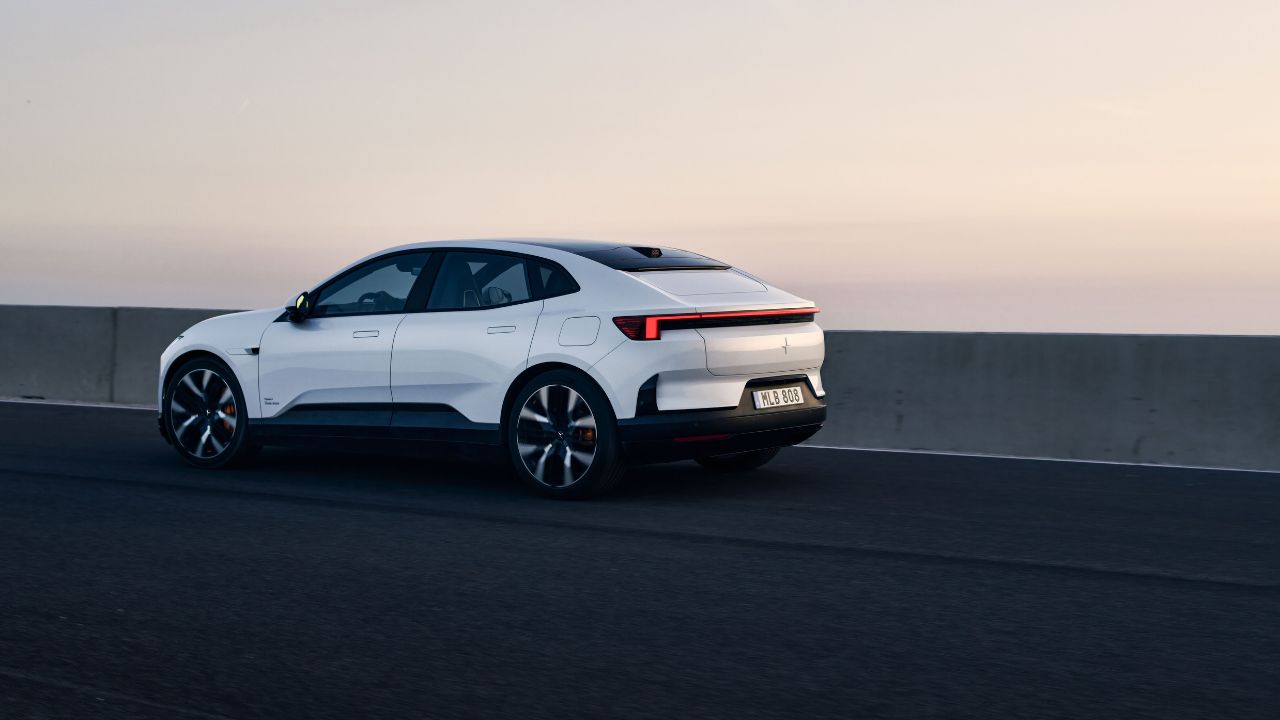
This one’s fresh enough that the ink is barely dry, but it’s worth including because it represents a certain kind of thinking that tends not to age well.
The Polestar 4 launched without a traditional rear window, instead relying on a rear-facing camera and interior display to show drivers what’s behind them. The technology works; technically, the camera is wide-angle, and the display is clear. But there’s a meaningful difference between a system that functions and one that drivers actually trust and prefer. Replacing a passive, always-on, always-reliable pane of glass with a powered system that can malfunction, glare, or simply feel disorienting isn’t obviously progress.
It’s an interesting design choice, though the enthusiasm for it outside of design studios appeared to be limited. Polestar has said it will reveal a new Polestar 4 variant later in 2026 that adds a real rear window, rather than relying solely on the camera and interior display.
Fake Engine Noise Piped into the Cabin

Automakers had a genuine challenge on their hands: modern engines are so well-insulated and efficient that they’re nearly silent, and some buyers found that disconcerting or unsatisfying.
The solution several brands landed on was piping synthesized or amplified engine noise through the car’s speakers to simulate a sportier sound profile. The intent was understandable. The execution, once you knew what was happening, felt a bit like finding out your favorite restaurant was microwaving something. Real exhaust notes are beloved because they’re a byproduct of mechanical events at high speed; the acoustic experience is authentic.
Simulated noise is just sound design, and enthusiast buyers knew the difference immediately.
Landau Roofs and Vinyl Tops

If you want to understand what the 1970s were doing to cars, the landau roof is a reasonable place to start.
This was a vinyl or fabric covering applied to the rear portion of a hardtop’s roof to simulate the look of a convertible with its top partially raised, a look that was never quite convincing and grew less convincing over the years. Some versions came with decorative metal “landau bars” for additional effect. It was a styling trend that arrived with great enthusiasm and departed quietly sometime in the mid-1980s, leaving behind a generation of used cars with peeling vinyl and trapped moisture.
Every era has its flourishes, and this one is safely behind us.
Digital Speedometers from the 1980s
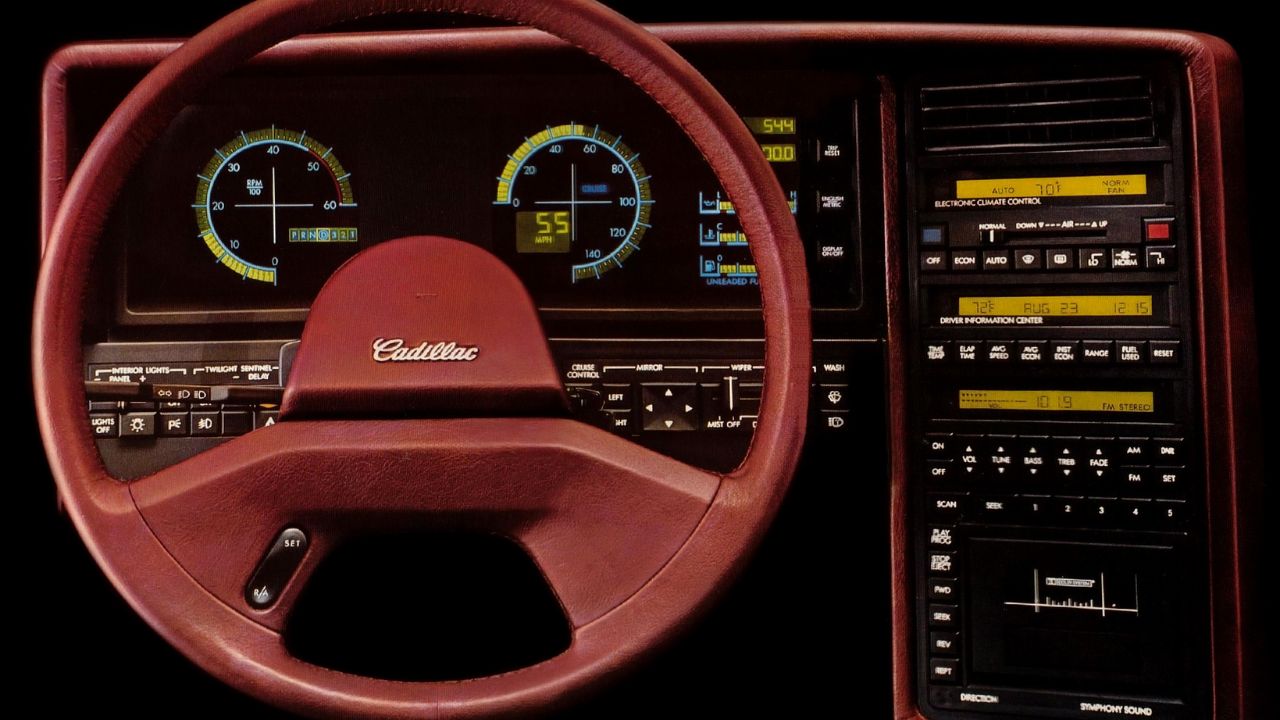
This is one that gets our writers’ room going every time.
Some of our staffers love the full 1980s vibe. The glowing digital dashboards. The sharp, blocky numbers. The whole retro-futuristic aesthetic. They remember those early digital gauges fondly and think they’re cool in a very specific, period-correct way.
Others think the look aged about as well as a beige CRT monitor.
In the 1980s, digital experimentation was everywhere, and for a while, a numeric speed read-out felt like the future. Some manufacturers went all-in, ditching analog needles entirely for LED or vacuum fluorescent displays that showed your speed as a changing number.
It looked space-age at the time. The issue is that you have to read a number. An analog needle, by contrast, just tells you where you are at a glance. Your brain processes position faster than it processes digits.
By the 1990s, most brands drifted back toward analog layouts, and today’s digital clusters are far more refined. Still, those early numeric-only dashboards remain divisive.
To each their own. I’m just not completely sold on them.
Conclusion
These are trends we’re not completely sold on. In certain situations, they might make sense. Some drivers may even prefer them. And who knows, maybe one day we’ll look back on hidden door handles or camera-only rear views with the same nostalgia people now have for digital dashboards from the 1980s.
But right now, they feel like ideas that prioritize novelty over simplicity.
The best automotive innovations are the ones you stop noticing because they just work. They make driving easier, safer, or more enjoyable without asking you to change how you interact with your car. That’s a high bar. Not every trend clears it.
Some of these may stick. Some may quietly fade away. For now, we’re just not completely sold.