

The Canadian government’s recent move to allow Chinese-made electric vehicles (EVs) into its market drew backlash from several quarters, and it seems even North American automakers has sided with the protectionists camp. They warn their government’s decision could jeopardize broader trade negotiations with the United States.
Brian Kingston, CEO of the Canadian Vehicle Manufacturers’ Association, told policymakers that opening the country to Chinese automobiles complicates discussions that already carry high stakes for the region’s auto industry.
Interestingly, Kingston’s group represents General Motors, Ford, and Stellantis, all of which operate manufacturing plants in Canada that supply vehicles to the U.S. market. That makes their lobbying essentially an indirect demand from Detroit for Ottawa to break with China.

The irony is that these same companies have been scaling back their Canadian footprint. Stellantis recently announced it was moving Jeep production out of Brampton, Ontario, while GM cut back operations and faces demands to repay hundreds of millions in federal subsidies.
Ottawa even retaliated by slashing the number of tariffs‑free vehicles GM and Stellantis can import, punishing them for abandoning local jobs. Ford has also warned that future investment in Canada could shrink.
So, Kingston’s warning arguably isn’t Canada’s auto industry speaking — it’s U.S. automakers who are already retreating from Canada, asking Ottawa to hold the line against Beijing while they themselves backpedal on, albeit Trump-forced, commitments north of the border.
Canada’s Strategic Pivot from Washington to Beijing
Canada’s about-turn on its China tariff policy marks a significant change in strategy. Until now, the country maintained strict tariffs on Chinese EVs that effectively prevented their entry into the domestic market.

Trump’s aggressive trade war tactics — especially his blanket tariffs on Chinese goods and his constant pressure on allies to align with U.S. protectionism — left Canada boxed in.
Ottawa initially followed Washington’s lead and walled off Chinese EVs with steep tariffs. But Trump’s unpredictability and his willingness to weaponize trade against allies (think steel and aluminum tariffs on Canada itself) made it clear that Canada couldn’t rely on the U.S. as a stable partner.
Faced with the choice of being perpetually squeezed between U.S. demands and global EV competition, Canada pivoted. By lifting barriers on Chinese EVs, Canada signaled that Trump’s America-first policies had literally pushed them into Beijing’s orbit — not out of preference, but out of necessity.
Implications for North American Trade and Supply Chains
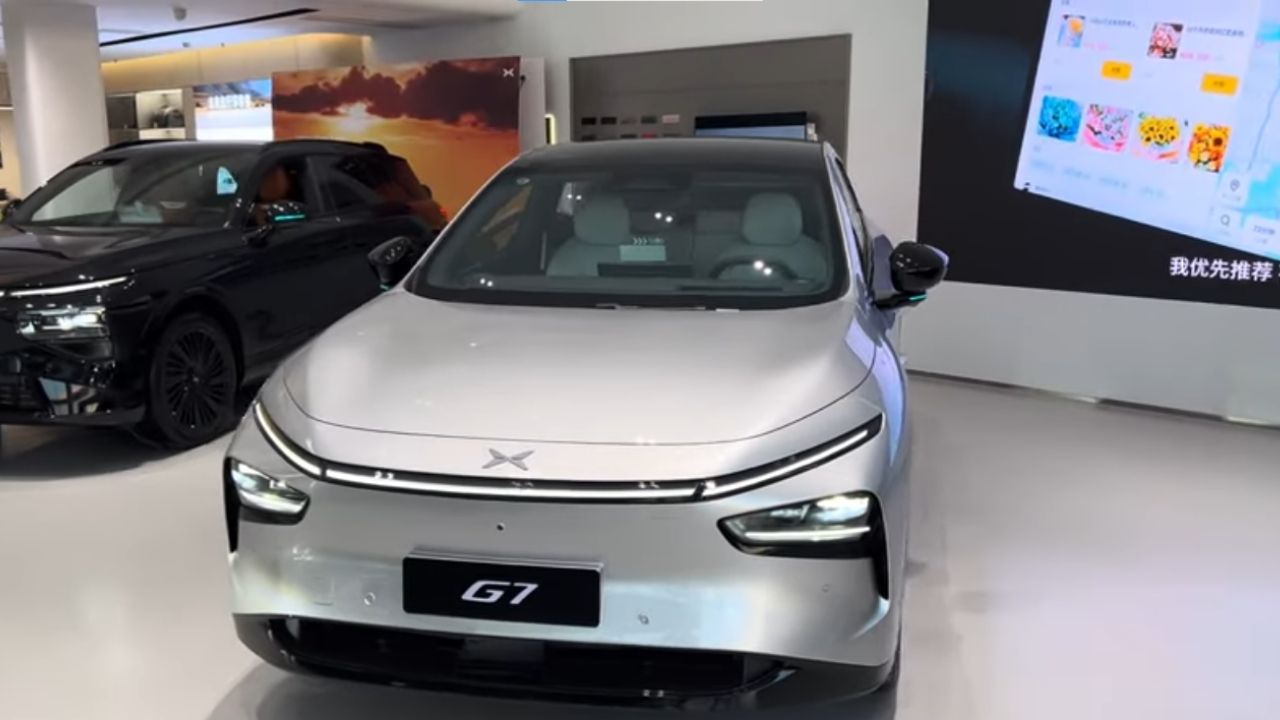
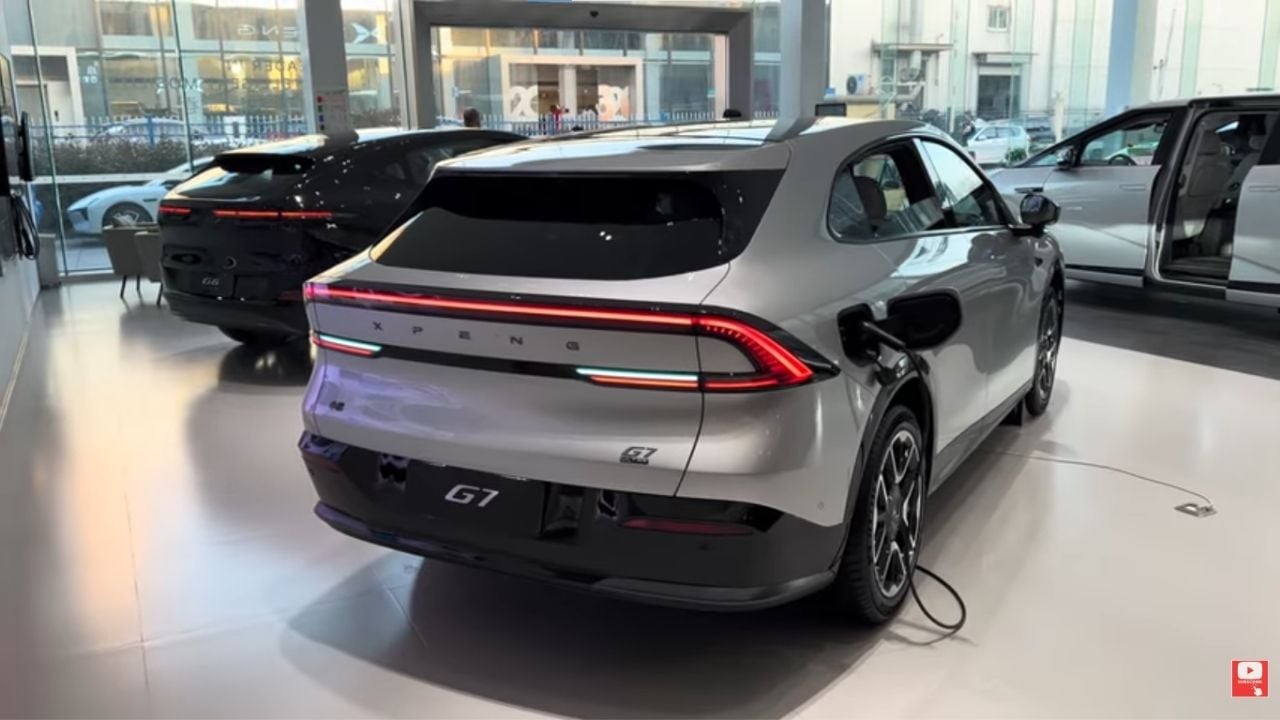
The new arrangement allows a limited number of Chinese EVs to be imported at much lower tariffs. Industry officials estimate that up to 49,000 vehicles could enter Canada annually under the new rules.

For automakers with supply chains spanning the Canada-U.S. border, this spell impending disruption to long-established trade flows.
Kingston highlighted the implications in a briefing with Canadian officials, noting that while the goal of expanding consumer choice is understandable, the trade-offs are serious enough to warrant a rethink.
U.S. policymakers and automakers fear that allowing lower-cost Chinese EVs into Canada could undermine American manufacturing competitiveness. Cars produced in Canadian plants are frequently exported across the border, and cheaper imports could distort market pricing and affect production planning in both countries.
Trump and his advisers could have prevented this outcome by pursuing a coordinated North American EV strategy instead of relying on blunt-force tariffs. Had Washington worked with Ottawa to craft joint incentives for domestic EV production, harmonized standards, and a shared approach to Chinese competition, Canada wouldn’t have felt compelled to break ranks.
Instead, Trump’s unilateral tariffs on allies eroded trust, and his scattershot trade war left no room for collaborative planning. If he had listened to advisers urging a rules-based, multilateral framework, Canada would have no reason to dis-align with U.S. policy rather than opening the door to Chinese EVs.
Rising Tensions and the Threat of U.S. Retaliation
The timing of Canada’s decision adds another layer of tension. Trade discussions between the U.S., Canada, and Mexico have already been complex, as each country navigates tariffs, supply chain security, and industrial policy.
The introduction of Chinese EVs into Canada’s market creates a scenario where U.S. policymakers may reconsider their stance on broader agreements. This theoretically raises the prospect of new trade barriers or retaliatory measures.
The US have indicated that they could respond with tariffs on Canadian goods if the trade landscape tilts too heavily in favor of Chinese products.
In late January 2026, President Donald Trump explicitly threatened to impose 100% tariffs on all Canadian goods if Canada pursued trade arrangements with China that would allow Chinese products — including EVs — easier access to the Canadian market. He warned that Canada could not become a “drop‑off port” for China to funnel goods into the U.S.
Automakers are predictably worried about longer-term supply chain stability. EV manufacturing is capital-intensive and relies on precise planning for battery production, parts sourcing, and labor allocation.
Unexpected shifts in the competitive landscape can create the sort of ripple effects affecting production schedules, profitability, and employment levels at plants on both sides of the border.
For companies like GM, Ford, and Stellantis, even a modest change in import policies can have consequences for thousands of workers.

The broader context of Canada’s decision involves its strategic relationship with China. Canada has sought to expand trade ties with Beijing, including reducing tariffs on select agricultural exports and engaging in bilateral agreements. The move to permit Chinese EV imports aligns with a pattern of reciprocal trade adjustments.
However, these adjustments are being closely watched in Washington. U.S. leaders have long expressed concern over China’s industrial policy and the potential for state-backed Chinese companies to dominate emerging technology sectors such as EVs.
A Fragile North American Auto Industry
The unfolding market dynamics underscores the fragility of integrated North American auto supply chains. This fact has never been more glaring. Production and export flows depend on regulatory certainty, predictable tariffs, and stable policy frameworks.
Disruptions in one country can quickly impact operations across borders. Automakers are urging Canadian and U.S. governments to coordinate closely, as unilateral policy decisions carry economic consequences for the wider region.
Ultimately, Canada’s decision to allow Chinese EVs into its market is a strategic test for North American trade and industry.