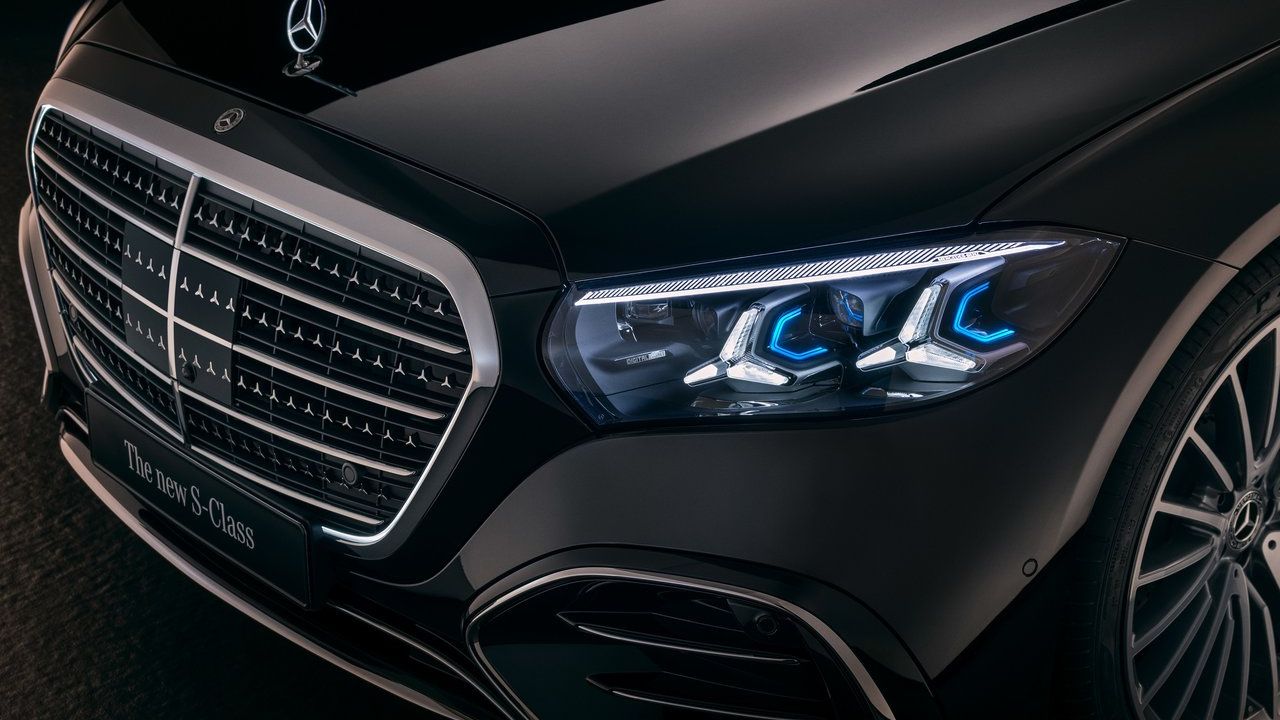

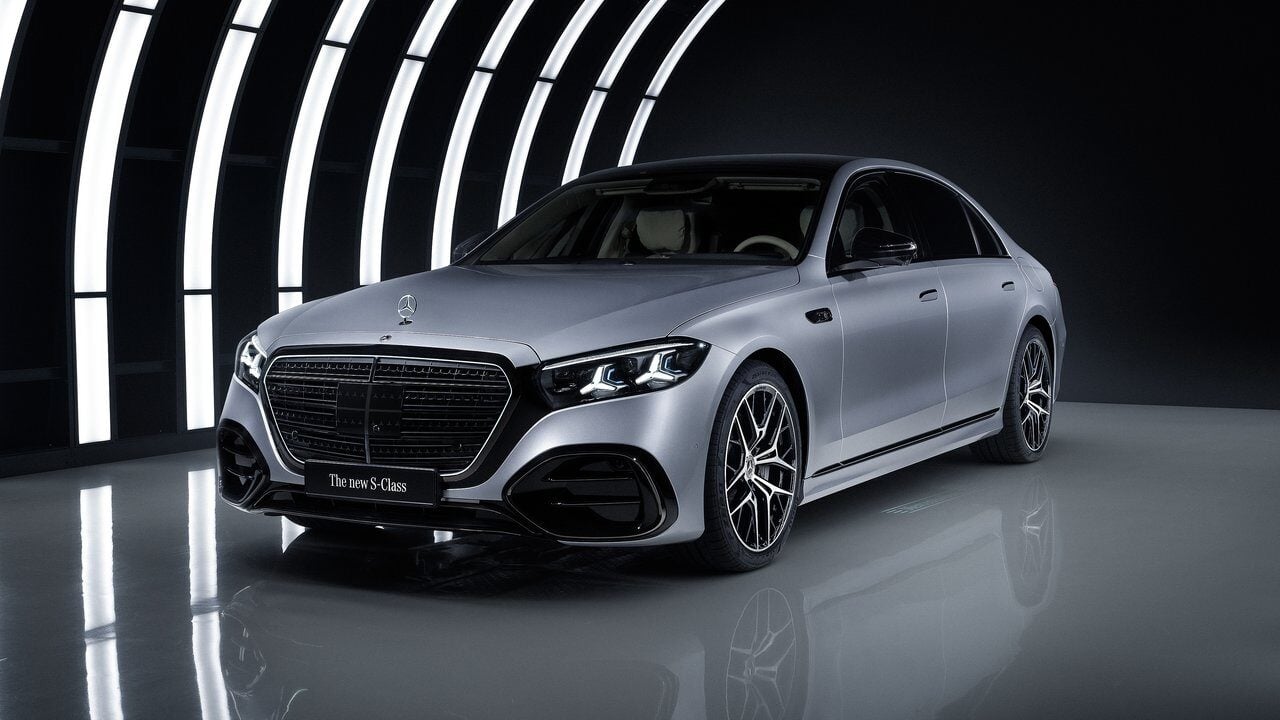
Mercedes-Benz has never treated headlights as simple accessories, but its latest Digital Light upgrade for the S-Class pushes automotive illumination into territory once reserved for aviation and military optics.
This isn’t about seeing farther at night anymore. The German marque might as well be turning light into a precision instrument that communicates, predicts, and actively protects.
The Raw Power of 50,000 Micro-LEDs
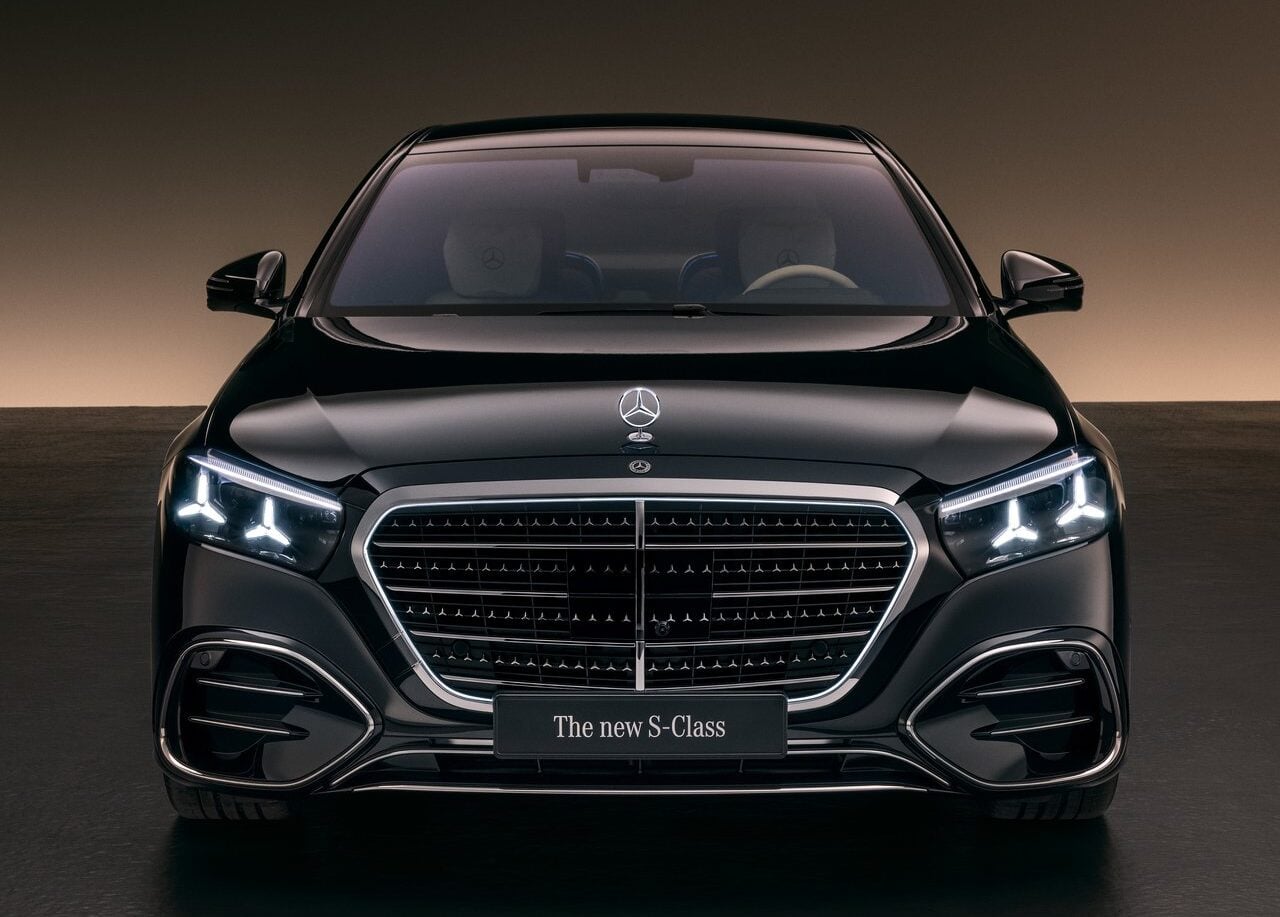
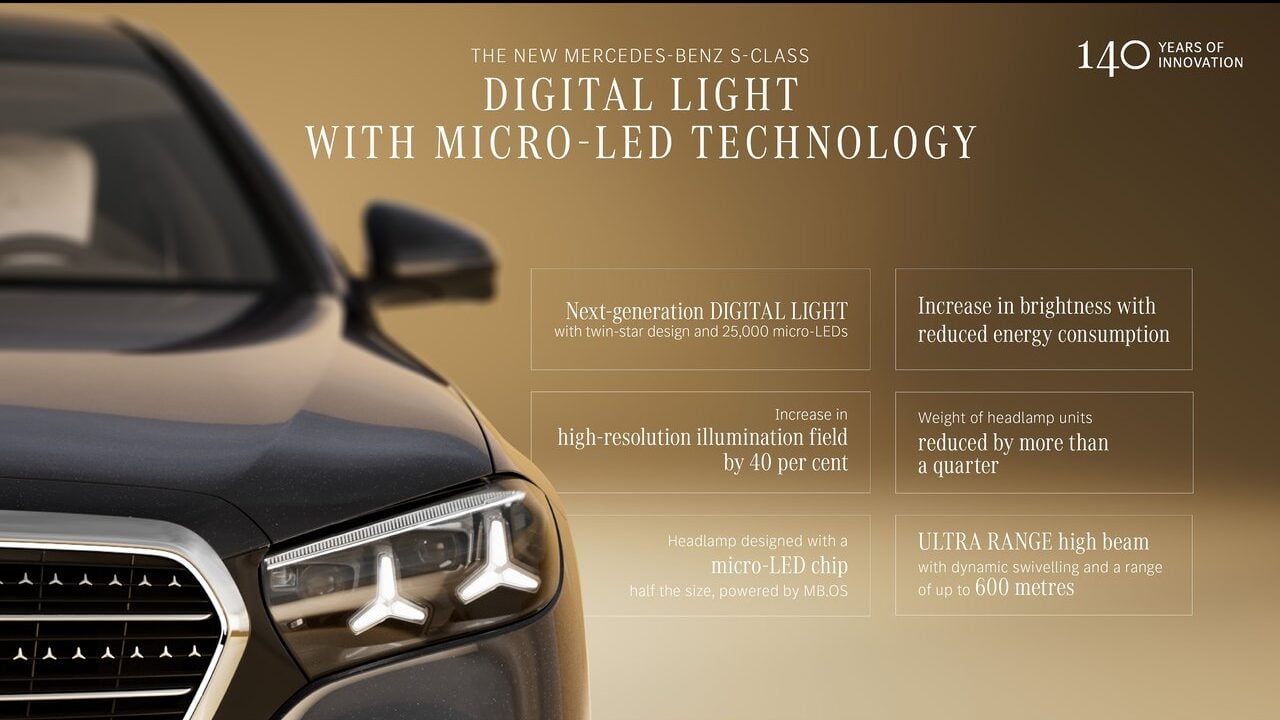
At the heart of the system is raw computational power. Each headlamp contains roughly 25,000 micro-LEDs, giving the S-Class a combined total of about 50,000 individually controllable light sources. That figure places it far ahead of most production vehicles today.
For comparison, Audi’s current HD Matrix LED system, widely regarded as one of the best in the industry, uses roughly 1.3 million micromirrors but relies on a different projection architecture.
BMW’s Laserlight, which once claimed the longest reach in production cars, focused on distance rather than pixel density and has since been phased out due to cost and regulatory complexity.
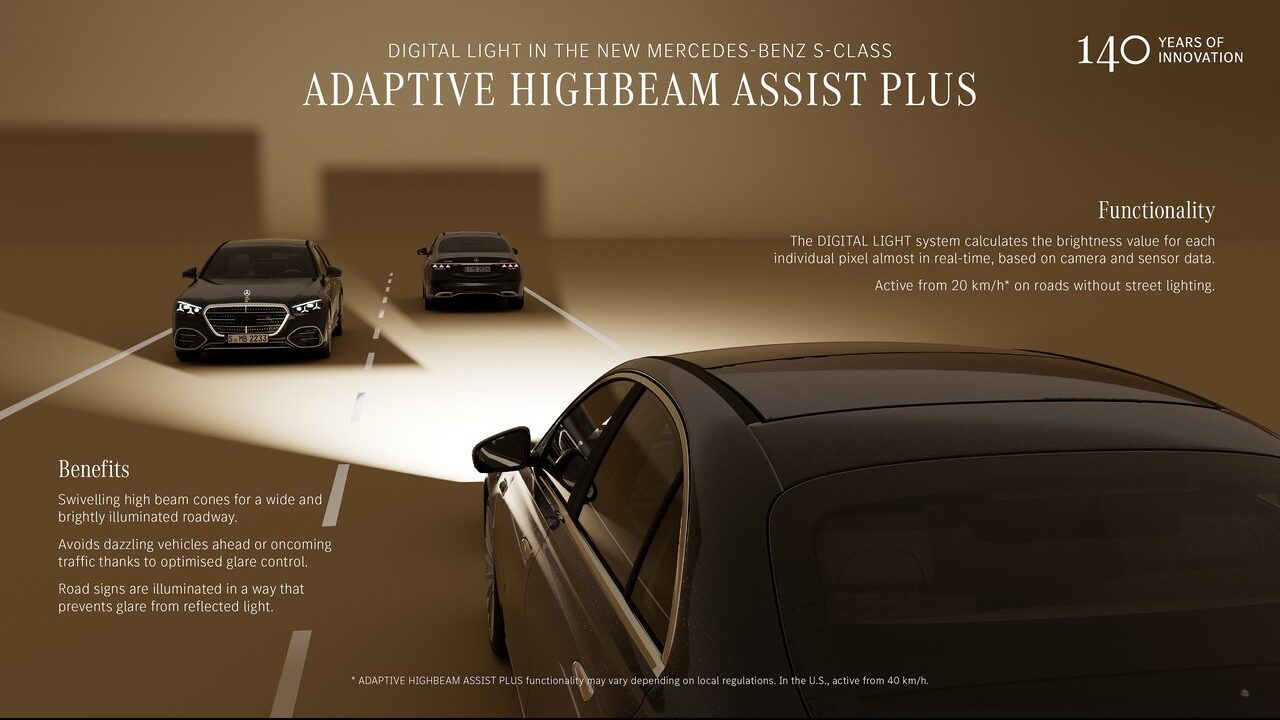
In practical terms, Mercedes claims the Digital Light system can illuminate the road up to 605 meters ahead while expanding the illuminated area by around 40 percent compared to earlier versions.
That distance rivals what some entry-level aircraft landing lights achieve, yet the S-Class does it while dynamically masking other vehicles to prevent glare. The light is shaped, dimmed, and redirected thousands of times per second, guided by camera inputs, navigation data, and vehicle speed.
The Road as a Display
What separates Digital Light from even the most advanced adaptive headlights is its projection capability. The system can display symbols directly onto the road surface.
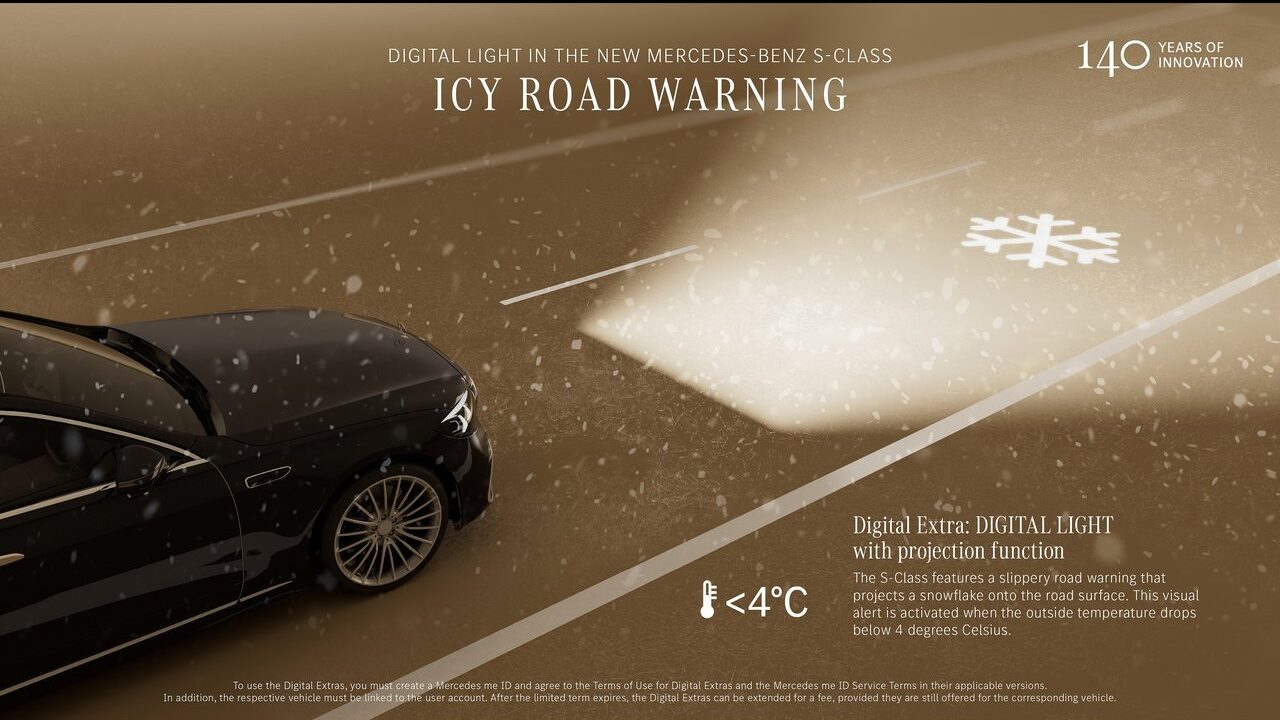
These include lane guidance lines in construction zones, warnings when the vehicle detects a wrong-way scenario, and visual alerts for slippery conditions. The headlight is no longer just lighting the road. It is using the road as a display.
This is possible because each micro-LED acts like a pixel in a high-resolution projector. Software determines which LEDs activate, at what intensity, and for how long. The result is a light pattern that can draw shapes, carve shadows around oncoming traffic, and highlight pedestrians without blinding them.
Mercedes also notes that the new units are more than 25 percent lighter and consume roughly half the energy of the outgoing system, despite being significantly more powerful.
The closest production competitor in terms of functional ambition is Audi’s Digital Matrix LED system as seen on the A8 and some e-tron models. Audi focuses heavily on lane-accurate light carpets and dynamic shading, but Mercedes has gone further in integrating symbolic communication.
BMW, meanwhile, is pivoting toward software-defined lighting effects and personalization rather than extreme reach or projection.
All this power raises an obvious question: is it even legal?
Regulatory Roadblocks and the Safety Argument
The answer depends on geography. In Europe, where regulations allow adaptive high beams that actively avoid dazzling other drivers, Digital Light operates close to its full potential. In the United States, federal lighting standards still lag behind modern headlight technology.
Certain projection features and adaptive behaviors may be limited or disabled until regulations evolve. Mercedes designs the system to be region-aware, meaning the hardware remains the same but software governs what features are permitted.
Safety, however, is where Digital Light makes its strongest case. By increasing visibility without increasing glare, the system reduces driver fatigue and improves reaction time. Pedestrians and cyclists can be highlighted with pinpoint accuracy.
Road hazards can be emphasized visually instead of relying solely on dashboard alerts. The intent is not to overwhelm the driver with information, but to move critical warnings into the driver’s natural line of sight.
Headlights as the Next Human-Machine Interface
There is also a subtle but important shift happening here. Headlights are becoming part of the vehicle’s human-machine interface.
As cars move toward higher levels of automation, external communication with the environment will matter more. Digital Light is an early example of how vehicles may eventually signal intent, warn others, and cooperate visually with infrastructure.
Mercedes-Benz is risen above just making the night brighter. It is currently operating at a lvel where it is redefining what headlights are allowed to do. Whether regulators keep pace will determine how much of this power drivers are ultimately allowed to use.