

The Tesla story has taken a turn few industry watchers saw coming. In a call with investors this week, Tesla CEO Elon Musk delivered a sobering and surreal news for fans of the Silicon Valley EV pioneer. After more than a decade defining the premium electric vehicle segment, the automaker will stop building two of its most iconic cars, the Model S and Model X, in the second quarter of 2026.
The context and implications of this decision will be one of, if not the most debated around the industry and within Tesla’s global fan base.
Tesla introduced the Model S in 2012 as a bold, trendsetting statement that EVs (electric vehicles) can be luxurious, fast, and desirable. And that statement was heard loud and clear around the world. The Model X followed in 2015, with falcon-wing doors and SUV practicality that had early adopters swooning.
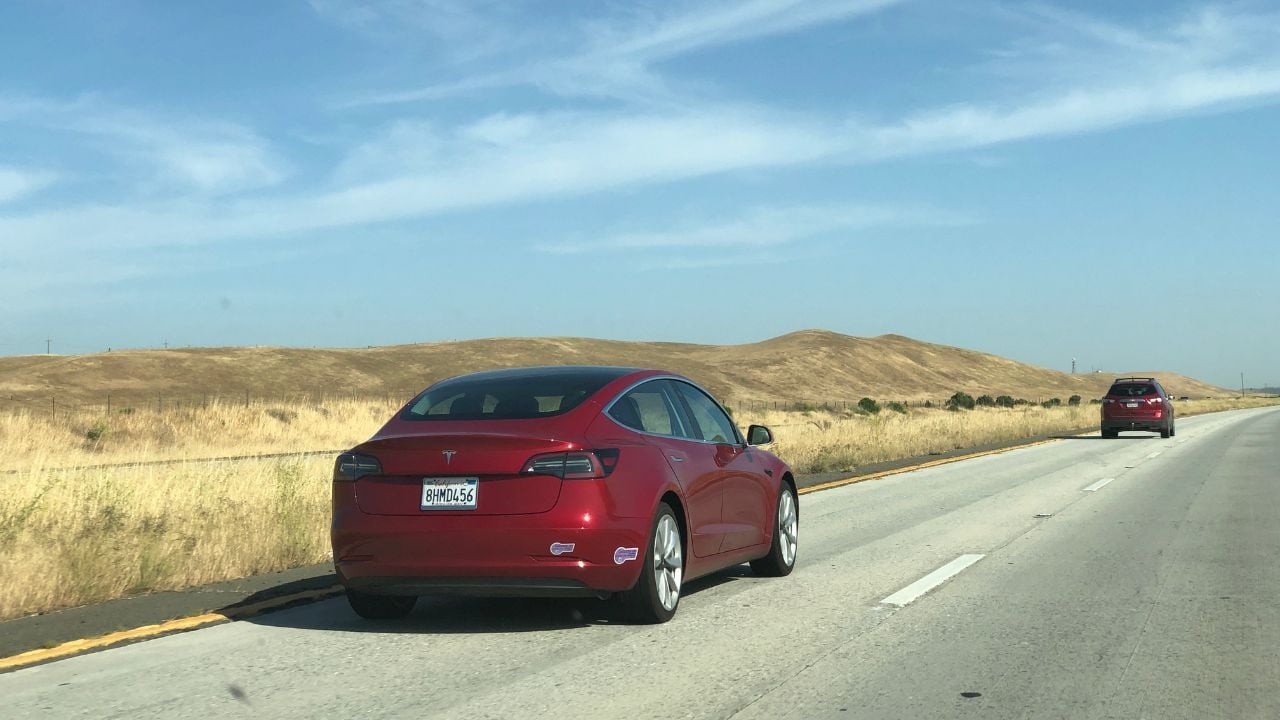
Both models played decisive roles in helping cement Tesla’s image as a disruptor in a legacy auto market. Yet now they are being quietly retired.
On Wednesday, Musk described the rather shocking move as bringing the two programs “to an end with an honorable discharge.” Of all that could have come out of the Boring Company this year, discontinuing the models was the last thing anyone expected or predicted.
For buyers who have ever dreamed of owning one of these top-tier EVs, this is the final curtain call. Tesla will continue servicing existing owners for as long as owners keep driving these cars, but new orders are being wound down. On the earnings call, Musk urged those with interest to act soon.
From Car Factory to Robot Foundry
But the real headline isn’t the farewell to these models. It’s what’s replacing them. Musk inadvertently shut down any presumptions of a new replacement or evolutionary model or models for the X and S with his explanation for why the cars are being discontinued.

He said the Fremont factory in California where the S and X are made will be repurposed to build Tesla’s Optimus robots, with an eye toward producing up to one million humanoid robots annually once the transition is complete.
That pivot triggered everything from cheers to eye rolls in the broader tech community. For many, robots are the next frontier. For others, converting a car factory into a robot assembly line feels like a bet on science fiction over solid automotive fundamentals.
Musk admitted at the call that Optimus is currently not executing any meaningful work at its factories, a rather blatant reversal from earlier claims that Optimus bots were already performing tasks autonomously.
“The company doesn’t have any Optimus robots doing useful work in its factories right now,” Musk said at the call, contradicting the June 2024 statement that two Optimus bots were autonomously performing tasks in the factory.
This follows the Tesla CEO’s sober admission in early January that the early production of the Optimus humanoid robot (alongside Tesla’s Cybercab robotaxi) would be “agonizingly slow,” effectively tempering expectations about how quickly Tesla could scale these ambitious projects.
“For Cybercab and Optimus, almost everything is new, so the early production rate will be agonizingly slow,” Musk said as he explained that the speed of production ramps follows an S-curve: painfully slow at first, then accelerating rapidly once processes stabilize. In other words, despite the slow start, production would eventually become—in the CEO’s words—insanely fast.
Perhaps, the Model X and S’s sacrifice on Optimus’ altar should come as no surprise since Musk has pitched the bot as potentially Tesla’s most important product, even more impactful than its cars.
Betting on AI and Autonomy

Tesla is steering toward autonomy and artificial intelligence as its defining future. On the same call, Musk boasted of a $2 billion investment in his AI company xAI and touted strong earnings that helped Tesla stock jump.
The company is apparently making good of its touted strategy of becoming less of a traditional carmaker and more of a physical AI and autonomy powerhouse. In this framing, Tesla automobiles become data platforms and autonomous robots become mobile agents of that future vision.
This decision risks been seen by some analysts as a retreat from core competencies. After all, Tesla sold more than 1.6 million Model 3 and Model Y units in 2025, but “other models” — including S, X and the Cybertruck — made up a tiny fraction of deliveries. Those numbers illustrate a stark reality.
The premium cars are old and underperforming in a market that increasingly favors utility, value, and in some cases, extremely compelling competition from established and upstart brands. And now, rather than reinvesting in new automotive innovation, Tesla is doubling down on a robotics future largely seen by many as unproven.

Taking a more philosophical view, Tesla has always been about breaking rules. Most companies build cars. Tesla builds dreams, and that’s partly why industry analysts accuse Tesla of selling dreams instead of real products.
We recently reported that veteran fund manager George Noble has described Tesla as one of history’s biggest stock bubbles. Whether it can build robots at scale remains to be seen, but Musk isn’t shy about dreaming big. That duality — visionary and volatile — has defined Tesla’s journey from niche EV maker to global headline magnet.
The Uphill Road for Optimus
What does this mean for the broader market? Legacy automakers might quietly applaud the retreat from premium EVs. Brands like Porsche, BMW, and Lucid have poured resources into high-end electric offerings and now stand to benefit from Tesla vacating that niche. Meanwhile, buyers in the market for a new EV may find more options than ever, from affordable compact EVs to luxury rides with decades of heritage behind them.
Now, Optimus has the floor; the one for whom the world’s fastest SUV was decommissioned. The humanoid robot, with new parts, systems, and manufacturing steps unlike Tesla’s cars, will require precision engineering and testing to be able to walk, manipulate objects, and operate safely at the level touted by Musk. Tesla has to develop new supply chains and assembly processes, which takes time before efficiency improves.
Musk envisions thousands of Optimus units in Tesla factories and eventually millions worldwide, performing tasks from logistics to household chores. Somehow, that’s more important than an electric car in your driveway. The automotive world watches with skepticism and fascination as a company that once reshaped an industry reshapes itself again.