

When Ford announced it is offering free Carhartt workwear, toolkits, and other perks to entice applicants into its mechanic ranks, the story confirmed a trend industry analysts and Ford’s CEO have been warning about for months: there are simply more skilled automotive jobs than there are qualified mechanics to fill them.
Ford’s latest partnership with Carhartt appears to be a strategic response to a labor crisis that has been quietly unfolding in the United States, one with implications far beyond a single automaker’s service bays.
The company says it currently has about 5,000 open mechanic positions at dealerships across the country. These positions include high-end automotive technician roles with potential six-figure compensation packages, salaries that are rare in many other parts of the labor market. Yet even that premium pay, it seems, isn’t enough to overcome the skilled-labor gap.
A Shortage That Matches the Data
Data from the U.S. Bureau of Labor Statistics shows that as of 2024 there were approximately 805,600 automotive service technicians and mechanics employed nationwide, with median annual wages around $49,670.
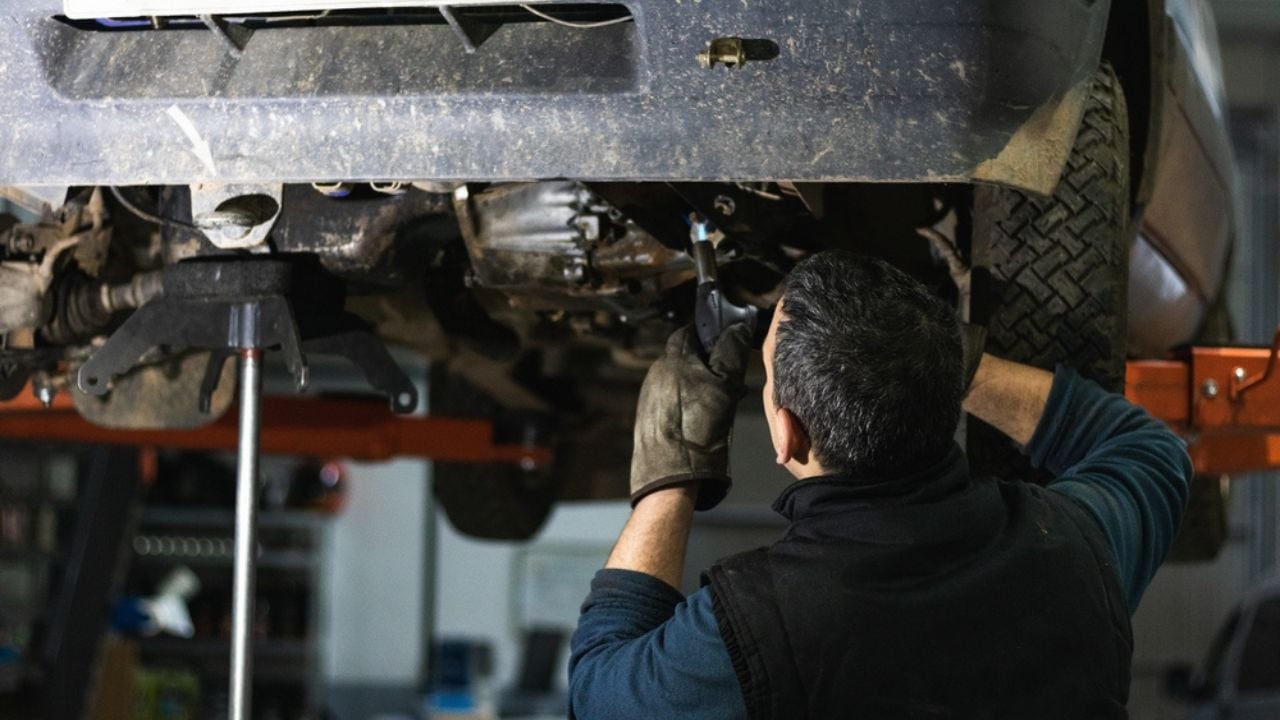
Meanwhile, industry analysts estimate hundreds of thousands of additional technicians are needed over the next several years based on projected demand growth and retirements. One report suggested U.S. employers may need to fill nearly a million mechanic and technician roles by 2028.
These numbers help explain why Ford’s internal forecast of 5,000 open jobs feels like the tip of a national iceberg. Across the broader manufacturing and service ecosystem, openings for skilled labor — from plumbers and electricians to emergency vehicle technicians — number in the hundreds of thousands.
CEOs and industry leaders have described this as a national workforce crisis, not merely an isolated corporate hiring challenge.
Clearly, Farley and Ford have come to realize traditional recruitment alone cannot close this gap. A large part of the company’s push is about rebranding the skilled trades. Modern automotive work is highly technical, involving advanced diagnostics, electronics, and software systems that most people do not associate with “mechanic work.”
Offering free Carhartt gear and tools implicitly lowers barriers to entry and helps young technicians acquire costly tool kits that can run into thousands of dollars. It’s also about shifting the perception of trades work from low-paid, physically demanding labor to a viable, respected career path with strong earnings potential.
What’s Being Said Out There
Reddit and other forums recorded a robust and deeply mixed reactions to Farley’s remarks about worker shortage. Many accept that a genuine shortage exists and point out that pay and benefits alone cannot fix years of trend data showing fewer entrants into trade schools and aging workforces.
Ford CEO says he has 5,000 open mechanic jobs with 6-figure salaries from the shortage of manually skilled workers: ‘We are in trouble in our country’.
byu/coinfanking ineconomy
Many comments cited posts that echo CEO Farley’s warning that the U.S. “is in trouble” if it cannot replenish its skilled labor ranks.
Others argue the shortage narrative is overblown or misframed. Some Reddit threads assert that while there may be lots of job openings, there is not necessarily a shortage of people entering or willing to enter the field. Instead, the claim tends to reflect a gap between experience levels demanded by employers and the actual supply of high-skill technicians.
One popular comment thread said the automaker needs experienced techs rather than entry-level workers, and that broad “shortage” claims mask this nuance.
One Redditor observed that amidst Farley’s claim of labor shortage, their career page had fewer than 800 open jobs at the time and with no salary range information, and that number included positions offshored to Mexico and India. It added:
“5,000 jobs and six-figure salaries seem like fraudulent misrepresentations unless the CEO can provide evidence those positions were approved, funds allocated, point us to 5,000 job postings, and provide PII-redacted offer letters and payroll records of them actually paying six-figures for those roles.”
One TikToker pointed to deeper causes, including student debt burdens, the cost of trade education, and generational shifts away from manual labor roles. A leading comment in that TikTok post noted that Ford technicians pay for everything they need for the job:
@jluis___ Ford ceo says there are no mechanics 🔧 #fyp #foryou #mechanic #america #economy ♬ original sound – Jluis___
“5 years Ford technician here. I pay for everything in my bay, including the clock on the wall. I am paid $18.75/hour. My dealer un-enrolled every technician in Ford’s Top Tech Rewards program that gives us technicians a bonus at the end of the year for being employed at a dealership and for all of our online courses we pass. I have not gotten my bonuses for 3 years now. These are the real reasons nobody wants to become a mechanic/technician anymore. There is NO incentive to become one. NONE, ZIP, ZERO.”
Some commenters argued that even when entry-level positions exist, the financial reality of apprenticeships and training means many potential mechanics cannot afford to pursue them.
The Real Story
What Ford’s incentive program highlights is not just a hiring challenge, but a structural workforce problem in the U.S. economy. While it makes sense that companies cannot simply outbid each other on wages if there is not a pipeline of workers with the skills required, Ford’s incentive program ultimately exposes, not just a skills gap, but a credibility gap as well.

There have been strong arguments that claims of thousands of open, six-figure mechanic roles collapse under scrutiny when job postings are scarce, pay ranges are opaque, and real technicians report stagnant wages and withdrawn bonuses. Social media accounts from current Ford technicians describe a system where workers shoulder tool costs, lose promised incentives, and earn wages far below headline figures.
“This goes to show the man doesn’t have a clue how technicians are paid,” read one Reddit comment. “Someone probably told him technicians make $40 per flat rate hour. He uses that to figure with overtime comes to 120k. Ask him how many hours a ford tech can flag per day warranty at ford. He’ll say work 8 hours get 8 hours pay …”
Against that backdrop, free workwear looks less like opportunity and more like window dressing for deeper structural and trust failures within the automotive labor market. That said, the incentive’s policy implications are significant: from renewed investment in vocational training to new partnerships between industry and education.
Ultimately, Ford’s free gear is newsworthy not because the clothing itself will fill service bays, but because it illustrates the broader, persistent truth that jobs are available, but qualified people are not, at least not in the numbers needed, and those available are disenchanted. That is the real story — and it is only just beginning.
Sources: Business Insider, Yahoo Finance