
In the quiet closing days of 2025, Stellantis submitted a patent filing that could very well reshape a vehicle type that has defined American roads for decades: the pickup truck.
The United States Patent and Trademark Office recorded a patent application from the automaker on December 25 for a novel “Angled Bed Cap for Truck,” a dynamic system built into a truck’s cargo box that promises to reduce drag and boost efficiency while preserving the rugged utility that defines the genre.
For decades, engineers have grappled with one stubborn problem. Pickup trucks, prized for their versatility and hauling capability, suffer from poor aerodynamics because of their open beds. Air hitting the vertical rear surface of a truck bed creates a turbulent pocket, increasing drag and dragging down fuel economy or driving range in an electric vehicle.
Conventional solutions range from simple tonneau covers to aftermarket aerodynamic shells. Yet most of these fixes involve tradeoffs: less cargo volume, complicated installation, or aesthetic compromises that turn truck purists away.
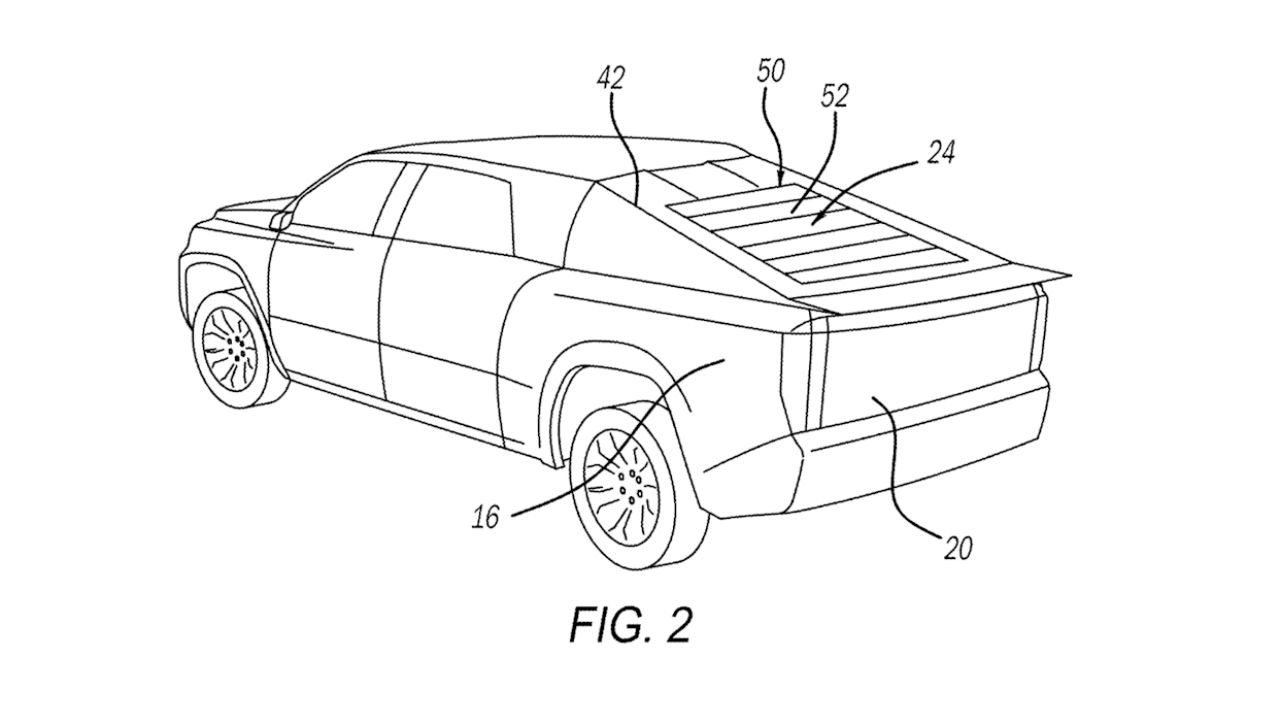
Stellantis’ answer is neither purely aftermarket nor a fixed fastback shell. Instead, it is a built‑in, transformable system that can alter the bed’s silhouette on demand. Patent drawings suggest that when the system is engaged, internal panels rise from the bed’s sidewalls, supporting a tonneau cover that tilts upward into a sleek, angled profile.
That slope creates a continuous surface from the truck cab to the tailgate, allowing air to sweep smoothly over the truck rather than slamming into an abrupt drop. A small, deployable spoiler at the rear edge of the cover may further sculpt airflow for added gains. If this design reminds you of the Cybertruck, you’re onto something.
Solving the Pickup’s Aerodynamic Riddle
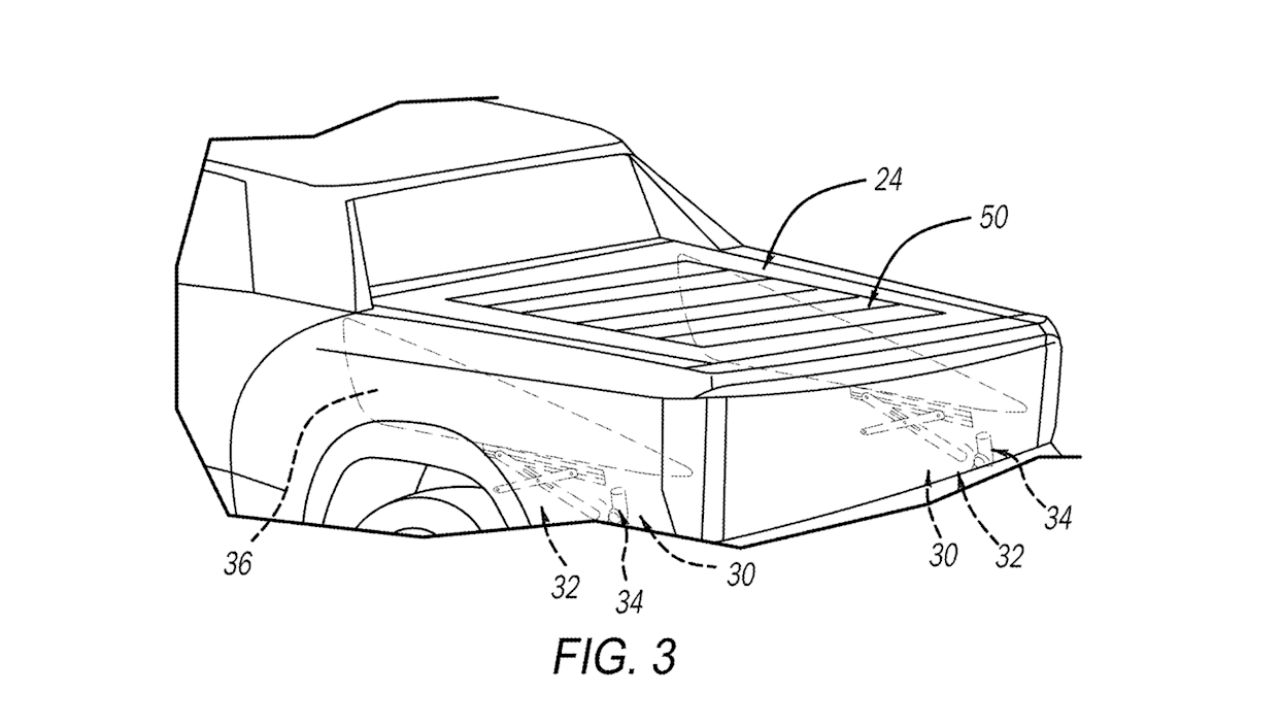
On the face of it, the idea seems simple. In practice it is elegantly complex. The panels that lift the cover remain hidden when not in use so that the pickup’s bed stays open and versatile. Cargo height is not compromised. The tailgate retains full operation. And because the mechanism sits within the existing bed structure, there is no loss of interior volume or the need for complex aftermarket swaps.
Stellantis engineers have, in essence, fused two worlds that rarely meet: the aerodynamic efficiency of sleek sportbacks and the uncompromising practicality of traditional pickups. The design embraces adaptability. A driver cruising on a highway could activate the system to reduce drag, while someone hauling long lumber or outdoor gear could leave the panels retracted for maximum cargo access.
Industry watchers say the patent also speaks to a broader shift. Trucks have long escaped intense scrutiny on emissions and efficiency relative to passenger cars and SUVs. But as environmental regulations tighten and electric trucks enter the mainstream, there is a growing pressure to extract every possible efficiency gain.
Reducing aerodynamic drag is one of the most effective ways to improve range for electric pickups and fuel economy for combustion models, and this need has intensified in recent years.
The Long Road from Patent to Production
Granted, a patent alone isn’t a promise of what will appear in showrooms. Automakers regularly lock down ideas on paper to protect intellectual property, sometimes without ever turning them into production hardware. There are costs, design challenges, and customer demand to consider before a concept moves from legal filing to factory assembly line.
Yet this particular design feels grounded. It respects the core values truck buyers tend to cherish while offering benefits they increasingly want. It does not force owners to give up cargo space. It does not require hauling unwieldy aftermarket parts to and from a garage. And it does not fundamentally alter the rugged look and capability that define Stellantis brands like Ram and Jeep.
Early reactions from truck communities and forums have ranged from excitement at the potential efficiency gains to skepticism about whether the system would add cost or complexity. And some can’t help but notice the design similarity with the Tesla Cybertruck.
Enthusiasts who live on the road or use trucks for work see real promise in a design that could smooth aerodynamic drag at highway speeds without sacrificing the ability to haul, tow, and load at the job site.
In some conceptual renders, the profile created by the raised bed cap evokes the appearance of other futuristic vehicles that have captured public imagination in recent years. Observers have drawn visual comparisons to angular designs such as those seen on rival electric trucks, capturing a zeitgeist in automotive design that embraces function and form in unexpected ways.
For now, the angled bed cap remains a patent and a possibility. Engineers must still navigate manufacturing feasibility and cost. Executives must determine whether customers will pay for the technology. And the company must decide if and when it is ready for prime time.