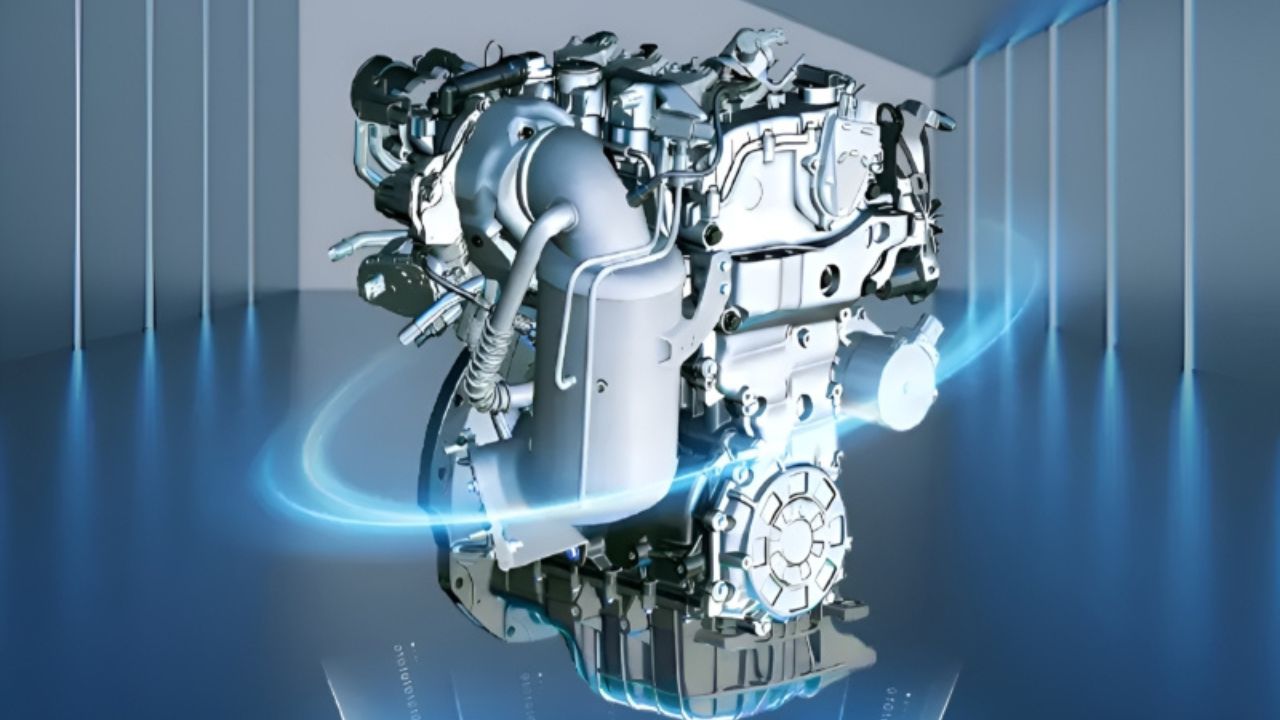

Dongfeng Motor has publicly released comprehensive technical details for its Mach 1.5T hybrid gasoline engine, which the company reports achieved a maximum thermal efficiency of 48.09 per cent. According to official statements and industry certification, this value exceeds the thermal efficiency figures of hybrid powertrains from major global competitors and represents a new high for production-intended hybrid gasoline engines worldwide. The engine has been certified with the China Automotive Technology and Research Center’s “Energy Efficiency Star” designation, which confirms the efficiency measurement.
Thermal efficiency in internal combustion engines measures the percentage of chemical energy in the fuel that is successfully converted into mechanical work. A higher number means less energy is wasted as heat, leading to lower fuel consumption and more effective propulsion. Traditional gasoline engines often attain efficiencies well below this level, so reaching nearly half of fuel energy converted into usable work is a significant engineering achievement.
Core Technical Solutions Driving High Thermal Efficiency
The Mach 1.5T achieves its high thermal efficiency through a suite of carefully engineered design features. First, the unit operates with a compression ratio above 15.5, which supports more complete combustion of the air-fuel mixture. This high ratio forces the mixture into a smaller space, increasing peak temperatures and pressures in the combustion chamber.
Dongfeng has also incorporated a 500-bar direct fuel injection system. Higher fuel pressure improves atomization, meaning fuel is broken into finer droplets. Finer atomization enhances the homogeneity of the mixture and supports faster, more stable combustion throughout the chamber, especially in the rapid transitions between acceleration and steady cruising.
Other combustion-focused innovations include a high-energy ignition system that stabilizes flame propagation and a specialized combustion mode tailored for hybrid applications. These systems ensure more efficient use of fuel across a wider range of operating conditions compared with conventional spark ignition.
From a mechanical standpoint, the engine incorporates variable geometry turbocharging, a valve-seat-free design, and electrically actuated variable valve timing. These hybrid-specific features optimize air intake and exhaust flow dynamics across the rev range, improving overall volumetric efficiency and reducing pumping losses that typically contribute to energy waste.
Dongfeng engineers have also paid close attention to internal friction and parasitic losses. There is an electrically driven oil pump that reduces energy loss in lubrication compared with traditional mechanical pumps, and a thermal-spray coating on the cylinder bores that reduces friction between the piston skirts and cylinder walls. Collectively, these refinements lower internal resistance and help the engine operate in its high-efficiency band for a larger segment of real-world usage.
Operational Benefits and Range Impact
Dongfeng notes that the technical solutions embedded in the Mach 1.5T translate into tangible efficiency benefits in diverse driving scenarios. The company’s internal testing suggests that the combination of these systems yields an approximate 10 per cent increase in driving range under equivalent fuel conditions when compared with previous hybrid engines that do not use this architecture. This improvement is meaningful for hybrid vehicles, especially in urban stop-and-go traffic and on highways, where maintaining momentum efficiently can significantly reduce fuel consumption.
The high-efficiency operating window of the engine reportedly covers more than 50 per cent of its typical duty cycle, which means the engine can operate at or near peak efficiency across a broad set of real-world driving loads. In hybrid configurations, where the internal combustion engine works in concert with electric motors, this capability helps reduce reliance on fossil fuel energy and improves overall system responsiveness.
Comparison With Global Hybrid Benchmarks
When compared with hybrid powertrains from major automakers, the Mach 1.5T’s thermal efficiency stands out. Toyota’s Atkinson-cycle hybrid engines, which power vehicles like the Prius and the Dynamic Force family, are widely quoted at around 40 to 41 per cent thermal efficiency under optimal conditions. Recent hybrid systems from Chinese makers, notably BYD, have been reported at roughly 46 to 46.5 per cent efficiency. The nearly 48.1 per cent figure from Dongfeng therefore represents a step forward in mainstream hybrid engine design.
The broader automotive industry has been moving toward greater hybridization as fuel-efficiency regulations tighten in major markets and consumer demand for lower emissions increases. In this context, Dongfeng’s achievement with the Mach 1.5T is a noteworthy contribution to hybrid powertrain innovation and highlights Chinese manufacturers’ growing capabilities in powertrain engineering.