Every year, automakers discontinue models that quietly fade from showrooms, often with little fanfare. While some cars simply run their course, others vanish from dealer lots for reasons that are genuinely surprising.
The automotive industry is filled with fascinating stories of promising vehicles cut short by unexpected circumstances. From regulatory hurdles to corporate shake-ups, the reasons behind these discontinuations often reveal interesting insights about the business of building cars.
Join us as we explore twelve memorable vehicles whose departures from the market happened for reasons you might not expect. Unless noted, the year in parentheses refers to the final model year in the United States or North America, not the end of global production. These stories remind us that success in the automotive world requires more than just a great product.
Pontiac Aztek (2005)

Despite its sorta fugly looks, the Pontiac Aztek has become a cultural icon thanks to a certain chemistry teacher. But its discontinuation wasn’t just about polarizing styling.
General Motors had designed the Aztek on a tight budget, sharing its platform with the Buick Rendezvous, which actually outsold it consistently. The real surprise is that despite being ahead of its time with features like a built-in tent and camping package, the Aztek suffered from intense internal competition within GM’s own lineup.
Corporate politics and brand overlap played a significant role in its demise, as GM was supporting too many divisions at the time. In its final calendar year on sale in the U.S. (2005), the Aztek sold about 5,000 units, a figure that could not justify its existence in a crowded portfolio.
Sometimes the problem isn’t the car itself, but the company structure around it.
Toyota FJ Cruiser (2014)

The rugged FJ Cruiser seemed like it should have been a permanent fixture in Toyota’s lineup, especially with the SUV boom in full swing. What many don’t realize is that the FJ was discontinued partly because it had become too expensive to produce for its market position.
The retro-styled SUV required unique body panels and parts that couldn’t be shared with other Toyota vehicles, making production costs higher than more mainstream models. Despite maintaining a loyal following and strong resale values, Toyota decided to focus resources on vehicles with broader appeal and better economies of scale. The FJ also faced increasing pressure to meet evolving safety regulations that would have required significant redesign investments.
It remains a testament to how production economics can override passionate fan support.
Volkswagen Phaeton (2006)

Volkswagen’s ultra luxury sedan was engineered around a famously ambitious design target: that it could be driven all day at 186 mph (300 km/h) in 122°F heat while keeping the cabin at about 72°F, even though production versions were electronically limited to about 155 mph (250 km/h). The Phaeton’s downfall wasn’t quality or capability, but rather the VW badge itself.
American buyers simply couldn’t justify spending $70,000 to $100,000 on a Volkswagen, regardless of how magnificent the car actually was. The brand perception gap proved insurmountable, even though the Phaeton shared its platform and many components with the Bentley Continental.
VW sold fewer than 3,000 Phaetons annually in the U.S. before pulling the plug. This case perfectly illustrates how brand equity matters as much as product excellence in the luxury market.
Honda Element (2011)

The boxy Element developed a cult following among outdoor enthusiasts and dog owners who appreciated its rubber floors and versatile interior. Honda discontinued this practical vehicle after the 2011 model year largely because sales had steadily declined, with buyers shifting to other Honda crossovers such as the CR-V.
The Element’s slab-sided design and unique door configuration made meeting new side-impact regulations particularly challenging without a complete redesign. Additionally, Honda wanted to pivot toward more fuel-efficient vehicles as gas prices climbed toward $4 per gallon. The crossover market was evolving rapidly, and the Element’s niche appeal couldn’t justify the investment needed to bring it into compliance with stricter regulations.
Its departure shows how regulatory requirements can end a model’s life even when customer demand remains strong.
Saturn Brand (2010)

Saturn wasn’t just a car line but an entire brand that GM launched with revolutionary ideas about retail experience and customer service.
The surprising reason Saturn disappeared was that it had actually become too successful at being different from GM’s other brands. When GM entered bankruptcy in 2009, Saturn’s unique dealer agreements, separate parts network, and distinct corporate culture made it impossible to integrate into the surviving brand structure.
The cost of maintaining Saturn’s independence couldn’t be justified when resources needed consolidation. Roger Penske nearly purchased the brand, but the deal collapsed when a manufacturing agreement fell through.
Saturn’s death proved that being different isn’t enough if you can’t fit into the larger corporate strategy during crisis mode.
Mazda RX-8 (2011)

The rotary-powered RX-8 was a driver’s delight with its screaming 9,000 RPM redline and unique four-door sports car layout. What killed the RX-8 wasn’t lack of enthusiasm but increasingly strict emissions regulations that the rotary engine simply couldn’t meet cost-effectively.
The Wankel rotary engine, while compact and smooth, inherently burns oil by design and struggles with fuel efficiency. European emissions standards were tightening dramatically, and modifying the rotary to comply would have required extensive development costs. Mazda also faced pressure from fluctuating gas prices during the late 2000s, making thirsty sports cars a harder sell.
The RX-8’s discontinuation marked the end of an era, though Mazda continues developing rotary technology for range-extender applications in electric vehicles.
Ford Crown Victoria (2011)

The Crown Victoria was the last of the traditional body-on-frame sedans, serving as America’s quintessential police car and taxi for decades. Its discontinuation surprised many because it seemed like a perpetual fixture, but the reason was actually forward-thinking pragmatism.
Ford realized that modern unibody sedans like the Taurus and Explorer could serve police and fleet duties more efficiently while offering better fuel economy and handling. The Panther platform dated back to 1979, and modernizing it to meet contemporary safety standards would have cost more than developing entirely new vehicles. Fleet customers were also beginning to embrace crossovers and SUVs for patrol duty.
The Crown Vic’s retirement represented the end of an automotive architecture that had simply run its course after 32 years.
Scion Brand (2016)

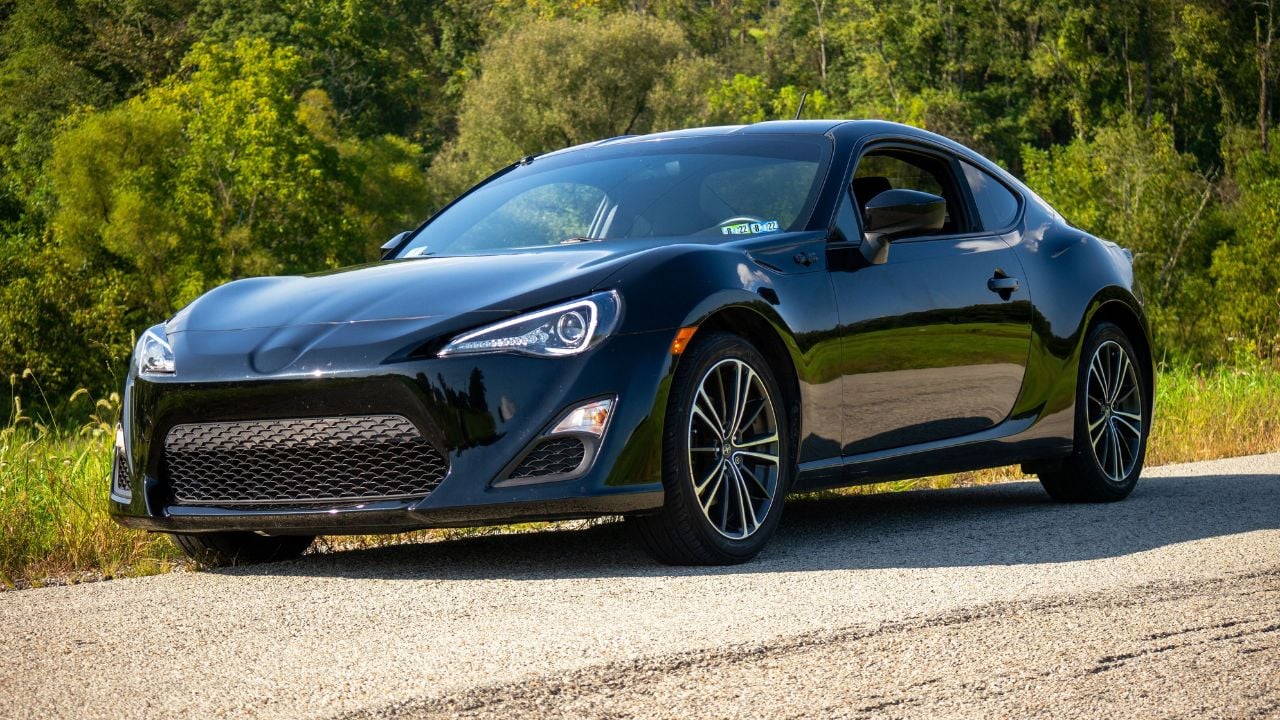
Scion was created to attract young buyers to Toyota showrooms with quirky, affordable vehicles and a no-haggle pricing model. The irony of Scion’s discontinuation is that it succeeded too well at its mission, and Toyota no longer needed a separate brand.
The average age of Scion buyers was successfully lower than Toyota’s, proving the brand strategy worked. However, Toyota realized they could simply fold the successful Scion models into the Toyota lineup and market them to the same demographic without the overhead of a separate brand. The decision came as Toyota streamlined operations and recognized that modern marketing doesn’t require separate dealerships to reach younger buyers.
Scion’s models like the FR-S and iM found new life as Toyotas, proving the products were never the problem.
Dodge Viper (2017)

The Viper was everything a supercar should be: outrageous, powerful, and unapologetically excessive with its 645-horsepower V10.
What ended production wasn’t performance complaints but rather the surprising reality of federal safety regulations. New federal safety standards taking effect on September 1, 2017, including FMVSS 226 ejection mitigation requirements, would have required major structural and airbag changes, an investment that was hard to justify at the Viper’s low production volume. The relatively low production volume of around 600 units annually couldn’t justify the engineering investment required for compliance.
Dodge also faced the reality that the modern supercar buyer increasingly expected refinement and technology alongside raw performance. The Viper represented an old-school philosophy that had become difficult to sustain in an era of sophisticated safety systems.
Chevrolet SS (2017)

The Chevrolet SS was a proper sports sedan with a 415-horsepower V8 and rear-wheel drive that felt like a budget BMW M5. Its downfall came from surprisingly poor marketing and an unfortunate name that made it nearly invisible in the market.
Chevrolet barely advertised the SS, and many potential buyers had no idea it even existed in showrooms. The car was essentially a rebadged Holden Commodore from Australia, and when Holden ceased manufacturing, the supply chain disappeared. GM sold 2,479 units in 2014, 2,895 in 2015, 3,013 in 2016, and 4,055 in 2017, numbers that could not justify continued importation.
The SS became a future collectible, beloved by those who knew about it but forgotten by the masses who never got the chance.
Nissan Cube (2014)

The quirky Cube with its asymmetrical rear window and carpet accessories was designed to capture young urban buyers seeking personality. What killed it in America was timing, as it arrived just as the market was shifting toward more conventional crossovers.
The Cube’s polarizing styling worked in Japan where compact cars reign supreme, but American buyers wanted something larger and more familiar. Nissan also struggled with the Cube’s positioning against their own Juke, which offered more conventional styling and better performance. U.S. sales were 21,471 in 2009 and 22,968 in 2010, then declined sharply in the years that followed.
The Cube’s discontinuation shows how cultural preferences don’t always translate across markets, even for global manufacturers.
Lincoln MKT
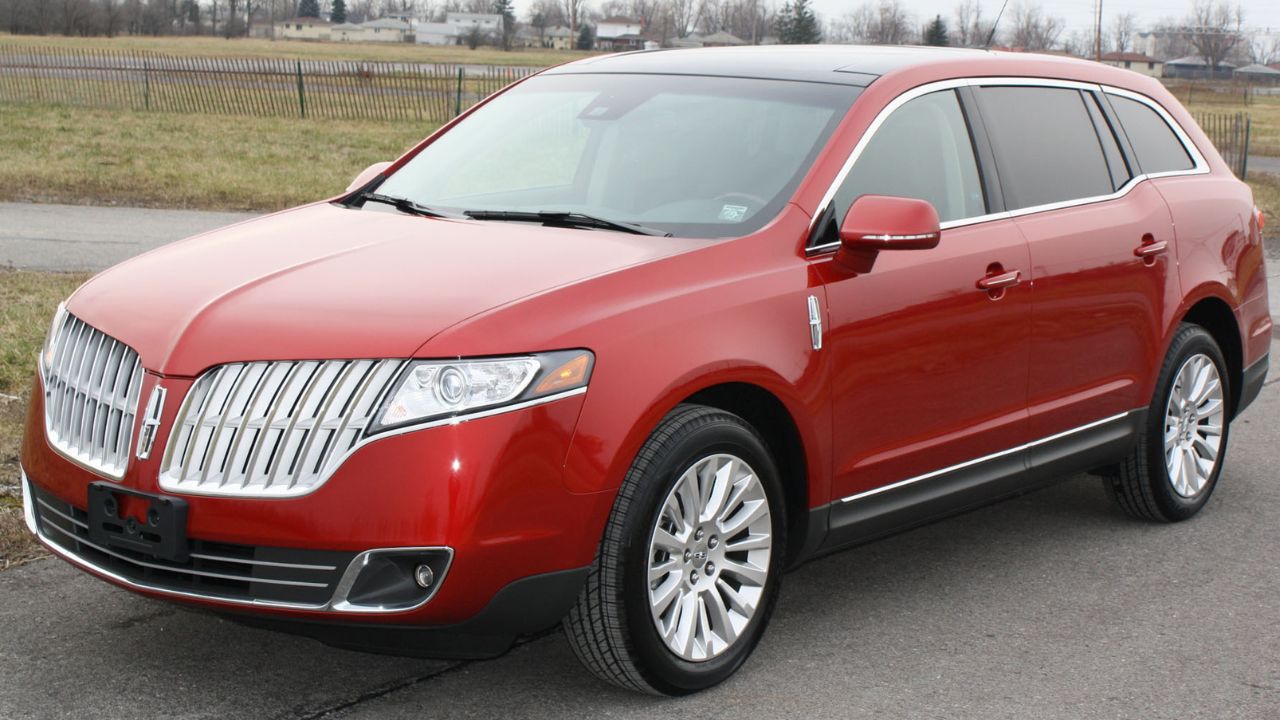
The MKT was Lincoln’s three-row luxury crossover that never quite found its identity in a competitive segment. The surprising reason it disappeared was Lincoln’s decision to completely reinvent their naming strategy and design language.
Rather than update the MKT, Lincoln chose to start fresh with the Aviator for retail buyers, a model built on a different rear drive based platform. The MKT suffered from conservative styling that didn’t differentiate it enough from the Ford Flex with which it shared underpinnings.
Lincoln realized they needed distinctive designs to justify premium pricing, not just upgraded Ford products. The MKT’s departure marked Lincoln’s transformation from a Ford luxury trim level to a brand with genuine identity.
Conclusion

The automotive graveyard is filled with vehicles that deserved better fates, but their stories reveal the complex realities of modern car manufacturing. From regulatory challenges to corporate restructuring, the reasons behind discontinuations often have little to do with the quality of the vehicles themselves.
These twelve examples demonstrate that success requires alignment of product, timing, pricing, brand perception, and corporate strategy. Each discontinued model teaches valuable lessons about what it takes to survive in an industry that demands constant evolution. The good news is that many of these vehicles have developed cult followings, with enthusiast communities keeping their memories alive.
As we look toward an electric future, today’s combustion-powered favorites may all join this list sooner than we think.