Greece is often celebrated for its sun-drenched islands and ancient ruins, but tucked between its olive groves and mountain villages lies another treasure: the legacy of Byzantine art and faith. The Byzantine Empire left an indelible mark on Greece’s landscape, building churches that glow with gold mosaics, marble icon screens, and sacred silence. Each one tells a story of devotion, resilience, and artistic genius that has survived centuries of wars, earthquakes, and empires. Walking into these churches feels like stepping through time, where faith meets breathtaking beauty.
From the famous monasteries of Meteora perched on cloud-touched cliffs to humble chapels on forgotten islands, every Byzantine church in Greece reveals a different facet of the country’s soul. Some dazzle with intricate frescoes and glittering domes, while others radiate quiet peace in remote corners of nature.
They stand as monuments not just of religion, but of art, culture, and endurance. Visiting them means tracing the spiritual heart of Greece through its most sacred walls. Here are sixteen of the most beautiful Byzantine churches that continue to inspire awe and devotion across the centuries.
Church of Panagia Kapnikarea, Athens
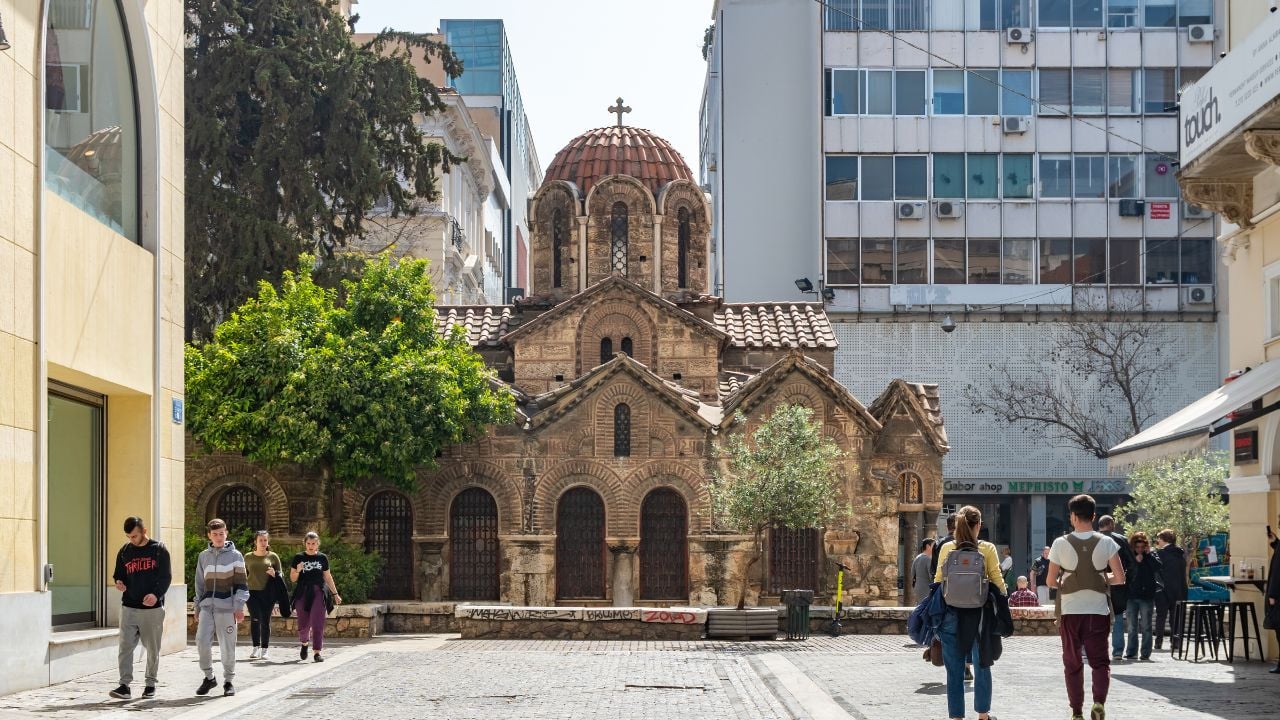
Hidden in the busy streets of central Athens, Panagia Kapnikarea stands as a serene survivor of the 11th century. Surrounded by modern shops and cafes, this small church seems frozen in time, offering a peaceful escape from the city’s noise.
Its red-tiled dome and intricate brickwork represent the perfect blend of Byzantine elegance and urban charm. Inside, visitors are greeted by stunning icons and soft candlelight that create an atmosphere of deep reverence. The faint scent of incense lingers, reminding everyone that this has been a place of prayer for nearly a thousand years.
The church’s mosaics and frescoes, restored through the centuries, depict the Virgin Mary in brilliant color, a symbol of divine protection over the city. Locals often stop for a quiet moment, lighting candles between errands, connecting ancient tradition with everyday life. The contrast between the sacred stillness of Kapnikarea and the modern chaos surrounding it makes it even more magical. Every brick seems to whisper stories of faith and survival through time. Visiting Panagia Kapnikarea isn’t just about history, it’s about feeling the spiritual heartbeat of Athens itself.
Hosios Loukas Monastery, Boeotia
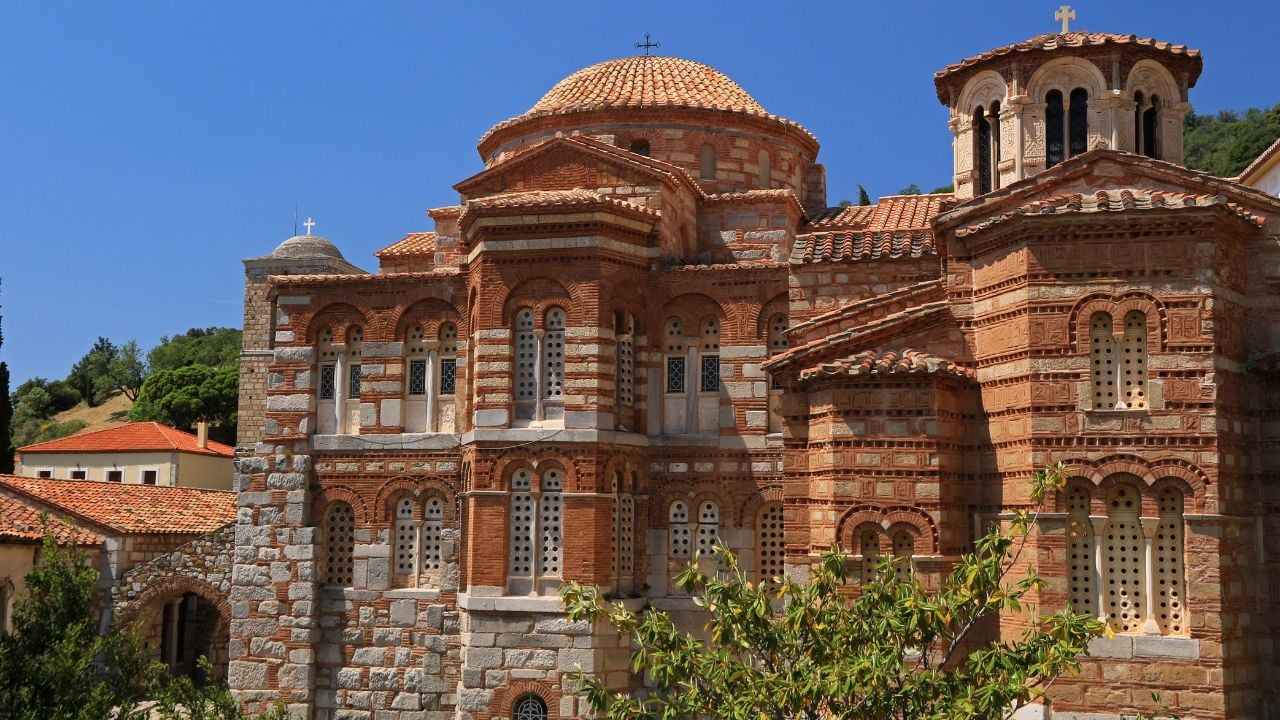
Hosios Loukas Monastery is one of Greece’s most breathtaking Byzantine monuments, set against the green slopes of Mount Helicon. Founded in the 10th century, it’s famous for its dazzling gold mosaics that shimmer in natural light. The walls tell stories from the life of Christ and the saints, crafted with meticulous beauty that rivals any church in Constantinople. The monastery’s architecture harmonizes with the landscape, creating a sense of heaven meeting earth. Every corridor, arch, and courtyard carries an air of quiet sanctity and timeless grace.
Walking inside feels like entering a living museum of Byzantine art, where color, faith, and geometry unite in perfect balance. The mosaic of Christ Pantocrator in the dome radiates majesty and compassion, symbolizing the heart of Orthodox spirituality. Pilgrims and art lovers alike come from all over the world to experience its divine atmosphere. The mountain breeze outside contrasts beautifully with the golden light within. Hosios Loukas remains a jewel of faith and artistry that continues to inspire awe a millennium later.
Church of Agios Demetrios, Thessaloniki
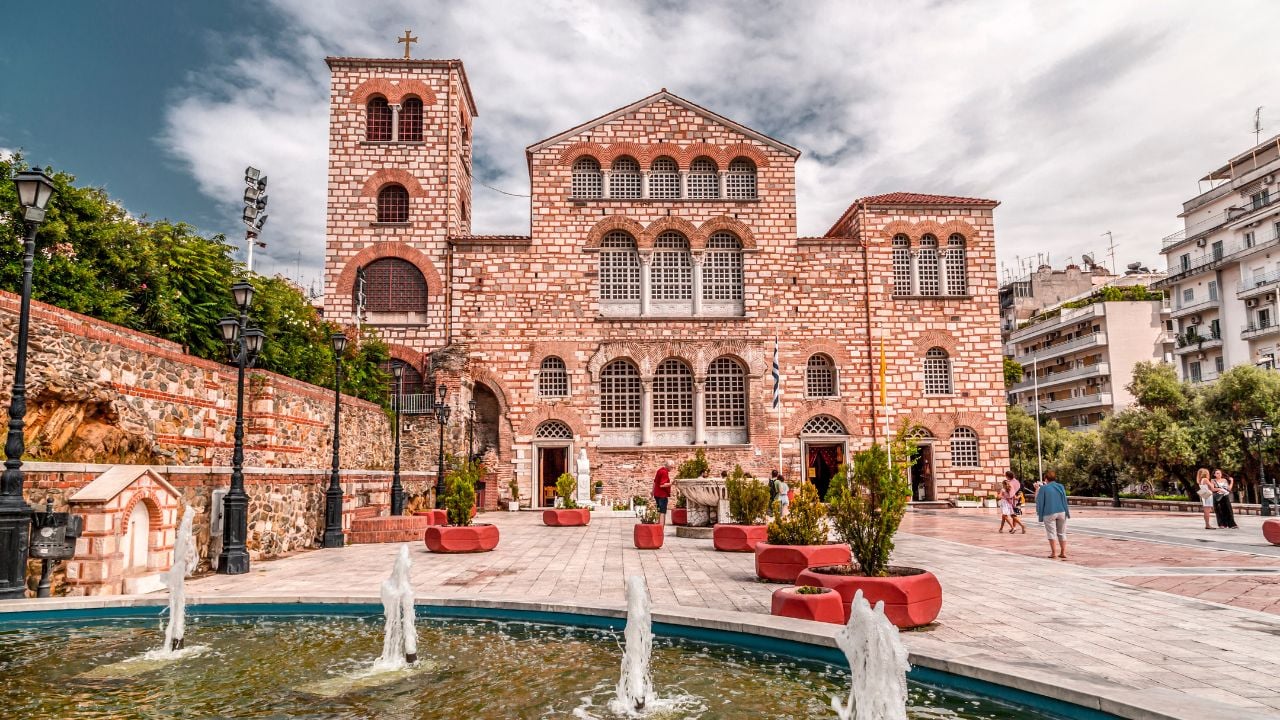
Agios Demetrios, the patron saint of Thessaloniki, has guarded the city since the 5th century through fires, invasions, and earthquakes. The basilica dedicated to him is one of Greece’s most sacred Byzantine landmarks, filled with relics, mosaics, and the saint’s crypt. Its tall arches, marble columns, and flickering lamps create a solemn and majestic atmosphere. The scent of incense fills the air, mixing with the sound of quiet prayers. Each corner seems alive with centuries of devotion and history.
The mosaics of Agios Demetrios are among the finest in the Orthodox world, depicting the saint blessing soldiers and citizens in brilliant gold and blue hues. Pilgrims come to touch the silver reliquary and leave small offerings, continuing traditions that date back over a thousand years. Light filters through stained windows, painting sacred patterns across the floor. Despite its age, the church feels vibrant and alive, still serving as the city’s spiritual heart. A visit to Agios Demetrios is not just sightseeing, it’s an encounter with living faith.
Church of Panagia Parigoritissa, Arta
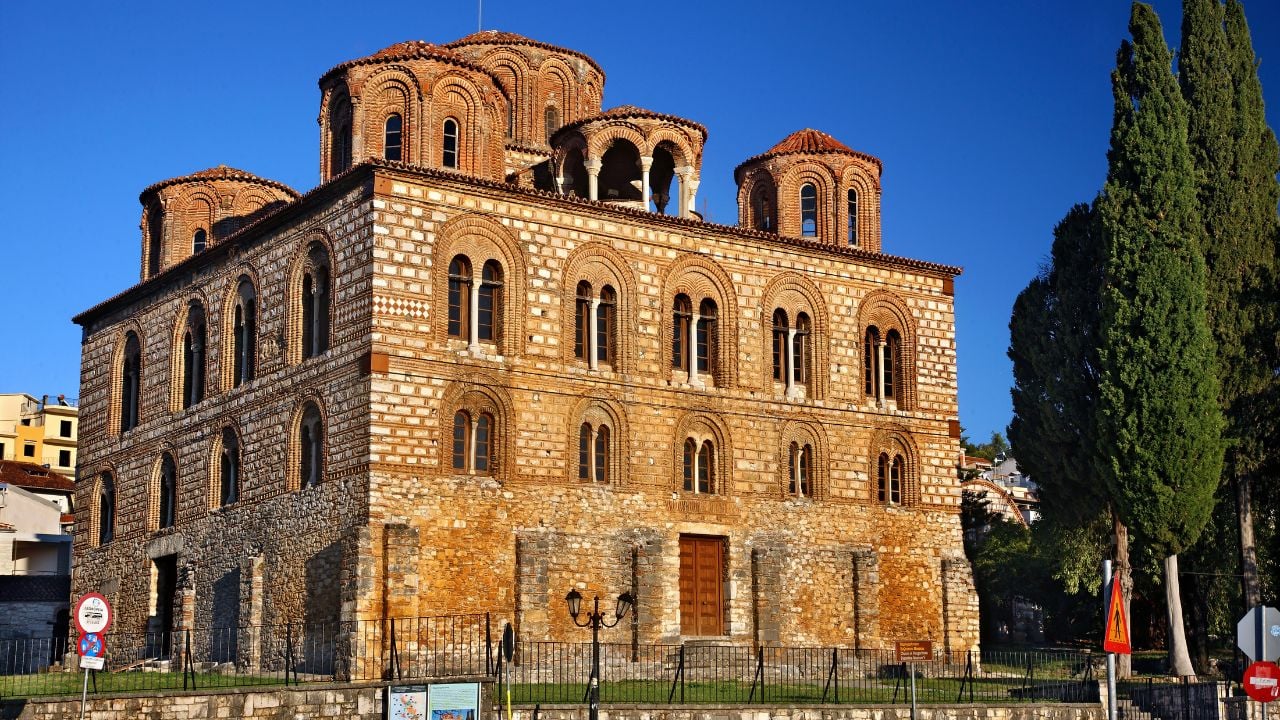
Tucked in the town of Arta, the Church of Panagia Parigoritissa shines as one of the architectural masterpieces of the late Byzantine period. Its complex domes and intricate brick patterns reflect the refined artistry of the 13th century. Inside, visitors find walls covered with frescoes that depict heavenly visions in striking color and detail. The central dome seems to float, supported by slender arches that give the building an ethereal quality. Every inch of the church tells of devotion expressed through geometry and light.
Parigoritissa means “Our Lady of Consolation,” and stepping inside truly feels like entering a place of comfort and peace. The play of sunlight across golden icons adds a sense of divine warmth. Chanting occasionally echoes through the nave, blending with the soft hum of history. Even after centuries, the craftsmanship remains awe-inspiring, a perfect harmony of human skill and spiritual inspiration. This church is a hidden gem for anyone seeking to experience Byzantine beauty beyond the tourist trails.
Church of Panagia Chalkeon, Thessaloniki
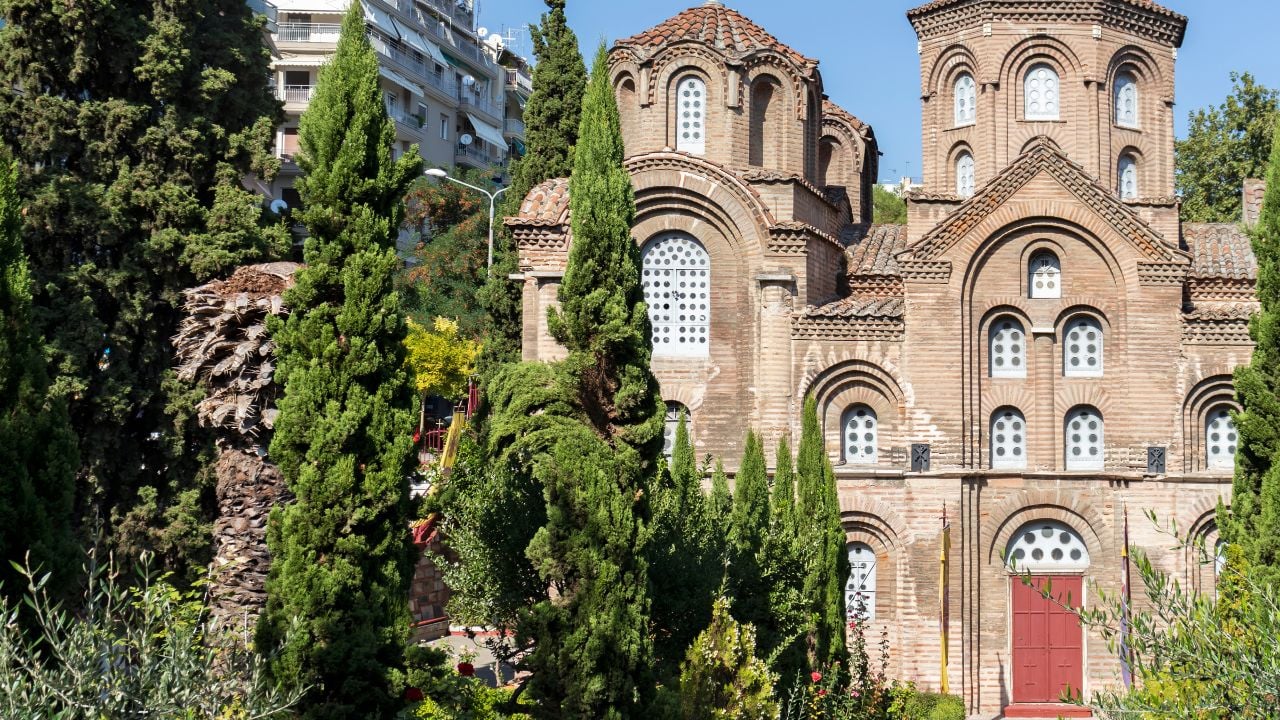
Often called the “Red Church” for its distinctive brick exterior, Panagia Chalkeon is a perfect example of middle Byzantine elegance. Built in 1028, it stands gracefully in the heart of Thessaloniki, surrounded by gardens and modern streets. Its symmetrical domes and arches are beautifully preserved, showing the city’s long Byzantine legacy. The interior glows with ancient frescoes and golden icons that reflect centuries of worship. The air inside feels cool and still, carrying a sense of timeless reverence.
The church was built by a noble family, and their devotion shows in every carved detail and painted figure. Visitors are struck by how the structure balances simplicity with profound spiritual depth. The soft light filtering through the windows gives the sacred images an almost living presence. Locals still come to light candles, maintaining a connection between the city’s past and present. Panagia Chalkeon stands as both a monument and a sanctuary in the heart of Thessaloniki’s urban rhythm.
Monastery of Daphni, near Athens
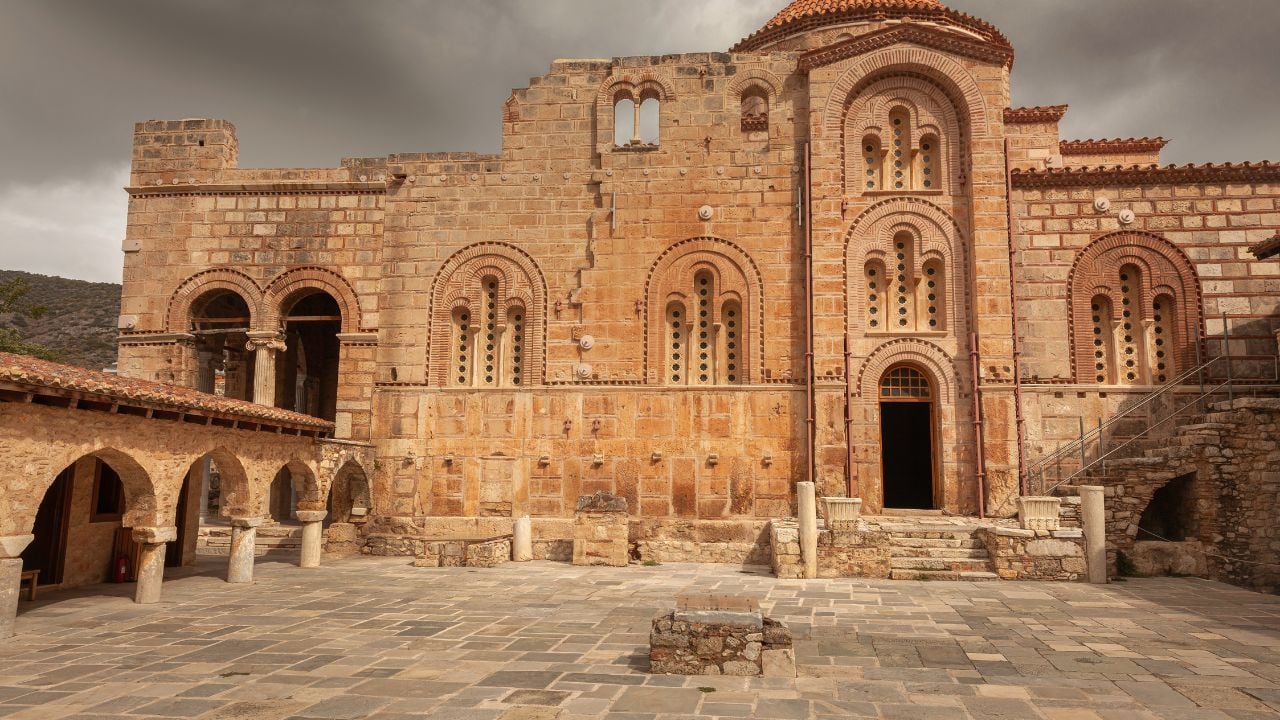
Located just outside Athens, the Monastery of Daphni is a UNESCO World Heritage site that radiates Byzantine grandeur. Built in the 11th century, it’s renowned for its stunning mosaic of Christ Pantocrator in the dome, gazing serenely from a background of shimmering gold. The symmetry and mathematical precision of its architecture reflect both faith and intellect. Every wall tells a sacred story in color and light. Despite its age and restorations, the atmosphere remains powerfully spiritual.
Stepping inside, visitors feel immediately enveloped in silence and sacred geometry. The golden mosaics shimmer even in the faintest light, transforming the space into a celestial vision. The monastery once served as a refuge for travelers and monks, its walls echoing centuries of prayer. Today it stands as one of the finest examples of Byzantine art in Greece. Daphni Monastery is a testament to how faith can shape architecture into pure beauty.
Church of Agia Sophia, Monemvasia
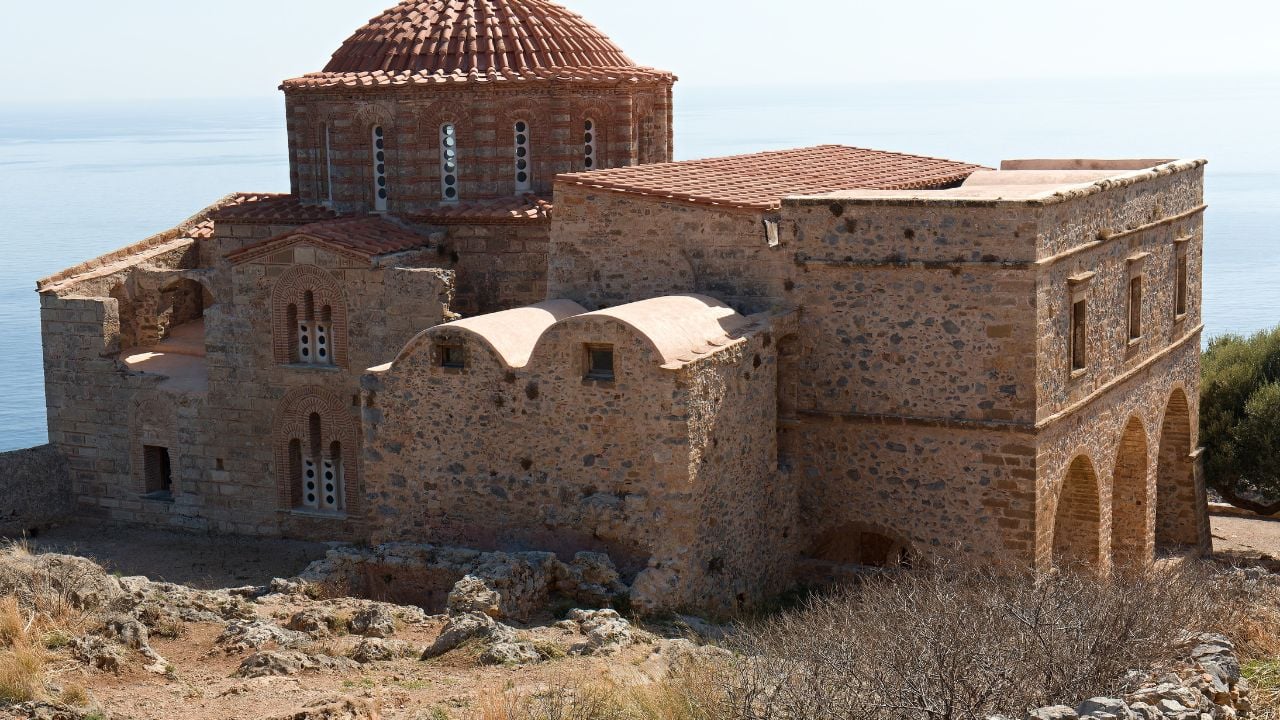
Perched high above the medieval town of Monemvasia, Agia Sophia looks out over the endless blue of the Aegean Sea. Built in the 12th century, it was inspired by the grand Hagia Sophia of Constantinople. Its elegant domes and stone arches blend seamlessly with the rugged cliffside landscape. Inside, faded frescoes and ancient carvings whisper tales of devotion and empire. The ocean breeze drifts through its open doors, merging the sacred and the natural.
The church’s simple elegance mirrors the humility of monastic life, while its location offers a sense of divine perspective. Standing on the terrace, visitors see both heaven and earth stretched before them. The harmony between architecture and landscape makes Agia Sophia one of Greece’s most breathtaking sacred sites. The light changes constantly, bathing the stones in gold at sunset. Every visit feels like a prayer written in wind and stone.
Church of Agios Nikolaos Orphanos, Thessaloniki
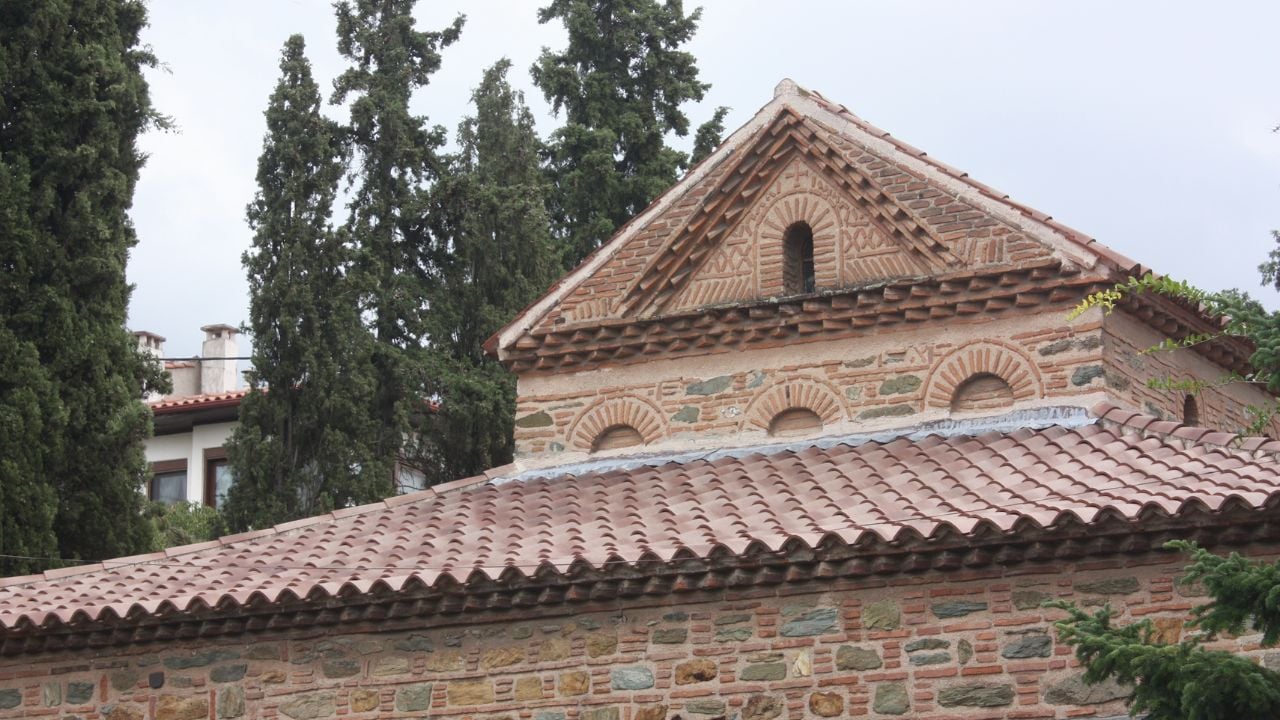
Agios Nikolaos Orphanos may be small, but its frescoes are among the most extraordinary in all of Byzantium. Hidden in a quiet corner of Thessaloniki, this 14th-century church glows with scenes from the Gospels painted in vivid, emotional color. The figures seem to move with life, expressing tenderness and faith. The architecture itself is modest, focusing all attention on the interior art. Entering feels like walking into a medieval dream.
The walls tell stories of hope, sacrifice, and divine grace with unmatched delicacy. Art historians consider these frescoes a turning point in Byzantine painting for their humanity and warmth. The soft light that fills the church enhances their magic, bringing faces and halos to life. Silence reigns, broken only by whispers and footsteps. Agios Nikolaos Orphanos proves that true beauty doesn’t need grandeur, only faith and art in perfect harmony.
Church of Panagia Kosmosotira, Feres
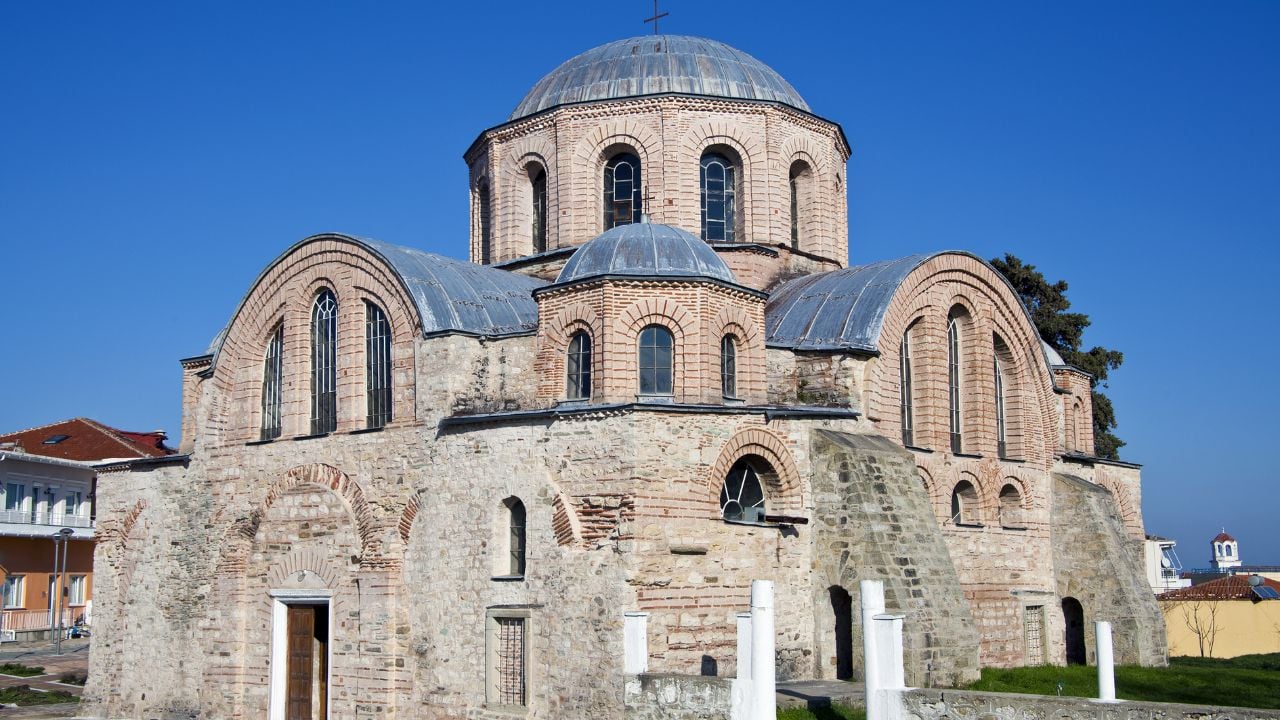
Standing proudly near the Evros River, the Church of Panagia Kosmosotira was built in the 12th century by Byzantine royalty. Its name means “Our Lady, Savior of the World,” and its architecture lives up to the title. The domes rise gracefully above the plains, reflecting sunlight like a crown of faith. Inside, the remnants of frescoes and stone carvings reveal the elegance of its original design. The peaceful surroundings make it a haven of reflection.
Kosmosotira once served as both monastery and fortress, protecting the region spiritually and physically. Though time and invasions have scarred its walls, its presence remains majestic. Pilgrims still visit to pray beneath its arches, sensing the strength of its history. The blend of power and grace in its design captures the essence of Byzantine spirituality. In this quiet corner of Greece, faith still echoes across the centuries.
Church of Panagia Ekatontapiliani, Paros
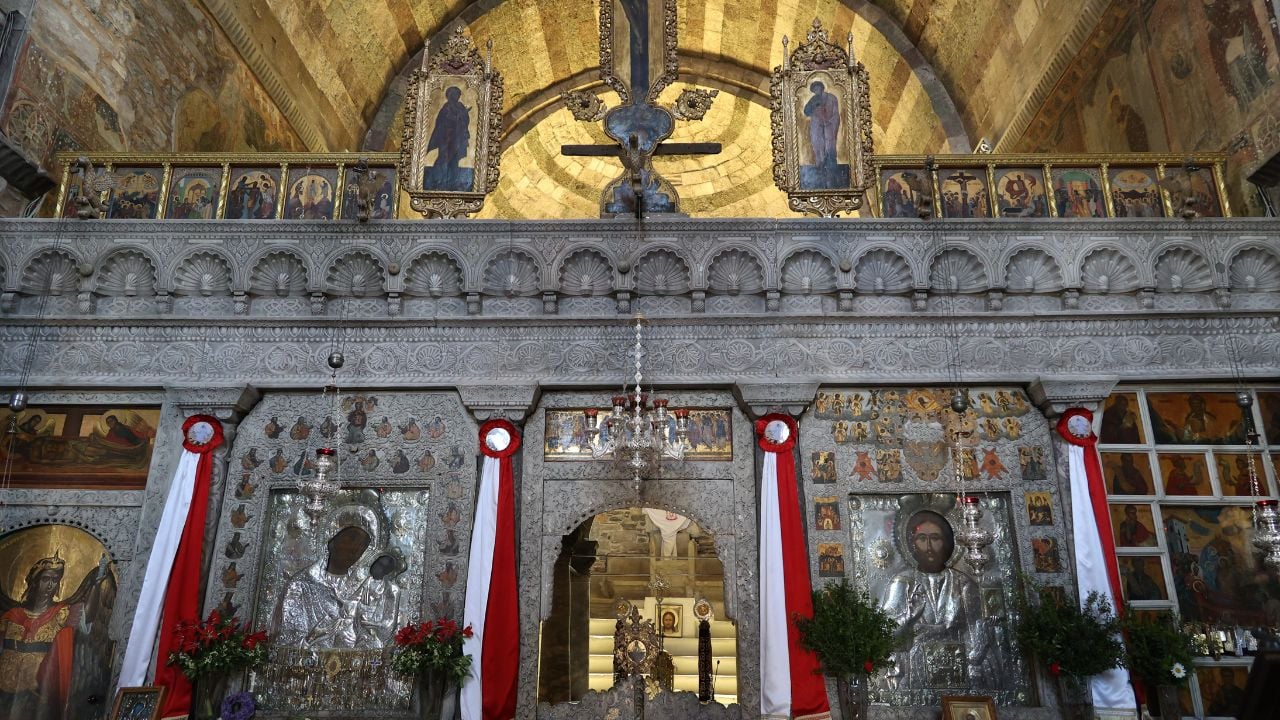
Known as the “Church of 100 Doors,” Panagia Ekatontapiliani is one of Greece’s oldest and most mysterious Byzantine churches. Built in the 4th century and expanded through Byzantine times, it’s both an architectural marvel and a spiritual legend. Marble columns, domes, and hidden chapels give it an almost labyrinthine beauty. Sunlight streams through narrow windows, illuminating centuries of worship. Pilgrims come from all over the world to experience its sanctity.
The legend says that the church has 99 known doors and one secret door that will open only on Judgment Day. Inside, the air feels thick with history and devotion. The icons and mosaics glow softly, telling stories of saints and miracles. Every step echoes with prayers whispered for generations. Ekatontapiliani stands as a timeless guardian of the island’s faith and identity.
Church of the Holy Apostles, Athens
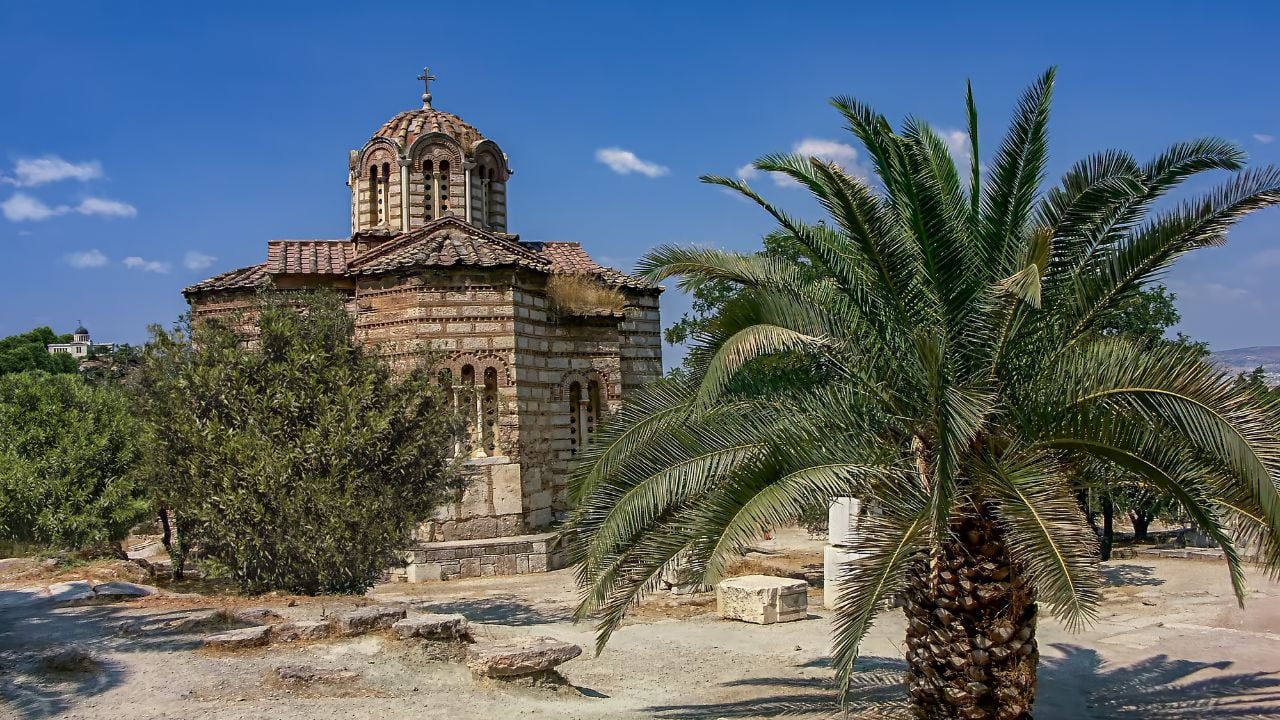
Nestled within the ruins of the Ancient Agora, the Church of the Holy Apostles bridges the worlds of antiquity and Byzantium. Built in the 10th century, it stands as one of Athens’s few surviving Byzantine monuments. The church’s cross-in-square design and ornate domes showcase the balance of proportion and beauty. Inside, delicate frescoes depict apostles, angels, and scenes from early Christianity. The combination of marble and sunlight gives it an otherworldly glow.
Surrounded by ancient columns and olive trees, it feels like a meeting place between faith and philosophy. The quietness of the site adds to its spiritual power. Visitors often pause to reflect on how seamlessly the sacred blends with the historical. Despite the centuries, the church feels alive, a symbol of continuity through Greece’s changing eras. The Holy Apostles stands as a living dialogue between the past and eternity.
Monastery of Saint John the Theologian, Patmos
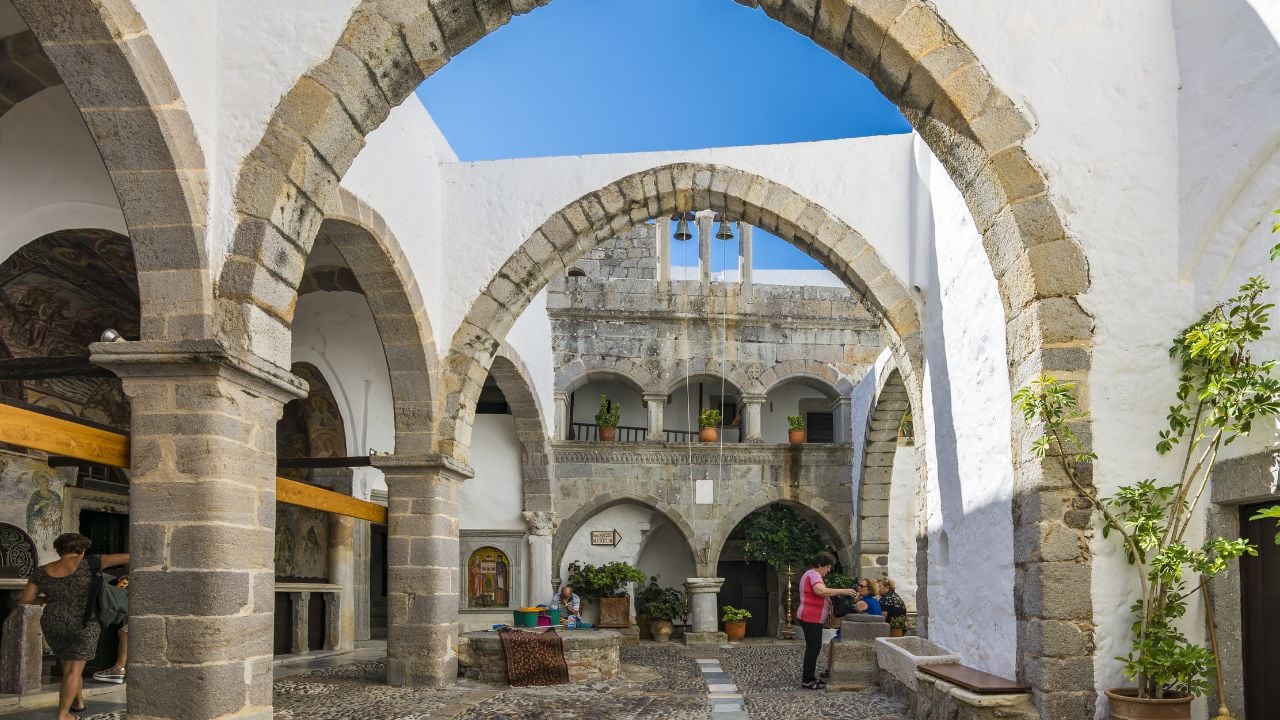
Crowning the island of Patmos, the Monastery of Saint John dominates both the landscape and the spirit of the island. Built in 1088, it resembles a fortress from the outside but hides a treasure of frescoes, manuscripts, and sacred relics within. Its thick stone walls protected it from pirates and invaders for centuries. The monastery’s courtyards are filled with light, olive trees, and whispers of ancient prayers. Each arch and corridor leads deeper into devotion.
The monastery is still active today, with monks maintaining traditions that date back nearly a thousand years. The library holds priceless manuscripts and icons that tell the story of Byzantine theology. From the ramparts, the view over the Aegean is breathtaking, symbolizing spiritual freedom and divine connection. Pilgrims come from all over the world to experience its peace. On Patmos, history, scripture, and heaven seem to meet.
Monastery of Panagia Hozoviotissa, Amorgos
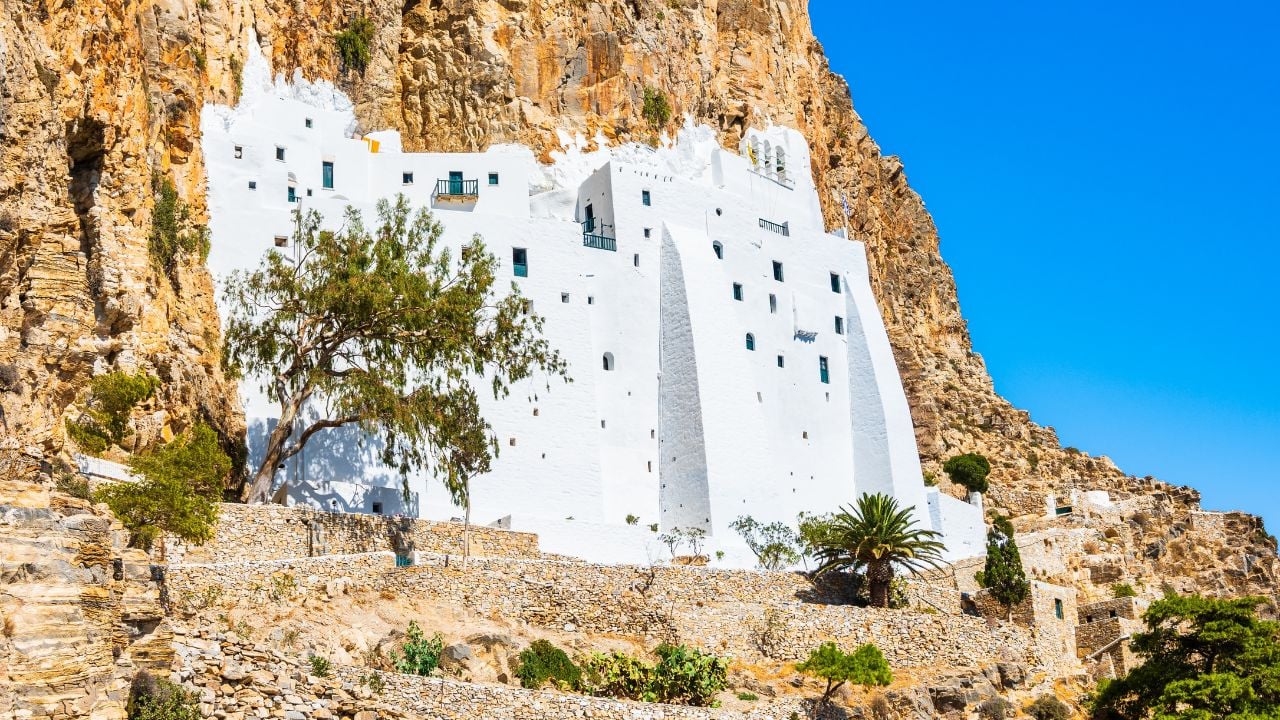
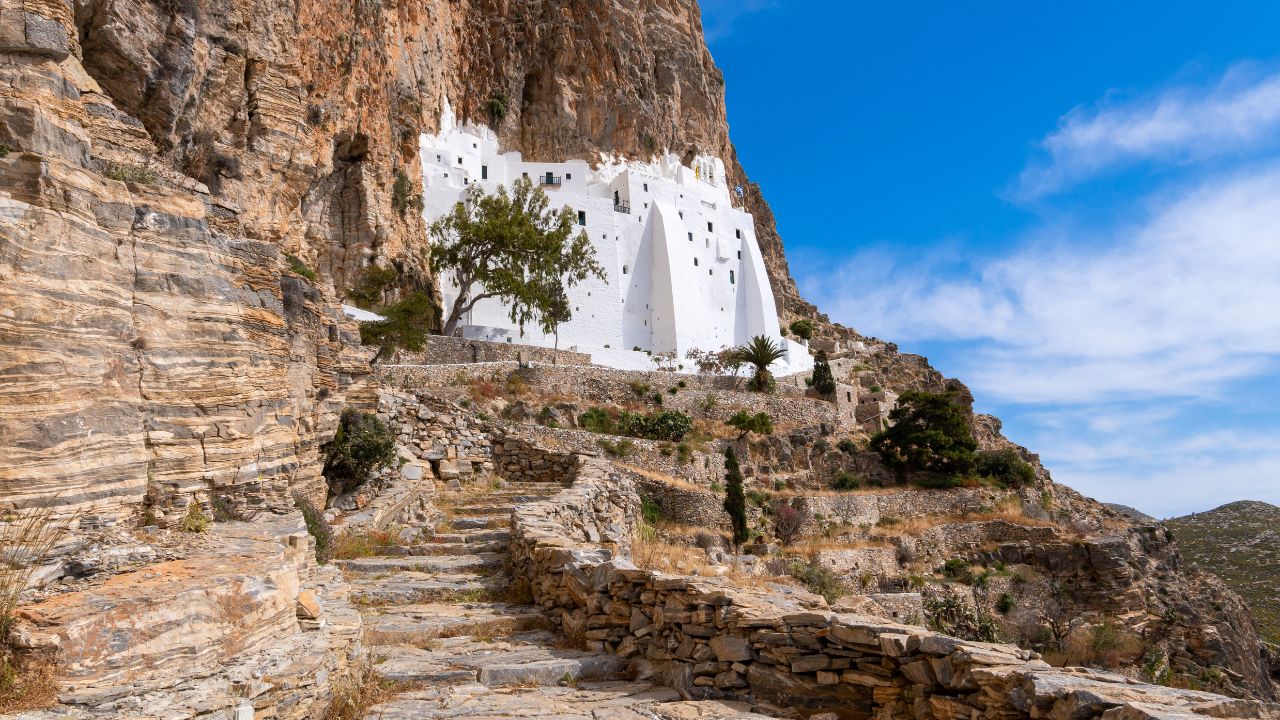
Clinging dramatically to the cliffs of Amorgos, the Monastery of Panagia Hozoviotissa is one of the most breathtaking Byzantine sanctuaries in Greece. Built in the 11th century, it seems to grow out of the white rock, gazing endlessly over the deep blue Aegean.
The monastery was founded to protect an icon of the Virgin Mary believed to have arrived miraculously from Palestine. Its narrow stairways and low doorways lead visitors through centuries of quiet devotion and ascetic life. The dazzling contrast between white walls and turquoise sea makes it feel like a holy mirage suspended between heaven and earth.
Inside, small chapels and ancient icons radiate a deep sense of faith and solitude. The scent of beeswax and incense fills the air, mingling with the ocean breeze that slips through stone windows. Monks still live here, maintaining a rhythm of prayer that hasn’t changed in a millennium. Visitors are often offered rakomelo, warm honeyed raki, as a sign of hospitality and peace. Panagia Hozoviotissa isn’t just a monastery; it’s a living testament to human devotion in one of the most spectacular settings on Earth.
Church of Panagia Kera, Kritsa (Crete)
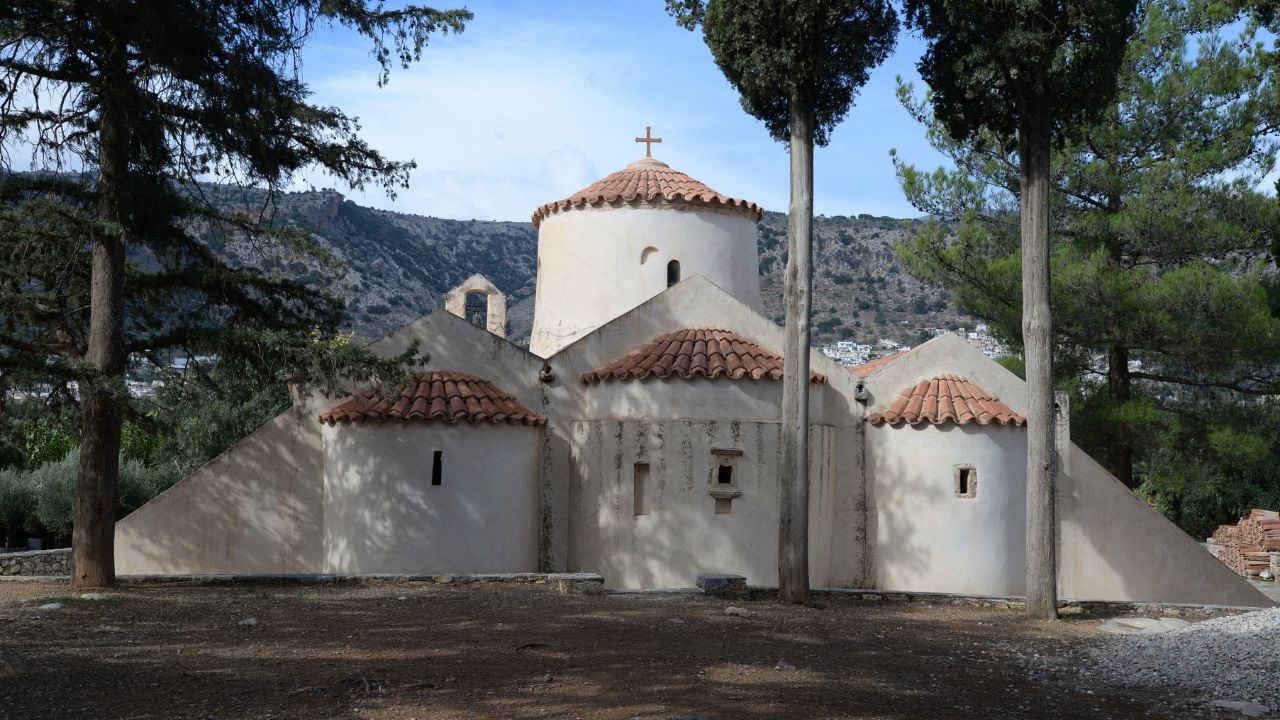
Hidden among olive groves near the Cretan village of Kritsa, Panagia Kera holds some of the most exquisite Byzantine frescoes in Greece. Dating from the 13th century, this small church may look modest from the outside, but inside it bursts with color, emotion, and sacred artistry. Every wall and arch is covered with vivid scenes from the New Testament painted in extraordinary detail. The expressions of the figures reveal deep humanity, making it a masterpiece of spiritual storytelling. The moment you step inside, you feel history breathing softly around you.
The frescoes remain remarkably preserved, their reds and blues glowing even in dim light. Each panel reflects a chapter of faith, painted by anonymous hands that captured divine emotion with grace and skill. The surrounding landscape adds to its charm, quiet hills, birdsong, and the smell of thyme in the air. Locals visit often, lighting candles for health and protection, keeping ancient traditions alive. Panagia Kera proves that even the smallest church can hold the most profound beauty and faith.
Monastery of Nea Moni, Chios
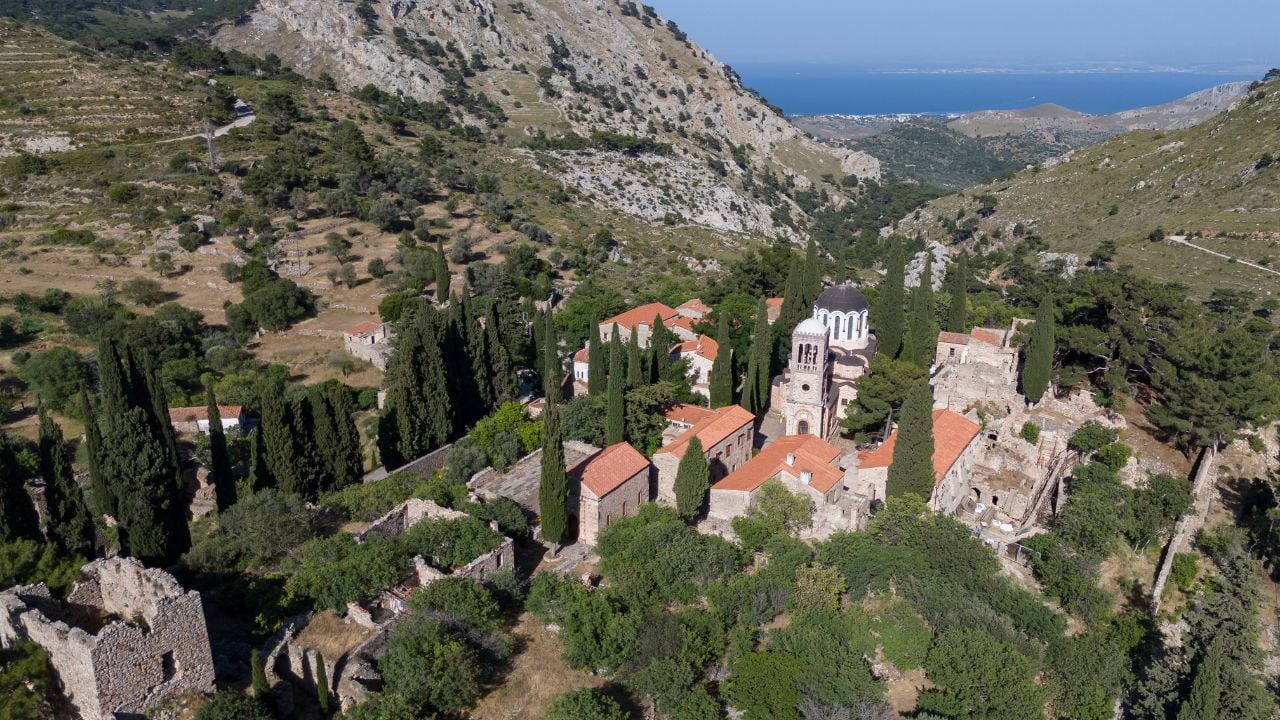
Nea Moni on the island of Chios is one of Byzantium’s grandest achievements, a UNESCO treasure built in the 11th century. Its golden mosaics are among the most spectacular in the world, rivaling those of Constantinople. The monastery’s design follows precise geometric patterns that reflect divine order. Light plays across the marble and gold, creating a sense of heaven on earth. Even in silence, the space seems to sing with faith.
The monks who once lived here left behind a legacy of devotion and artistry. Despite damage from earthquakes and time, Nea Moni remains majestic and awe-inspiring. Visitors feel both humbled and uplifted as they walk through its arches. Every mosaic panel tells a sacred story, rich with color and symbolism. Nea Moni is not just a monument, it’s a masterpiece of spirit made visible.
Meteora Monasteries, Thessaly
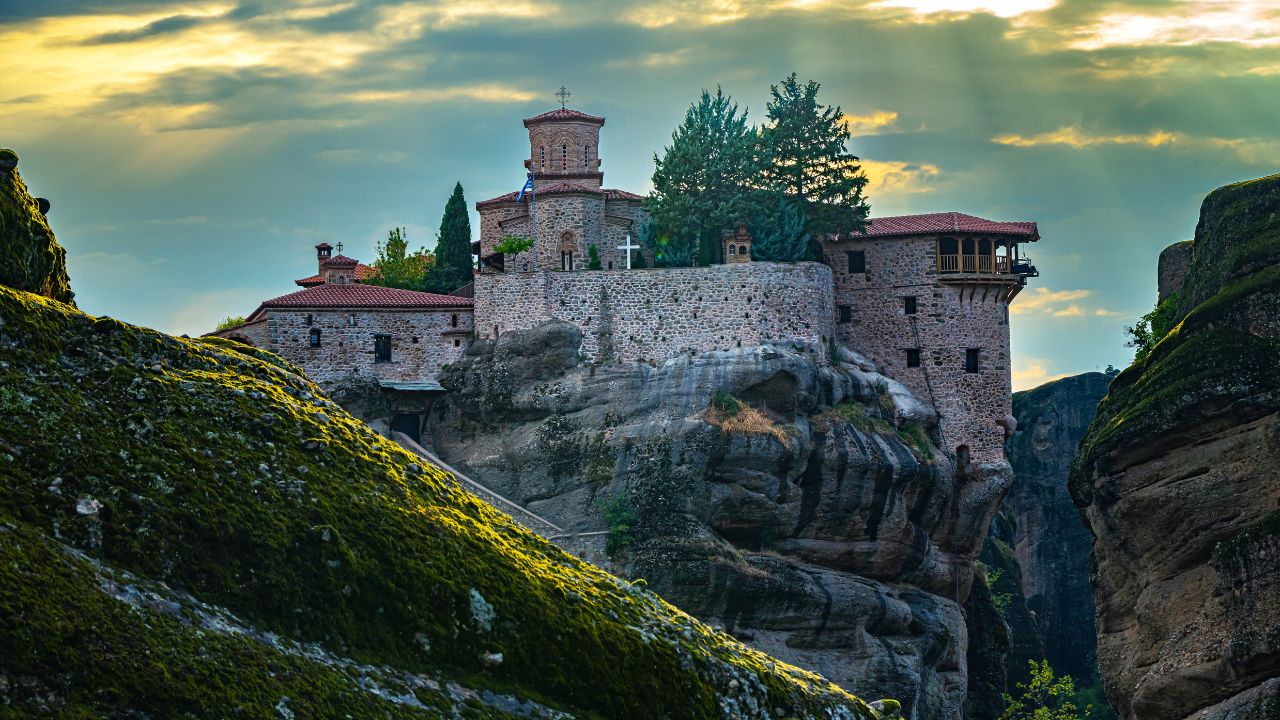
No list of Byzantine wonders would be complete without Meteora, where monasteries rise from massive stone pillars that pierce the sky. Built by monks seeking solitude and closeness to God, these structures defy gravity and logic. Their frescoes, icons, and relics represent centuries of faith carved into the clouds. The climb to reach them is both physical and spiritual, rewarding travelers with silence and breathtaking views. Every sunrise paints the stone walls in shades of gold and grace.
Each monastery, from Great Meteoron to Varlaam and Rousanou, offers a glimpse of monastic life unchanged for hundreds of years. The sound of bells echoes across valleys, merging with wind and prayer. Visitors stand in awe at the harmony between human devotion and natural majesty. Meteora feels like the meeting point between heaven and earth. It is, without question, one of the most extraordinary expressions of Byzantine faith and beauty in the world.