There’s a philosophy in motorsport that’s as old as racing itself: add lightness. While some manufacturers chase horsepower numbers like they’re collecting Pokémon cards, the truly enlightened souls know that shaving pounds off a chassis can be just as intoxicating as adding power.
These featherweight track weapons prove that when you strip away everything unnecessary, you’re left with pure, unadulterated driving nirvana. The cars on this list have taken weight reduction to borderline obsessive levels, tipping the scales at figures that would make a modern SUV’s spare tire feel heavy. They’re the automotive equivalent of carbon fiber ballet dancers: graceful, purposeful, and absolutely thrilling to watch in motion.
Whether through exotic materials, minimalist design, or just plain engineering wizardry, these machines remind us that sometimes less really is more.
Ariel Atom 4 – 1,433 lbs
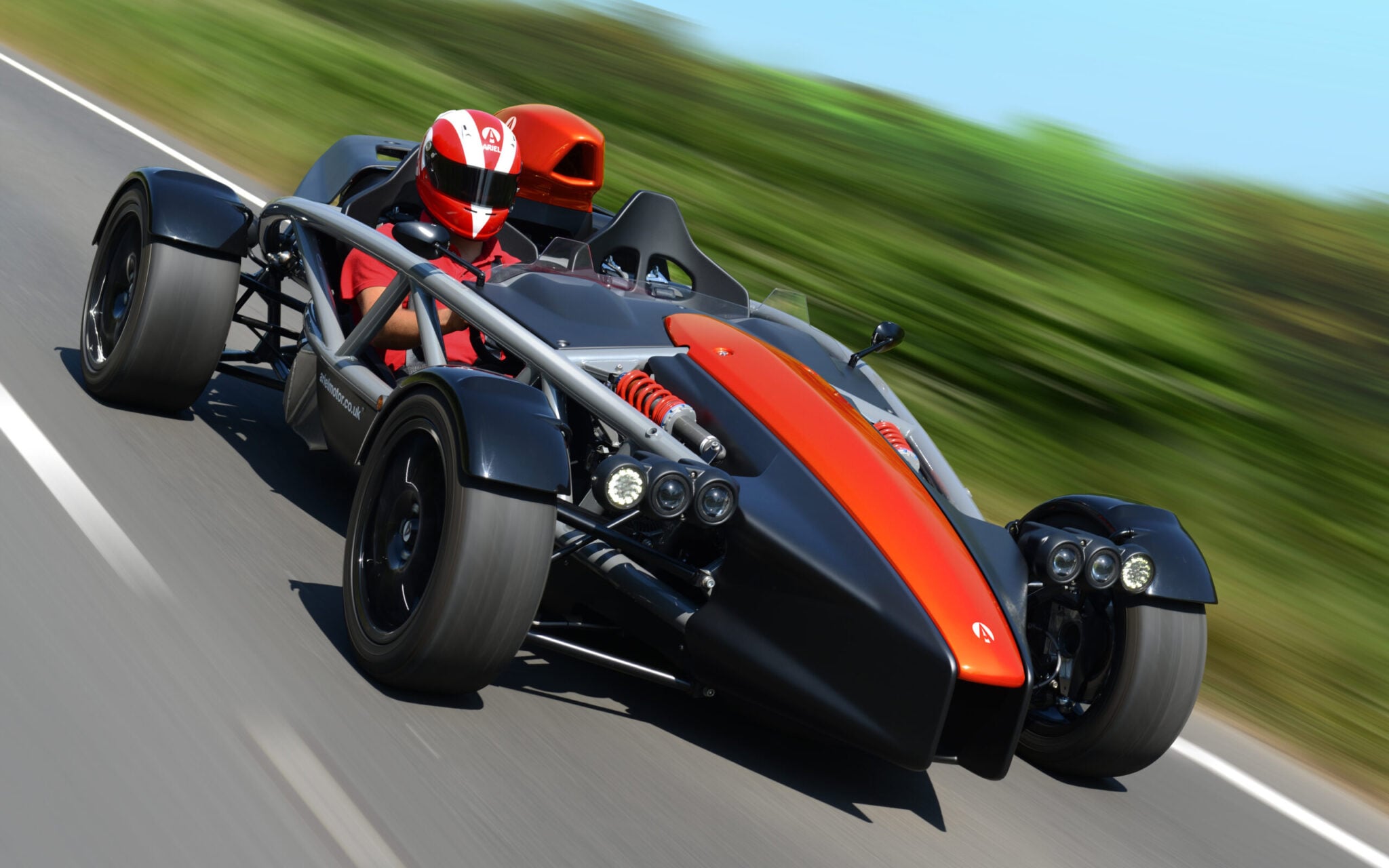
The Ariel Atom looks like someone forgot to finish building it, and honestly, that’s the entire point. This British-built missile dispenses with frivolous concepts like “body panels” and “weather protection” to create something that feels more like a street-legal roller coaster than a car.
At just 1,312 pounds, it’s lighter than most motorcycles with sidecars, yet packs up to 320 horsepower from its Honda-sourced engine. The power-to-weight ratio is absolutely bonkers – we’re talking 0-60 mph in under 3 seconds for a car you can technically drive to the grocery store. Sure, you’ll arrive with windswept hair and possibly a few bugs in your teeth, but you’ll be grinning like an absolute maniac.
The Atom proves that when you eliminate everything except the essentials, the essentials become extraordinary.
Caterham Seven 620R – 1,213 lbs
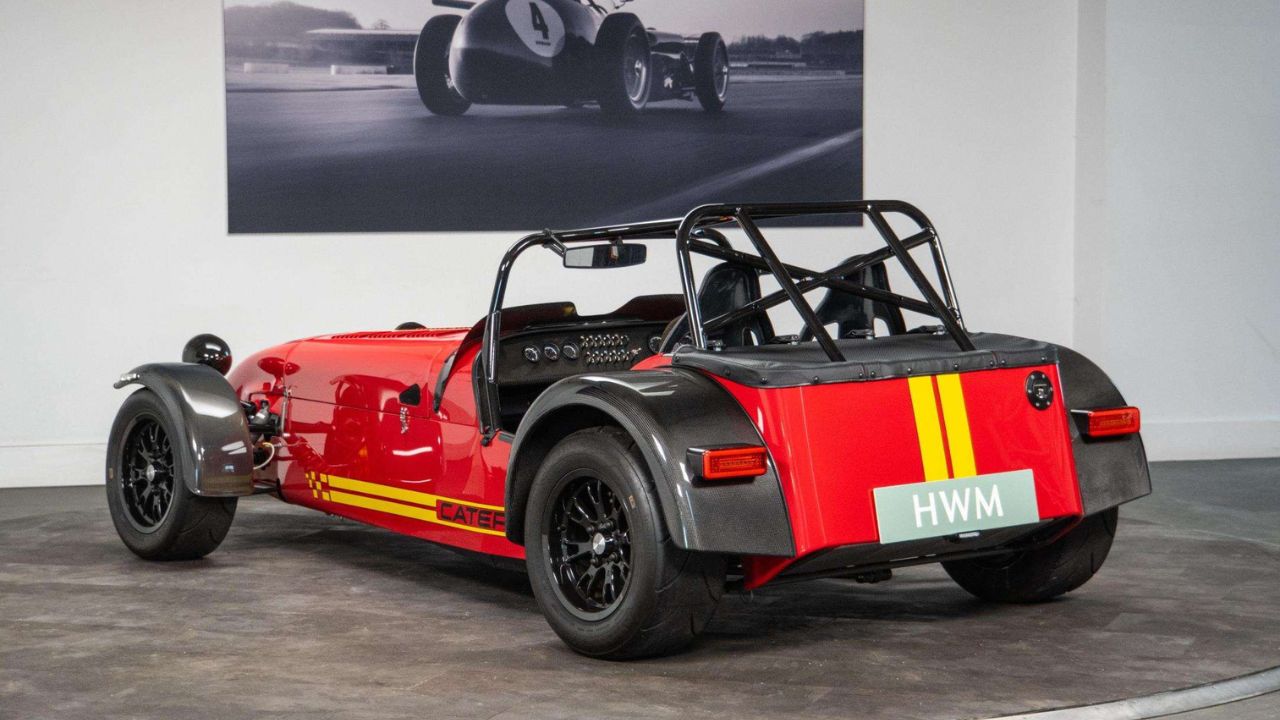
The Caterham Seven has been making lightweight enthusiasts weak in the knees since the 1970s, but the 620R takes the formula to absolutely ludicrous extremes. At 1,213 pounds, it weighs less than a Smart Fortwo, yet produces 310 horsepower from its supercharged Ford Duratec engine.
This thing accelerates like physics forgot to show up for work that day – 0-60 mph happens in just 2.79 seconds, which is supercar territory from something that costs less than a loaded pickup truck. The driving experience is raw, unfiltered, and about as subtle as a megaphone at a library. You sit mere inches from the ground with the front wheels practically in your peripheral vision, feeling every pebble and imperfection in the road.
It’s uncomfortable, impractical, and absolutely glorious in ways that modern cars have completely forgotten how to be.
KTM X-Bow GT-XR – 2,315 lbs

Austrian motorcycle manufacturer KTM decided to build a car, and true to form, they approached it with the same “function over everything” mentality that makes their dirt bikes legendary. The X-Bow GT-XR tips the scales at under 2,500 pounds, which sounds hefty compared to some entries here until you remember it’s a fully enclosed GT car with actual creature comforts. The carbon fiber monocoque chassis is the real star, providing incredible rigidity while keeping weight in check.
Power comes from a 2.5-liter Audi five-cylinder producing 493 horsepower, launching this thing to 60 mph in 3.4 seconds. Unlike the truly Spartan track toys, this one actually has a roof, windows, and climate control, making it almost civilized. It’s proof that you can have your lightweight cake and eat it too, assuming you have about $300,000 lying around.
Lotus Elise Series 3 – 2,028 lbs

Lotus founder Colin Chapman’s famous mantra was “simplify, then add lightness,” and the Elise is basically that philosophy wrapped in fiberglass. At 2,028 pounds, it’s a masterclass in doing more with less, featuring a bonded aluminum chassis that’s both incredibly strong and refreshingly light.
The base model makes just 217 horsepower from a Toyota-sourced engine, but when your car weighs as much as a decent-sized dirt bike with a passenger, you don’t need much. The driving experience is pure and communicative in ways that modern cars, with their nannies and assists, simply can’t replicate. Every input is direct, every response immediate, making even a trip to the hardware store feel like a qualifying lap at Monaco.
Sadly, the Elise left the US market in 2011, but its influence on lightweight sports car design continues to echo through the industry.
BAC Mono R – 1,279 lbs
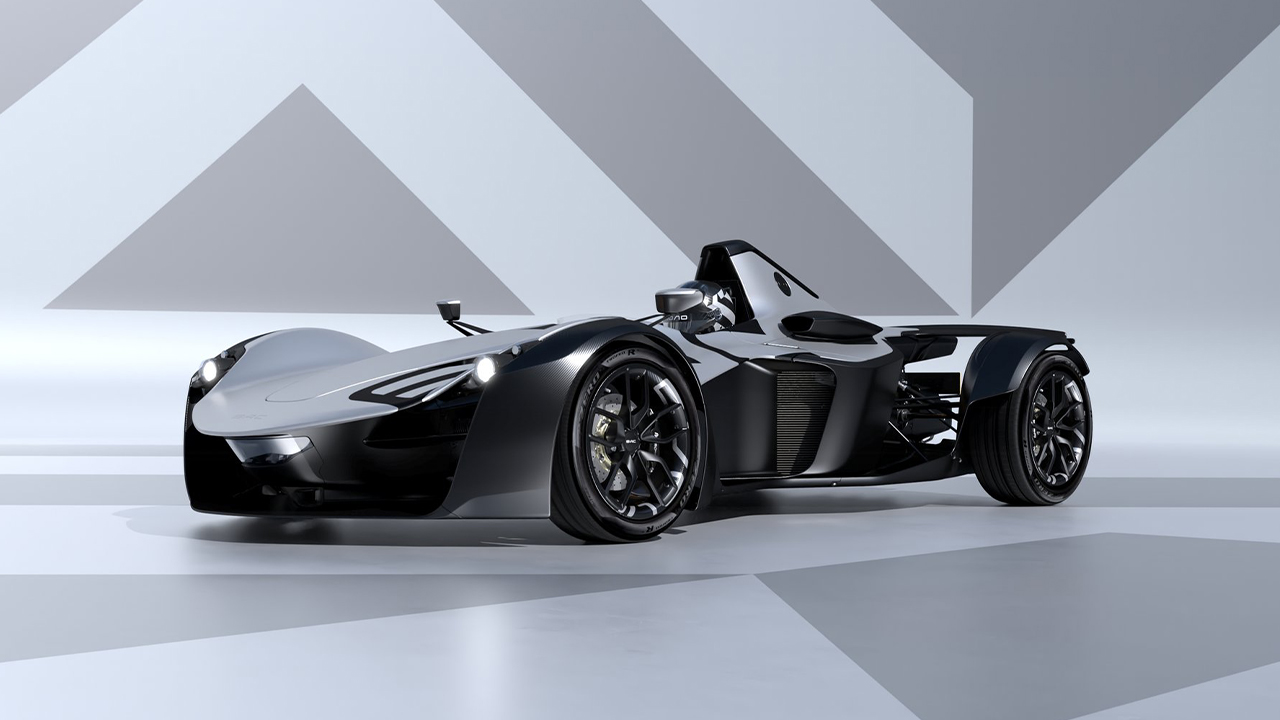
The BAC Mono R takes the single-seater concept and turns it into a road-legal fighter jet simulator. At just 1,279 pounds, this British trackday special makes most motorcycles look portly by comparison. The carbon fiber construction is obsessive, with even the suspension components crafted from the exotic material to shave every possible ounce. Power comes from a Mountune-tuned 2.5-liter four-cylinder producing 343 horsepower, which in a car this light translates to face-melting acceleration.
The sequential gearbox snaps off shifts with mechanical precision, while the pushrod suspension setup borrowed from Formula racing provides handling that borders on telepathic. There’s no passenger seat, no storage, and absolutely no pretense about being anything other than a pure driving tool. It’s automotive minimalism taken to its logical extreme, and the experience is reportedly transcendent.
Radical SR10 – 1,962 lbs

Radical has been building street-legal race cars since before it was cool, and the SR10 represents their most focused effort yet. This thing is basically a track day prototype, and it is primarily sold as a circuit focused car rather than a street legal one. At 1,598 pounds, it’s featherlight for something packing a 425-horsepower turbocharged 2.3-liter inline-four that makes peak power at around 6,900 rpm. The carbon fiber bodywork wraps around a tubular steel chassis, creating something that looks fast just sitting still.
On track, it can generate enough downforce to theoretically drive upside down in a tunnel, though we don’t recommend testing that theory. The driving position is pure race car, with your legs stretched out Formula-style and the steering wheel inches from your chest. You can actually drive this on the street, assuming your local roads can handle something with suspension travel measured in millimeters.
Dallara Stradale – 1,874 lbs

When an Italian company that’s been building race cars since 1972 decides to make a road car, you know it’s going to be special. The Dallara Stradale weighs just 1,874 pounds thanks to extensive use of carbon fiber for the chassis, body, and basically everything else they could manage.
The 2.3-liter turbocharged four-cylinder produces 400 horsepower, but the real party trick is the aerodynamics – this thing generates legitimate downforce at street speeds. You can option it with an aero package that increases downforce to levels that would make a GT3 car jealous. Inside, it’s surprisingly civilized, with actual seats, controls that make sense, and even a decent stereo system.
At around $250,000, it’s not exactly affordable, but you’re essentially buying a Formula car with license plates and air conditioning.
Vuhl 05RR – 1,532 lbs

This Mexican-built track weapon proves that lightweight engineering excellence isn’t limited to Europe and Asia. The Vuhl 05RR weighs a mere 1,532 pounds while packing 385 horsepower from a Ford EcoBoost engine, resulting in a power-to-weight ratio that embarrasses most supercars.
The carbon fiber and aluminum construction is beautifully executed, with the open-wheel design giving it an aggressive, purposeful stance. What makes the Vuhl special is its approachability – unlike some track toys that require a racing license just to start, this one is surprisingly friendly to enthusiastic amateurs. The steering is communicative without being darty, the brakes are powerful but progressive, and the whole package feels cohesive rather than compromised.
It’s handbuilt in Querétaro, giving it an exotic backstory that most European track cars can’t match.
Donkervoort D8 GTO-JD70 – 1,543 lbs

The Dutch have given us Van Gogh, tulips, and apparently, absolutely mental lightweight sports cars. The Donkervoort D8 GTO-JD70 weighs 1,543 pounds and produces up to 415 horsepower from a 2.5-liter Audi five-cylinder engine. Yes, that’s the same engine family that powers the Audi RS3, but tuned to levels that would make factory engineers nervous.
The result is a 0-60 mph time of just 2.7 seconds, which is genuinely absurd for something you can drive on public roads. The carbon fiber bodywork is hand-laid, and each car takes months to complete in their small Dutch factory. It’s basically a modern interpretation of the classic Lotus Seven formula, cranked up to 11 and then pushed a bit further just for good measure.
The driving experience is reportedly so intense that Donkervoort includes a “Lady Mode” that reduces power for passengers who might find the full experience a bit much.
Elemental RP1 – 1,100 lbs

The Elemental RP1 takes weight reduction to almost comical extremes, tipping the scales at about 1,389 pounds. This British track special uses extensive carbon fiber construction and a minimalist philosophy that makes other lightweight cars look indulgent.
Power comes from a 2.0-liter Ford EcoBoost engine producing 320 horsepower in standard form, though there’s a race version making 500 horsepower that’s surely some form of controlled insanity. The chassis is so advanced it was actually developed using Formula One construction techniques, and the attention to detail is obsessive. Every component is optimized for weight, from the titanium exhaust to the carbon fiber suspension components.
On track, it apparently feels like driving a full-sized go-kart, with instant responses and grip levels that seem to defy the modest tire widths. Production is limited, and prices start around $200,000, making this a very exclusive toy.
Morgan 3 Wheeler – 1,157 lbs

Leave it to the British to build something that looks like it time-traveled from 1935 and somehow make it one of the most entertaining vehicles on the road. The Morgan 3 Wheeler weighs just 1,157 pounds and features a V-twin motorcycle engine mounted out front like some sort of steampunk torpedo.
At 81 horsepower, it’s not winning any drag races, but when your vehicle weighs about as much as four passengers in a Suburban, you don’t need much. The driving experience is wonderfully absurd – you sit low and exposed with the front wheels in your peripheral vision, feeling every vibration from that big V-twin thrumming away. It’s impractical, uncomfortable on long trips, and utterly charming in ways that modern cars simply cannot replicate.
Sadly, production ended in 2021, but these quirky three-wheelers remain instant conversation starters at any car meet.
Ultima RS – 2,138 lbs

The Ultima RS proves that you can have legitimate supercar performance without the supercar weight penalty. At about 2,050 pounds with a 1,200-horsepower twin-turbo V8 option, this British-built monster delivers power-to-weight ratios that make Bugattis weep. The tubular steel space frame chassis is surprisingly simple but incredibly effective, while the fiberglass body keeps weight in check without resorting to expensive carbon fiber.
What’s remarkable is that Ultima sells these as kit cars, meaning dedicated enthusiasts can build their own for significantly less than buying something comparable. On track, the RS is devastatingly fast, with potential top speeds exceeding 250 mph in top-spec form. The styling is aggressive and purposeful, if perhaps not as refined as Italian exotics costing five times as much.
It’s a reminder that sometimes the best approach is keeping things mechanically straightforward while obsessing over power-to-weight ratios.
Conclusion

These lightweight track weapons represent the purest expression of the less-is-more philosophy that enthusiasts have championed for decades. In an era where the average new car weighs well over 4,000 pounds and family SUVs tip the scales at three tons, these machines feel almost rebellious in their commitment to minimalism.
They prove that driving excitement doesn’t require a thousand horsepower or adaptive dampers with seventeen settings – sometimes it just requires the courage to strip away everything unnecessary. Yes, they’re impractical, uncomfortable, and often expensive, but they deliver driving experiences that stay with you long after you’ve climbed out and tried to remember how your legs work. Whether you prefer the open-air rawness of an Ariel Atom or the slightly-more-civilized approach of a Dallara Stradale, these cars remind us why we fell in love with driving in the first place.
They’re not just light – they’re enlightening.