We all love the idea of owning a classic car (or three), but let’s be honest, a lot of them belong in garages, not grocery store parking lots. You don’t want to be that person calling AAA every other Tuesday because your carburetors are acting up again.
But here’s the good news: there are plenty of classics from the 1970s and earlier that you can actually drive without keeping your mechanic on speed dial. These are the cars that blend old-school charm with surprising reliability, the ones that won’t leave you stranded at Costco. We’re talking about vehicles that have proven themselves over decades, with parts you can still find and problems you can actually fix.
These classics would look sweet as a daily driver, and you wont’ have to worry at all about coming outside of Target to see another leak.
1960s-1970s Volkswagen Beetle

The Beetle is basically the cockroach of the automotive world, and I mean that as the highest compliment. These things just refuse to die, with air-cooled engines so simple you could practically fix them with a screwdriver and determination. Parts are everywhere because VW made about 21 million of them, so you’re never stuck hunting down some obscure component.
The rear-engine, rear-wheel-drive layout means decent traction in snow, though the heater is more of a “gentle suggestion of warmth” than actual climate control. Insurance is cheap, gas mileage is solid at around 25-30 mpg, and every mechanic over 40 knows these inside and out.
Plus, people smile and wave at you, which is a nice bonus when you’re just trying to get to work. Others may just punch each other.
1965-1970 Ford Mustang (Inline-6)

Everyone wants the V8 Mustang, but the six-cylinder models are the secret weapon for daily driving. The 200 or 250 cubic inch inline-six is bulletproof, gets decent fuel economy for a classic (around 18-20 mpg), and parts are ridiculously available since Ford used these engines in everything from trucks to sedans.
You still get the iconic Mustang looks without the maintenance headaches or the gas bills that make you weep. These cars are straightforward to work on, with tons of aftermarket support and a huge community of owners who’ve already figured out every quirk. The manual steering takes some getting used to in parking lots, but it’s not terrible once you build up those forearms.
It’s the practical choice that still lets you feel cool pulling up to the office.
1973-1979 Volkswagen Super Beetle

The Super Beetle takes everything good about the regular Beetle and adds MacPherson strut front suspension, which actually improves the handling quite a bit. The trunk space up front is genuinely usable now, and the overall driving experience is more refined without sacrificing that legendary VW simplicity.
These later models got slightly better safety features like an improved dashboard and better crash protection, which matters when you’re sharing the road with modern SUVs. The fuel injection models from 1975 onward are particularly reliable and easier to start in cold weather.
You’re still looking at that same robust air-cooled engine that mechanics actually understand, and the community support is massive. The curved windshield gives you better visibility than the earlier models too, which is nice when you’re trying to merge into traffic.
1960s-1970s Chevrolet C10 Pickup

Old Chevy trucks are like denim jeans, practical, timeless, and they get better with age. The small-block Chevy engines (283, 327, or 350) are legendary for reliability and there are probably more parts available for them than any other engine ever made. These trucks are easy to work on, with huge engine bays that give you plenty of room to actually reach things, unlike modern vehicles where you need to remove half the car to change a spark plug.
The body-on-frame construction means you can fix rust issues without dealing with complex unibody repairs, and honestly, a few dents just add character on a work truck. Fuel economy isn’t amazing at around 12-15 mpg, but insurance is cheap and these things can haul your actual stuff when you need to move furniture or pick up lumber.
Plus, they ride surprisingly well for trucks of that era, and the straight-six models are even more reliable if you want to sacrifice a little power for better mileage. Noted one owner: “I commute my ’72 about 17 miles to work. My newer diesel truck has all the amenities but no soul. Love driving the C10!”
1959-1970 Volvo 122S/Amazon

Volvos have always been the automotive equivalent of a Timex watch, not flashy, but they take a licking and keep on ticking. The 122S (called the Amazon in Europe) was overbuilt to Swedish standards, which means everything is just a bit more robust than it needs to be. The B18 and B20 engines are simple, with good parts availability through Volvo specialists and online communities.
These cars have a cult following among people who appreciate solid engineering over fancy features, so there’s plenty of support and knowledge out there. They handle well by 1960s standards, get around 20-25 mpg, and the boxy styling has aged surprisingly well. The interiors are basic but comfortable, and that upright seating position means you can actually see out of the thing, which is refreshing compared to modern cars with their bunker-like visibility.
1970-1973 Datsun 240Z

Okay, hear me out, these have gotten expensive and collectible, but they’re still actually drivable if you can find one that hasn’t been turned into a garage queen. The L24 inline-six is a workhorse engine that Datsun used in trucks and sedans, so it’s built to last and parts are still around.
These cars handle beautifully, get around 17-20 mpg, and have enough power to keep up with modern traffic without breaking a sweat. The rust issues are real, so you need to buy one that’s already been dealt with or be prepared for bodywork, but mechanically they’re pretty solid. Independent rear suspension was advanced for the time and makes them genuinely fun to drive on curvy roads.
The aftermarket support is strong, and there’s a passionate community that’s figured out solutions to every common problem these cars face.
1964-1970 Mercedes-Benz 230SL/250SL/280SL (W113 “Pagoda”)

Mercedes built these to last forever, and many of them have almost made it there. The W113 used Mercedes inline six engines that evolved across the run: the 230SL had the M127, the 250SL had the M129, and the 280SL had the M130.
Parts aren’t cheap, but they’re available, and these cars were built when Mercedes still had “the best or nothing” as an actual engineering mandate rather than a marketing slogan. The fuel injection system is more complex than a carburetor but generally reliable once you understand it. These cars cruise beautifully on highways, get around 15-18 mpg, and the build quality means things don’t rattle or feel worn out even after 50 years.
The hardtop/soft-top versatility is great, and while values have gone up, they’re still cars you can use rather than just trailer to shows.
1968-1976 BMW 2002

The 2002 helped define the modern sport sedan formula, and it’s still a blast to drive today. The M10 four-cylinder engine is simple, reliable, and responsive, with enough tuning potential that there’s a huge aftermarket if you want more power down the line. These cars handle better than they have any right to, with a well-balanced chassis and responsive steering that connects you to the road.
Parts availability is excellent thanks to a devoted enthusiast community, and there are specialists who know these cars inside and out. Fuel economy is decent at around 22-25 mpg, and the compact size makes them easy to park and maneuver in city traffic. The rust issues are significant, so buy the best one you can afford, but mechanically these are stout little machines that reward you every time you drive them.
One driver said, “I own a ’75 2002, and it could easily be rebuilt for someone willing to put in the time. All the mechanical bits are pretty easy to come by, and since BMW kept building the M10 engine until the late 1980s, there are a bunch of parts that upgrade reliability and bolt right on, like stronger alternators and starters.”
1960s-1970s Jeep CJ-5

If you want simple, the CJ-5 is about as straightforward as vehicles get, it’s basically a tractor with seats. Later CJ-5s used AMC inline six engines like the 232 and 258, while many 1960s CJ-5s came with the Hurricane four cylinder and often the Buick 225 Dauntless V6. Everything is accessible and fixable with basic tools, and the Jeep community is massive and helpful.
These aren’t comfortable or refined, and the soft top means you’re always negotiating with the weather, but they’re honest vehicles that do exactly what they promise. Fuel economy is rough at around 10-14 mpg, but parts are cheap and insurance is basically nothing. The four-wheel-drive system is simple and effective, and these things go places that would make modern SUVs cry.
You’ll feel every bump in the road and hear every decibel of wind noise, but that’s part of the charm if you’re into that utilitarian experience.
1955-1957 Chevrolet Bel Air/210 (Inline-6)
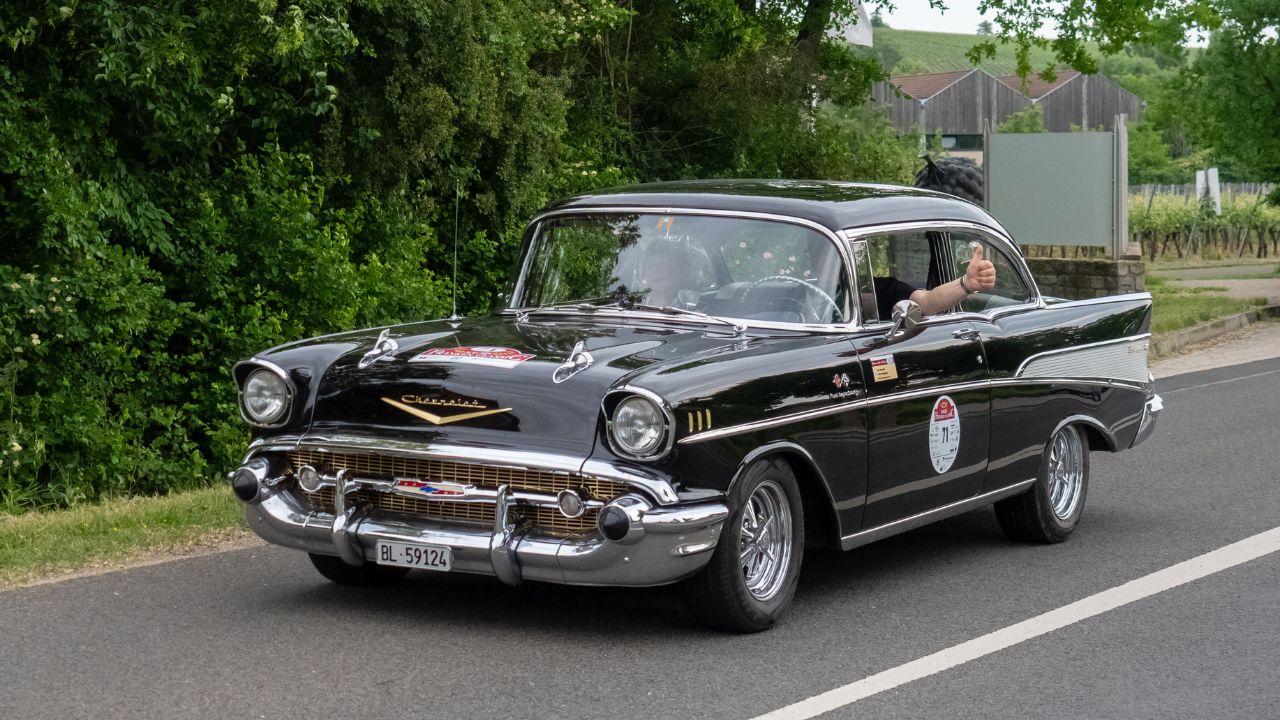
Everyone lusts after the V8 versions, but the six-cylinder Tri-Five Chevys are the smart daily driver choice. The 235 cubic inch inline-six is nearly indestructible, gets better fuel economy (around 16-20 mpg), and parts availability is phenomenal since these are some of the most popular classics in America.
The steering and brakes are manual, which takes some muscle, but the cars are manageable once you adjust your expectations. These cruise comfortably at highway speeds, have enough trunk space for real life, and the simple mechanicals mean you’re not constantly troubleshooting complex systems.
Values are lower than the V8 models, which means you can actually afford to drive it rather than just look at it. The 1950s styling has aged incredibly well, and you get all that chrome and presence without the maintenance nightmares or the gas bills.
1964-1974 Dodge Dart/Plymouth Valiant (Slant-Six)

The Chrysler Slant-Six engine is legendary for good reason: these things run on neglect and spite. Mechanics joke that the only way to kill one is to drain the oil and even then it’ll probably make it another 20 miles. Parts are cheap and available, and any mechanic who’s been in the business for more than a few years knows these cars.
The Dart and Valiant aren’t exciting or particularly pretty, but they’re honest, competent cars that start every morning and get you where you need to go. Fuel economy is decent at around 18-22 mpg, and the simple construction means repairs are straightforward and affordable.
These cars have a cult following among people who value reliability over flash, and there’s something satisfying about driving a car that just works. The manual transmission models are particularly engaging if you like being involved in the driving process.
Said one owner: “I paid $3000 for my ’68 Dart and I’ve driven it almost every day the last four years.”
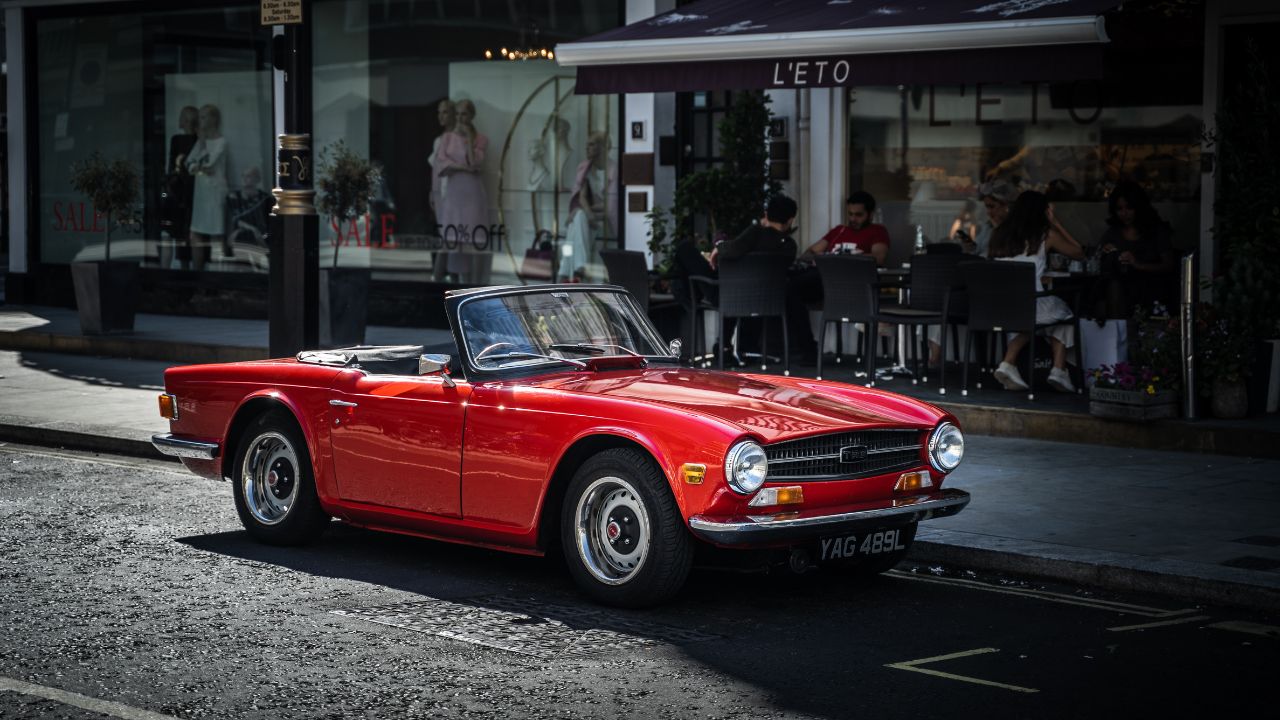
1970-1976 Triumph TR6

British sports cars have a reputation for electrical gremlins and constant maintenance, but the TR6 is actually one of the more reliable options if you do basic preventative care. The 2.5-liter inline-six is robust and torquey, with carburetors on U.S. models and Lucas mechanical fuel injection on the TR6 sold in Great Britain and much of Europe. Parts availability is good through specialty suppliers, and there’s a strong community of owners who’ve modernized the weak points (like upgrading the electrical system to modern standards).
These cars are genuinely fun to drive, with great steering feel and a comfortable cruising demeanor that makes them viable for longer trips. Fuel economy is around 20-23 mpg, and the convertible top means you can enjoy nice weather whenever it appears.
Yes, you’ll need to stay on top of maintenance more than with a Honda, but it’s not the nightmare ownership experience that some British cars offer, and the driving reward is worth the extra effort.
Conclusion

The key to daily-driving a classic is choosing something that was either overbuilt, super popular, or both. You want a car where parts are available, mechanics aren’t scared of it, and the engineering is straightforward enough that you can handle basic maintenance yourself.
These 12 cars prove that classic doesn’t have to mean unreliable, you just need to pick the right one and set realistic expectations. Sure, you’ll sacrifice modern conveniences like Bluetooth and heated seats, but you gain character, style, and the satisfaction of driving something with actual personality. Just remember to join the owner’s club for your chosen car, budget for maintenance even when nothing’s broken, and maybe keep a set of basic tools in the trunk.
Because the best classic car is the one you actually drive, not the one gathering dust in your garage waiting for “someday.”