British motoring history is a tapestry woven with invention, charm, eccentricity, and above all, affection because while Britain has produced many fast cars, grand cars, and curious cars, it has also produced some of the most beloved machines ever to wear license plates. To speak of beloved cars is to step beyond horsepower and lap times and into the realm of memory, of cars that defined childhoods, that filled family albums, that shaped entire generations of drivers. They are the cars that once rattled along cobbled lanes and now gleam at Sunday meets, the cars that owners polish with devotion because they are part of who they are. In Britain, where weather is rarely kind and roads are rarely straight, love for cars is measured in character, and these six cars embody that spirit more than any others.
And when we look back at them today, they remind us that motoring was always about stories about the first time someone learned to drive in a Mini, about the romance of an E-Type seen at dawn, about a Land Rover carrying hay through misty fields. They are the cars grandparents recall with a smile, the ones children still recognize without hesitation, proof that affection endures across generations. To speak of them is to speak of British life itself, from the villages to the high streets, from glamour to grit, all captured on four wheels.
How We Measured Affection on Four Wheels

To choose Britain’s most beloved cars, we turned not to sales charts or stopwatch records but to the less tangible measures of loyalty, nostalgia, and cultural resonance. Each car here won not only market success but a place in the hearts of enthusiasts and ordinary families alike. They are cars that still appear in films, on posters, or at village fetes, spoken of with warmth across generations. We looked for models that are instantly recognizable, cars that remain part of the national story, and whose reputations have endured through decades of changing tastes. Some are humble, others heroic, but all are bound by the invisible thread of affection, the kind that makes people smile when they see one pass by.
Mini (1959-2000)
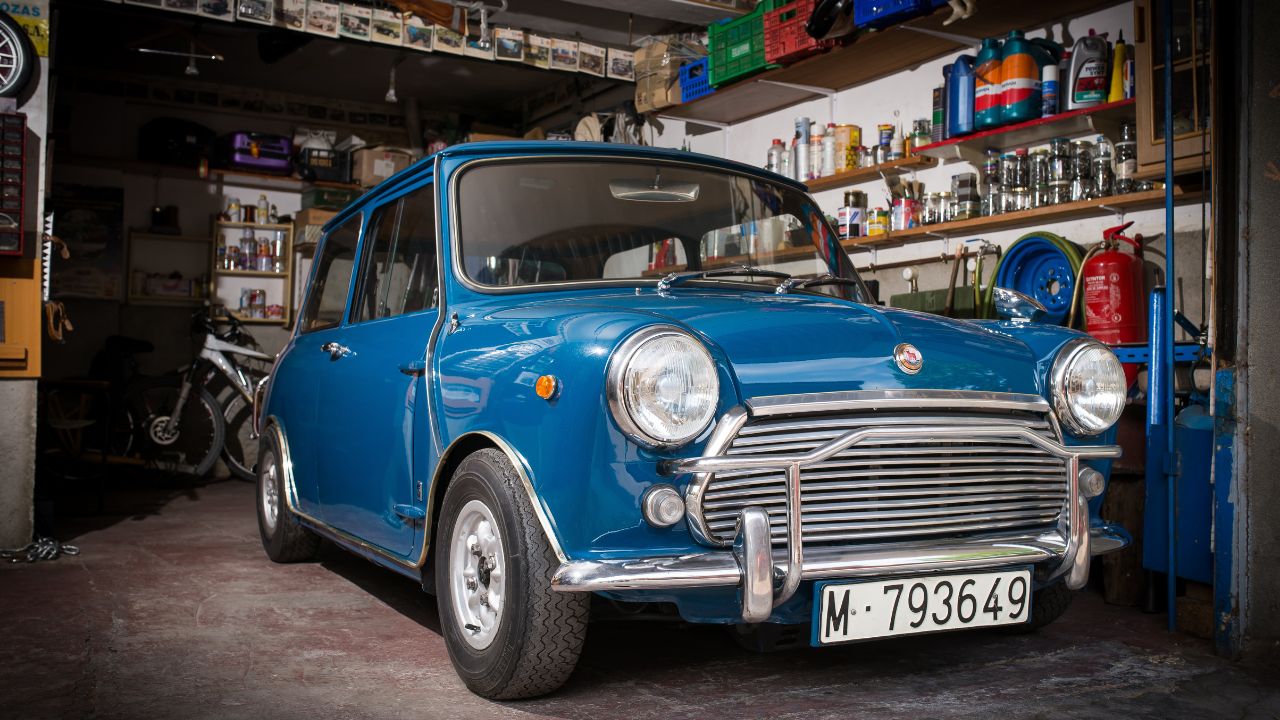
The original Mini, designed by Alec Issigonis, solved a practical problem and in doing so rewrote motoring history. Its transverse engine, space-saving packaging, and cheeky looks turned it into a brilliant solution for postwar fuel shortages and a fashion statement of the swinging sixties. Families adored its affordability and practicality, and celebrities from The Beatles to Twiggy elevated it into an icon of cool, showing that small cars could be glamorous. On rally stages, the Mini Cooper became a giant killer, defeating larger, more powerful machines and giving Britain victories that still sparkle in collective memory. Children waved at them in traffic, enthusiasts raced them on weekends, and students crammed friends inside for late-night adventures it was truly everyones car. Even decades after production ended, the sight of an original Mini draws smiles and stories, because it embodies British ingenuity and charm, a reminder that the littlest cars often leave the greatest mark on our hearts.
It’s greatest achievement was the way it democratized joy, placing happiness within reach of ordinary households and appearing outside suburban semis as often as it did outside grand London townhouses. For many, it was a companion as much as a car, part of family rituals and shared adventures. The affection it continues to inspire proves that brilliance often comes in the smallest packages.
Jaguar E-Type (1961-1975)

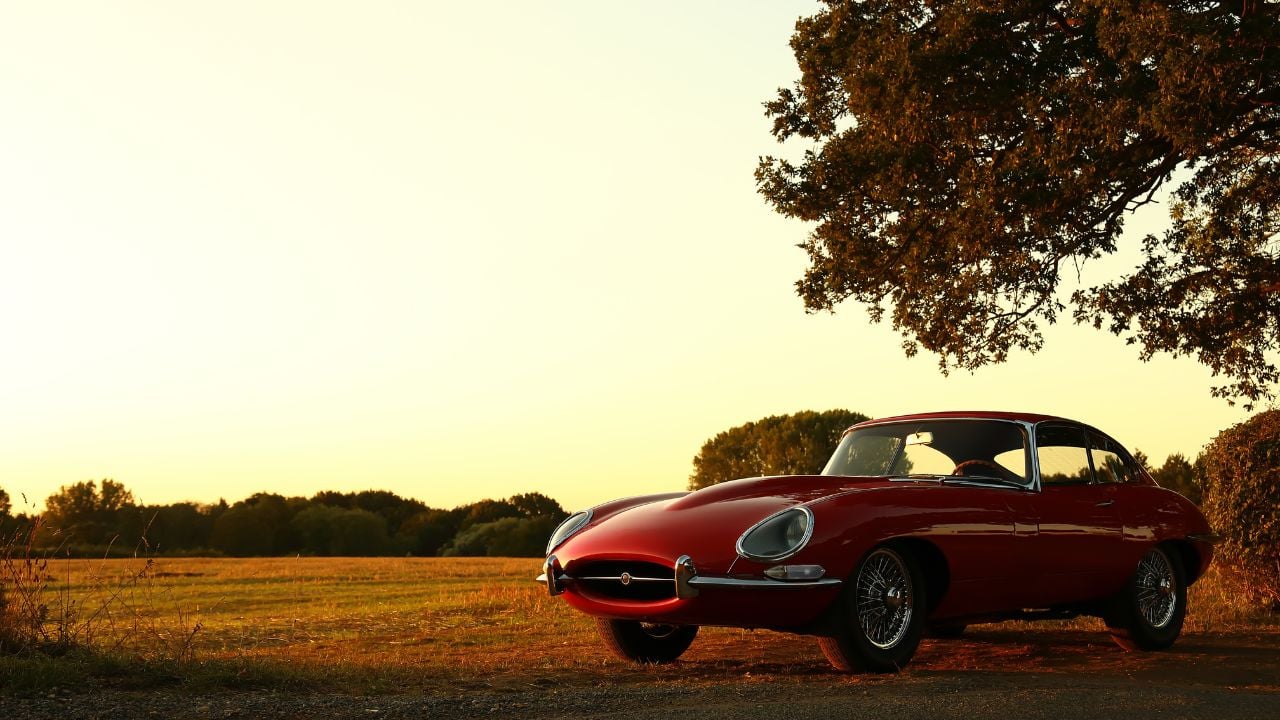
When Enzo Ferrari described the Jaguar E-Type as the most beautiful car in the world, he captured what millions already felt when they saw its impossibly long bonnet and delicate curves. To the British public, the E-Type was a declaration that Britain could surpass the glamour of Italian and German rivals. It became the poster car of the 1960s, a symbol of youth, freedom, and style in a country that was reshaping itself culturally as well as industrially. Owners spoke of feeling like film stars behind the wheel, and those who could only dream of it pinned its image to bedroom walls. The E-Type also offered genuine performance at a fraction of continental prices, making the exotic accessible to a wider audience. It was raced, rallied, admired in art galleries, and immortalized in television dramas, embedding itself in British cultural identity. Even today, when it rolls onto a concours lawn, the crowd gathers instinctively, drawn by nostalgia and design, proof that few cars have ever enjoyed such lasting affection.
Its charisma carried with it the energy of the decade, capturing the music, fashion, and liberation of the 1960s. For enthusiasts, spotting an E-Type on the road was an event that elevated the everyday into something extraordinary. And even now, every glance at an E-Type brings back that first astonishment, a reminder that perfection in proportion endures across time.
Land Rover Series I-III (1948-1985)
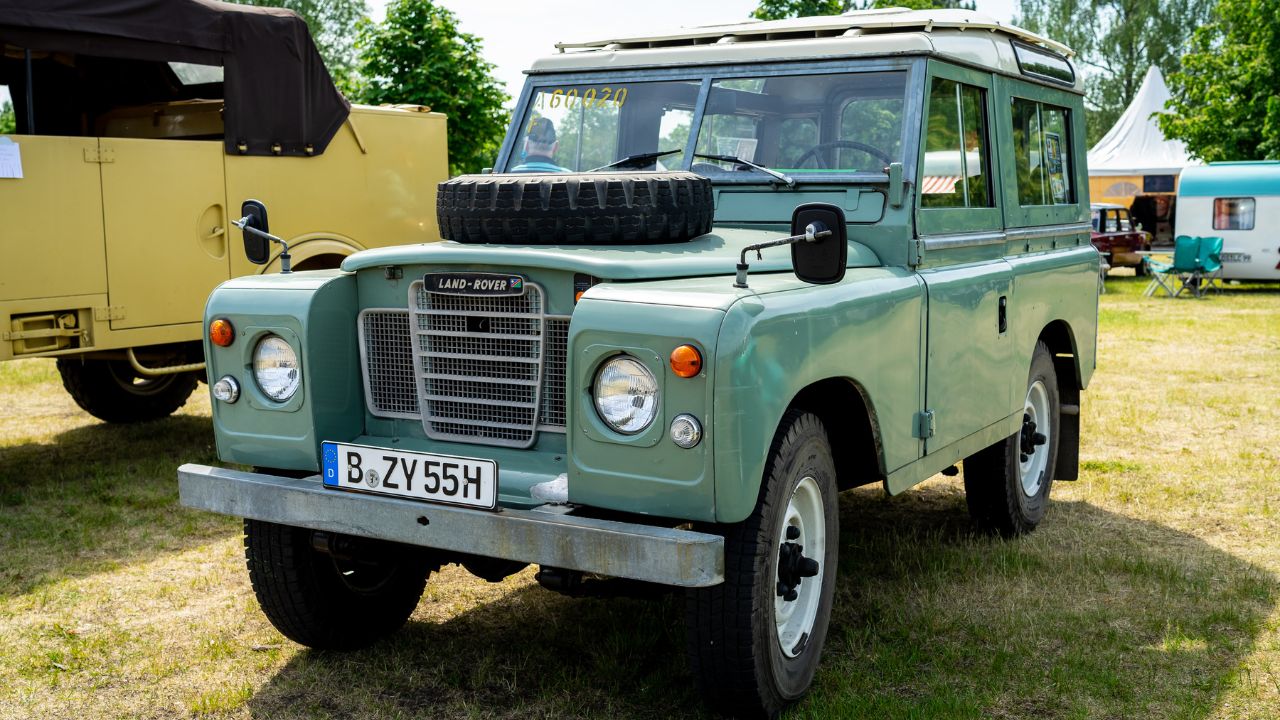
If the Mini defined city streets, the Land Rover defined the countryside, a machine so practical and rugged that it became woven into the very fabric of British rural life. Conceived in the aftermath of war using surplus materials, it quickly proved indispensable to farmers, explorers, and the military, carrying hay bales one day and dignitaries the next. Its simple, boxy form became as familiar as a pair of well-worn boots, loved for dependability and resilience. Families recall childhoods spent bouncing around in the back of a Land Rover on muddy tracks, dogs scrambling aboard, Wellington boots wedged by the tailgate. Abroad, it carried the Union Jack to the most remote corners of the globe, earning Britain admiration for engineering that embodied toughness and honesty. Its character lay in functionality and fortitude, and generations grew up with the sight of one parked outside farm gates or green-lane pubs. To this day, classic Land Rovers gather enthusiasts who celebrate them as symbols of freedom, endurance, and simple pleasures a love story between people and machine as enduring as the countryside itself.
The Land Rovers scars from years of use only deepen its charm, each dent and scratch telling a story of work well done. It became a tool and a family member alike, remembered with fondness long after being replaced. The affection it inspires flows from loyalty earned in every field, every village lane, and every adventure far from home.
Aston Martin DB5 (1963-1965)

Few cars embody myth and reality as seamlessly as the Aston Martin DB5. Elegant, understated, and quintessentially British, the DB5 commanded admiration even before it appeared alongside Sean Connerys James Bond. On screen it became immortal, bristling with gadgets and exuding suave sophistication that defined an era. To cinema audiences, it was the ultimate dream car, and owners felt a brush of that glamour whenever they turned the key. Beyond the silver screen, the DB5 was a finely crafted GT, its straight-six engine and hand-built luxury making it deeply rewarding on the open road. Enthusiasts recall the way it seemed to glide through decades, timeless in its appeal and graceful in every setting. Loved for both its cinematic presence and its intrinsic elegance, the DB5 shows how cars can inspire as much in imagination as they do in reality.
It became shorthand for aspiration itself, a cultural icon as much as a machine. Spotting one on the road in the 1960s gave ordinary life a touch of extraordinary glamour. Today, every DB5 rekindles that connection, reminding us that cinema and motoring sometimes blend into legend.
Mgb (1962-1980)

The MGB earned its place in British hearts by offering accessible joy to hundreds of thousands of drivers. Affordable, handsome, and simple to maintain, it became the roadster of choice for students, young couples, and weekend enthusiasts across Britain and beyond. Its charm lay in the way it made every journey feel like an adventure, with the top folded back, wind in your hair, and the scent of leather and petrol surrounding you. Enthusiasts recall long summer evenings on winding B-roads, the MGB buzzing contentedly, embodying carefree motoring. Clubs sprang up everywhere, friendships were forged around bonnet-up repairs, and for many it was the car that introduced them to the meaning of driving pleasure. Owners often spoke of love rather than criticism, because the MGB was about character and shared memories. Its enduring popularity at classic car gatherings proves that it is more than a machine it is a memory shared by generations.
The MGB invited drivers into its world rather than intimidating them, offering approachability with charm. Families treasure stories of courting drives, seaside holidays with luggage strapped to the boot, and adventures that became folklore. Its affection stems from the way it enriched ordinary life, turning routine into celebration.
McLaren F1 (1992-1998)

The McLaren F1 represents the pinnacle of British ambition, a car conceived by Gordon Murray as the ultimate road machine and executed with astonishing brilliance. Its central driving position, gold-lined engine bay, and naturally aspirated BMW V12 created a car that combined Formula 1 ingenuity with road-going usability. For enthusiasts, it was the stuff of fantasy, admired universally as the apex of British engineering daring. When it shattered speed records, it became a source of national pride, showing that Britain could produce the greatest road car in the world. Over time, its legend only grew, collectors treating it as a holy grail and enthusiasts speaking of it with reverence. Loved because it was audacious, brilliant, and unmatched, the McLaren F1 demonstrates that British affection embraces marvels as well as modest classics.
Its reputation extended far beyond the motoring press, inspiring awe in classrooms, on posters, and at car meets where it was spoken of as if it were myth brought to life. It carried with it the sense of limitless possibility, a celebration of ingenuity and daring. Decades later, its silhouette and its roar continue to quicken the pulse, as though its brilliance cannot fade.
Roads Paved With Affection

The story of British motoring is a story of emotion, of cars that gathered affection as much as accolades. From the Mini that carried a nation in cheerful compactness to the McLaren F1 that carried it to the outer edge of possibility, these cars reveal the many ways love for a machine can take root. They remind us that what we adore about cars is deeply human, rooted in memory, pride, and imagination. Beloved cars are those that made us smile, that made us dream, that made us proud to share their story. In Britain, where roads twist, skies change, and history lingers, these six cars endure as companions of a national romance that continues to flourish.
They evoke memories of rain-slicked drives, of summers with the roof folded back, of muddy boots in the back of a Land Rover, and of the silver glint of a DB5 on the cinema screen. Each one is a chapter in a collective diary written in petrol, chrome, and leather, a diary Britain shares with the world. As motoring shifts into an era of quiet electricity and digital precision, these cars remain guardians of feeling, whispering that joy, pride, and belonging define true motoring heritage. Their stories continue each time an engine fires and a crowd turns to watch, proof that beloved cars never grow old.