Okay, let’s clear this up first: Simple doesn’t mean boring. In fact, it’s the opposite for these cars!
Simplicity in design has a way of creating beauty that lasts. When lines are clean and shapes are clear, cars gain a presence that feels timeless. Across history, the most admired models often carried restraint rather than excess. Car design has always reflected the spirit of its era. Yet those built with clarity tend to stay relevant long after trends fade. They prove that elegance grows from proportion, not decoration. A plain form can achieve harmony, while surfaces left uncluttered create strength of character.
They represent design in its purest form, where every detail has purpose. That sense of balance explains why people still admire them decades later. These are vehicles that don’t hide behind extra features, screens, and dramatic stances: they have become iconic for being amazing without needing any bells and whistles at all. Again, these cars are not boring. They are automotive design at its most raw and real.
The Road To Choosing These Icons

Great car design isn’t about throwing every styling trick at the sheet metal and hoping something sticks. It’s about understanding what makes a car work, both mechanically and emotionally, then executing that vision with precision. The cars on this list didn’t become icons by accident. Each one represents a moment when designers and engineers found that sweet spot where form truly follows function.
Think about it: the most memorable cars in your life probably don’t have the most aggressive spoilers or the loudest paint jobs (or, maybe they do; there is something to love about every car). They’re the ones that made you feel something the first time you saw them, and kept delivering that feeling every time you got behind the wheel.
Volkswagen Beetle

The Beetle’s story starts with some pretty ambitious goals: create a “people’s car” that regular families could actually afford. What Ferdinand Porsche and his team delivered was something nobody expected: a car that would sell about 21.5 million first-generation Beetles and become a cultural phenomenon.
That distinctive teardrop shape wasn’t just pretty, it was practical. The rounded body was largely about packaging and aerodynamics; cooling came from the engine’s fan-driven air-cooling system, while those curves provided surprising aerodynamic efficiency. At about 1,600-1,800 pounds, the Beetle could squeeze 30+ mpg out of its modest 34–40 horsepower (varied by year/market and rating standard), making it incredibly economical to own.
But here’s what made it special: you could fix almost anything on a Beetle with basic tools in your driveway. The engine came out in about an hour, the body panels were simple to replace, and parts were cheap and plentiful. It was automotive democracy in action: reliable transportation that didn’t require a trust fund to maintain.
The Beetle’s influence went way beyond transportation. It became the unofficial car of the 1960s counterculture, starred in Disney movies, and inspired countless custom builds. Even today, seeing a well-maintained Bug cruising down the street puts a smile on people’s faces.
Ford Model T

Henry Ford revolutionized how cars were built. The Model T was one of the first vehicles engineered around large-scale mass production, and it helped popularize assembly-line manufacturing, and that manufacturing philosophy shaped every aspect of its design.
Those tall, upright proportions weren’t just stylistic choices. The high ground clearance was essential for navigating the rough, unpaved roads of early 20th-century America. The simple leaf spring suspension was robust enough to handle terrible road conditions while remaining cheap to manufacture and repair.
The 20-horsepower, 177-cubic-inch four-cylinder engine was brilliantly straightforward, three main bearings, splash lubrication, and a simple carburetor that rarely needed adjustment. Most importantly, it ran on gasoline, kerosene, or ethanol, giving owners flexibility when fuel was hard to find.
Ford’s genius was understanding that reliability trumped performance for most buyers. The Model T could sustain roughly 30–35 mph for long stretches, with short bursts nearer 40 mph under favorable conditions, climb steep hills in low gear, and keep running with minimal maintenance. By 1918, half the cars in America were Model Ts, a market dominance that would be impossible today. Although you’d never know it by the number of SUVs on the road.
Citroën 2CV
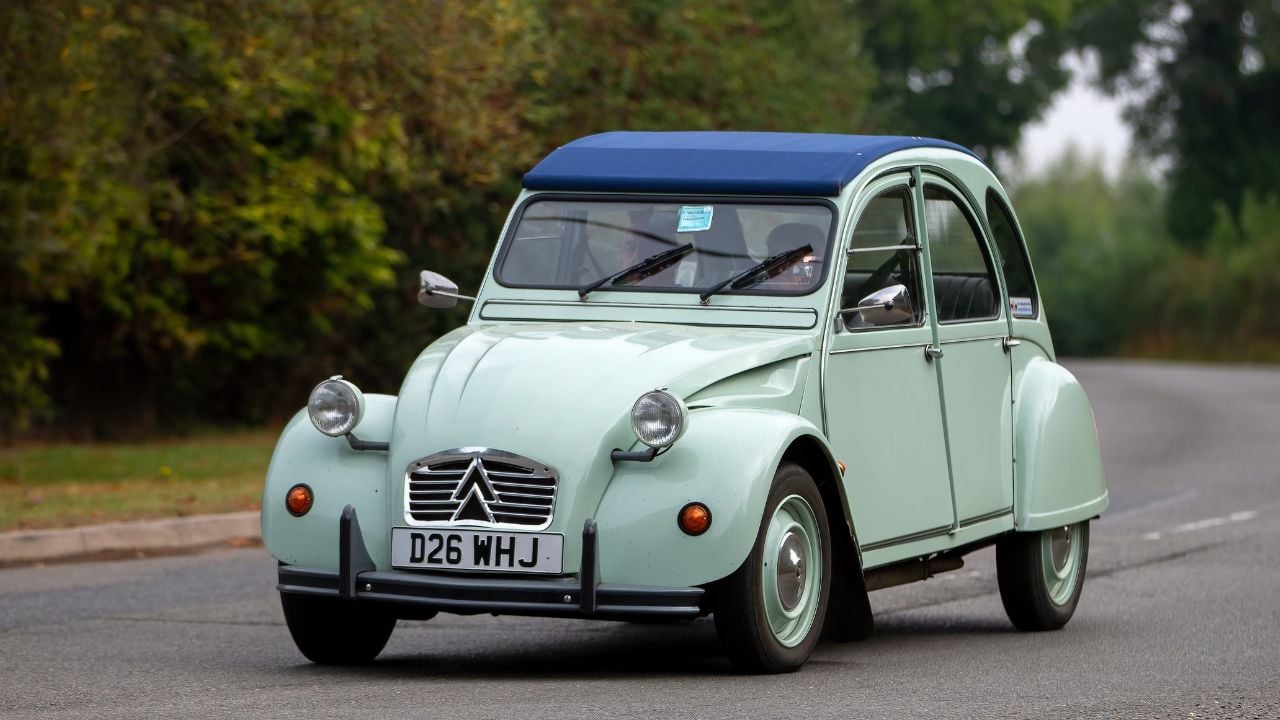
The 2CV was born from a simple brief: create a car that could carry a farmer across a plowed field with a basket of eggs without breaking any. What Citroën delivered was automotive minimalism at its most functional.
That distinctive corrugated body wasn’t just quirky styling. Those panels were incredibly light yet strong, helping keep the car’s weight down to roughly 500 kg (about 1,100 lb) in early form (varied by year). The interconnected suspension system, with its leading arms and coil springs, provided an amazingly smooth ride despite the car’s basic construction.
Under that modest hood early 2CVs used a 375cc twin-cylinder producing about 9 hp (later cars grew to larger engines), less than most lawn mowers today. But here’s the thing: the 2CV could still hit 40 mph and return over 50 mpg. For post-war Europe, where fuel was expensive and reliability was everything, those numbers were perfect.
The interior was pure function – removable seats that could double as picnic chairs, a speedometer that only went to 60 mph (optimistically), and windows that opened upward to provide maximum ventilation. Everything was designed to be repaired by the owner with basic tools.
Mini
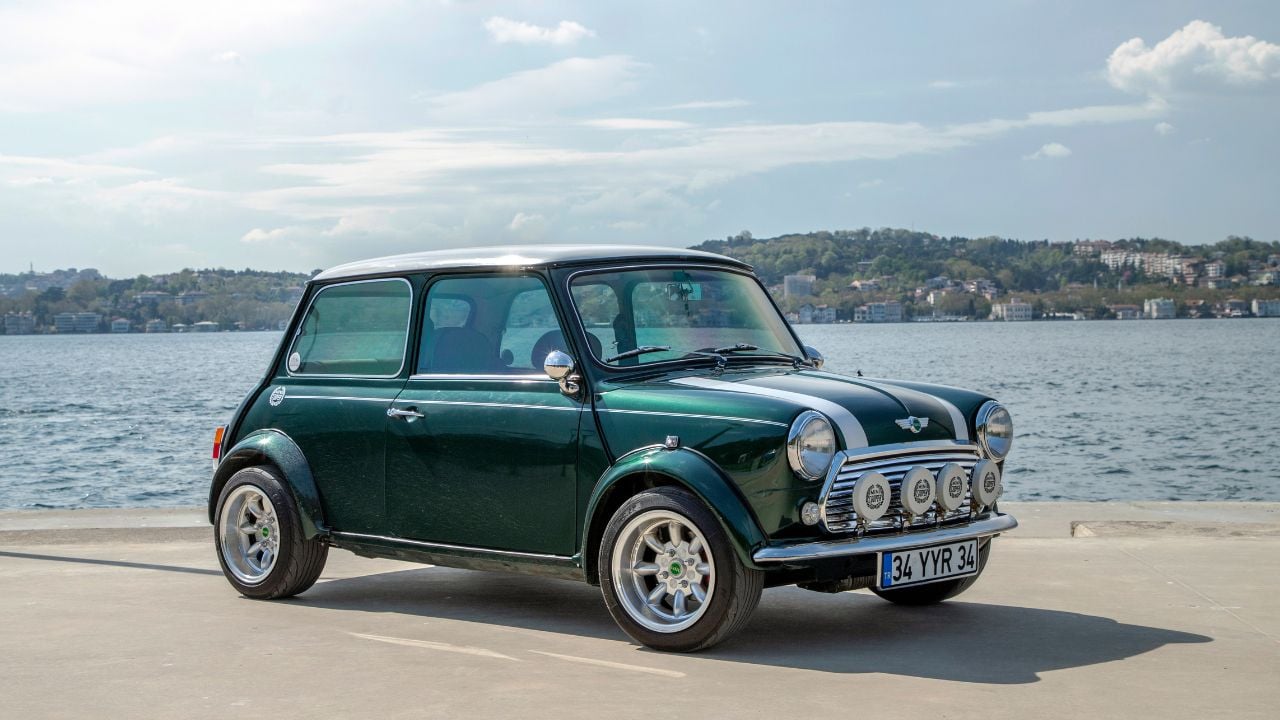
When Alec Issigonis was asked to design Britain’s answer to the Beetle, he came up with something completely different: a car that put the engine sideways and squeezed maximum interior space from minimal exterior dimensions.
The original Mini was just 10 feet long, but that transverse-mounted 848cc (initially) four-cylinder and front-wheel-drive layout meant a remarkably high proportion of its footprint was usable space for passengers and cargo. It was a packaging revelation that every small car since has copied.
Those distinctive exterior door hinges weren’t just cost-cutting, they freed up interior door space by eliminating the need for complex internal mechanisms. The sliding windows saved weight and interior room, while the external boot hinges made loading cargo easier.
The Mini’s 34-horsepower output doesn’t sound impressive until you consider it had to move just 1,380 pounds. The go-kart-like handling made it a giant-killer in motorsport, Paddy Hopkirk’s victory in the 1964 Monte Carlo Rally proved that clever engineering could beat raw power.
Porsche 356

Ferdinand “Ferry” Porsche’s first production car established the design language that would define the brand for decades. The 356’s smooth, rounded body was both beautiful and purposeful – that shape provided excellent aerodynamics while housing the rear-mounted, air-cooled flat-four engine.
Early 356s used Volkswagen mechanicals: the Early 356s used VW-derived flat-fours around 40 hp, and curb weight varied roughly 1,650–1,800 lb depending on year/body style, that was enough for genuine sports car performance. The rear-engine layout provided excellent traction while keeping costs down by using proven components.
The interior reflected Porsche’s racing heritage – simple, functional instruments clustered directly in front of the driver, with a distinctive four-spoke steering wheel that became a Porsche signature. Everything was focused on the driving experience, with minimal decoration or unnecessary features.
What separated the 356 from other sports cars was its usability. While British roadsters leaked and Italian exotics broke down, the 356 could be driven daily in all weather. It was this combination of performance, reliability, and everyday practicality that established Porsche’s reputation.
Honda Civic (First Generation 1972)
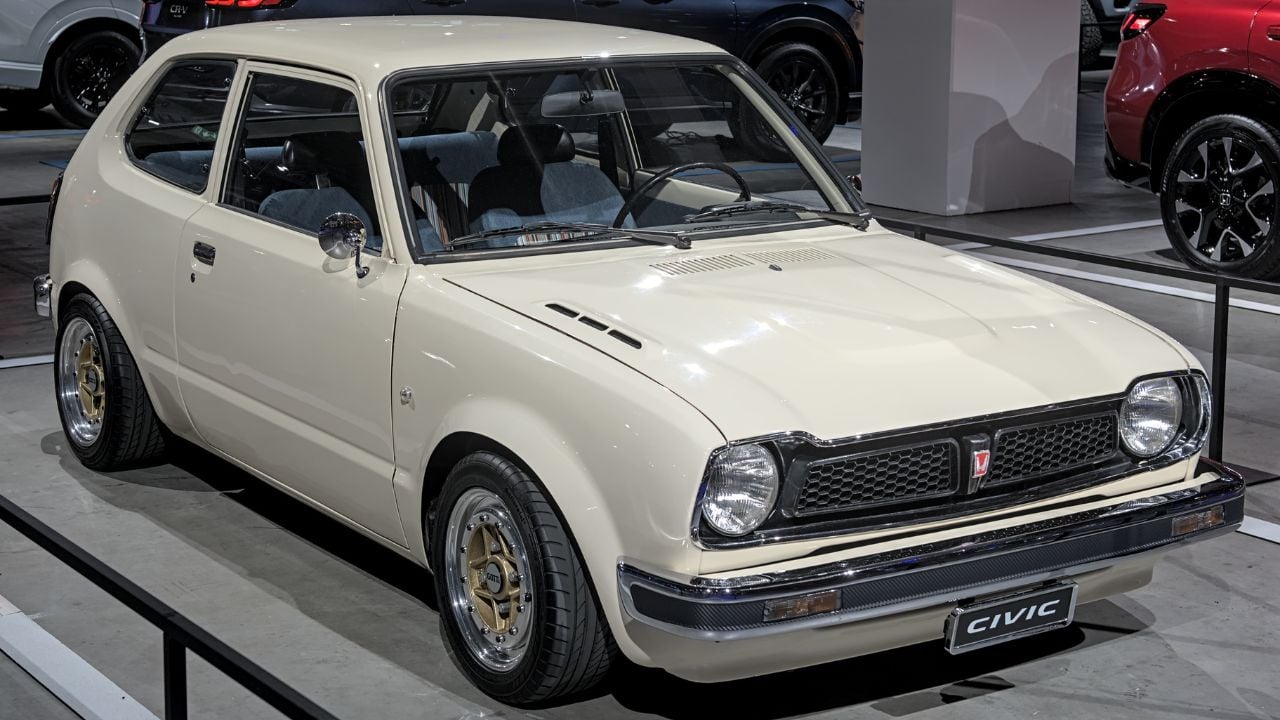
When Honda decided to enter the American market, they needed a car that would establish their reputation for quality and innovation. The first-generation Civic was that car: a compact that proved Japanese engineering could compete with anyone.
CVCC debuted for 1975 as an optional 1.5-liter (1488cc) engine alongside the standard engines. Without a catalytic converter, it could meet strict 1975 emissions standards while delivering excellent fuel economy for the era (figures varied by test/market). The stratified charge combustion system was so advanced that American manufacturers licensed the technology.
That boxy, upright body maximized interior space while keeping exterior dimensions compact: perfect for crowded American parking lots and garages. Despite its small size, the Civic offered surprising rear-seat and cargo space, making it practical for young families.
Honda’s attention to detail was evident everywhere. The transmission was silky-smooth, the controls fell perfectly to hand, and the build quality was exceptional. While American compacts of the era felt flimsy and cheap, the Civic felt solid and well-engineered.
Toyota Corolla (First Generation 1966)
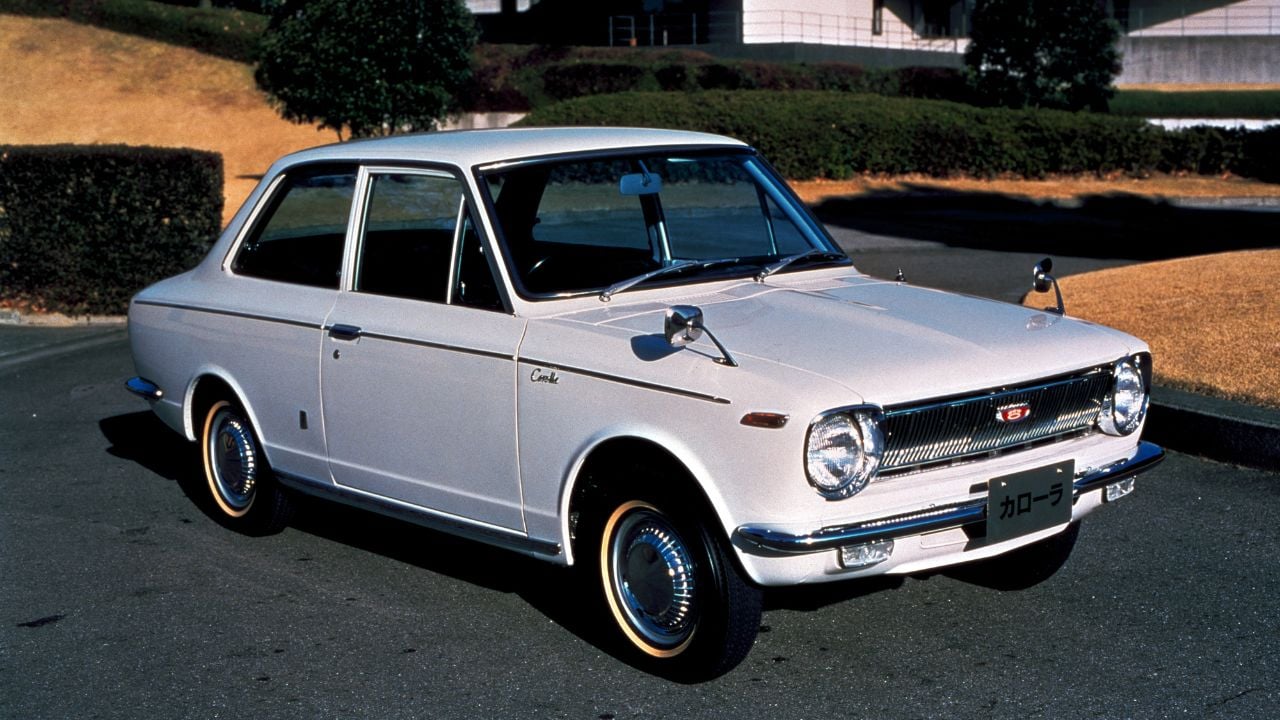
My commuter car’s ancestor! Toyota’s entry into the compact car market established the template for reliable, affordable transportation that would make the Corolla the best-selling nameplate in history. Over 50 million Corollas have been sold/produced (depending on the metric reported), and it all started with this simple, honest first generation.
The 1.1-liter four-cylinder engine produced about 60 PS: modest but adequate for the car’s 1,800-pound curb weight. More importantly, it was bulletproof reliable, with proper maintenance schedules easily extending engine life beyond 200,000 miles.
Toyota’s manufacturing philosophy emphasized consistent quality over flashy features. Every Corolla was built to the same exacting standards, with tight panel gaps, smooth paint, and components that fit properly from the factory. It was this attention to detail that established Toyota’s reputation for dependability.
The interior was straightforward but comfortable, with good visibility and intuitive controls. The seats were supportive for long drives, and the driving position felt natural. Everything worked exactly as intended, every time.
Saab 92
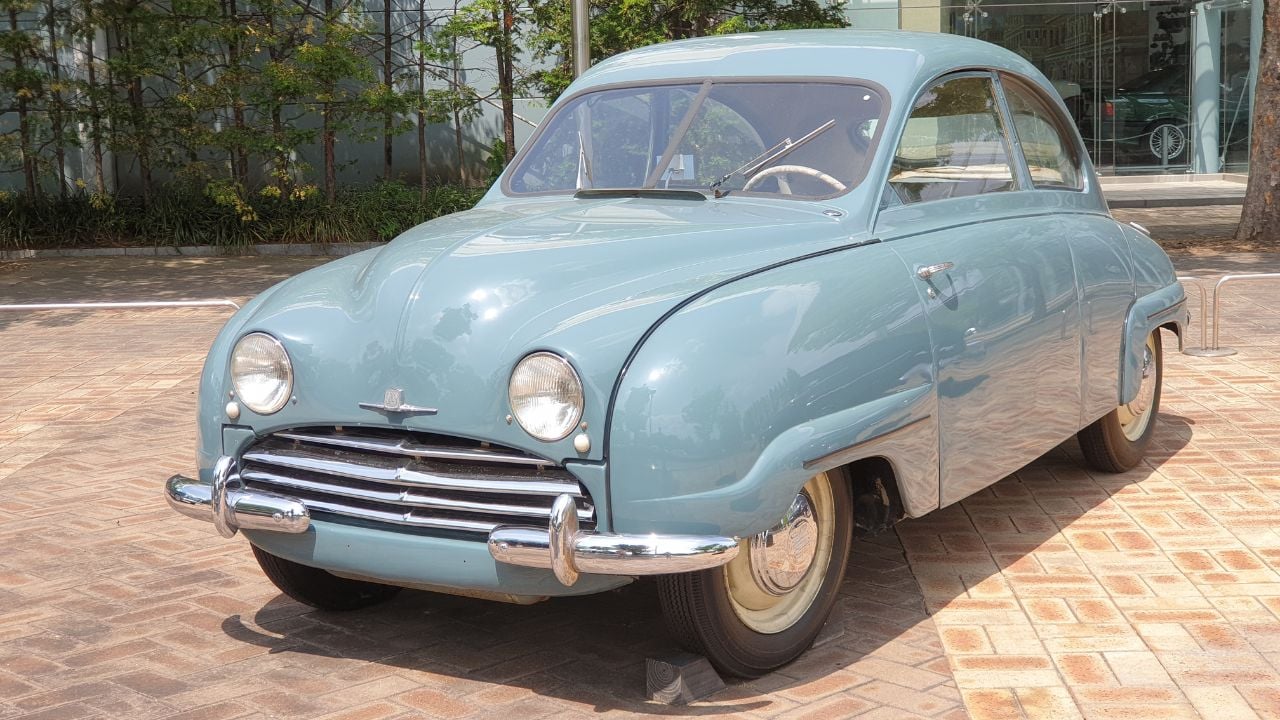
Saab’s transition from aircraft to automobiles resulted in one of the most aerodynamically advanced cars of its era. The 92’s teardrop shape wasn’t just pretty, wind tunnel testing was reported/quoted at around 0.30, remarkable for the late 1940s.
Two-stroke, two-cylinder 764cc engine producing about 25 hp, but the car’s light weight (1,500 pounds) and excellent aerodynamics allowed respectable performance and outstanding fuel economy. The front-wheel-drive layout provided excellent traction in Swedish winters while keeping the passenger compartment spacious.
Saab’s aviation background showed in the car’s construction. The unibody structure was exceptionally rigid, and the attention to detail was aircraft-quality. Door handles, switches, and controls all had the precise feel of aviation instruments.
BMW 2002

The 2002 transformed BMW from a maker of quirky economy cars into a serious performance brand. It perfectly captured the emerging sport sedan concept: a practical two-door that could embarrass dedicated sports cars on a winding road.
In 2002 tii form, the 2.0-liter produced about 130 PS (~128 hp); base 2002 models were lower in a car weighing just 2,200 pounds, that’s serious power-to-weight by any era’s standards. The four-speed manual transmission was precise and engaging, with perfectly spaced ratios that encouraged spirited driving.
But the real magic was in the chassis. The 2002’s suspension was beautifully balanced, providing excellent handling without sacrificing ride quality. The steering was direct and communicative, giving drivers complete confidence in the car’s capabilities.
Inside, the 2002 established BMW’s driver-focused philosophy. All controls were angled toward the driver, with clear gauges and intuitive switchgear. The seats provided excellent support during aggressive driving while remaining comfortable for daily use.
Datsun 510

Nissan’s 510 proved that Japanese manufacturers could build cars that were both reliable and fun to drive. Its boxy, European-influenced styling housed sophisticated engineering that surprised enthusiasts and established Nissan’s performance credibility.
The 1.6-liter four-cylinder engine produced about 96 horsepower, modest but adequate in a car weighing just 2,100 pounds. More importantly, the engine was smooth, reliable, and responded well to modifications. The four-speed manual transmission was precise and engaging.
The 510’s independent rear suspension was unusual for an affordable sedan, providing excellent handling balance and ride quality. The steering was quick and accurate, making the car feel nimble and responsive in traffic or on winding roads.
Racing success elevated the 510’s reputation. It dominated SCCA competition in the early 1970s, proving that Japanese engineering could compete with the best from Europe. This motorsport success translated directly into showroom credibility.
Lexus LS 400
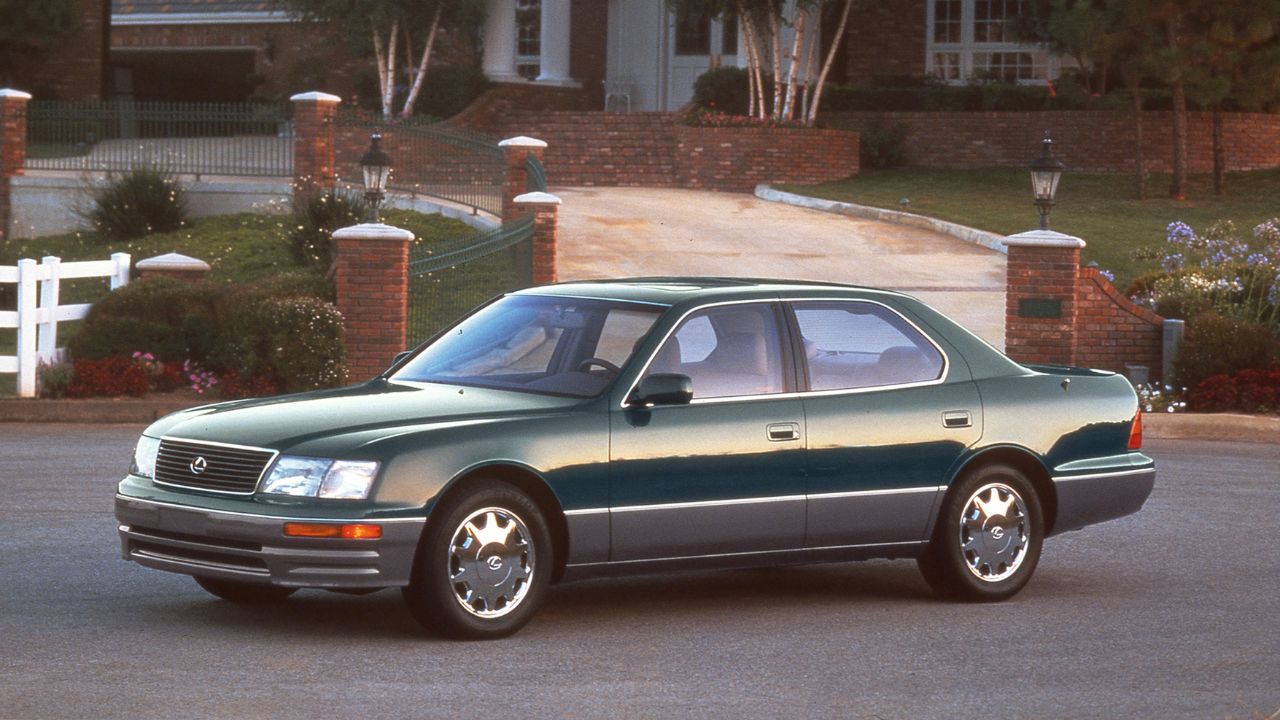
The Lexus LS 400 entered the luxury segment with a body that felt calm and assured. Its lines were smooth and measured, free from excess detail. The design communicated refinement without shouting for attention.
Toyota’s luxury debut was designed to directly challenge Mercedes-Benz and BMW on their home turf. The result was a sedan that redefined what luxury could mean, emphasizing reliability and refinement over tradition and heritage.
It has 4.0-liter V8 with about 250 hp in early models (output changed in later years) delivered so seamlessly that acceleration felt effortless rather than aggressive. The four-speed automatic transmission was calibrated for silky smoothness, with shifts barely perceptible under normal driving.
Lexus famously tested prototypes for over one million miles before production, ensuring that every system would meet their exacting standards. The result was a luxury car that didn’t require constant visits to the dealer: a revolutionary concept in the premium segment.
When Clarity Defines Beauty

Each of these cars succeeded by focusing on what really matters, getting the fundamentals right before adding any embellishment. They prove that great design comes from understanding your priorities and executing them with precision.
The best car designers are like great chefs – they know that perfect technique with quality ingredients beats fancy presentation every time. These cars mastered their basic recipe so well that decades later, we’re still admiring the results.
Whether you’re drawn to the cheerful simplicity of the Beetle, or the understated elegance of the LS 400, each represents a different interpretation of the same principle: when you get the important stuff right, everything else falls into place.
The automotive future will bring new technologies and new challenges, but the lessons from these twelve icons remain relevant. Clean design, honest engineering, and respect for the user experience never go out of style, they just find new ways to express themselves.