You know that feeling when you slide into a car and everything just feels right? The leather has that perfect patina, the switches have real weight to them, and suddenly you’re in no hurry to reach your destination. Some interiors have that magic: they’re time machines wrapped in hide and wood that transport you to an era when cars were built like Swiss watches and designed like jewelry boxes.
These cabins are the result of designers who understood that the inside of a car is where you actually live during the drive. And trust me, after spending time in modern cars where everything beeps at you and the dashboard looks like a NASA control room, these classics feel like a breath of fresh air.
Mercedes-Benz 600
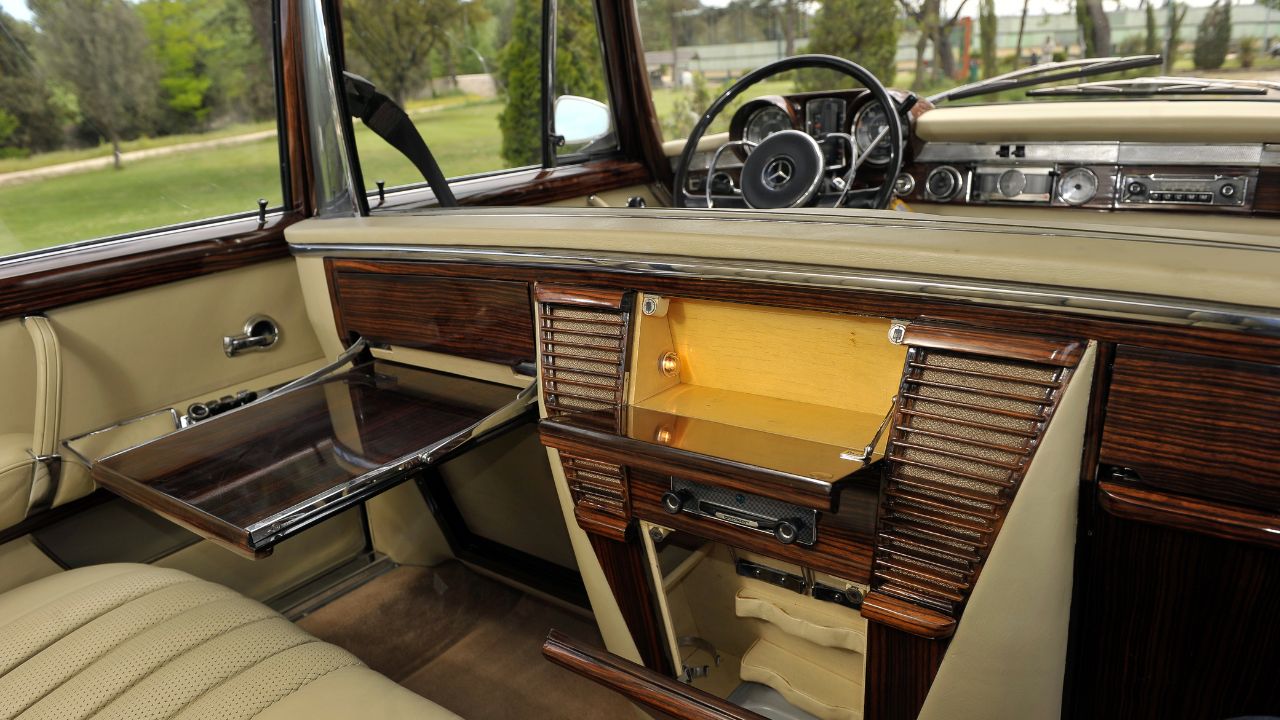
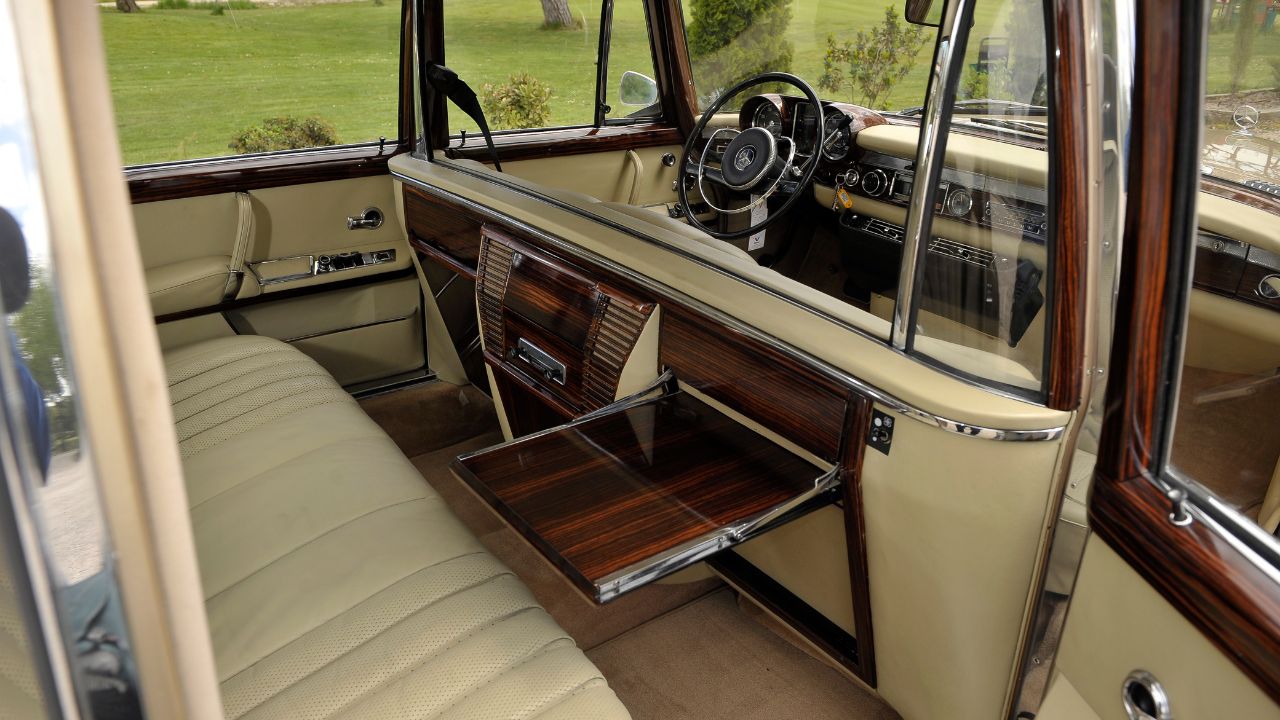
If you’ve ever wondered what it feels like to be royalty, the Mercedes 600 interior had you covered. This was a mobile statement that money was absolutely no object. We’re talking about a cabin where the rear seats were literally armchairs, complete with fold-out tables that could handle a proper business meeting.
The hydraulic system was pure theater. Press a button and watch the windows glide down with the authority of a bank vault opening. The rear passengers got their own climate control because, naturally, important people can’t be expected to share air temperature preferences with the help up front.
Here’s a fun fact: the 600 was hand-built, and its cabin used hand-finished, grain-matched wood veneers and hand-sewn leather upholstery. The walnut veneer was book-matched (meaning each piece was cut from the same tree and arranged like opening a book), and Mercedes specified high-grade leather upholstery and carefully finished wood veneers throughout the cabin.
The silence inside was so complete that passengers could hear their own thoughts, which was either wonderfully peaceful or slightly terrifying, depending on your perspective. This was the car that dictators, heads of state, and rock stars chose when they wanted to make an entrance, and honestly, it’s hard to argue with their logic.
Jaguar XJ Series III
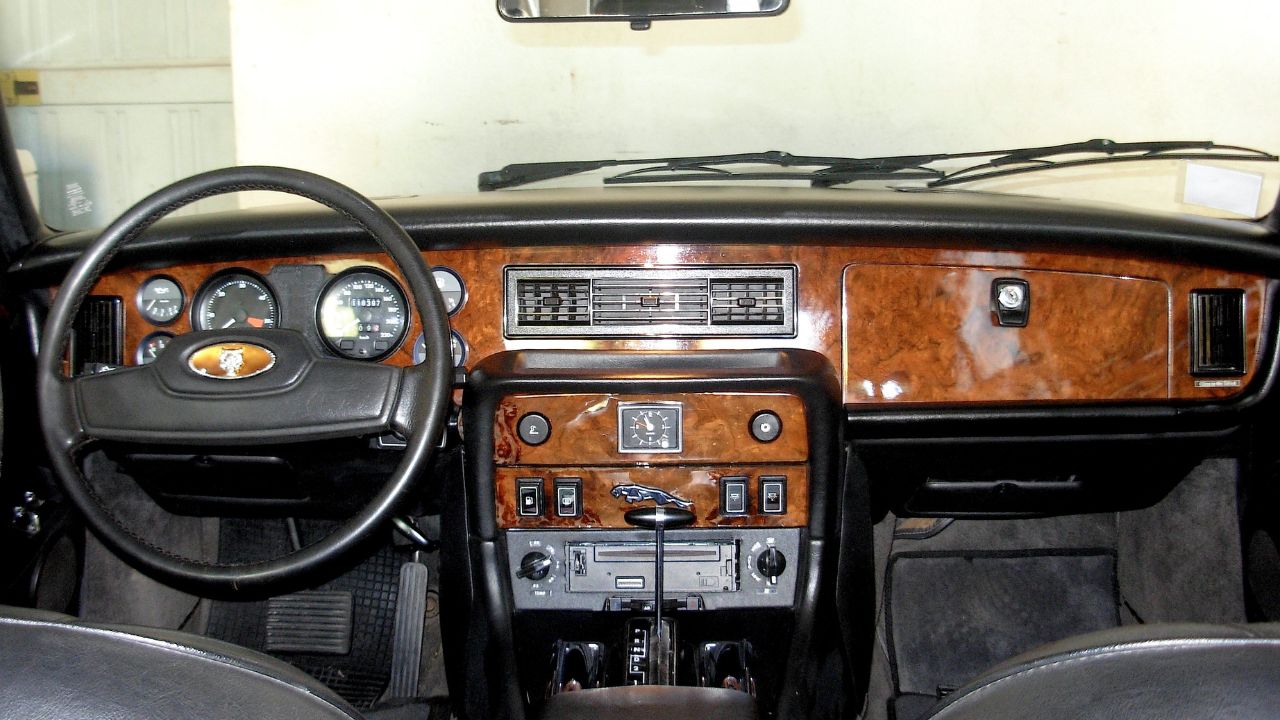
The Series III XJ interior was where British luxury finally got its act together. After years of beautiful Jaguars that spent more time with Lucas electrical systems in the shop than on the road, the Series III delivered both style and reliability—a combination that had previously seemed impossible.
That Connolly leather wasn’t just marketing speak. Connolly was the same company supplying Rolls-Royce, and they knew how to make hide that would still smell amazing 40 years later. The walnut was real wood veneer, carefully selected and fitted with an eye for grain patterns and consistency.
The rear seat was a revelation: finally, a Jaguar where you could actually stretch out without your knees hitting the front seat. Rear seat comfort improved, but the Series 3 wheelbase stayed the same, so rear legroom gains were not a simple across-the-board three-inch change.
Those green-illuminated gauges became a Jaguar signature, creating a cockpit that felt both sophisticated and slightly mysterious after dark. The green illuminated gauges became a Jaguar signature, giving the cabin a distinctive look after dark.
Porsche 911 Carrera 993
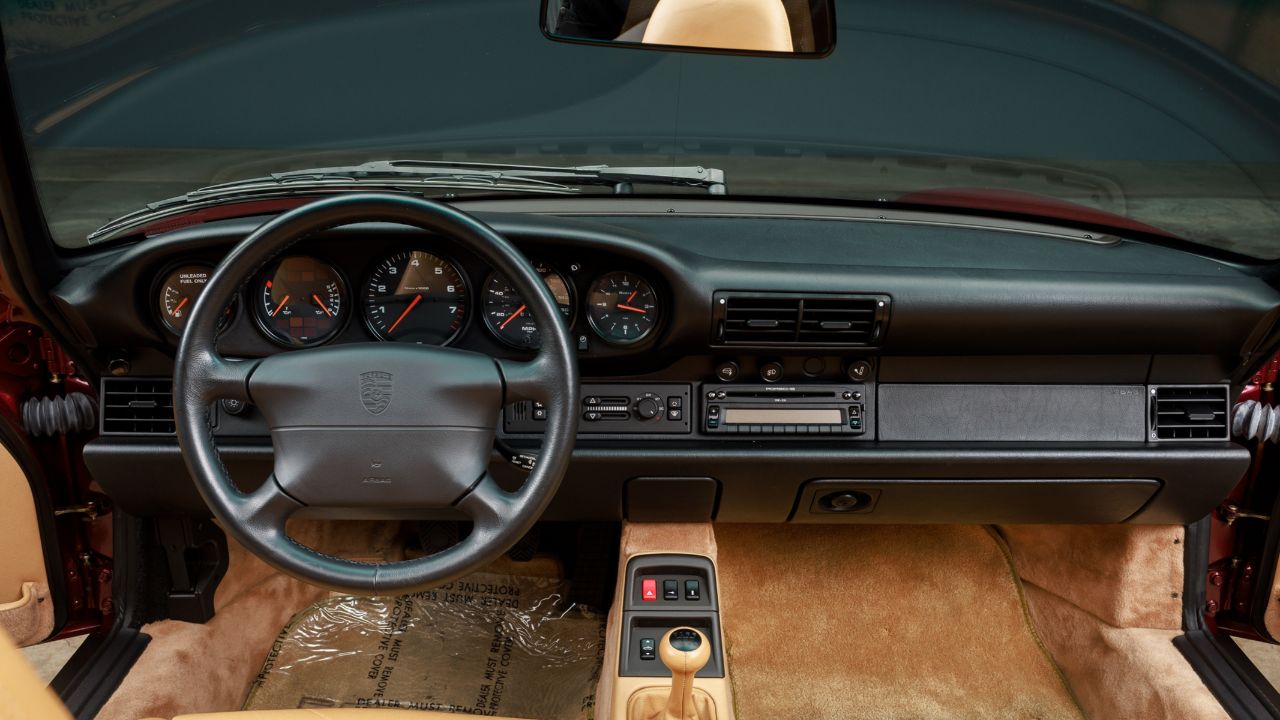
The 993 interior represents Porsche at its most focused. Five round gauges, a three-spoke steering wheel, and everything else you need within arm’s reach. No nonsense, no frills, just pure driving joy distilled into a cabin that could have been designed yesterday.
This was the last air-cooled 911, and Porsche knew they were ending an era. The interior reflected that gravity: every switch, every button, and every surface was crafted with the knowledge that this was the finale of a 30-year run. The result feels both timeless and slightly melancholy, like a perfectly preserved photograph.
The seats were a masterpiece of function meeting form. Those side bolsters that look so aggressive? They actually work, holding you in place during spirited driving while remaining comfortable enough for cross-country tours. Try that in a modern bucket seat—you’ll be reaching for the ibuprofen after 50 miles.
Here’s what Porsche got right: they understood that sports car interiors should enhance the driving experience, not distract from it. Everything you need is exactly where you expect it to be. Everything you don’t need simply isn’t there. It’s minimalism with purpose, and it makes modern interiors with their 47 different driving modes seem rather silly by comparison.
Cadillac Eldorado Biarritz 1957
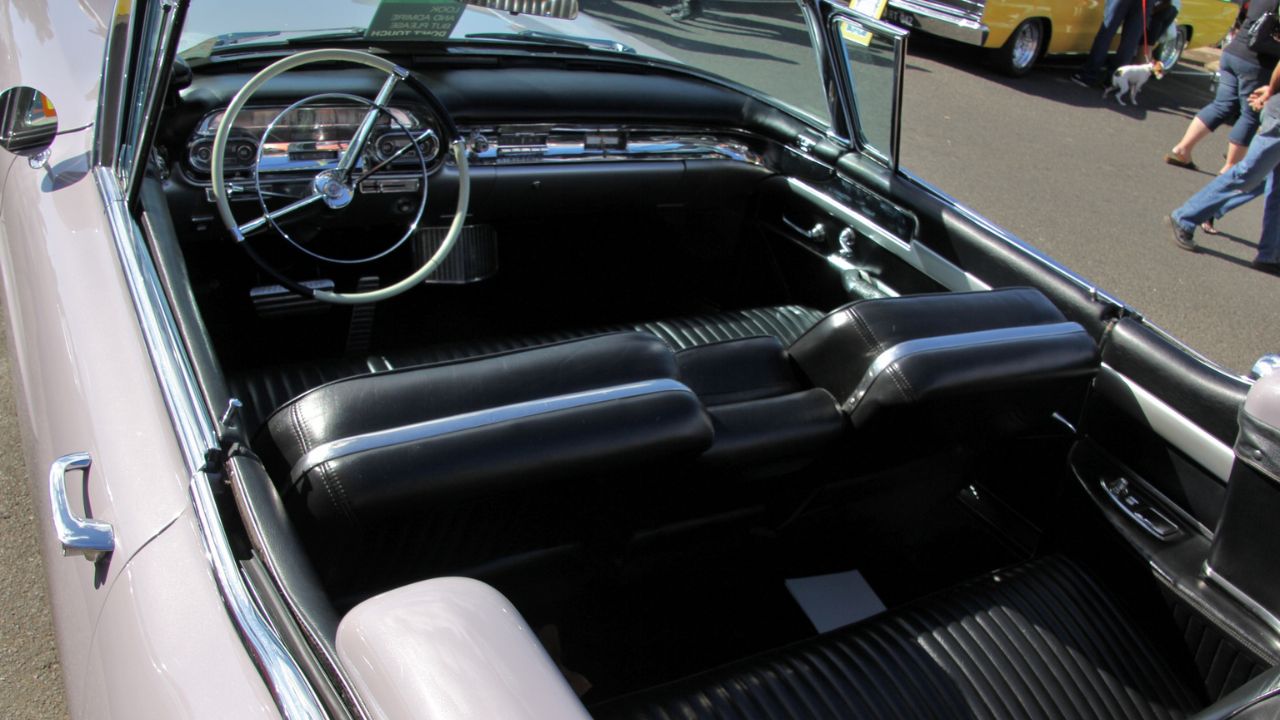
The ’57 Eldorado Biarritz interior was America showing off, and we loved every ridiculous, over-the-top inch of it. This was the era when chrome was a food group and subtle was a dirty word. The dashboard looked like it was styled by someone who thought jewelry should be functional.
Those bench seats were essentially living room furniture that happened to be mounted in a car. You could seat three across the front without anyone complaining; try that in today’s bucket-seat world. No, don’t; we were being facetious! The leather came in colors that would make a peacock jealous: turquoise, coral, yellow, and other hues that modern car companies wouldn’t dare attempt.
The steering wheel was large enough to double as a ship’s wheel, which was appropriate because the Eldorado drove more like a yacht than a car. Power everything was still a novelty in 1957, so every switch and button felt like controlling the future. Air conditioning was so new that having it was basically bragging rights, and the Eldorado’s system could practically refrigerate a small building.
This interior captured post-war American optimism in leather and chrome. It believed in fins, space travel, and the idea that tomorrow would always be better than today. Was it subtle? Absolutely not. Was it glorious? You bet it was.
BMW 7 Series E38
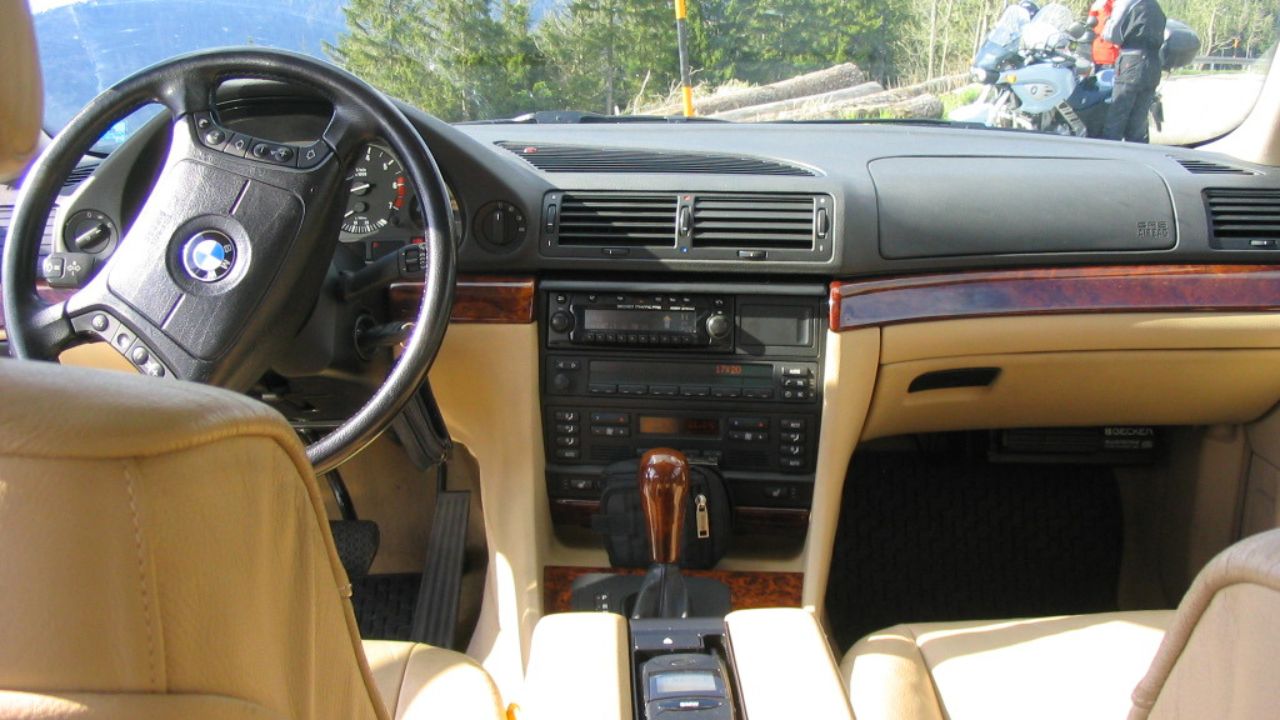
The E38 7 Series interior was BMW’s answer to the question, “What if we made a cabin that was both luxurious and logical?” The result was a masterclass in thoughtful design that made every other executive sedan look either too flashy or too boring.
BMW introduced a twist-and-push controller in the E38 that BMW describes as a forerunner of iDrive. The wood trim wasn’t trying to impress your grandmother; it was real, it was restrained, and it aged beautifully.
Those seats were engineered like precision instruments. The front chairs offered 16-way adjustment, which sounds excessive until you realize that finding your perfect driving position becomes an obsession once you experience it. Rear passengers got their own climate zones because, as BMW learned, executives have strong opinions about temperature.
The E38 offered features that became common later, including navigation and rain-sensing wipers, but BMW’s automatic high beam assist arrived years afterward. This was technology serving the driver rather than the other way around, a philosophy that seems to have gotten lost somewhere along the way.
Ferrari 456 GT
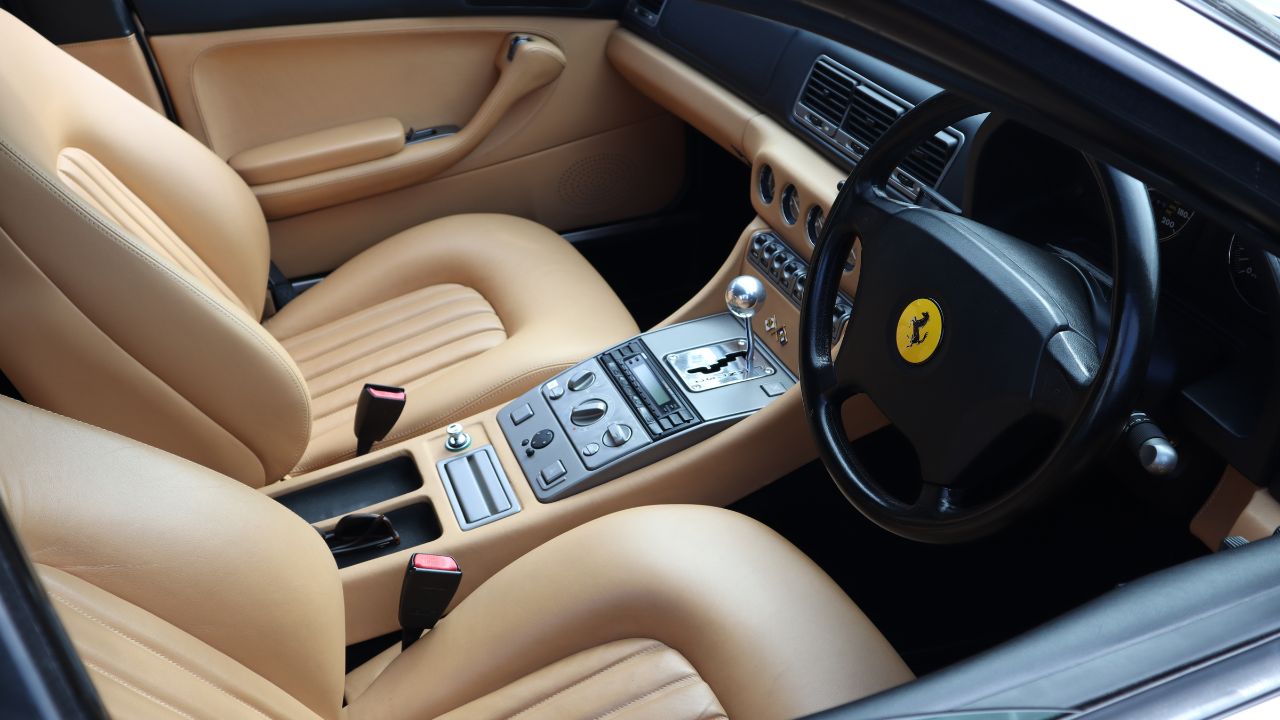
The 456 GT interior proved that Ferrari could build more than just racing machines for masochists. This was a cabin designed for covering serious miles in serious style, with rear seats that could actually accommodate human beings rather than your gym bag.
That gated shifter was a mechanical marvel that made every gear change feel like conducting an orchestra. The gates guided the lever through its path with precision that modern paddle shifters can’t match. Sure, it took practice to master, but that was half the fun.
Connolly leather wrapped everything important, and the stitching was done by hand because, well, this was Ferrari. The dashboard curved around the driver like a cockpit, but with enough elegance to remind you this wasn’t a track-only weapon. Climate control actually worked, the radio got a good reception, and you could drive to dinner without arriving covered in sweat and engine oil.
The 456 proved that supercars didn’t have to torture their occupants. You could drive this thing to Monaco, enjoy the journey, and arrive looking like you meant to be there. Revolutionary concept, really.
Lasting Impressions from Interiors That Endure

Here’s the thing about these cabins: they were built by people who understood that cars are extensions of our personalities. Every material choice, every curve, and every switch placement was deliberate. Nothing was there just to hit a price point or satisfy a focus group.
Modern interiors are impressive in their own way, with technology that is undeniably amazing (at least, compared to where cars started), and the safety features would make these classics weep with envy (blind spot detectors are great, and you can’t change my mind). But something gets lost when everything is controlled by touchscreens and voice commands. These vintage cabins remind us that driving used to be a more tactile, engaging experience.