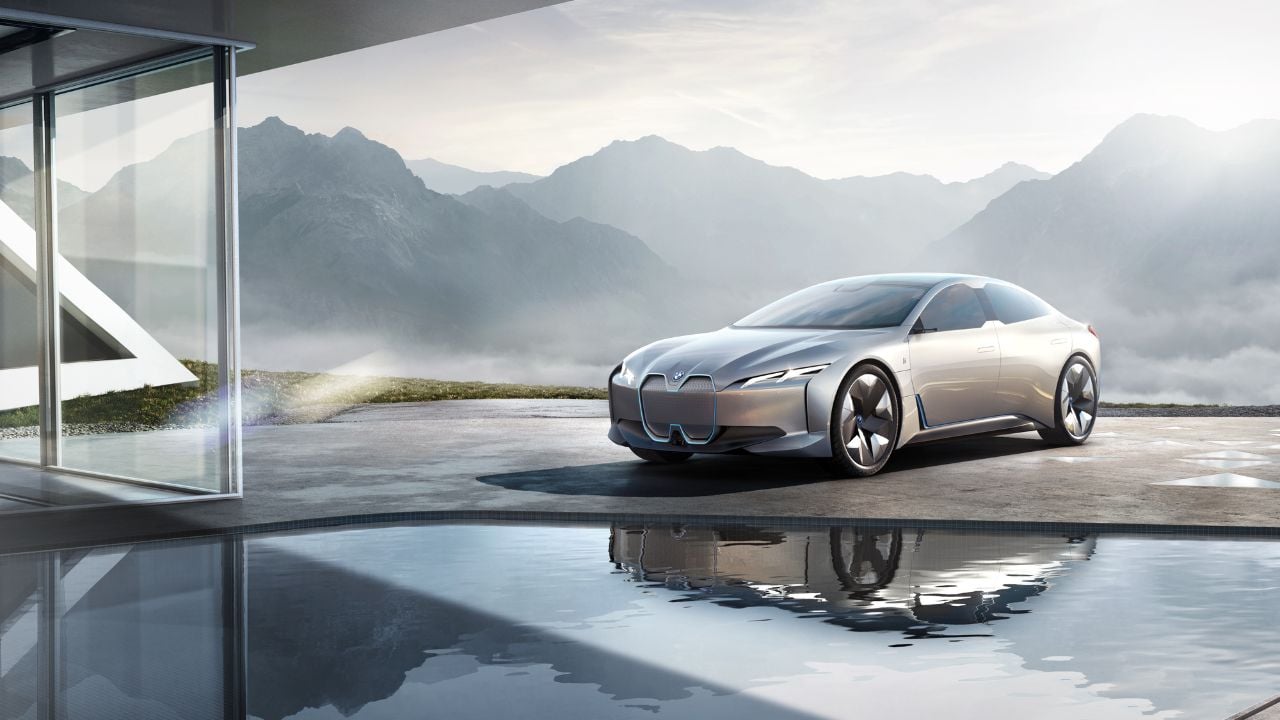
BMW has a signature look (and smell); let’s not avoid the obvious. However, the carmaker’s concept cars show the company’s design journey throughout the years, showcasing just how BMW got to the silhouette we know and love. And if you’re asking me, I sometimes like the journey more than the destination.
The beauty of BMW concepts throughout the years lies in their courage. They captured attention with lines, proportions, and ideas that felt futuristic yet true to the spirit of the brand. Some explored new technologies, while others reimagined heritage in fresh forms. Each one carried the soul of BMW forward, reminding car lovers that progress begins with daring to dream. This article celebrates those visions ahead of their time, concept cars that defined the future before the world was ready.
Maybe they were forgotten at the time, but now they’re all we think about. Here are the concepts we can’t forget.
BMW Z18 (1995)
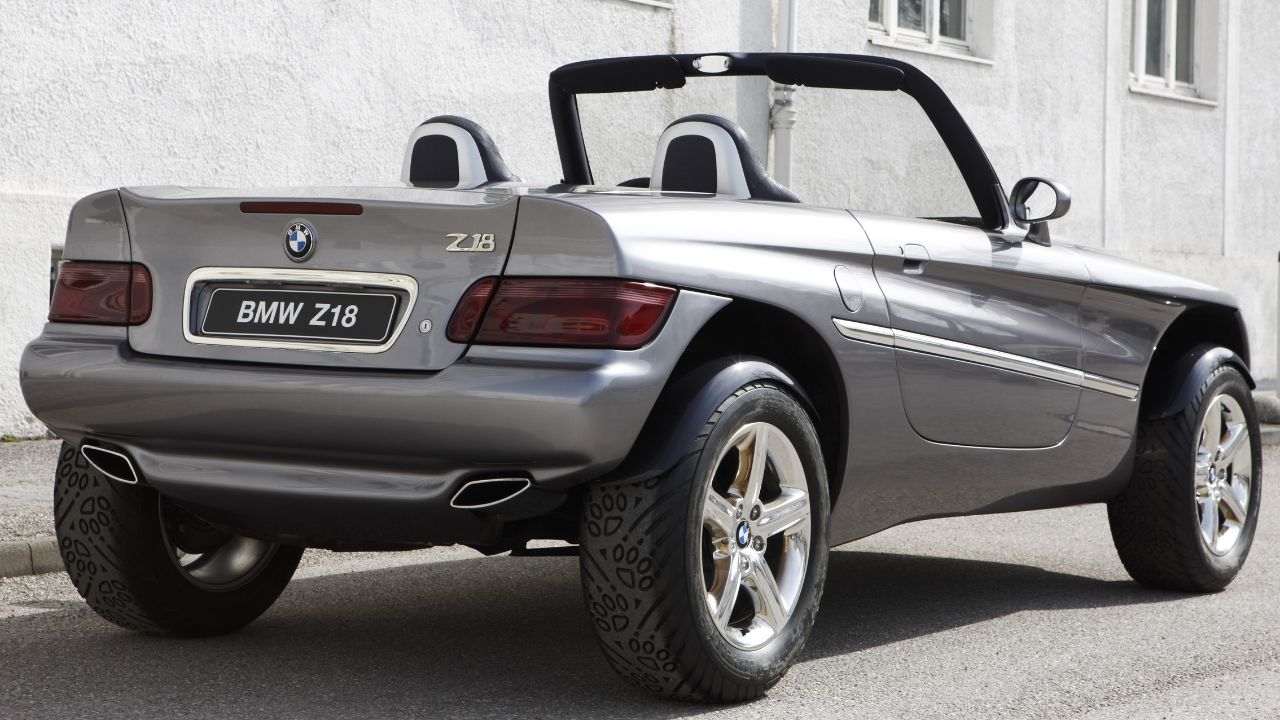
Picture this: it’s 1995, and BMW drops something nobody saw coming. The Z18 wasn’t just unusual for BMW: it was unusual for anyone. This thing was like someone took a Z3 roadster, fed it nothing but protein powder for six months, then taught it how to climb mountains.
The engineers stuffed a 4.4-liter V8 under the hood – the same M62 engine that would later power the E39 540i, but here it was making 355 PS (about 350 hp)… with a kerb weight of 1,560 kg (3,439 lb). Think about that power-to-weight ratio for a second. This wasn’t some lumbering SUV pretending to be sporty; this was a genuine sports car that happened to have the ground clearance and approach angles to tackle serious terrain.
What really gets me about the Z18 is how ahead of its time it was. BMW called it an “off-road roadster,” but we didn’t have words for what it really was back then. Today, we’d call it a performance crossover, maybe even the spiritual grandfather of something like the X6 M. BMW did not design a roof for the Z18, and it used waterproofed interior elements for off-road/water use, the four-seat configuration, even the way it managed to look both rugged and elegant – BMW was writing the playbook for an entire segment that wouldn’t really take off for another decade.
The Z18 rode on off-road-oriented wheels/tires and had underbody protection (huge for 1995) wrapped in specially designed off-road tires, and it had real underbody protection. This wasn’t a concept car that would crumble if you drove it off the show stand. BMW built it to work, and that commitment to functionality in their concepts is something that sets them apart even today.
BMW M1 Hommage (2008)

Sometimes you see a concept car and immediately know it’s going to influence everything that comes after it. The M1 Hommage was one of those moments. When BMW rolled it out at Villa d’Este in 2008, it wasn’t just paying tribute to the original M1 – it was showing us the future of BMW design language.
What BMW did here was brilliant. Instead of just copying the original, they captured its essence. The Hommage had the same dramatic wedge profile, but the surfaces were more sculpted, more fluid. Those iconic side blades were there, but they flowed into the bodywork more naturally. The kidney grille was present but integrated into the front fascia in a way that looked both familiar and futuristic.
The influence of this concept can’t be overstated. Look at the i8 that followed, and you’ll see the M1 Hommage’s DNA all over it. The dramatic door cuts, the way the roof flows into the rear deck, even the aggressive front spoiler: it all traces back to this concept. BMW proved they could honor their past while pushing design forward, and that philosophy has guided their approach to sports cars ever since. BMW described the M1 Hommage as a pure design study, and no power unit was envisaged for it.
BMW Nazca C2 (1992)

The Nazca C2 wasn’t designed in Munich – it came from Italdesign, under the watchful eye of Giorgetto Giugiaro, the man behind automotive legends like the original VW Golf and the Lotus Esprit. When BMW gave him the keys to their parts bin, magic happened.
Giugiaro built the Nazca C2 around BMW’s magnificent 5.0-liter V12 from the 750i, but in this lightweight carbon fiber body, it became something entirely different. With Alpina involvement and a tuned 5.0L BMW V12 making about 350 hp, period specs credit the Nazca C2 with a claimed 193 mph top speed. Those numbers might not sound crazy by today’s standards, but remember – this was 1992, when most supercars were still struggling to crack 180 mph.
The design is pure Giugiaro genius. That sweeping canopy roof, the way the glass wraps around the entire passenger compartment – it looks like a fighter jet navigating through traffic. The gullwing doors weren’t just for show; they were necessary because of how low the car sat.
Only three examples were ever built, making this one of the rarest BMW concepts ever. But its influence went far beyond its production numbers. The Nazca C2 showed BMW what was possible when they pushed their engineering to the absolute limit, and elements of its design philosophy would surface in future BMW sports cars for years to come.
BMW Gina Light Visionary Model (2008)

The GINA was a complete reimagining of what a car could be. Instead of metal body panels, BMW stretched a flexible fabric skin over a movable frame. The headlights opened like eyelids. The surfaces could change shape depending on the car’s needs. It was like something out of a science fiction movie, except it was real and it actually worked.
BMW’s head of design, Chris Bangle, was the mastermind behind GINA, and his team spent years figuring out how to make it work. The fabric was a polyurethane-coated Spandex (Lycra-type fabric) that was both water-resistant and incredibly durable. The frame underneath was made from aluminum and carbon fiber spars that could move independently, allowing the car to literally change its shape.
The engineering was mind-blowing. When you needed to access the engine, the hood would split open along a seam that was invisible when it was closed. The doors had no handles – you just pressed on the skin and it would indent, creating a natural grip. When you turned on the headlights, the fabric would stretch and part to reveal the lamps underneath, then close again when you turned them off.
The GINA’s influence shows up in subtle ways throughout BMW’s current lineup. The more organic shapes, the emphasis on functional aerodynamics, even the way newer BMWs seem to have more character and personality – it all traces back to lessons learned from this shape-shifting concept.
BMW Vision EfficientDynamics (2009)

This is the concept that changed everything. When BMW unveiled the Vision EfficientDynamics at Frankfurt in 2009, they weren’t just showing off another pretty concept car – they were announcing their intention to redefine what a sports car could be in the 21st century.
The powertrain was revolutionary: a 1.5-liter three-cylinder turbo diesel working with two electric motors to produce 356 total horsepower. The diesel and electric motors worked together, creating an all-wheel-drive hybrid system that could hit 100km/h in 4.8 seconds while rated at 3.76 L/100 km on the EU test cycle (roughly ~63 mpg US equivalent / ~75 mpg UK). In 2009, that combination seemed impossible.
But the real genius was in the packaging. The Vision EfficientDynamics looked like a proper supercar – low, wide, and aggressive – but it achieved its dramatic proportions through clever engineering rather than brute force. The battery pack was integrated into the carbon fiber structure, the diesel engine was mounted low and far back, and every surface was optimized for aerodynamics. The result was a drag coefficient of just 0.22, making it more slippery through the air than most cars today.
The influence of this concept can’t be overstated. It became the BMW i8, which went on to become one of the most recognizable and successful hybrid sports cars ever built. More importantly, it proved that electrification didn’t mean the end of driving excitement – it could actually enhance it. The instant torque from the electric motors, the clever way the systems worked together, the stunning efficiency – the Vision EfficientDynamics showed that the future of performance would be electric.
BMW i Vision Dynamics (2017)

By 2017, BMW had learned a lot from the i3 and i8, and the i Vision Dynamics showed how they planned to apply those lessons to a more mainstream electric sports sedan. This wasn’t as radical as some of BMW’s earlier concepts, but that was the point – it was a preview of how electric performance would become accessible to more drivers.
The design struck a perfect balance between BMW heritage and electric future. The kidney grille was there, but it was mostly closed off since an electric car doesn’t need as much cooling airflow. The proportions were classic BMW sedan, but the details – like the way the roofline flowed into the rear deck – marked it as something new.
The i Vision Dynamics became the foundation for the i4, which launched in 2021 as BMW’s first i-brand concept aimed at bringing EV tech into the core four-door Gran Coupé space (later previewing the i4). The production car kept the concept’s essential proportions and many of its design elements, proving once again that BMW concepts aren’t just flights of fancy – they’re previews of coming attractions.
BMW’s Legacy of Innovation

What strikes me most about these BMW concepts is how many of their ideas actually made it to production. The Z18’s crossover philosophy, the M1 Hommage’s design language, the Nazca’s performance envelope, GINA’s organic surfaces, the Vision EfficientDynamics’ hybrid sports car formula, and the i Vision Dynamics’ electric sedan approach – they all influenced cars you can buy today.
That’s what separates great concept cars from mere showpieces. These weren’t just exercises in style; they were laboratories for the future. BMW used them to test ideas, explore possibilities, and push boundaries in ways that production cars couldn’t. But they also kept one foot firmly planted in reality, making sure their wildest dreams could eventually become our everyday drives.
Looking at these concepts today, what impresses me isn’t just their individual brilliance: it’s how they collectively tell the story of BMW’s evolution. From the Z18’s genre-blending audacity to the i Vision Dynamics’ electric sophistication, each one pushed the brand forward while staying true to its core values of performance, innovation, and that indefinable quality we call “Ultimate Driving Machine.”
BMW isn’t done dreaming. Every auto show seems to bring another concept that makes us rethink what’s possible, another preview of a future that seems just crazy enough to work. And if history is any guide, the wild ideas they’re showing us today will be the cars our kids are driving tomorrow.