
Some of our best (and worst) childhood memories take place during family road trips. You probably remember moments like singing songs from the backseat, stopping at beautiful rest stops to grab snacks and breathe in the fresh air, and envisioning a weird man on all fours running across the fences and roofs as your dad sped down the street. Maybe that last one was just me. Either way, road trips create family experiences that last a lifetime; you just need the right vehicle to make those trips memorable in a positive way. I want to celebrate those vehicles throughout the decades that could go across country without complaint while providing a comfortable environment for those long days on the road. The ones that let you remember the funny and silly moments rather than the frustration of being stuck on the side of the road.
For decades, vehicles have played a central role in shaping family adventures. Each era brought vehicles designed to carry families with comfort and confidence. A reliable vehicle became more than just transportation; it became an integral part of the memory itself.
1960s-1070s: Volkswagen Type 2 Microbus
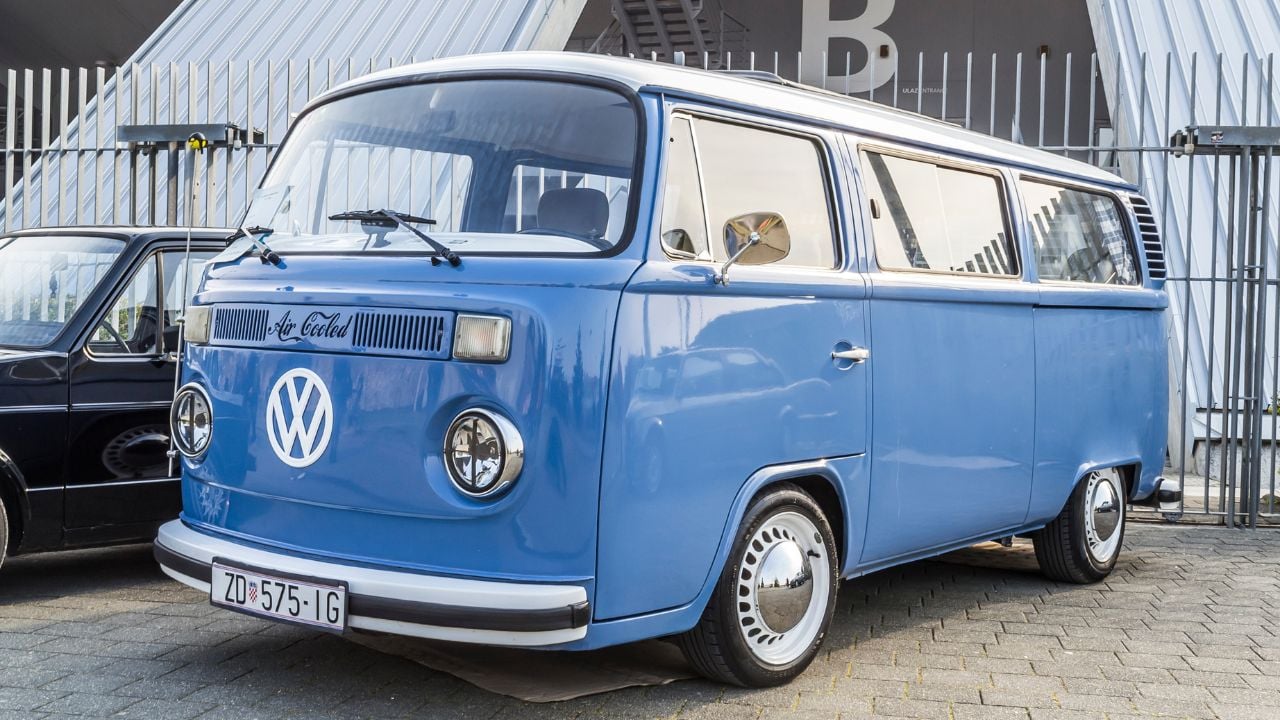
Let’s start with the obvious choice that makes every car enthusiast either smile or cringe, depending on their patience level. The VW Bus wasn’t fast; calling it “leisurely” would be generous. With its 1.6-liter pancake four-cylinder putting out a whopping 57 horsepower, you weren’t outrunning anything except maybe a determined jogger.
But here’s the thing about the Bus that modern car buyers just don’t get: it was never about speed. That rear-engine, air-cooled setup meant you could hear everything going on behind you, from the engine working overtime on hills to your kids planning their next snack attack. The flat floor and boxy design meant you could actually fit stuff; revolutionary concept, right?
What made it special was the culture it created. You couldn’t drive a VW Bus without people assuming you were either heading to a music festival or had really strong opinions about organic vegetables. No matter the destination, everyone was definitely smiling all the way there. The split-window models from the early ’60s are now worth more than most people’s houses, which proves that sometimes the slowest car wins the race.
1970s-1980s: Chevrolet Suburban

If the VW Bus was the hippie uncle of family travel, the Suburban was the no-nonsense patriarch. Introduced in 1935 (making it older than your grandfather’s complaints about modern cars), the Suburban reached its stride as the ultimate American road trip machine during the 1970s and 1980s.
This thing was massive even by today’s standards. The ’70s models stretched over 18 feet long – longer than some of the studio apartments I’ve rented over the years. Under that enormous hood sat engines that drank gas like a sailor on shore leave. The 454 big-block V8 option produced 245 horsepower and approximately 8 miles per gallon, but who was counting when gas was 60 cents a gallon?
What the Suburban lacked in fuel efficiency, it made up for in pure capability. You could fit three rows of kids, enough luggage for a small army, and still have room for the dog. The rear gate doubled as a picnic table, and the thing rode like a living room sofa – a very large, very thirsty living room sofa.
The best part? These things were built like bank vaults. Many families drove the same Suburban for decades, passing it down like a family heirloom. Sure, it needed a paint job every few years thanks to that period when Detroit thought primer was a color option, but the mechanicals just kept going.
1970s-1980s: Ford Country Squire Wagon

Nothing says “American family vacation” quite like a Country Squire with fake wood paneling and a rear-facing third seat. Ford sold these wood-grained beauties from 1950 to 1991, but the ’70s and ’80s models became the definitive family haulers of their era.
The magic was in the details that modern SUVs have forgotten. That rear-facing third seat turned every trip into a social experiment, where kids could wave at following cars, play games, and generally misbehave with their antics. The tailgate opened to reveal a cargo area big enough for camping gear, coolers, and whatever impulse purchases mom made at roadside gift shops.
Under the hood, Ford offered everything from the economical 302 V8 (economical being relative when you’re talking about a 4,500-pound wagon) to the tire-shredding 429. Most families opted for the 351 Windsor V8, which provided the perfect balance of power and reliability for cross-country adventures.
The Country Squire’s ride quality was legendary. Those long leaf springs and soft suspension soaked up highway imperfections like a sponge, turning interstate slabs into magic carpets. Sure, it wallowed through corners like a boat in a storm, but who was taking corners aggressively with a car full of kids and luggage?
1980s-1990s: Dodge Caravan

Here’s where things get interesting, because the Dodge Caravan didn’t just change family travel; it actually created an entirely new category of vehicle. When Chrysler introduced it in 1984, they basically told station wagons, “thanks for your service,” and showed families what they’d been missing.
That first-generation Caravan came with a 2.2-liter four-cylinder engine that produced 96 horsepower; not exactly tire-burning power, but enough to haul the family from interstate to interstate. The real revelation was the interior space. Seven passengers could actually sit comfortably, and the rear seats folded flat to create a cargo area that rivaled pickup trucks.
By the late 1980s, Chrysler had added the 3.0-liter Mitsubishi V6, providing the Caravan with sufficient power to merge onto highways without causing traffic incidents. The all-wheel-drive option made it practical in snow country, though most families never ventured off pavement.
1980s-1990s: Jeep Grand Wagoneer

While everyone else was building practical family haulers, Jeep took a different approach with the Grand Wagoneer. They started with their rugged SJ-platform (which dated back to 1963) and dressed it up like it was going to a country club dinner.
The Grand Wagoneer was unique because it offered legitimate off-road capability wrapped in wood grain and luxury appointments. Under the hood sat AMC’s legendary 360 V8, later upgraded to a 401 in some years. These engines were torquey, reliable, and had that distinctive AMC rumble that let everyone know you were coming.
What set the Grand Wagoneer apart was its dual personality. It could tow a boat, climb mountain trails, and haul a family of seven in comfort. The interior featured genuine leather seats, deep-pile carpeting, and an abundance of fake wood, enough to build a small cabin. Air conditioning was standard, which was still a big deal in the ’80s.
The four-wheel-drive system was simple and effective: a two-speed transfer case with a floor-mounted shifter that actually required some muscle to engage. No computer-controlled systems here, just mechanical reliability that could get you out of trouble anywhere from a snowy driveway to a muddy campground.
Grand Wagoneers commanded premium prices when new, and they’ve become highly collectible today. Clean examples sell for more than they cost new, which tells you everything about their lasting appeal. They represented a time when luxury and capability weren’t mutually exclusive, before luxury meant 20 touchscreens and constant reminders to stand up straighter.
1990s-2000s: Honda Odyssey

By the time Honda introduced the Odyssey in 1995, the minivan market was crowded with options, but most were built by companies that treated them like afterthoughts. Honda approached the project differently: they decided to build a minivan that actually drove like a Honda.
The first-generation Odyssey was smaller than its American rivals but felt more refined. Honda’s 2.2-liter four-cylinder was smooth and efficient, though families quickly learned that merging onto freeways required planning and patience. The interior was thoughtfully designed with clever storage solutions and materials that actually held up to family abuse.
The real breakthrough came with the second-generation Odyssey in 1999. Honda stretched the wheelbase, added a V6 engine, and created what many consider the benchmark for minivan excellence. That 3.5-liter V6 produced 210 hp; enough to actually pass other vehicles on two-lane highways, while returning respectable fuel economy.
A Journey Shared Across Generations

Despite their apparent differences, all of these vehicles shaped memories, created traditions, and proved that sometimes the journey really is more important than the destination. Each one reflected the needs and values of its era, from the counterculture freedom of the VW Bus to the suburban practicality of the Odyssey.
Today’s families have more choices than ever, with SUVs and crossovers dominating showrooms. However, the lessons learned from these classics remain applicable: space matters, reliability is crucial, and sometimes the best family car is the one that gets everyone excited about the next adventure.
What made your family’s road trip car special? Was it the way it handled mountain passes, the memories created in the back seat, or just the fact that it got you there and back again? In the end, that’s what really matters; not the horsepower or the 0-60 times, but the stories these vehicles helped create.