
Ferrari on a screen is never just transportation. It is a character. The paint pops, the engine note sets the mood, and suddenly the plot bends around the car. From Magnum P.I.’s 308 to Miami Vice’s white Testarossa, from Ferris Bueller’s daydream machine to the red convertible of Sega’s OutRun and the poster cars of Need for Speed and Gran Turismo, these moments turned Ferraris into cultural shorthand for style and speed.
This list spotlights the appearances where the Ferrari stole the scene, not just appeared in it. Picks are based on cultural impact, how much the car shaped the story or gameplay, and the way it lived on in posters, preorders, and memory. Cue the revs and roll the tape.
How We Chose the Ferraris That Stole the Spotlight
There are probably numerous Ferraris featured in movies, shows, and games… For an exhaustive list, simply consult Wikipedia. But we didn’t want to just list Ferrari appearances. These are the times when Ferrari defined the story or experience. These are the ones that stole the show, just as they did all throughout Monterey Car Week and beyond.
We asked: Did the car drive the plot forward? Did it capture the spirit of the scene or game? Was it instantly recognizable and unforgettable, even years later?
We also prioritized examples that continue to resonate with audiences. While many Ferraris have appeared in films and TV, not all have left a lasting mark. The 250 GT California in Ferris Bueller’s Day Off became the ultimate symbol of teenage rebellion and freedom, while the Testarossa in OutRun transformed the way gamers imagined exotic cars and road trips.
By adding other examples, such as the 308 GTS from Magnum, the Enzo in Charlie’s Angels, and the 512 BB from Cannonball Run, we paint a fuller picture of how Ferrari’s legacy extends beyond engineering and into pure cultural storytelling.
Ferris Bueller’s Ferrari 250 GT California Spyder

Let’s address the elephant in the garage first: the real 250 GT California was so expensive that replicas from the movie sell for over $200,000, and actual specimens have sold for $17-18.5 million at auction. John Hughes wasn’t about to let teenage actors anywhere near a car worth more than most people’s houses.
So what did they do? Built three fiberglass replicas for $25,000 each — a bargain compared to the $300,000+ a real one would have cost in 1986. The replicas were powered by 7.0-liter Chevy V-8 engines because apparently, nothing says “Italian sophistication” like Detroit muscle wrapped in Pininfarina-inspired bodywork.
The real 250 GT California Spyder was Ferrari’s answer to the question, “What if we made our race car street legal?” Only about 100 were produced between 1957 and 1963, powered by a 3.0-liter V12 engine that made around 240 horsepower. In today’s world of 700-horsepower family sedans, that sounds quaint. However, in the late 1950s, it was enough to inspire teenagers to plan elaborate heists (especially after seeing it in action on the big screen).
The movie car’s destruction scene still makes Ferrari purists flinch, even knowing it was fake. Cameron’s father probably had the right idea in keeping it locked away, though perhaps investing in therapy for his son would’ve been cheaper than replacing the windows.
OutRun’s Ferrari Testarossa
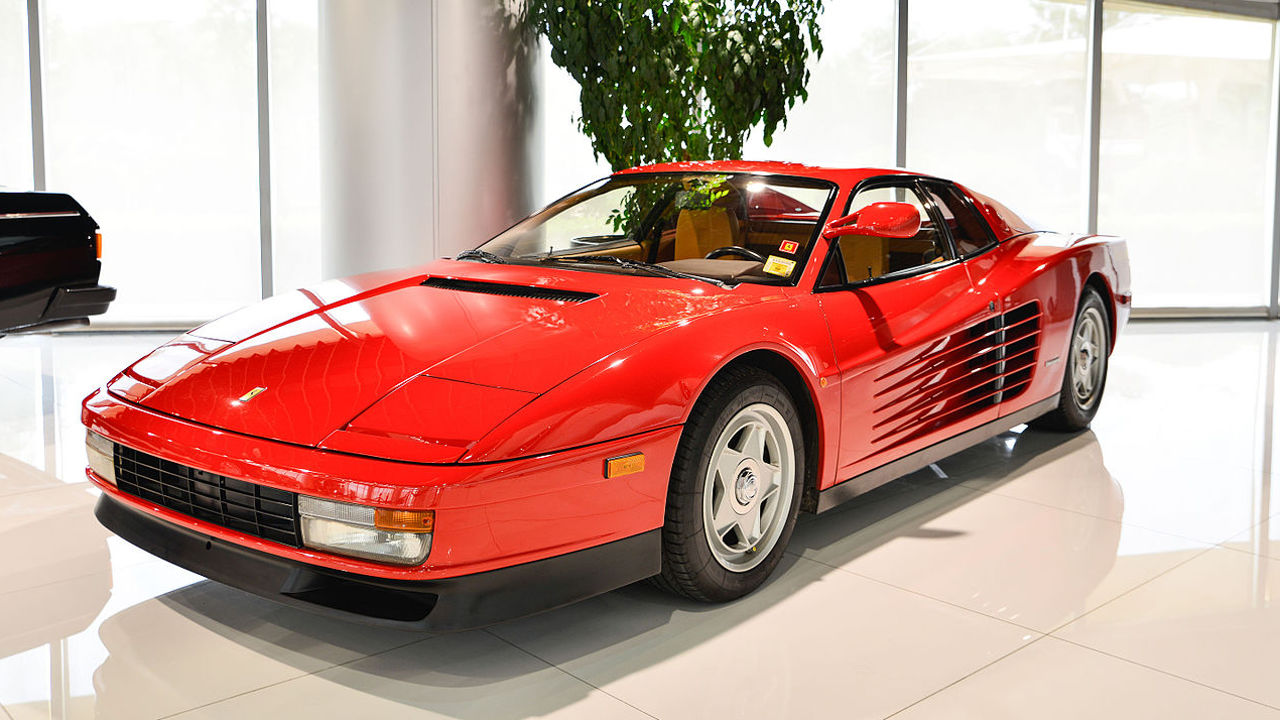
Before Gran Turismo made us all armchair racing experts, there was Sega’s OutRun, and its star was unmistakably the Ferrari Testarossa. The 1986 arcade game featured a convertible Testarossa (which Ferrari never actually made as a factory option), but hey, it’s a video game, so reality is optional.
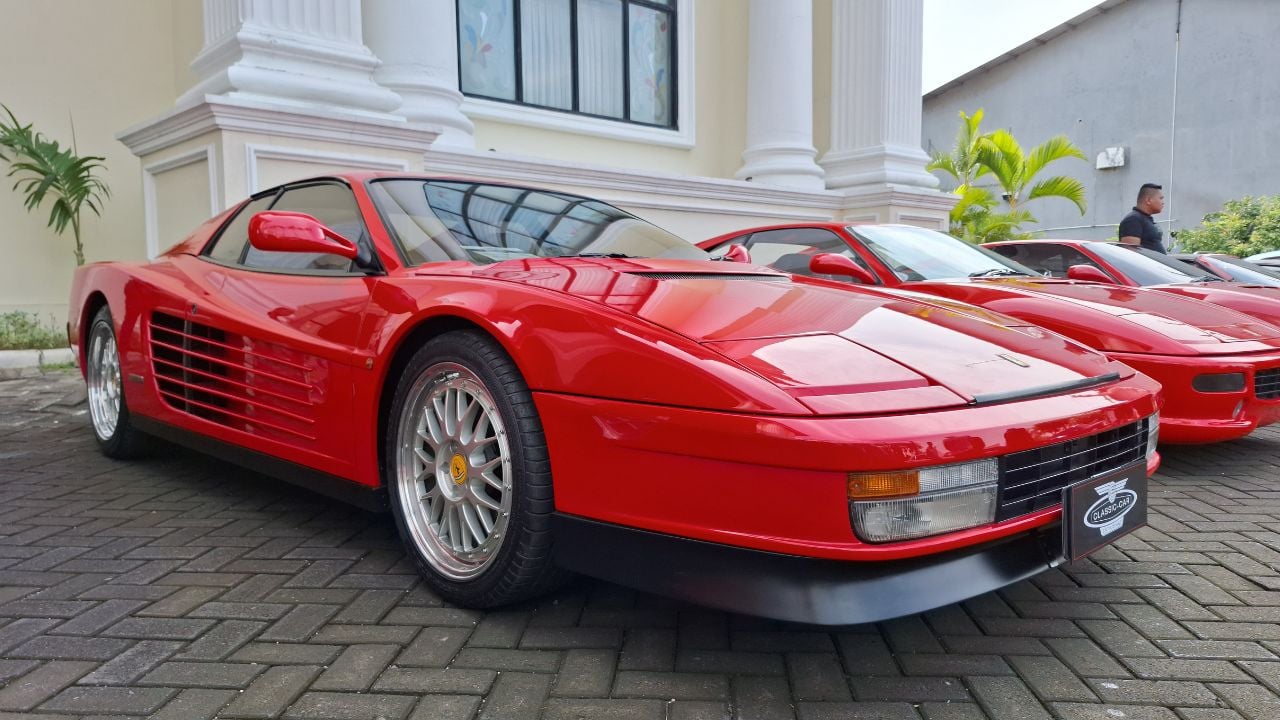
The real Testarossa was Ferrari’s range-topper during the 1980s, powered by a 385-horsepower flat-12 engine. At nearly 78 inches wide, it was half a foot wider than its predecessor, the Boxer, because subtlety was apparently not part of the 1980s design brief.
Those iconic side strakes weren’t just for show; they supplied air to the massive side-mounted radiators required to cool the thirsty flat-12. The design was so distinctive that it became synonymous with 1980s “yuppie” culture, which is either a compliment or an insult, depending on your opinion of shoulder pads and cocaine.
OutRun’s genius was letting players live out their Magnum P.I. fantasies without the risk of actual debt or divorce papers. The game’s “generic red convertible” fooled exactly nobody, because those wedge lines and side strakes were pure Testarossa, even rendered in glorious 16-bit graphics.
Magnum’s Ferrari 308 GTS

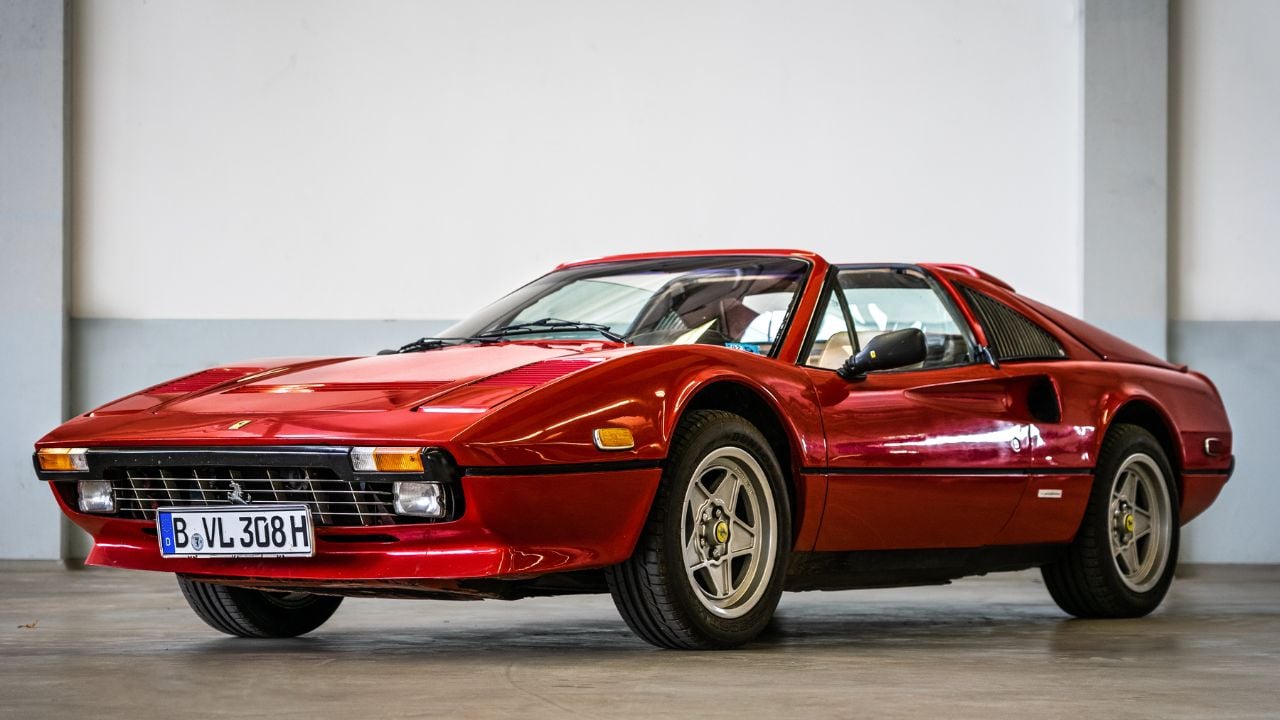
If the Testarossa was the 1980s in car form, the Ferrari 308 GTS was its slightly more sensible older brother who still knew how to party. Tom Selleck’s Thomas Magnum made the 308 GTS a household name.
The 308 GTS was powered by a 2.9-liter V8 engine producing approximately 205-240 hp, depending on the year and local emissions regulations. It wasn’t the fastest Ferrari, but it was arguably the most approachable; the kind of car you could theoretically daily drive without your chiropractor buying a vacation home.
What made Magnum’s Ferrari special wasn’t its specs but its personality. While most TV cars were either boring sedans or impossibly exotic, the 308 GTS struck the perfect balance. It was exotic enough to be aspirational but familiar enough that viewers saw it every week for eight seasons. It became the Ferrari people actually knew, not just admired from afar.
Plus, let’s be honest: anything looks good next to Tom Selleck’s mustache. That thing could make a Pinto look distinguished.
Charlie’s Angels: Full Throttle’s Ferrari Enzo
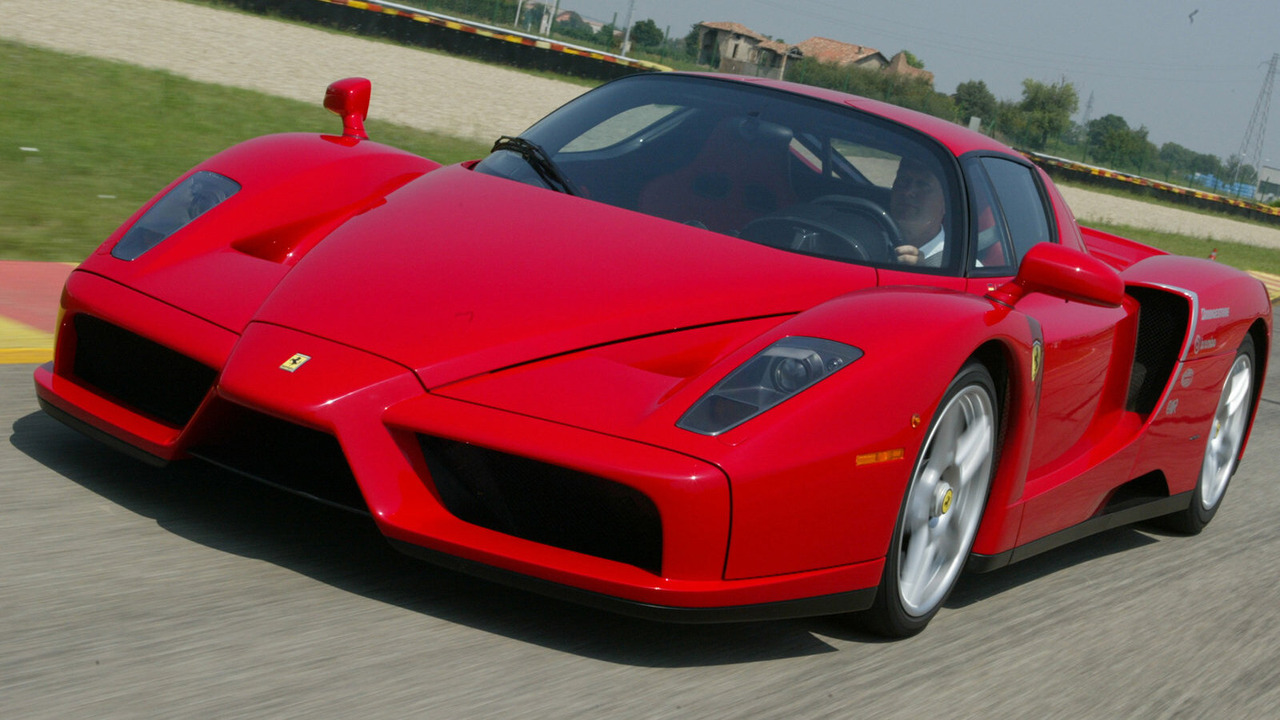
By 2003, Ferrari had realized that regular supercars weren’t enough; they needed to build something that made other supercars feel inadequate at a prestigious car meet. Enter the Enzo, named after the company’s founder and engineered to make your neighbors file noise complaints.
The Enzo was Ferrari’s loud war against physics, powered by a 6.0-liter V12 producing 651 hp. Only 400 were made, ensuring exclusivity and guaranteeing that someone would always have a more expensive midlife crisis than you.
In Charlie’s Angels: Full Throttle, Cameron Diaz’s character arrives in an Enzo, and the car immediately communicates everything you need to know about her character’s wealth, taste, and complete disregard for speed limits. The Enzo didn’t need to do stunts or chase scenes, its mere presence was the special effect.
It was automotive peacocking at its finest, the kind of car that makes valet attendants break into cold sweats and insurance adjusters update their résumés.
Cannonball Run’s Ferrari 512 BB

Before the Testarossa rewrote the supercar rulebook, there was the 512 BB (Berlinetta Boxer), Ferrari’s first attempt at a mid-engine 12-cylinder road car. The 512 BB featured a 4.9-liter flat-12 producing around 360 hp, respectable numbers (for the time) that were immediately made irrelevant by the car’s tendency to overheat, handle like a drunken rhinoceros, and cost more to maintain than most people’s salaries.
In Cannonball Run, the 512 BB perfectly captured the film’s spirit of beautiful chaos. It was fast enough to be credible in an illegal cross-country race, exotic enough to justify the movie’s premise, and temperamental enough that breaking down mid-race wouldn’t surprise anyone familiar with 1970s Italian engineering.
The 512 BB was Ferrari’s way of saying that they could build a mid-engine supercar that was faster than a Lamborghini Countach, while quietly adding, “but we make no promises about it starting reliably or not spontaneously combusting.” Sorta like a medication ad, but for something awesome (that won’t cure rashes).
When the Car Becomes the Star

These Ferraris prove that sometimes the best supporting actor has a V12 heartbeat and an Italian accent. Whether it’s a teenager’s joyride in Chicago, a detective’s daily driver in Hawaii, or a secret agent’s grand entrance. The magic isn’t just in the horsepower figures or the exotic styling (though both help). It’s in how these cars capture our imagination and make us believe, even for a moment, that life could be more exciting, more glamorous, more… Italian.
Sure, most of us will never own a real 250 GT California or an Enzo. But thanks to these movies, TV shows, and games, we’ve all experienced that Ferrari dream: even if it was through a movie screen, arcade cabinet, or television set. And sometimes, that’s enough to keep the dream alive until the next Powerball drawing.
After all, every Ferrari owner started as someone who just wanted to live like Ferris Bueller for a day. The lucky ones figured out how to make it last a lifetime. The rest of us just keep the posters on our walls and the dreams in our hearts, and occasionally, we fire up an old arcade game and pretend we’re cruising down the Pacific Coast Highway with the wind in our hair and not a care in the world.
Bueller? Bueller? The car’s still calling.