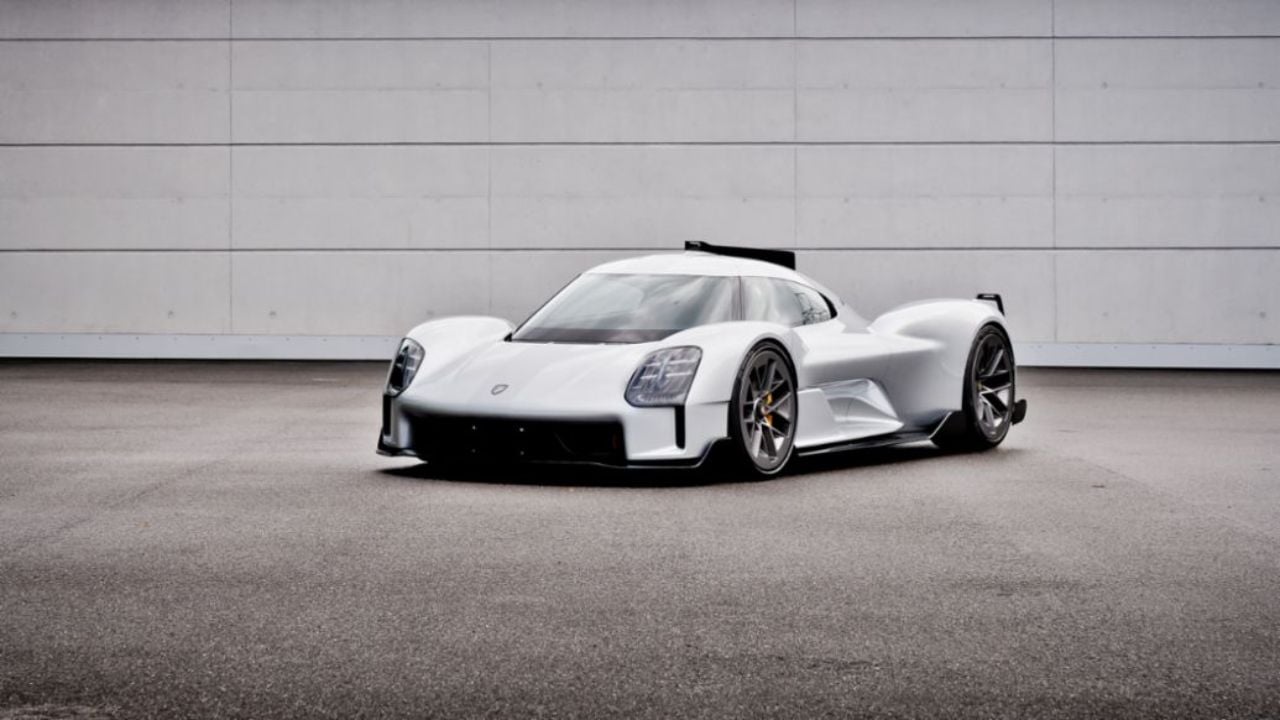

A Porsche concept car is like that perfect first date: full of promise, impossibly attractive, and destined to leave you wondering “what if?” These automotive heartbreakers arrive with all the fanfare of a Hollywood premiere, complete with mysterious backstories and enough swoopy curves to make grown enthusiasts weak in the knees. They whisper sweet nothings about 0-60 times and lateral G-forces, then vanish into the automotive ether, leaving only grainy press photos and the occasional clay model gathering dust in Stuttgart.
The cruel beauty of a concept car lies in its ability to exist in that perfect limbo between reality and fantasy. Unlike production cars, they never have to worry about mundane concerns like “will the doors actually open in a parking garage?” or “can anyone under 6’2″ actually see out of this thing?”
They’re automotive unicorns: beautiful, mythical, and absolutely impossible to actually own (unless you’re the kind of person who casually drops seven figures on clay models, in which case, call me).
Porsche 989

The Porsche 989 was developed between 1988 and 1991 as a four-door performance sedan, equipped with a front-mounted V8 that grew from 3.6 to 4.2 liters, with development targets at least around 300 hp (some sources cite ~320 bhp during development), which was genuinely impressive back when most family cars made about as much power as a modern lawn mower.
Picture this: someone at Porsche looked at the 911’s silhouette and thought, “You know what this needs? More doors and a trunk people can actually use.” Created as Porsche’s answer to luxury saloons from BMW and Mercedes-Benz, the 989 was essentially Stuttgart’s attempt to prove they could build a practical car without completely losing their sports car soul in the process.
Under the leadership of Dr. Ulrich Bez, the 989 was planned as a flagship four-door to sit above or alongside the 928-era GT strategy, which tells you everything you need to know about Porsche’s relationship with long-term planning. The car featured a 111.3-inch wheelbase and proportions that somehow made four doors look like they belonged on a 911; no small feat.
The 989 died in 1992, a victim of corporate belt-tightening and the kind of market research that probably concluded that “sports car buyers don’t need four doors.” History would eventually prove them wrong, as the Panamera exists and sells quite well (thank you very much). That’s the automotive industry for you: always ready to learn yesterday’s lessons tomorrow.
Porsche 919 Street

Developed in 2017 to “make the exhilarating driving experience of the LMP1 race car available to amateur drivers,” the 919 Street was envisioned as a road-going counterpart to Porsche’s Le Mans-winning 919 Hybrid. Because apparently, someone at Porsche thought, “What if we took our most successful race car and made it slightly less likely to kill you on your morning commute?”
A design study based on the 919 Hybrid, envisioned as a privateer-focused special series. Period reporting describes it as using the 919’s carbon monocoque and race-derived 2.0-liter turbo V4 hybrid system with output quoted around 900 hp.
The 919 Street represented everything wonderful and terrible about concept cars: it looked absolutely spectacular, promised performance that would redefine physics as we know it, and had about as much chance of reaching production as a flying car powered by unicorn tears. Still, you can see it in clay form at the Porsche Museum, where it serves as a monument to the eternal optimism of automotive designers who believe that surely, this time, the accountants will say yes.
Porsche 960

The so-called ‘Porsche 960’ was a long-rumored mid-engine supercar project reported by outlets like Motor Authority and MotorTrend, never officially confirmed by Porsche. This mid-engine marvel was rumored to feature a flat-eight in some reports; apparently, six cylinders are for minimalists and ten are for show-offs.
The all-wheel drive system promised to deliver the kind of traction that would make launching from stoplights feel like a NASA mission, while the dual-clutch gearbox would shift faster than you could change your mind about needing this much car. The body was designed with the kind of wide hips that suggested serious business and a low roofline that guaranteed you’d need a shoehorn to get in and out gracefully.
Inside, the cabin was supposedly designed for long-distance comfort, which is automotive marketing speak for “the seats don’t actively torture you during extended drives.” The 960 was meant to embody that peculiar Porsche philosophy of building cars that are equally capable of setting lap records and picking up groceries.
The 960 never materialized, presumably because someone realized that building a car to compete with your own lineup might not be the brightest business strategy. Instead, it lives on as automotive folklore, the kind of car that enthusiasts discuss in hushed tones at Cars and Coffee, always beginning with “You know, if Porsche had actually built the 960…”
Porsche 911 Vision Safari

The 911 Vision Safari took the civilized 911 and gave it a survivalist makeover, like sending a stockbroker to boot camp. This wasn’t just a lifted 911: it was a 911 that had clearly been watching too many Dakar Rally highlights and decided it was tired of being confined to smooth tarmac.
The raised suspension provided ground clearance that would make a Jeep owner nod approvingly, while chunky all-terrain tires stood ready to grip everything from sand to gravel to whatever constitutes “terrain” in your particular corner of the world. Protective elements, such as skid plates and reinforced fender flares, suggested that this car was prepared for encounters that would make a regular 911 owner reach for their insurance agent’s phone number.
The headlights wore mesh guards like protective eyewear, giving the front end a determined expression that said, “Yes, I know this is a Porsche, and yes, I’m about to drive through that muddy field anyway.” Inside, bucket seats held occupants firmly in place with harnesses that doubled as a reminder that this wasn’t your typical Sunday drive to the country club.
A roof rack stood ready for spare wheels, extra supplies, and whatever else you might need when your adventure takes you beyond the reach of roadside assistance. The 911 Vision Safari captured that particularly German approach to adventure: thoroughly over-engineered, impeccably crafted, and probably capable of reaching the North Pole while maintaining a perfect paint finish.
This was a car we eventually ended up getting, in the form of a variant called the Porsche 911 Dakar. So, a win is still a win.
Porsche Panamericana

Built to celebrate Ferry Porsche’s 80th birthday, the Panamericana was less concept car and more automotive birthday card… If birthday cards came based on the 911 Carrera 4’s 3.6-liter flat-six, with 250 horsepower. It was a rolling celebration of everything that made Porsche special, wrapped in bodywork that seemed to flow like a Porsche but looked just a bit off kilter.
The fastback rear treatment gave the Panamericana a distinctive profile that managed to look both classic and futuristic, like a 1960s sports car designed by time travelers. The metallic paint shifted colors under different lighting conditions, adding visual depth that made the car appear almost alive in certain circumstances.
As a tribute to the Porsche patriarch, the Panamericana captured the spirit of adventure that defined the marque: the idea that a sports car should be capable of crossing continents as easily as it crossed town. It was a rolling invitation to travel, with every line suggesting journeys measured in experiences rather than miles.
Porsche Mission R

The Mission R represented Porsche’s electric racing future, designed for a generation that would grow up thinking horsepower came from batteries. This wasn’t just another electric concept: Porsche attempted to prove that going electric didn’t mean sacrificing the soul of motorsport.
Twin electric motors delivered the kind of instant torque that made traditional turbos look like they were taking their sweet time. At the same time, digital displays provided more real-time data than a NASA mission control center. The interior materials reflected Porsche’s newfound interest in sustainability, while maintaining the kind of performance focus that suggested saving the planet didn’t mean sacrificing lap times.
The adjustable rear wing and integrated air channels worked together to manage aerodynamic forces with the precision of a Swiss timepiece. At the same time, the overall stance suggested agility and control that would make corners its natural habitat. Racing stripes combined with modern color choices created a visual identity that looked ready for both the racetrack and the Instagram feed.
Porsche 928 H50

The 928 H50 took the grand touring excellence of the 928 and stretched it like automotive putty, creating a four-door GT that somehow maintained its coupe-like dignity despite gaining rear doors and shooting-brake-esque proportions. This was Porsche’s answer to the question nobody had asked: “What if a 928 could carry more than two people without requiring them to fold themselves into origami shapes?”
The V8 engine and pop-up headlights added character and a touch of 1980s charm that modern cars miss, because nothing says “sports car” quite like headlights that emerge from hiding when needed. The 928 H50 represented Porsche’s brief flirtation with the idea that sports car DNA could be successfully transplanted into a luxury limousine without losing what made it special in the first place. Their current showroom proved that they could, in fact, pull that off (looking at you, Panamera and Taycan).
Porsche 904 Living Legend

The 904 Living Legend celebrated the radical idea that in an automotive world increasingly obsessed with more power, more technology, and more everything, sometimes the path to driving nirvana runs in the opposite direction. This concept was Porsche’s love letter to the philosophy that less weight equals more smiles per mile.
The body sat low and taut, with curves that suggested speed even at rest and proportions that reminded observers why the original 904 was considered one of the most beautiful race cars ever built. The compact footprint created an intimacy between driver and road that modern cars, with their advanced safety systems and comfort features, sometimes struggle to achieve.
Every panel seemed sculpted for both function and form, creating a visual harmony that suggested the designers had found that perfect balance between aerodynamic efficiency and aesthetic beauty. The narrow stance reinforced the connection between driver and machine, making every input feel direct and immediate.
Porsche 917 Living Legend

The 917 Living Legend took one of history’s most iconic racing shapes and reimagined it with modern design language and contemporary proportions. This wasn’t just nostalgia wrapped in carbon fiber: it was an exploration of how legendary forms could be reinterpreted for a new generation of enthusiasts.
Aerodynamic sculpting guided airflow over and around the body with the precision of a Formula 1 engineer, creating functional beauty that served both form and performance. The cockpit was narrow and focused, emphasizing the driver’s connection to the machine over passenger comfort or cargo capacity.
The proportions dominated any space the car entered, creating a presence that reminded observers why the original 917 was considered one of the most beautiful and successful race cars ever built. Every line suggested motion even when stationary, capturing the essence of endurance racing in a form that could theoretically be driven on public roads.
Porsche Vision 916

The Vision 916 represented Porsche’s early exploration into electric performance, wrapped in a package that suggested agility and fun over raw power and intimidation. This compact concept embodied the idea that electric propulsion could enhance rather than compromise the traditional sports car experience.
The small footprint and muscular stance created visual tension, suggesting that this car was ready to change direction at a moment’s notice. Meanwhile, the electric motors provided the kind of instant torque response that made traditional engines seem sluggish by comparison. Lightweight materials kept the car quick and responsive, proving that electric didn’t necessarily mean heavy.
The Vision 916 reflected Porsche’s early attempts to understand how classic sports car values could be translated into an electric future. It invited drivers to imagine spirited drives where the soundtrack came from tire squeal and wind noise rather than engine exhaust, where performance was measured by responsiveness and agility rather than just raw acceleration.
Broken Dreams, Unforgettable Fantasies

These Porsche concepts represent automotive history’s most beautiful missed opportunities, the cars that could have changed everything but instead became footnotes in design studios and conversation pieces in museums. They were created by dreamers who believed in beauty, performance, and the thrilling possibility of what could be, only to be shelved by realists who worried about crash tests, emissions regulations, and quarterly profit margins.
Time has a way of making these concepts seem even more special than they were in their original moment. They exist in that perfect state of automotive preservation: forever young, forever promising, forever just out of reach. They’re the cars that make us wonder what could have been.
Which Porsche concept car has been your favorite so far? Let us know in the comments.