

For newcomers to the off-road world, you may not realize how much “lingo” there could be, but the language can be surprisingly complex. Spend five minutes around seasoned off-roaders and you might feel like you’ve stumbled into a foreign country where everyone speaks in a specialized code. Words such as “approach angle,” “airing down,” or “lockers” get tossed around casually, and understanding them opens up a whole new side of the experience.
Off-roading combines skill, preparation, and shared knowledge. The terms you hear on the trail often come from years of trial, error, and innovation. Learning this vocabulary is more than just an academic exercise; it directly improves your ability to drive smartly, communicate clearly, and make better choices when the terrain gets tricky.
In this guide, we outline some of the most important terms every off-roader should know. Each entry explains what the term means, when you might encounter it, and why it matters for your time on the trail. Whether you are getting ready for your first run or looking to sharpen your knowledge, this list will help you sound like you belong in any off-road conversation.
How We Built This List of Essential Off-Road Terms
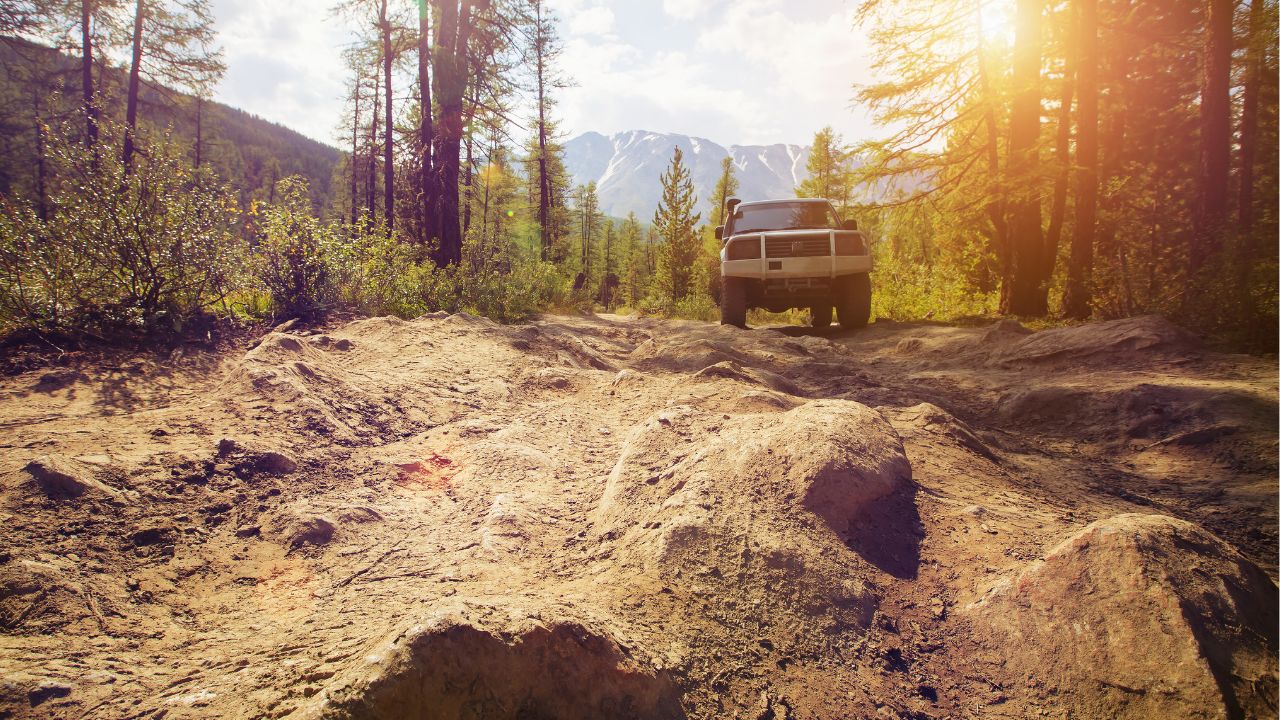
We created this quick-glance glossary from hands-on off-road experience. Our team has logged countless hours navigating varied terrain, talking with enthusiasts, and testing vehicles in different conditions. We focused on terms that are frequently used in everyday trail conversations, whether in the garage, on the radio, or during a group drive.
Each term was selected for its usefulness, its role in improving communication, and its potential to cause confusion for newcomers. We left out overly technical jargon used only in very specialized situations and kept the focus on language you are likely to encounter regularly. For every term, you will find a clear explanation, the context in which it is used, and the reason it earns a spot in this essential list. This is by no means a complete list of off-road-related words and phrases, but we aren’t trying to overwhelm you, we are just here to help you get started with confidence.
Airing Down

Airing down: to remove air from your tires.
Airing down is the process of lowering tire pressure before heading onto the trail. Why? Reducing pressure actually increases the tire’s footprint, allowing for better traction on loose or uneven surfaces like sand, snow, mud, and rocks. A larger contact patch means your tires can grip and conform to the terrain, reducing slippage and making for a smoother ride over bumps and ruts.
Too much air in your tires can cause them to bounce and lose grip, while too little risks rim damage or a tire coming off the bead. Many off-roaders carry portable compressors or CO2 tanks to re-inflate tires when they return to pavement, since low-pressure tires are not safe for highway speeds. Knowing how, when, and how much to air down is a skill that separates prepared drivers from those who get stuck early in the day.
Approach Angle

Approach angle: the steepest angle your vehicle can drive up without hitting the front end into the ground first.
The approach angle is the maximum incline your vehicle can drive up without the front bumper making contact with the ground. It determines how easily you can climb over obstacles like rocks, logs, or steep embankments without damaging the front end. Manufacturers often list this measurement in vehicle specifications, but real-world conditions can change what’s possible.
If you misjudge your approach angle, you could scrape or bend components, damage skid plates, or get hung up entirely. Vehicles with shorter front overhangs tend to have better approach angles, which is why some off-roaders swap out factory bumpers for smaller aftermarket ones that sit higher. Knowing this number is important because it helps you assess whether an obstacle is safe to attempt. Understanding approach angle also improves your ability to select better lines and avoid unnecessary repairs, making it a key factor in trail success and vehicle longevity.
Breakover Angle
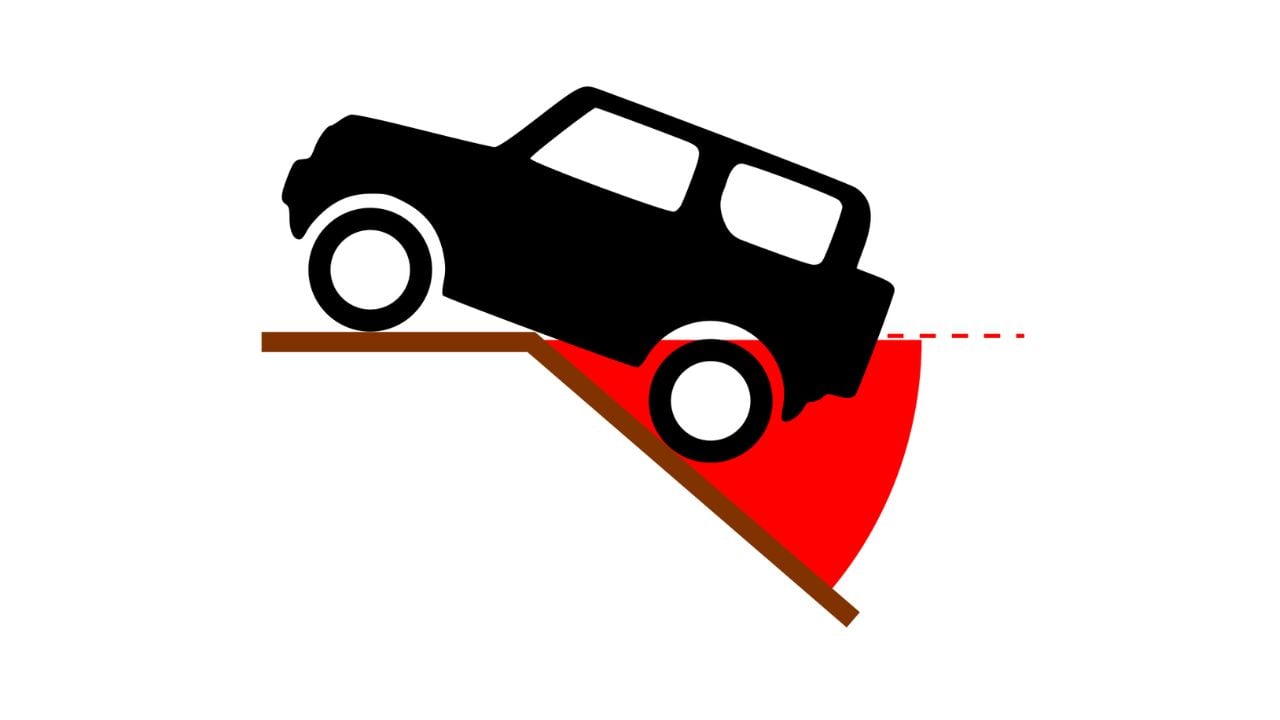
Breakover angle: the max angle of a peak or hump your vehicle can go over without the center of the underside of your vehicle hitting the peak or bump.
It’s determined by your vehicle’s ground clearance and wheelbase length. Essentially, it tells you the point at which your vehicle could become “high-centered,” with all four wheels off the ground and the chassis resting on an obstacle.
When cresting a hill or ridge, if your breakover angle is too shallow, you risk scraping vital components or becoming stuck in a way that requires recovery gear to escape. Shorter wheelbase vehicles often perform better in this category because they can crest sharper obstacles without bottoming out.
Understanding breakover angle allows you to approach obstacles with the correct speed and line, minimizing the risk of getting stranded or damaging underbody parts. It also helps you determine whether modifications such as suspension lifts or larger tires might benefit your style of off-roading.
Departure Angle
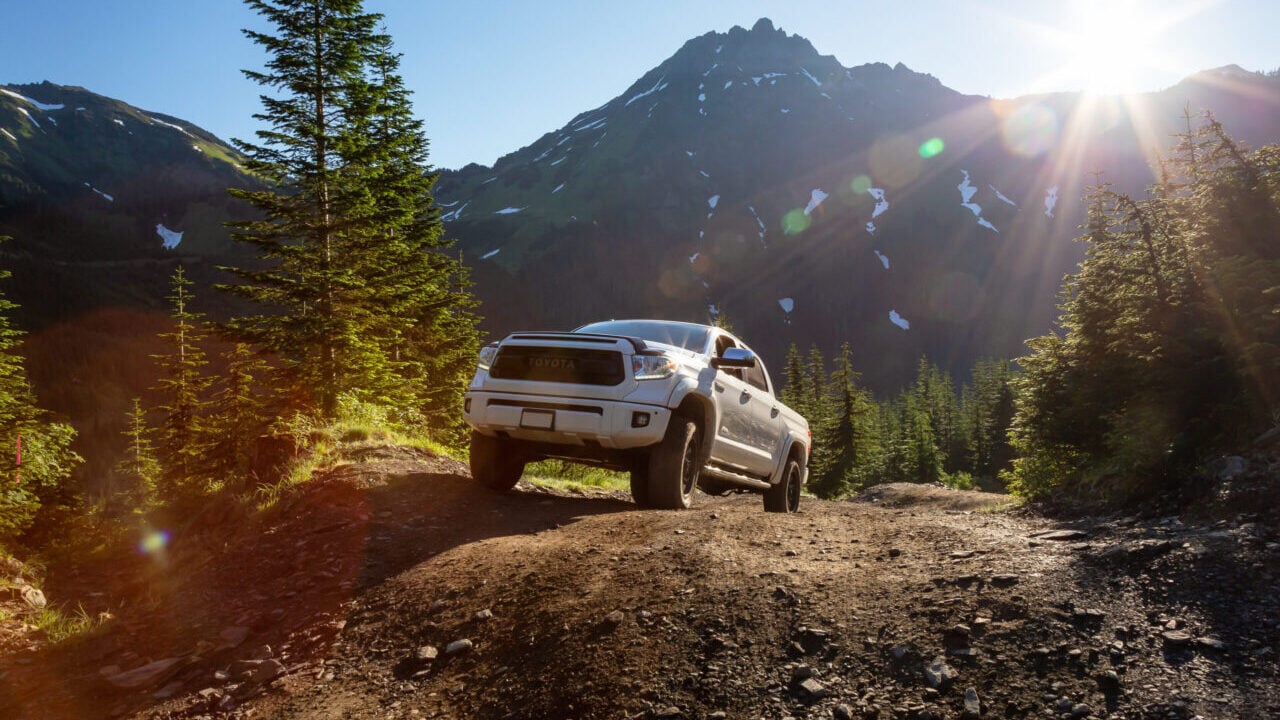
Departure angle: the max angle your vehicle can descend without the rear end hitting the ground.
This measurement becomes important when coming off large rocks, ledges, or steep trail exits. Vehicles with long rear overhangs often have poor departure angles, which can lead to scraping, bumper damage, or even getting stuck.
Knowing your departure angle helps you decide the best way to descend obstacles. It may influence whether you approach a drop straight on or at an angle, or even whether you take a bypass. Some off-roaders improve departure angles by installing shorter bumpers or relocating spare tires.
Understanding this term keeps you from leaving parts of your rig behind on the trail. It also lets you talk about vehicle modifications more intelligently, which is a big part of trail culture and planning future upgrades.
Lockers

Lockers: locking differentials which allow both wheels on the same axle to rotate at the same speed regardless of traction differences.
Normally, power flows to the wheel with the least resistance, which can leave one tire spinning uselessly while the other sits still. Lockers eliminate that problem by ensuring equal power distribution. This is especially useful when one wheel is off the ground or in a slippery patch, such as on wet rocks or loose sand. There are different types, including manual, automatic, and selectable lockers, each with its pros and cons.
Knowing how lockers work and when to engage them can drastically improve your ability to clear tough terrain. They are considered one of the most important traction aids in serious off-roading, and understanding the term shows you appreciate the mechanics behind successful trail driving.
Spotter
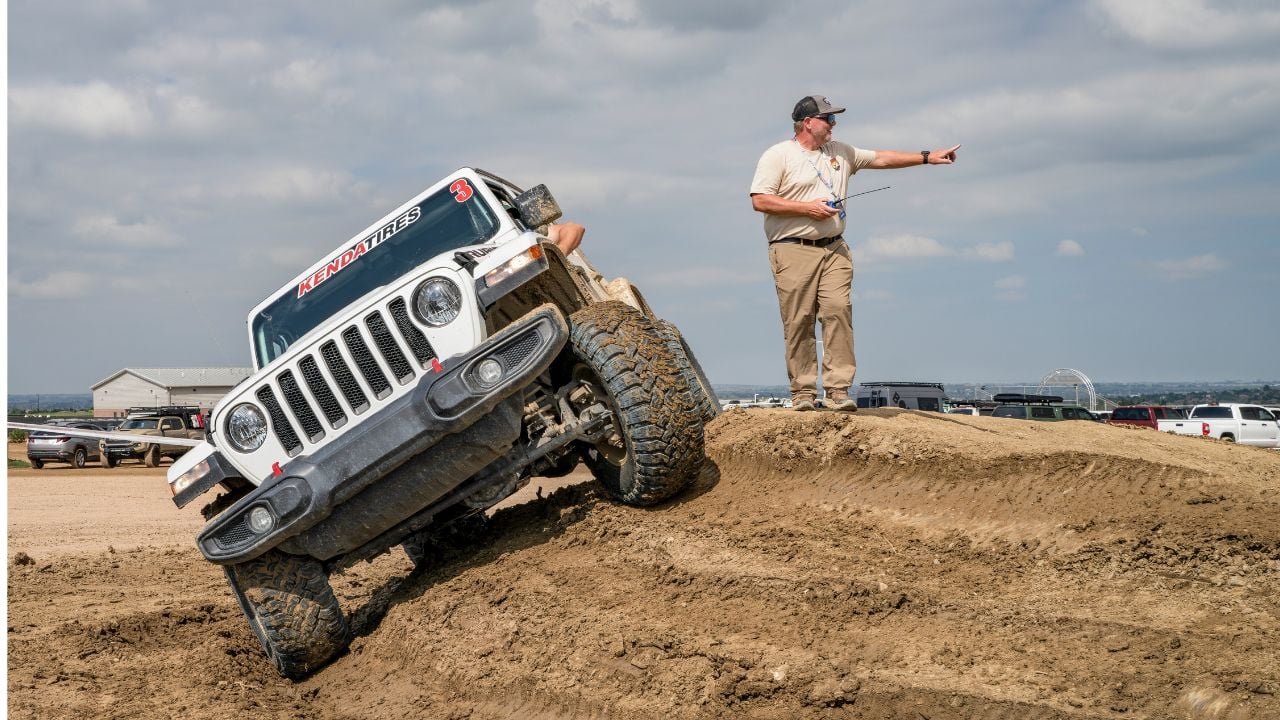
Spotter: a person who guides you through challenging obstacles by giving clear, visible, or verbal directions.
Positioned outside the vehicle, they can see hazards that are hidden from the driver’s seat, including rocks, dips, and steep drop-offs. Good spotting can prevent damage and accidents. The relationship between driver and spotter relies heavily on trust and communication. The driver must respond promptly and accurately to directions, while the spotter must remain calm and clear in their guidance.
Having a spotter is especially valuable in rock crawling or narrow forest trails where a small mistake could mean a rollover or a damaged vehicle. Recognizing the role of a spotter shows you understand teamwork in off-roading and are willing to put safety and precision ahead of ego.
Winching

Winching: the process of using a powered spool of cable or synthetic rope to pull a stuck vehicle out of trouble.
Winches are usually mounted to the front bumper, although some vehicles have rear-mounted setups. Using a winch effectively requires more than just hitting a button. It involves selecting a solid anchor point, using a tree saver strap to protect the environment, maintaining proper tension, and placing a winch dampener on the line to reduce recoil risk if the cable snaps.
Winches can recover vehicles from mud pits, steep ditches, or rock ledges that would otherwise require hours of manual effort. Understanding winching means knowing not just the equipment but also the safety protocols that protect both people and vehicles during recovery operations.
Skid Plates

Skid plates: metal or composite panels bolted to the underside of your vehicle to protect vital components such as the oil pan, transmission, transfer case, and fuel tank.
On the trail, these parts are vulnerable to rocks, logs, and uneven terrain. Without skid plates, even a slow-speed impact can puncture or crack a critical part, leaving your vehicle stranded. Many factory vehicles come with limited skid protection, so off-roaders often add aftermarket plates for full coverage.
Skid plates also give peace of mind when attempting more aggressive trails, allowing you to focus on driving rather than constantly worrying about damage underneath. Knowing this term and its importance shows that you value protecting your investment and understand how to prepare for challenging conditions.
Rock Crawling
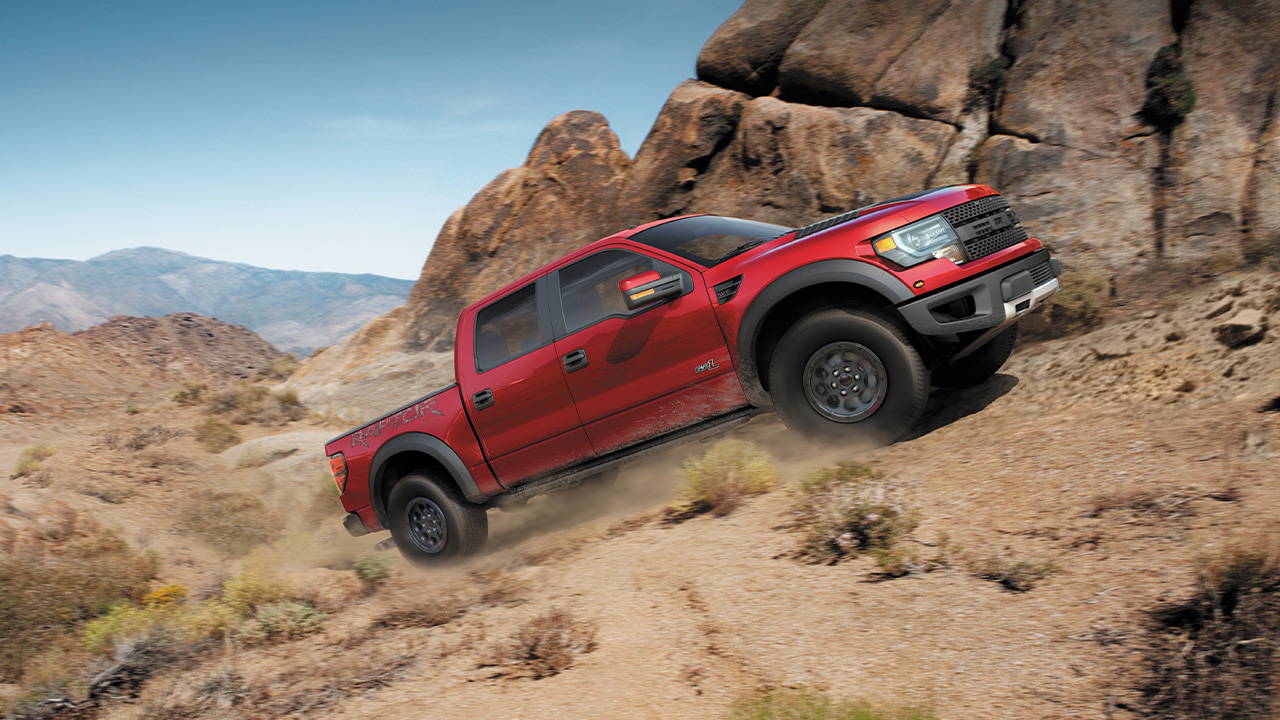
Rock crawling: a form of off-roading that focuses on slow, controlled movement over large rocks and boulders.
This style of driving demands a vehicle with strong low-range gearing, durable tires, and good ground clearance. Rock crawling can be physically and mentally demanding because it requires constant focus and split-second decision-making. It emphasizes precision over speed, requiring careful tire placement, throttle control, and often the use of lockers and a spotter.
Mentioning rock crawling in conversation signals an appreciation for one of the most technical aspects of off-roading. It also shows that you understand not all trails are about speed and dust, some are about patience, skill, and reading the terrain.
Air Locker

Air locker: a type of selectable locking differential that uses compressed air to engage or disengage the lock.
Air lockers are popular because they combine the benefits of both open differentials and fully locked ones, giving the driver the ability to run the axle normally on easy terrain and lock it only when needed. This flexibility improves handling on regular roads while providing maximum traction off-road.
Knowing about air lockers means you understand the finer points of traction control and vehicle adaptability. It also shows you are aware of the technology available to make a vehicle perform better in a variety of conditions.
Recovery Gear

Recovery gear: the set of tools and equipment used to get a vehicle unstuck or to help others on the trail. This can include tow straps, soft shackles, snatch blocks, traction boards, gloves, and winch accessories.
Carrying recovery gear is not optional for responsible off-roading. It allows you to handle common problems without relying on others and ensures you can contribute if someone else needs assistance.
Understanding recovery gear also means knowing how to use it safely and effectively. This knowledge marks you as a prepared and dependable trail partner, which earns respect in the off-road community.
Low Range
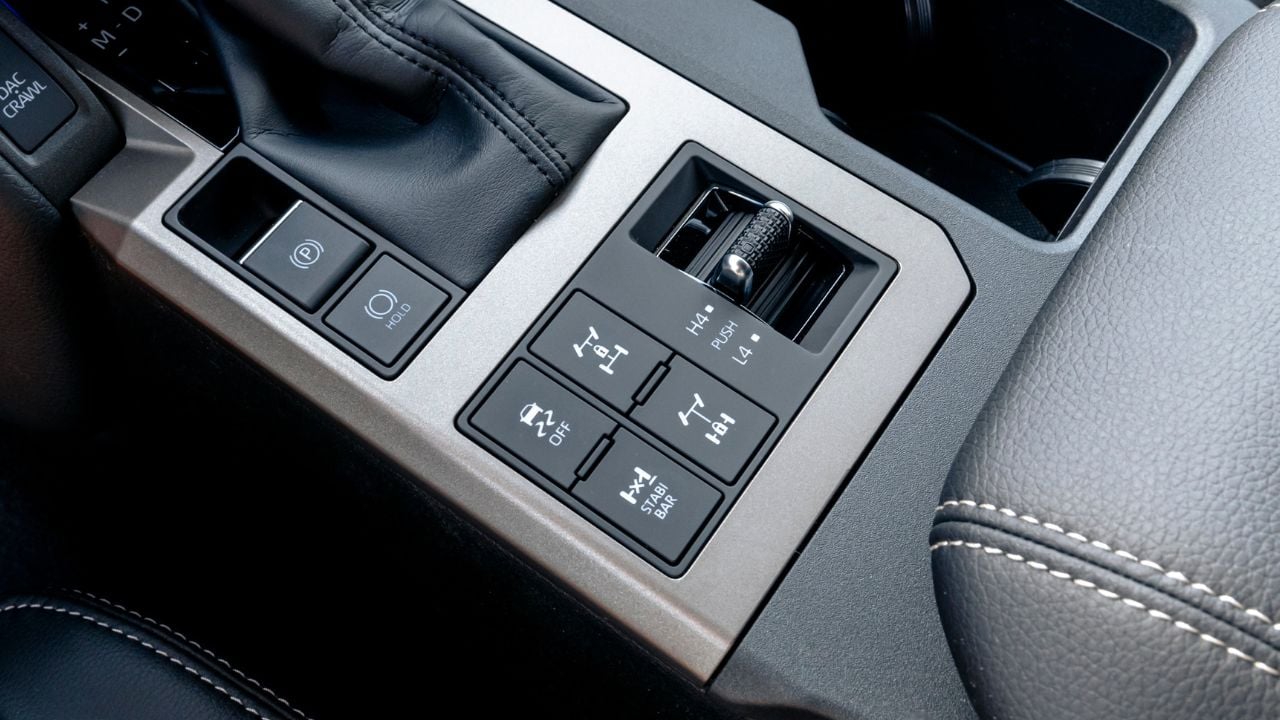
Low range: lower gear set available in a four-wheel-drive transfer case.
When you engage low range, the gears multiply torque and slow wheel speed, giving your vehicle significantly more pulling power at low speeds. This is ideal for climbing steep hills, crawling over rocks, navigating deep mud, or descending tricky slopes with more control.
Understanding low range is crucial because it allows for precision in challenging situations where high-range gears would either stall the engine or require excessive speed. It reduces strain on your engine and drivetrain while improving traction.
Drivers who know when to shift into low range can tackle terrain that would stop others in their tracks. It’s a fundamental off-road skill that goes hand in hand with knowing your approach, breakover, and departure angles. Mastering low range shows that you’re thinking ahead, protecting your vehicle, and optimizing performance for the trail conditions.
From Lingo to Legend: Speaking the Language of the Trail

We hope after reading this list you’re feeling the itch to hit the trails, and when you do, you feel just a little bit more confident in yourself. Off-roading thrives on a shared language that connects drivers and builds trust on the trail. Learning the key terms allows you to communicate clearly and operate more effectively in any group setting, and it helps you to be a part of the community.
By knowing these terms, you are better prepared for challenges, more aware of your vehicle’s capabilities, and ready to collaborate with others. Clear communication leads to smoother trail runs, stronger teamwork, and fewer surprises.