In an age where your average SUV weighs more than a small aircraft carrier and luxury sedans tip the scales like they’re smuggling concrete blocks, there’s something refreshingly rebellious about cars that actually embrace the radical concept of weighing less. You know, like physics intended.
While modern automakers seem convinced that adding another 500 pounds of “safety features” (read: cup holders and mood lighting) makes everything better, these 12 cars took the opposite approach. They asked the simple question: “What if we just… didn’t?” The results? Pure driving nirvana that’ll make you wonder why your current ride needs to weigh as much as a rhinoceros just to get you to the grocery store.
The Beauty of Shedding Weight
I have a thing for light cars. I started with a 1993 Mazda MX-5 Miata at about 2,100 to 2,200 pounds and thought, “That’s not light enough.” That’s when I got the 2006 Lotus Elise, weighing in at 1,984 pounds. You’d think that’d be satisfying enough, but I started even thinking about the Autozam AZ-1. That lightness is just exhilarating, the car is so responsive, like a more capable go-kart that can confidently take the sharpest of turns without hesitation. Why complicate things?
For us, 12 represents the sweet spot where you get enough variety to showcase different approaches to lightness without turning this into a phone book-sized manifesto that nobody will finish reading. From purpose-built track weapons to quirky city runabouts, these dozen examples prove that when it comes to automotive soul, less stuff equals more fun.
We focused on production cars (sorry, one-off concepts and your buddy’s stripped-out Civic don’t count) that achieved their feathery status through genuine engineering brilliance rather than simply removing the seats and calling it a day. Each represents a different philosophy of lightness, some stripped down to racing essentials, others achieving efficiency through clever materials and packaging. What they all share is that magical quality where every input feels amplified, every corner becomes an invitation, and every drive reminds you why you fell in love with cars in the first place.
There may be some lighter cars out there, if you’ve experienced one, please let me know because I’d love to add it to my collection. Or maybe don’t enable me. But here are some that we found to be quite interesting that represent the lightweights in the ring.
Alfa Romeo 4C: 2,465 lbs (1,118 kg)
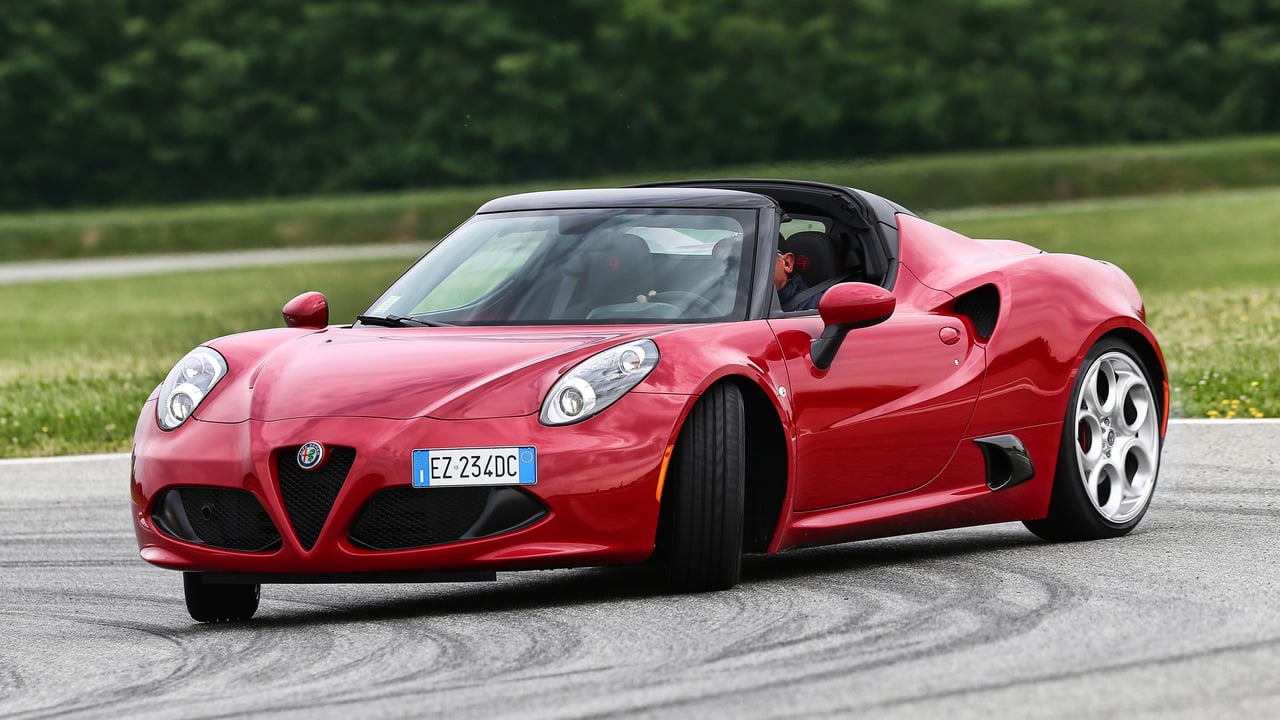
Leave it to the Italians to build a carbon fiber masterpiece and then somehow make it the heaviest car on a list about lightness. The 4C’s carbon monocoque construction is genuinely impressive, it’s the same stuff Formula 1 cars are made from, which explains why it costs more than your mortgage down payment.
At 2,465 pounds, it’s quite svelte by today’s bloated standards, though it’s carrying about 400 more pounds than purists would prefer. Blame the modern safety regulations, electronic nannies, and the fact that Alfa couldn’t resist adding just a few more Italian flourishes. The unassisted steering means your arms will get a workout in parking lots, but on winding roads, it transforms into a scalpel that carves corners with surgical precision.
The best part? It looks like it was styled by angels having a particularly inspired day. The worst part? Finding a dealer who can actually fix it when (not if) the Italian electrical gremlins inevitably strike. But hey, you’ll look fantastic broken down on the side of the road.
Mazda MX-5 Miata NA: 2,116 lbs (960 kg)

Before the Miata, roadsters were either unreliable British contraptions that leaked more fluids than a nursing home, or overwrought German machines that cost more than a small house. Mazda looked at this situation and said, “What if we just made one that actually works?”
The NA Miata’s 2,116-pound curb weight was achieved through the revolutionary engineering principle of “not adding unnecessary junk.” Pop-up headlights? Sure, because it was the ’90s and it looked cute. Power steering? Optional, because your biceps can handle it. Air conditioning? Optional, because real drivers suffer for their art.
The manual transmission clicks through gears like a well-oiled rifle bolt, and the 50/50 weight distribution means it rotates around corners like it’s on rails, albeit very enthusiastic, tail-happy rails. It’s proof that you don’t need 500 horsepower to have stupid amounts of fun. You just need perfect proportions, minimal weight, and the wisdom to know when to stop adding features.
Three decades later, it’s still the answer to “What’s the best sports car for actual driving?” Sorry, Porsche fanboys, but your 911 weighs as much as a small planet these days.
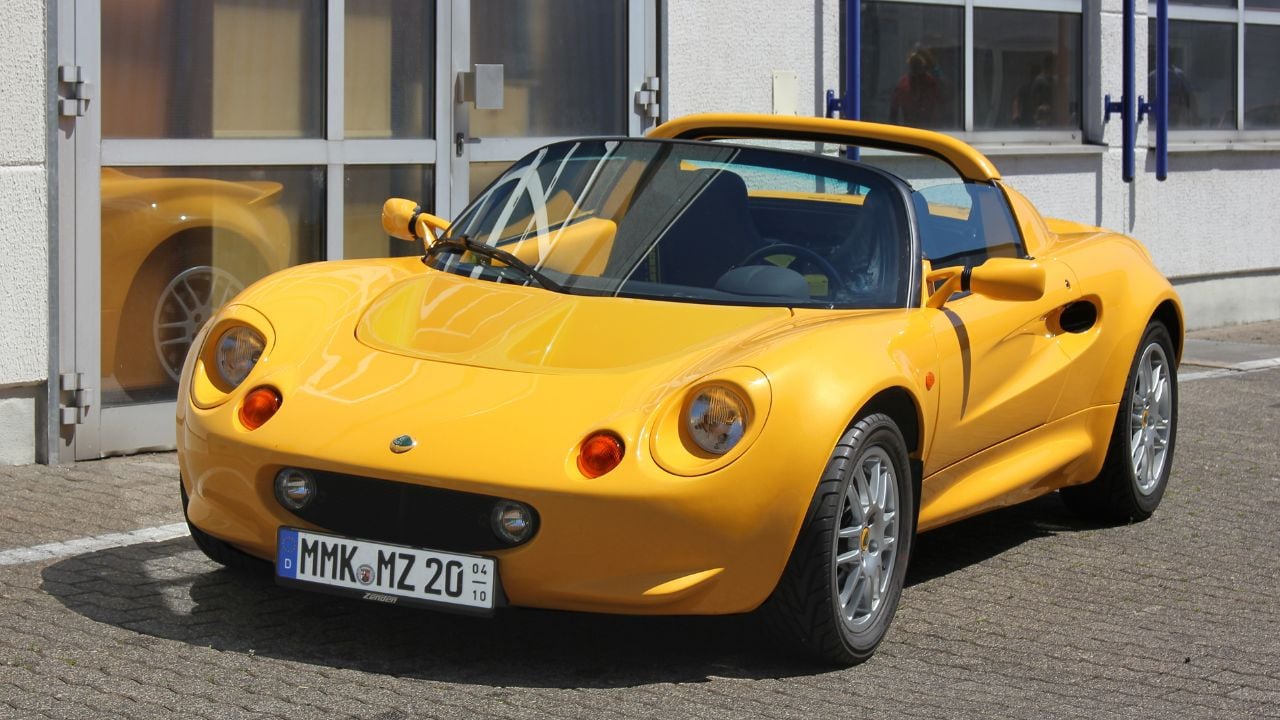
Lotus Elise Sport 240 Final Edition: 2032 lbs (921 kg)

The Final Edition Elise is what happens when Lotus decides to go out with a bang rather than a whimper. At just over 2,000 pounds, it’s carrying the torch for Chapman’s “simplify, then add lightness” philosophy while everyone else was adding cup holders and Netflix capability.
The OG Elise models were even lighter, but the Final Edition is worth noting due to its extremely lightweight body compared to other sports cars of the same era. The aluminum chassis could probably double as a jungle gym, and the fiberglass bodywork is so thin you can practically see through it. The 240 hp from the supercharged Toyota engine feels like 500 hp because physics is still a thing, even if modern automakers seem to have forgotten.
Getting in requires the flexibility of a yoga instructor and the determination of someone who really, really wants to have fun. Getting out? Good luck with that (my dad needed two guys to pull him out of mine). But once you’re behind the wheel, you’ll understand why Lotus spent decades perfecting the art of doing more with less. Every input is amplified, every corner is an opportunity, and every drive feels like you’re piloting a telepathic extension of your own nervous system.
The Final Edition badge is bittersweet, it marks the end of an era when cars could be this pure, this focused, this utterly uncompromising in their pursuit of driving perfection.
Honda Beat: 1,675 lbs (760 kg)

While America was busy supersizing everything and Europe was adding complexity for complexity’s sake, Honda quietly crafted the Beat: a mid-engine masterpiece that weighed less than a modern motorcycle. This wasn’t some cynical exercise in cost-cutting; it was a genuine attempt to distill pure driving joy into its most concentrated form.
The Beat’s 1,675-pound mass was distributed perfectly around its tiny 656cc three-cylinder engine. Yes, you read that right: this thing made a whopping 64 hp, which in a car this light felt like strapping yourself to a particularly enthusiastic espresso machine. The mid-engine layout gave it handling that would embarrass supercars costing ten times as much, at least until those supercars reached a straight road.
Honda’s engineers understood something profound: in a world obsessed with more, sometimes the most radical statement is to offer less. Less weight, less complexity, less pretension, but infinitely more smiles on every turn. The Beat proved that kei car regulations weren’t limitations but liberation, forcing designers to find elegance in constraint.
The 25-year rule for importing vehicles has finally allowed this tiny warrior to conquer the United States’ twistiest roads. It’s still hard to come by the Beat, making it more exciting than spotting a supercar at a car meet.
Smart Fortwo (First Generation): 1,610 lbs (730 kg)

The original Smart Fortwo looked like someone took a regular car and put it through a photocopier set to 60% reduction. At 1,610 pounds, it was basically a motorcycle with delusions of grandeur and actual weather protection. The engineering brief was simple: create something that could park perpendicular in a parallel space and not get crushed like a soda can in the process.
The Tridion safety cell, that’s the fancy term for “roll cage”, was legitimately brilliant engineering. It created a rigid passenger compartment that could survive impacts with much larger vehicles, which was fortunate because every other vehicle was much larger. The plastic body panels were easily replaceable, which was equally fortunate because city parking involves more contact than a hockey game.
Driving dynamics were… unique. The automated manual transmission shifted with all the smoothness of a first-year driving student, and the 61-horsepower three-cylinder engine provided acceleration that could charitably be described as “leisurely.” But in crowded European city centers, it was pure genius. You could park anywhere, navigate the narrowest medieval streets, and look smugly superior while Range Rover drivers circled blocks looking for spaces.
The Smart wasn’t fast, it wasn’t luxurious, and it definitely wasn’t conventional. But it was undeniably clever, and in its own weird way, it worked exactly as intended.
Lotus Elise Series 1: 1,598 lbs (725 kg)
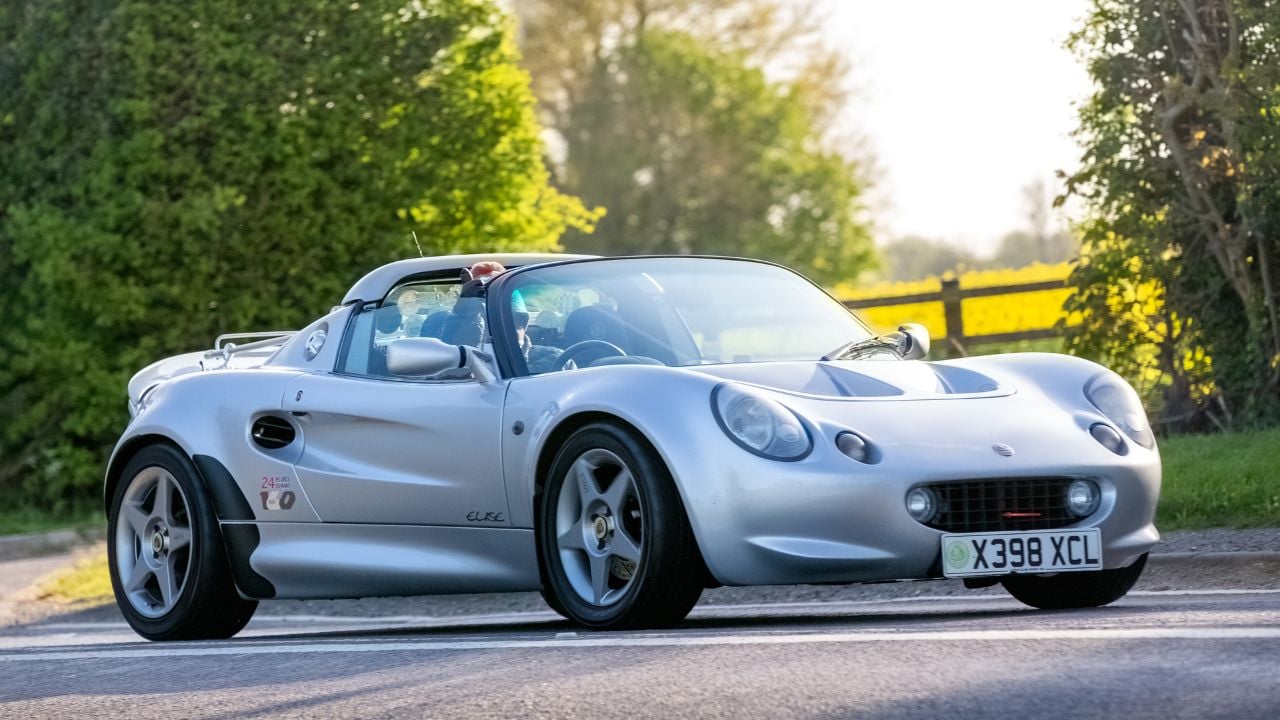
The original Elise wasn’t just light, it was “did they forget to install something?” light. At 1,598 pounds, it could be mistaken for a modern touring motorcycle, but it had the courtesy to actually keep you dry when it rained. Mostly.
Lotus achieved this magical number through the simple expedient of not including anything that wasn’t absolutely essential for the process of going fast around corners. No power steering, no ABS, no air conditioning: just you, about 120 hp from a Rover K-series engine (yes, that Rover), and the kind of chassis dynamics that would make a Formula Ford jealous.
The aluminum space frame construction was revolutionary for a road car, creating a structure so rigid that the doors actually fit properly, a minor miracle for early Lotus. The fiberglass body panels were hand-laid, which sounds romantic until you realize it meant no two cars were exactly identical, and quality control was more of a general suggestion than a hard requirement.
None of that mattered once you drove it. The steering was so communicative you could practically feel individual pebbles through the wheel, and the handling was so precise you could place the car exactly where you wanted it with millimeter accuracy. It was like wearing the road as a glove, if gloves required you to be double-jointed to put them on.
The Series 1 Elise proved that modern cars could still capture the essence of classic sports car purity. It just took a company crazy enough to actually try it. And as the owner of a Series 2, I’m endlessly grateful for Lotus’ dedication to pure drivers’ cars that don’t give a dang about interior comforts and quality. Things can just be glued, alright?
Ariel Atom 4: 1,312 lbs (595 kg)
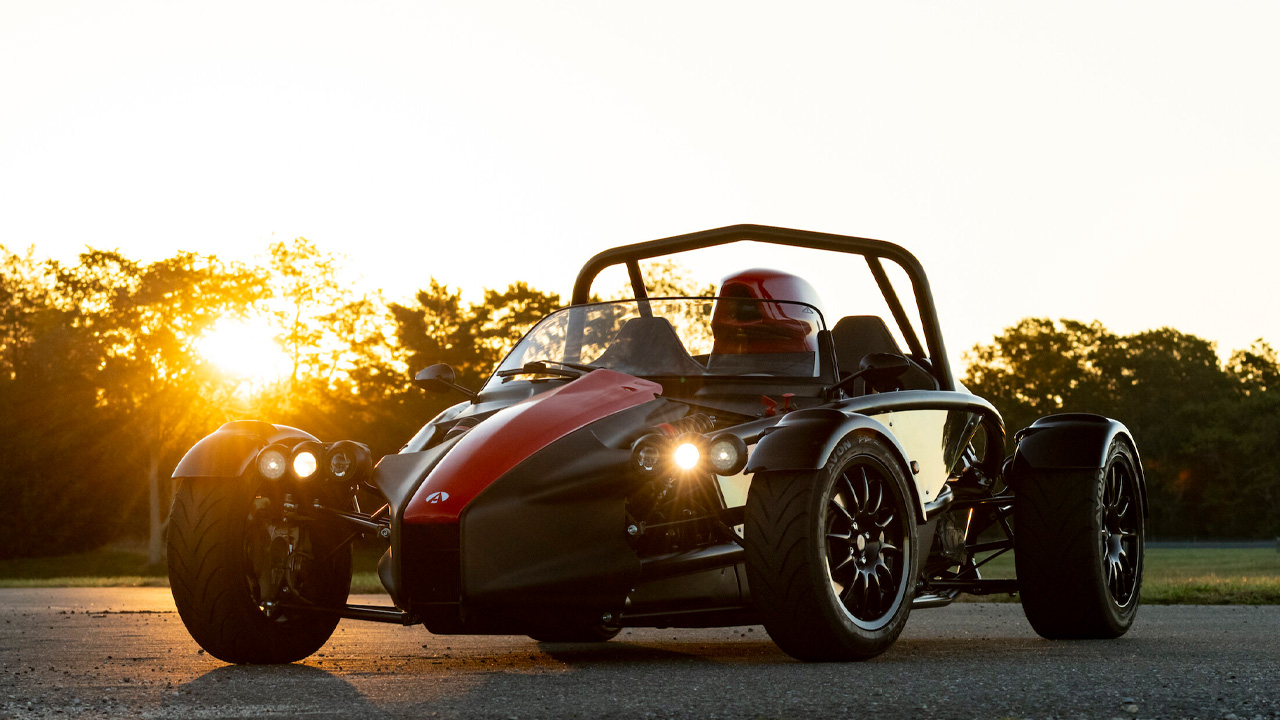
The Atom 4 is what you get when someone asks, “What if we built a car but forgot to add the car part?” It’s essentially a chassis, engine, and seats held together by pure mechanical enthusiasm and a complete disregard for conventional automotive wisdom. But it’s awesome!
At 1,312 pounds, the Atom 4 weighs about as much as a decent motorcycle, except it has four wheels, a Honda Civic Type R engine, and absolutely no interest in your comfort or dignity. The tubular frame construction means you can see exactly how it’s put together, which is reassuring until you realize there’s literally nothing between you and the world except some strategically placed tubing and a helmet.
The 320 hp from the K20C1 engine doesn’t sound like much until you do the math. That’s roughly 500 hp per ton, which puts it in supercar territory for power-to-weight ratio. The difference is that supercars weigh enough to maintain some semblance of civilized behavior. The Atom has abandoned all pretense of civilization and embraces pure, unadulterated mechanical violence.
Driving an Atom is like mainlining adrenaline while being attacked by a wind tunnel. It’s loud, it’s raw, it’s completely impractical for anything resembling normal use, and it’s absolutely magnificent in its single-minded pursuit of the ultimate driving experience. It’s the closest thing to a legal street weapon that doesn’t require a license to carry.
Toyota Sports 800: 1,279 lbs (580 kg)

Long before the Supra, before the GT-86, even before most people knew Toyota made anything other than sensible sedans, there was the Sports 800. At 1,279 pounds, it was Toyota’s declaration that they understood the sports car formula: take weight out, add handling, and let physics do the rest.
Its construction used a strategic mix of steel and aluminum, helping keep weight low for 1965. The air-cooled, flat-twin engine from the Publica produced a mighty 45 hp, which sounds pathetic until you remember that 45 horsepower in 1,279 pounds feels very different than 45 horsepower in today’s 3,500-pound “compact” cars.
The lift out roof panel could be removed and stored in the trunk, making it one of the earliest production targa top cars and it even predated the Porsche 911 Targa. The aerodynamic body was clean and purposeful for its era, and the low weight helped it feel lively even with modest power. Toyota’s engineers had clearly been paying attention to what worked in Europe and decided to do it better, lighter, and more reliably.
The Sports 800 proved that Japanese automakers weren’t content to just copy Western designs, they were going to improve on them. It established Toyota’s sports car credibility decades before anyone took Japanese performance cars seriously. Today, finding one is nearly impossible, and owning one is like possessing automotive archaeology that still happens to run perfectly after 60 years.
Caterham Seven 620R: about 1,345 lbs (610 kg)

The 620R takes the Seven formula, which was already pretty extreme, and dials it up to 11. At about 1,345 pounds depending on specification, it’s light enough that you could probably carry it up a flight of stairs if you had enough friends and questionable judgment. It’s also powerful enough to achieve 0-60 mph in 2.8 seconds, which is faster than most supercars and all common sense.
The supercharged Ford Duratec engine produces 310 hp, which in a car this light creates a power-to-weight ratio that borders on the physically absurd. It’s like strapping yourself to a barely controlled explosion with wheels (something you can actually do for fun at Bonneville Salt Flats). The suspension is so stiff that road irregularities are transmitted directly to your spine with zero filtration, which Caterham cheerfully markets as “uncompromising feedback.”
There are no creature comforts because creatures don’t need to go 0-60 in under 3 seconds. There’s no weather protection worth mentioning because the weather is just another variable to master. There’s no storage space because you’re not taking this to the grocery store: you’re taking it to experience what it feels like to have physics grab you by the throat and remind you that you’re definitely not immortal.
The 620R represents the absolute pinnacle of the “add lightness” philosophy. It’s a car that exists purely to answer the question: “How fast can we make something go around corners without it technically being a race car?” The answer is very, very fast.
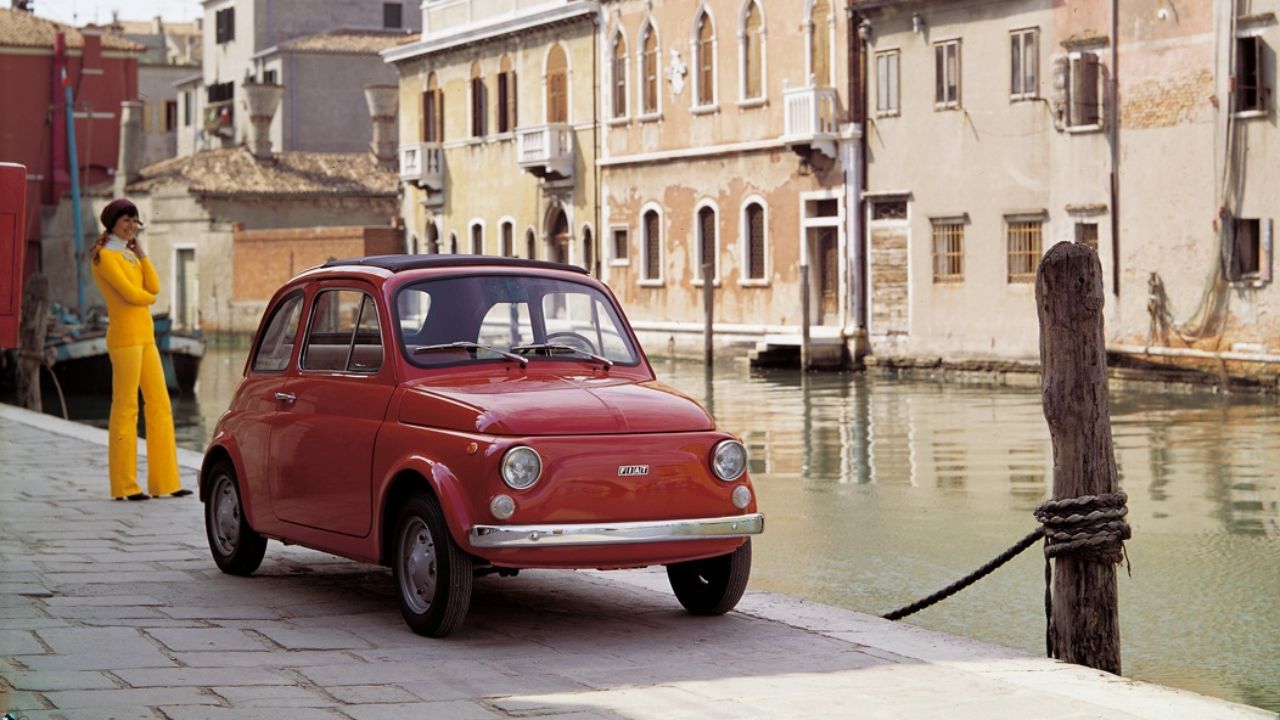
Fiat 500 (Original): 1,100 lbs (499 kg)
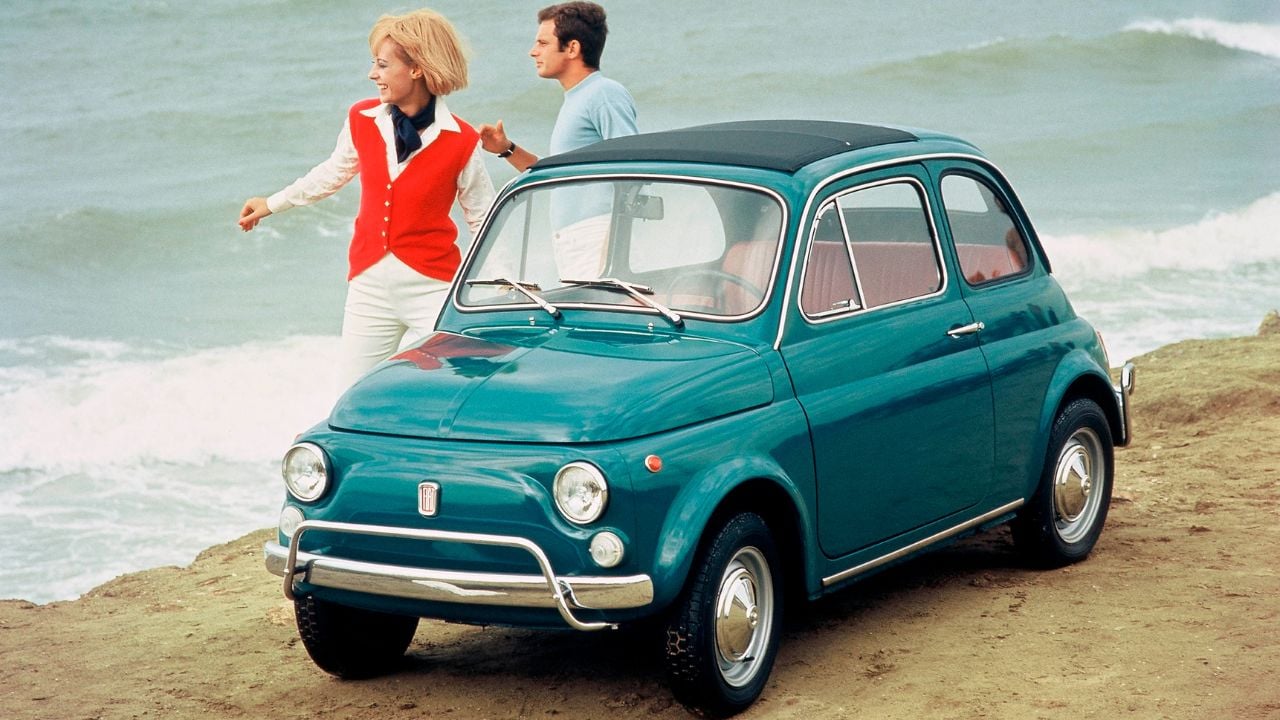
The original Fiat 500 was an exercise in brilliant minimalism wrapped in the cutest package ever to grace four wheels. At exactly 1,100 pounds, it proved that you could build a real car, with doors, a roof, seats for four (very small) people, and actual weather protection, with extremely low mass. “Real,” depending on what kinda driver you ask.
The rear-mounted, air-cooled twin-cylinder engine produced an “earth-shaking” 13 hp in early models, eventually growing to a tire-smoking 18 hp in later variants. Before you laugh, remember that 18 horsepower in 1,100 pounds actually moved the car along quite nicely, thank you very much. It was economical, practical, and utterly charming in a way that modern cars, with their focus groups and market research, can never quite capture.
The 500’s genius was in its complete lack of pretension. It wasn’t trying to be anything other than simple, honest transportation that happened to be irresistibly cute. The canvas sunroof folded back like a convertible, the doors opened the wrong way (by American standards), and the whole thing looked like it was designed by someone who really understood that cars should be friendly, approachable machines.
Post-war Italy needed affordable mobility, and Fiat delivered it with style and Italian flair. The 500 democratized personal transportation while proving that economy cars didn’t have to be boring, ugly, or soulless. It’s a lesson that seems to have been largely forgotten in today’s world of focus-grouped transportation appliances.
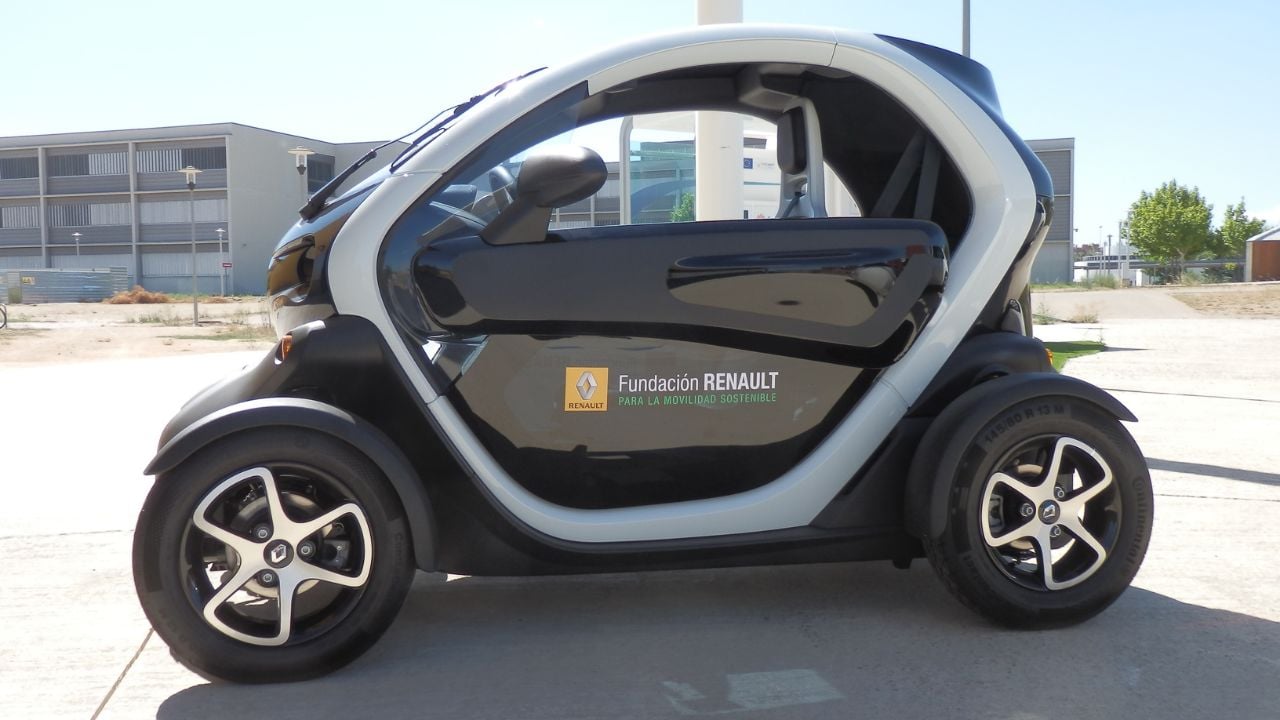
Renault Twizy 992 lbs (450 kg)
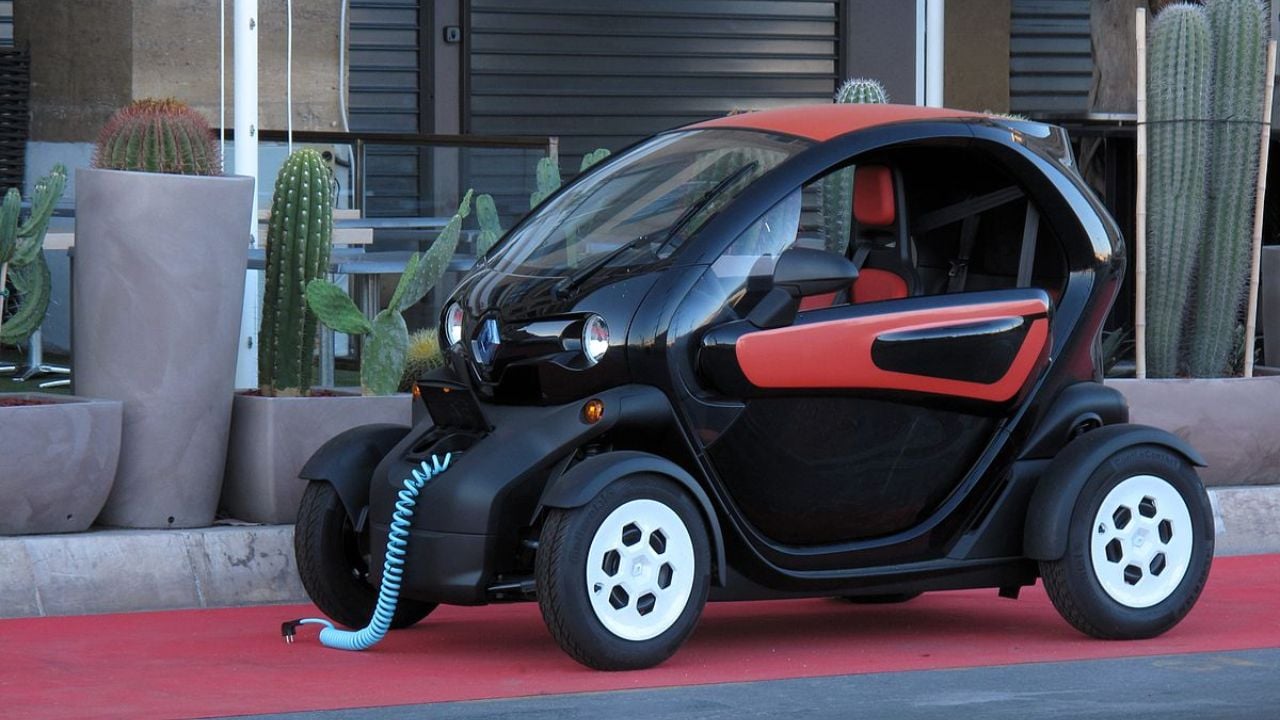
The Twizy exists in its own category of automotive weirdness, weighing in at just 992 pounds and looking like it escaped from a particularly optimistic science fiction movie about a bloated mosquito on wheels. It’s not quite a car, not quite a motorcycle, and definitely not something you’d want to meet in a dark alley, mainly because it would probably start a conversation about sustainable urban mobility.
With tandem seating that puts the passenger directly behind the driver (like a very slow fighter jet), the Twizy maximizes efficiency while minimizing everything else. The doors are optional, not “available as an option” but literally optional, as in “we can’t figure out why you’d want them.” The side windows don’t exist, which Renault markets as “enhanced environmental connection” rather than “you’re going to get wet.”
The electric powertrain produces about 17 hp, which in a 992-pound vehicle provides surprisingly peppy acceleration up to its artificial speed limiter. It’s not fast, but it’s immediate and silent, which makes it perfect for sneaking up on pedestrians who don’t expect something that looks like a golf cart to be sharing the road.
The Twizy represents French automotive thinking at its most unconventional. It ignored every established automotive convention and created something entirely new: an urban mobility solution that’s part transportation device, part fashion statement, and part rolling conversation starter.
Peel P50 130 lbs (59 kg)

We’re taking quite a jump down in weight here. Behold the Peel P50: officially the world’s smallest production car and the only vehicle that weighs less than its driver after a heavy lunch. At a mere 130 pounds, it’s so light that parallel parking involves literally picking it up and placing it where you want it. The Isle of Man company that built it clearly looked at conventional automotive wisdom and decided it was all complete nonsense.
The P50’s specs read like a joke: one seat, one door, one headlight, and one cylinder producing 4.2 hp. There’s no reverse gear because the designers reasoned that if you needed to back up, you could just get out and push. The fiberglass body is so thin you could probably poke a hole in it with a determined finger, and the interior is so minimalist that calling it “spartan” would be an insult to Sparta.
But here’s the thing: it works. In 1960s Britain, with narrow streets and expensive fuel, the P50 made perfect sense. It could go 38 mph (downhill, with a tailwind), achieved economy figures that would make a Prius jealous, and could park literally anywhere that wasn’t specifically designed to prevent parking. The only joke is that I’ve never been able to experience the Peel myself.
The P50 represents the absolute extreme of lightweighting philosophy. It’s what happens when you take “simplify, then add lightness” to its logical conclusion and then keep going. It’s completely impractical for modern life, borderline unsafe by any reasonable standard, and absolutely magnificent in its single-minded pursuit of being the smallest, lightest, most economical car possible.
In a world where even “economy” cars now weigh over 3,000 pounds and come with 47 different drive modes, the P50 stands as a reminder that transportation can be reduced to its absolute essence: one person, one tiny engine, and just enough structure to keep the rain off. Sort of.
When Lightness Creates Magic
These 12 cars prove that the automotive industry’s current obsession with adding weight in the name of “progress” isn’t inevitable — it’s a choice. Each of these machines demonstrates that intelligent design, careful material selection, and a clear vision of purpose can create vehicles that feel more alive, more engaging, and more connected to the pure joy of driving than anything rolling off modern production lines.
They remind us that cars don’t need to weigh as much as small buildings to be safe, practical, or fun. They just need to be thoughtfully engineered by people who remember that the point of a car is not to be a rolling living room, but to transport human beings in a way that makes them smile.
In an era of 5,000-pound pickup trucks and SUVs that need their own zip codes, these lightweight legends stand as proof that sometimes the most revolutionary thing you can do is simply refuse to add unnecessary mass. They chose subtraction over addition, simplicity over complexity, and engagement over isolation.
The result? Driving experiences that remind you why you fell in love with cars in the first place, back when cars were partners in adventure rather than appliances with wheels. These 12 cars shed more than weight: they shed everything that stood between the driver and the pure, unfiltered joy of motion.
Now, if only modern automakers would remember that lesson instead of adding another screen to control the heated steering wheel settings.