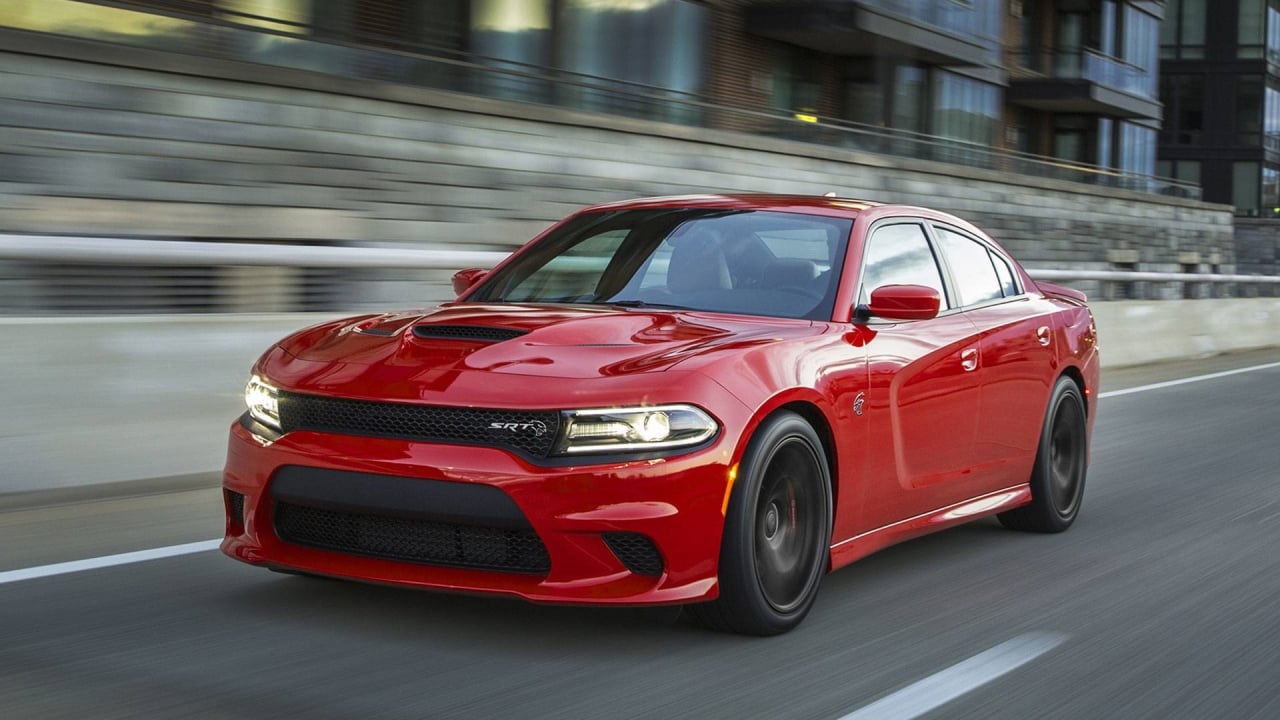

The Dodge Charger has spent nearly six decades proving that subtlety is overrated and that bigger is usually better — especially when it comes to displacement. While other manufacturers were busy making “sensible choices,” Dodge was over here asking the important questions: What if we made it louder? What if we made it faster? What if we made the EPA cry?
This is the story of a car that’s survived disco, shoulder pads, the minivan craze, and somehow still manages to make your neighbor’s Tesla look like a golf cart.
Rolling Back the Odometer

Before diving into this horsepower-fueled history lesson, let’s talk methodology. We wanted to tell the full story of the Charger, so we picked the most iconic, innovative, groundbreaking, and interesting moments in the Dodge Charger’s history. This was done by researching Dodge’s archives, seeing what Dodge fans are talking about online, and just choosing what we personally feel were pivotal moments in its timeline.
We also spent considerable time studying the Charger’s Hollywood resume — because let’s face it, this car has had more screen time than most B-list actors. From a tire-squealing car chase in Bullitt to drifting and jumping antics in The Dukes of Hazzard, the Charger has been America’s stunt double of choice.
The goal? Tell the complete story of a car that refuses to apologize for being exactly what it is: loud, proud, and occasionally sideways.
1966-1967: The Fastback That Started It All

The original 1966 Charger rolled into showrooms with a 117-inch wheelbase, hidden headlights that actually worked (revolutionary!), and a fastback roofline that said “I’m definitely compensating for something, and that something is my neighbor’s boring Impala.”
Dodge offered the Charger with everything from a 318 small-block that wouldn’t scare a grocery cart to the legendary 426 Street HEMI that could apparently restart your heart if the purchase price stopped it. The base price of $3,122 seems quaint now — that’s about what you’ll pay for decent tires on today’s Hellcat.
The interior featured four bucket seats because apparently Dodge thought bench seats were for people who didn’t take corners seriously. The center console was large enough to hide your registration, insurance papers, and that speeding ticket you definitely earned.
1968-1969: The Shape That Launched a Thousand Posters

Then came 1968, and Dodge’s designers apparently decided the first-gen Charger wasn’t dramatic enough. They carved out a new body that looked like it was already doing 80 mph while parked. The circular taillights became split designs, the flying buttress roof got more buttressed, and suddenly every other muscle car looked like it was trying too hard.
The R/T package arrived with a 440 Magnum V8 producing 375 horsepower. Chrysler liked to underrate it for insurance purposes, so the actual number was probably closer to “yes” horsepower. For $417 more, you could option the 426 HEMI, and with 425 hp, it should have come with a warning label.
Steve McQueen made the ’68 Charger famous in Bullitt, though he wasn’t the one driving it. In one of cinema’s greatest chase scenes ever, he’s behind the wheel of a Ford Mustang, chasing down the bad guys in their black Charger through the streets of San Francisco.
1971-1974: The Fuselage Years

The third-generation Charger arrived in 1971 looking like it had been designed by someone who thought the previous version was “too restrained.” The fuselage body style added curves in all the right places and about 200 pounds in all the wrong ones.
The 1971 R/T could be equipped with the 440 Six Pack — three two-barrel carburetors that gulped premium like a college freshman at spring break. The 426 HEMI was still available for those who wanted their neighbors to know exactly when they left for work. Fuel economy? What’s that? This thing got 8 MPG on a good day with a tailwind.
They were so dominant in NASCAR, they scooped up race wins until the organization changed the rules. Nothing says “too good” like regulatory intervention.
“No, seriously, what is fuel economy?” — Dodge, probably
The General Lee Phenomenon (1979 TV Series)

Meanwhile, somewhere in Georgia (or Hollywood pretending to be Georgia), a bright orange 1969 Charger named General Lee was teaching America that physics was more of a suggestion than a law. The Dukes of Hazzard took 309 Chargers and turned most of them into expensive firewood, single-handedly decimating the supply of second-gen Chargers and inflating prices for the next 40 years.
Thanks a lot, Bo and Luke. That restored ’69 you can’t afford? They probably jumped it over a barn.
1983-1987: The Front-Wheel Drive Experiment

Someone at Dodge in the early ’80s apparently suffered a severe head injury and decided the Charger name should go on a front-wheel-drive compact based on the K-car platform. This was like putting a massive engine in a Lotus Elise — technically functional, but missing the entire point.
The base 1983 Charger came with a 2.2-liter four-cylinder producing 94 hp, which was about 300 less than its predecessors. It was available with a manual transmission that at least let you shift gears while contemplating your life choices.
The Shelby Charger: At Least Someone Was Trying

Carroll Shelby, bless his heart, tried to inject some performance into this econobox. The Shelby Charger GLH-S (which stood for “Goes Like Heck — Some more”) cranked out 175 hp from a turbocharged 2.2-liter. It was quick for what it was, but “quick for what it was” is the kind of praise that ends marriages.
The Shelby versions had graphics packages that screamed “TURBO” because subtlety was apparently dead and buried somewhere in Detroit. At least it looked like it was trying, which is more than you could say for most of the competition.
1999: The Concept That Gave Us Hope
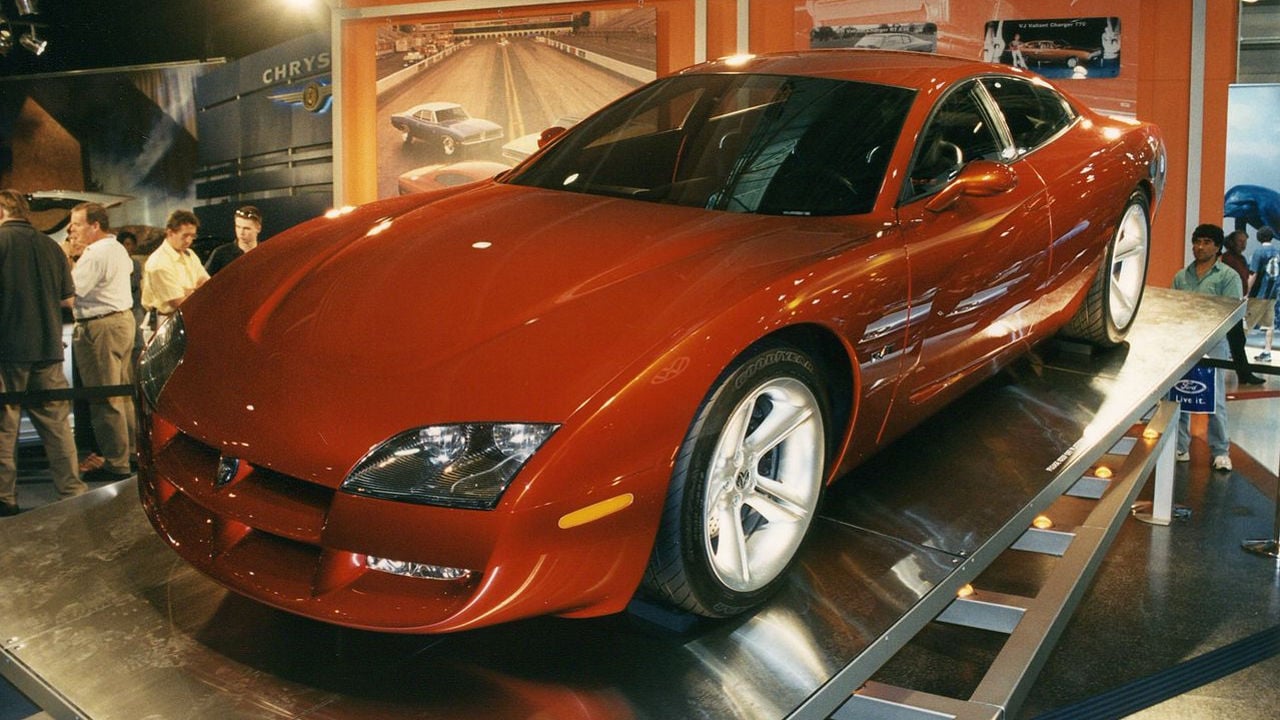
The 1990s were when the Charger name went to live on a farm upstate, where it could run free with other discontinued nameplates. Dodge was busy making minivans and forgetting that performance cars were a thing people actually wanted to buy. Then, in 1999, the Charger R/T concept aggressively appeared with suicide doors, a 354 HEMI V8, and styling that suggested Dodge remembered what testosterone looked like.
It was everything the ’80s Charger wasn’t — rear-wheel drive, V8-powered, and completely unapologetic about its intentions. Car shows buzzed with rumors. Message boards (remember those?) exploded with speculation. Would Dodge actually build it? Would they remember how to make a proper muscle car? The suspense was killing us.
2006: The Return of Real Chargers
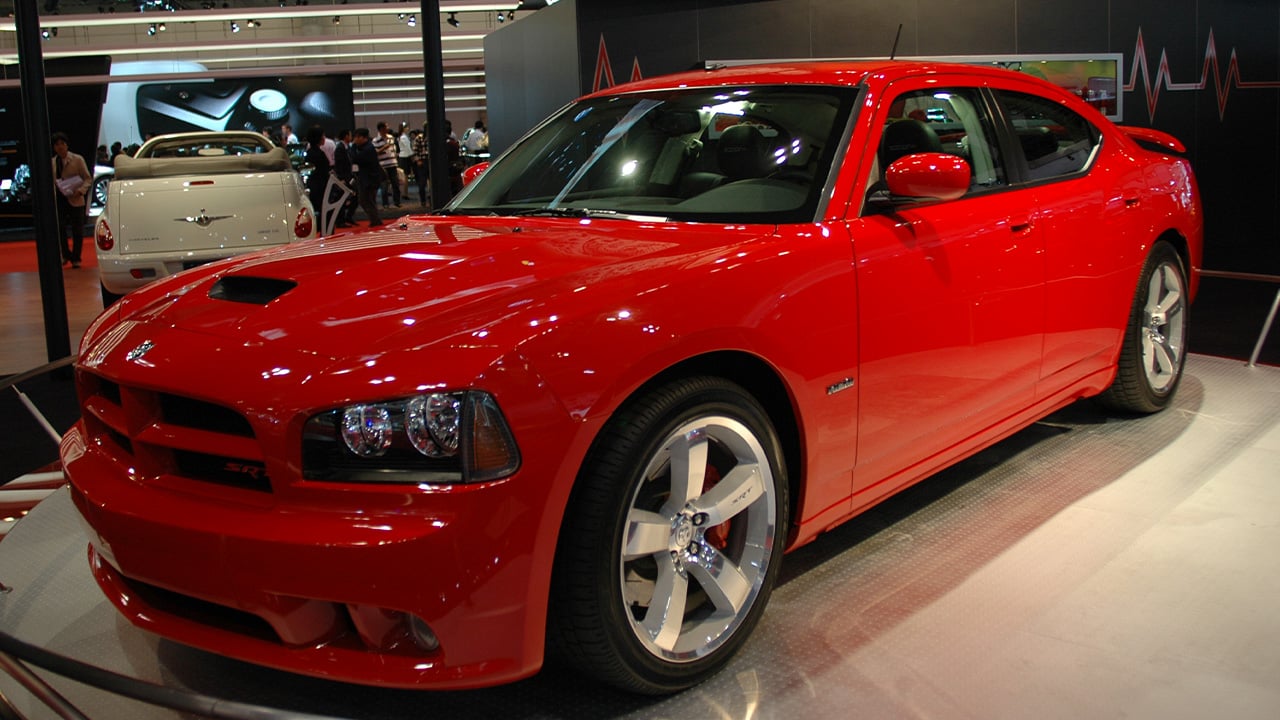
Dodge shocked everyone by bringing back the Charger as a four-door sedan. Purists screamed heresy until they drove one and realized that 340 hp makes most theological arguments irrelevant.
The base model came with a 3.5-liter V6 producing 250 hp — respectable numbers that would have embarrassed most ’80s performance cars. The R/T introduced the 5.7-liter HEMI V8 with 340 horsepower and the kind of exhaust note that made your garage neighbors file noise complaints.
2011: The Redesign That Fixed Everything

The fifth-generation Charger arrived looking like it had been hitting the gym and taking steroids. The new design incorporated classic Charger cues without looking like a retro mashup gone wrong. The wheelbase grew to 120 inches, because apparently Dodge had learned that bigger really was better.
The R/T came standard with the 5.7-liter HEMI producing 370 hp. The SRT8 bumped displacement to 6.4 liters and 470 hp, which was enough to make environmentalists cry and your local tire shop very, very happy.
2015: When 707 Horsepower Seemed Reasonable

When Dodge went completely insane and created the Hellcat. The 6.2-liter supercharged HEMI produced 707 hp and came with a warning label that basically said “Good luck and call your insurance agent.” The quarter-mile time dropped to 11.2 seconds at 125 mph, which was faster than some people could spell “oversteer.”
The Hellcat came with two key fobs: a red one that unleashed all 707 horses, and a black “valet” key that limited power to 500 hp — because apparently 500 hp was now considered “restrained” at this point in the Charger’s timeline.
2018: Because 707 Wasn’t Enough
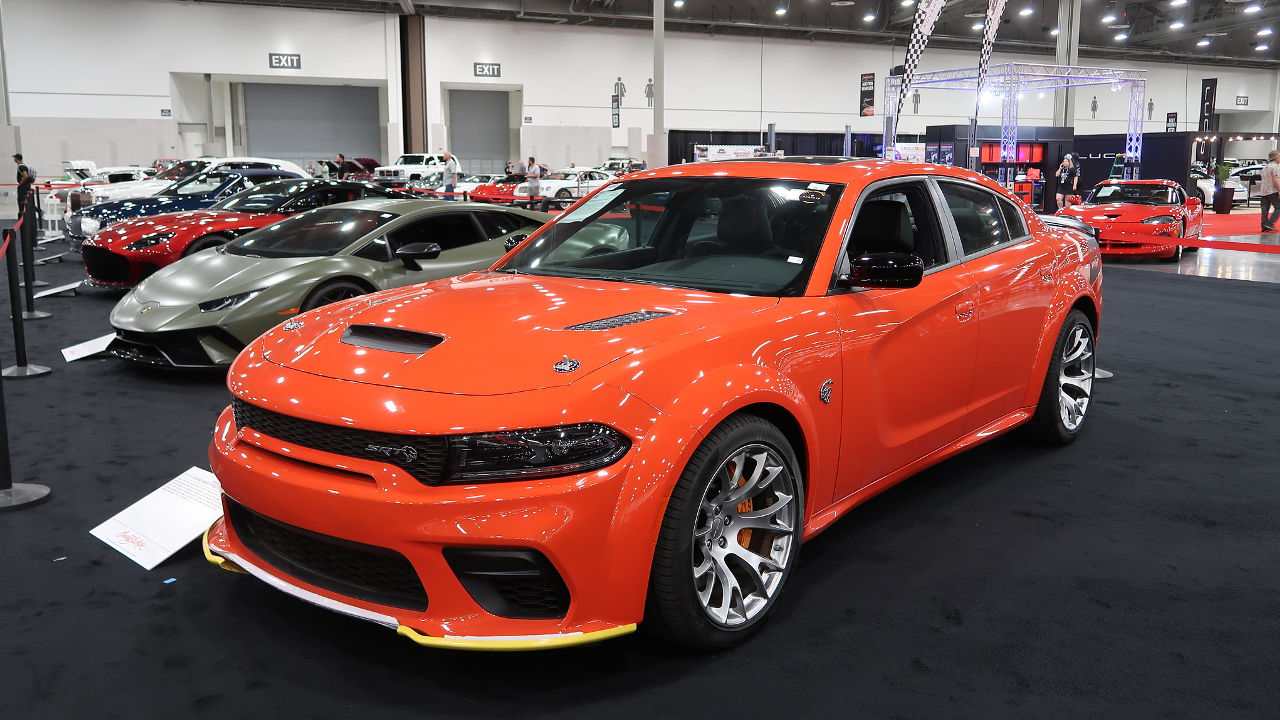
The Hellcat Redeye arrived with 797 hp because Dodge’s engineers had apparently lost a bet with physics. It could hit 60 mph in 3.4 seconds and had a top speed of 203 mph, which was coincidentally the same speed at which your driver’s license would disappear.
Around this time, the Dodge Challenger Demon was banned from NHRA-sanctioned drag races for finishing the quarter mile too fast (nine seconds). It was only allowed to participate with a roll cage and parachute, but not stock. And as you can see in this video, the Hellcat Redeye is pretty much on par with that beast. It won’t hit the exact same numbers, but you get the idea — it’s powerful, almost pointlessly powerful.
2021-2023: Last Call Special Editions
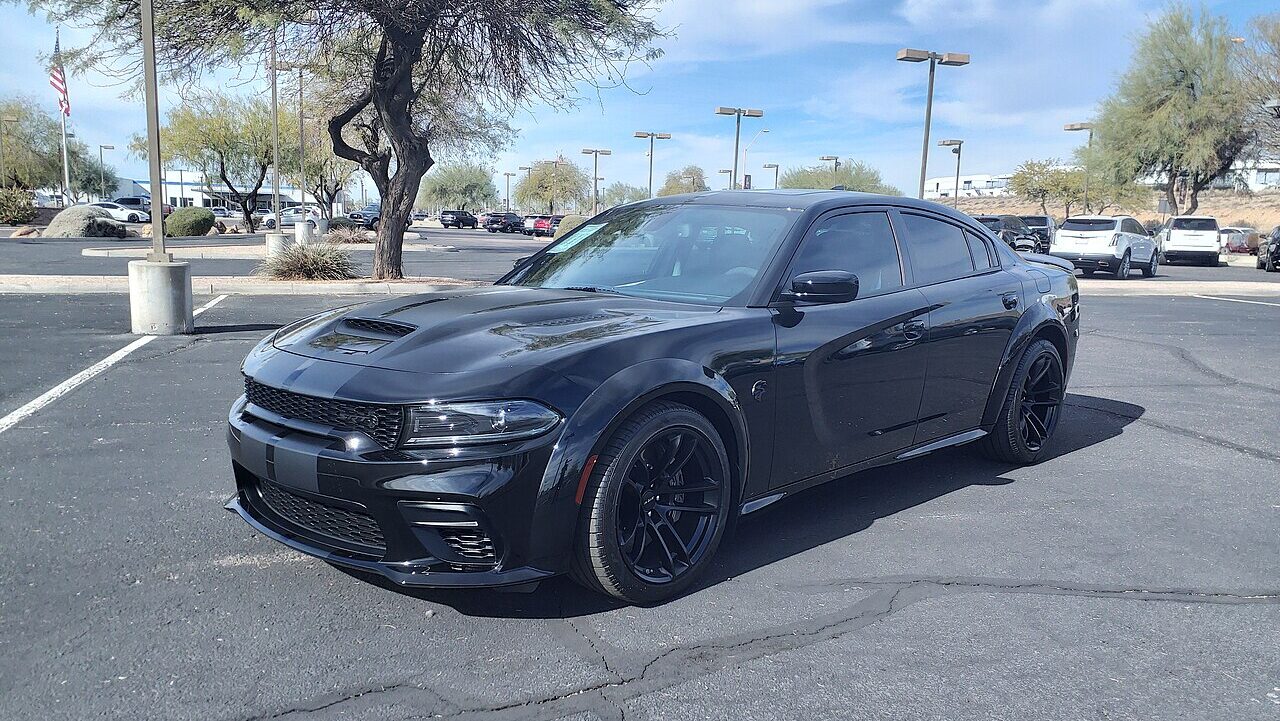
Dodge began producing “Last Call” special editions faster than collectors could secure financing. The Jailbreak, King Daytona, and Swinger editions celebrated everything from racing heritage to the fact that someone at Dodge had apparently been given unlimited access to the parts bin and a marker board covered in random performance ideas.
The Charger SRT Hellcat Redeye Widebody Jailbreak (yes, that’s the actual name) produced 797 hp, wore tires wider than some city streets, and came with enough carbon fiber to build a small aircraft.
2024: The Electric Future (Allegedly)

Dodge announced the Charger Daytona SRT Concept, an electric muscle car that promised to carry the Charger name into the EV era. It featured something called “Fratzonic Chambered Exhaust” — basically a speaker system designed to make electric motors sound like V8s, because nothing says “authentic modern muscle car experience” like Bluetooth audio.
The concept promised 0-60 times in the low 2-second range and the ability to wake your neighbors without burning a drop of gasoline. Whether it can capture the soul of tire-smoking, gas-guzzling, EPA-terrorizing Chargers remains to be seen. But I have a feeling the drivers yearn for the V8 (and a fake sound isn’t enough).
The 2020s opened with strong energy. Jailbreak editions and Redeyes kept raising the bar. Each model added horsepower and style. Special editions honored every past generation. Showrooms displayed Chargers in heritage colors. Hood scoops grew larger. Badging told stories from the 1960s to today. The Charger Daytona SRT Concept introduced a new shape. Fratzonic Chambered Exhaust brought a new kind of sound. Electric performance promised acceleration with Charger spirit. Lights glowed with confidence. Cabin screens brought digital muscle. Mopar enthusiasts welcomed innovation. Collectors placed orders for Last Call models. V8-powered Chargers celebrated every final lap. Car shows displayed both classic and modern versions side by side. The future looked ready to carry the legacy forward.
The Final Burnout

The Dodge Charger has spent nearly 60 years proving that Americans will never get tired of straight-line acceleration, questionable fuel economy, and the kind of exhaust note that makes your chest vibrate. It survived the malaise era, conquered Hollywood, and somehow convinced an entire generation that 800 horsepower was a reasonable daily driver option.
From the hidden headlights of ’66 to the supercharged madness of the Hellcat era, the Charger has never apologized for being too much. In a world increasingly focused on efficiency, practicality, and saving the planet, the Charger stood up and said, “But have you considered going really, really fast instead?”
As we potentially head into an electric future, one thing remains certain: somewhere out there, a Charger is still warming its tires, its owner is still grinning, and a neighbor is still calling the HOA. And honestly? That’s exactly how it should be.
The road ahead might be electric, but the legend will always smell like racing fuel and poor life choices. And we wouldn’t have it any other way.