There’s just something about a truck. If you’ve owned one, you get it. The utility isn’t theoretical, and it isn’t something you can fully replicate with clever workarounds. You can tell yourself that another vehicle and a utility trailer will cover the same ground, but in practice, it rarely does. Been there. Done that. Wouldn’t recommend it.
A pickup’s appeal goes beyond towing numbers or payload ratings. It’s the flexibility, the readiness, and the quiet confidence that it can handle whatever the day throws at it without needing a plan. Trucks earn their place in people’s lives, which is why so many owners come back to them even after trying something else.
Automakers understand that appeal. And from time to time, they’ve tried to reimagine it—experimenting with form, layout, luxury, or engineering in an attempt to blend truck utility with something different. Sometimes those experiments were clever. Sometimes they were misguided. But they were rarely boring.
What follows isn’t a list of traditional pickups. These are the unusual attempts—the trucks that bent the rules, challenged expectations, or tried to combine truck usefulness with ideas borrowed from sports cars, luxury sedans, or compact commuters. Some worked better than others, but all of them proved just how hard it is to mess with a formula that already works.
Subaru BRAT

The Subaru BRAT—short for Bi-drive Recreational All-terrain Transporter—took a different approach to what a pickup could be. Built from 1978 through the early 1990s, it wasn’t designed to compete with full-size trucks. Instead, it focused on compact size, efficiency, and light-duty capability, offering utility in a footprint closer to a car than a traditional pickup.
Its most recognizable feature was the pair of rear-facing jump seats mounted in the bed. While unconventional, they served a practical purpose: helping Subaru classify the BRAT as a passenger vehicle in the U.S. and avoid the 25 percent “chicken tax” on imported trucks. The result was unusual, but clever, and it gave the BRAT a personality unlike anything else on the road.
The BRAT also offered features rarely seen on small pickups at the time, including available T-tops and a four-wheel-drive system that provided real traction on snow, dirt, and light trails. Power came from modest 1.6- and 1.8-liter flat-four engines, prioritizing efficiency and reliability over outright speed.
Compact, nimble, and easy to live with, the BRAT delivered genuine utility without the size, fuel consumption, or cost associated with larger trucks. That idea still resonates today, as many buyers continue to wish for affordable, smaller pickups—not because modern trucks fall short, but because years of size creep have pushed much of the market toward increasingly large, luxurious, and expensive offerings.
The BRAT stands as a reminder that truck usefulness isn’t measured in excess. Sometimes, smart packaging is enough.
Chevrolet SSR
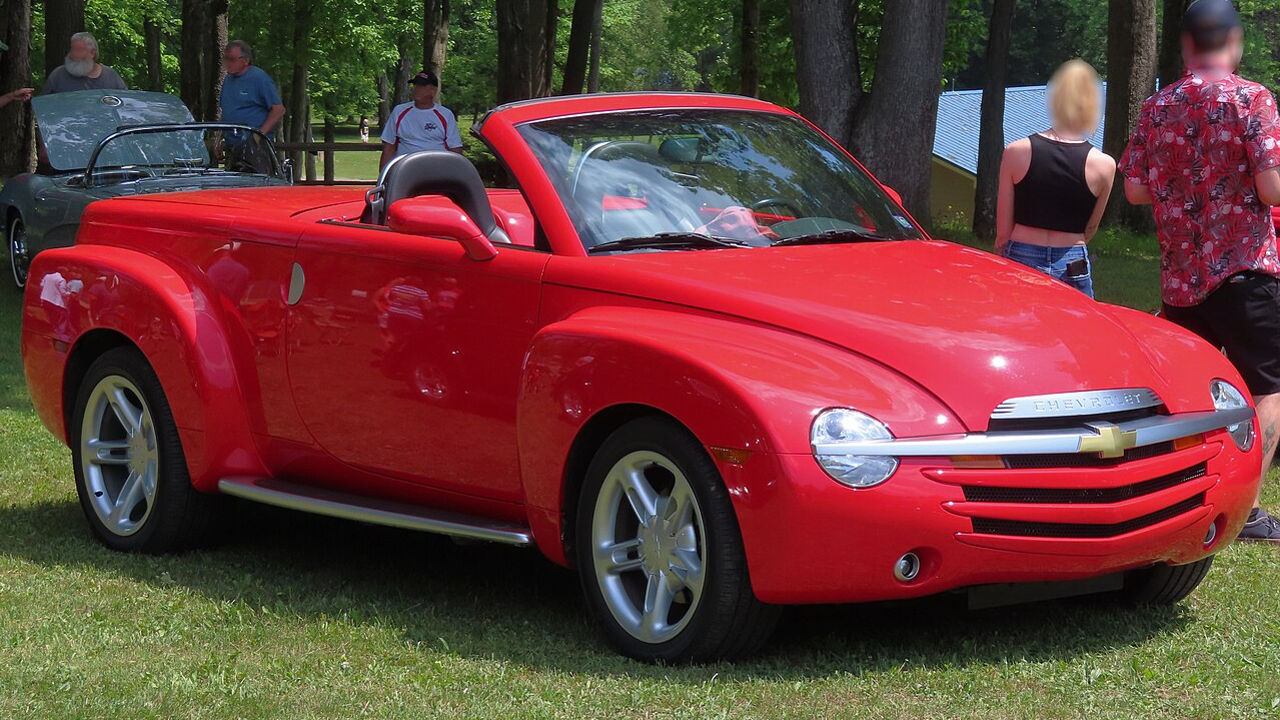
The Chevrolet SSR (Super Sport Roadster) was never meant to be a conventional pickup. Introduced for 2003, it was designed as a retro-styled tribute to Chevrolet’s classic trucks, filtered through modern street-rod culture and delivered as a factory-built custom. Utility took a back seat to design and presence.
Underneath, the SSR rode on a shortened version of GM’s GMT360 body-on-frame platform, shared with the Chevrolet TrailBlazer and GMC Envoy. Engineers trimmed the longer TrailBlazer EXT chassis to achieve the SSR’s proportions while retaining the platform’s width and stance, giving it solid road presence even if its mission leaned more toward cruising than cargo.
At launch, the SSR was easy to like. The styling was bold and distinctive, and it stood apart from anything else on the road. It made sense as a design statement, even if its role as a truck was less clearly defined.
Power came from V8 engines throughout its run, starting with a 5.3-liter and later upgrading to a 6.0-liter LS2 producing up to 390 horsepower, with a manual transmission available in later models. That performance reinforced its identity as a street-focused machine rather than a work vehicle.
In hindsight, its limited success is understandable. The SSR wasn’t quite sporty enough to attract performance buyers, and it wasn’t truck-focused enough to satisfy traditional pickup owners. Caught between categories, it struggled to find a broad audience.
Produced from 2003 to 2006 in relatively small numbers, the SSR stands today as a clear example of Chevrolet experimenting with form and identity—memorable, unconventional, and unapologetically niche.
Dodge Dakota Convertible
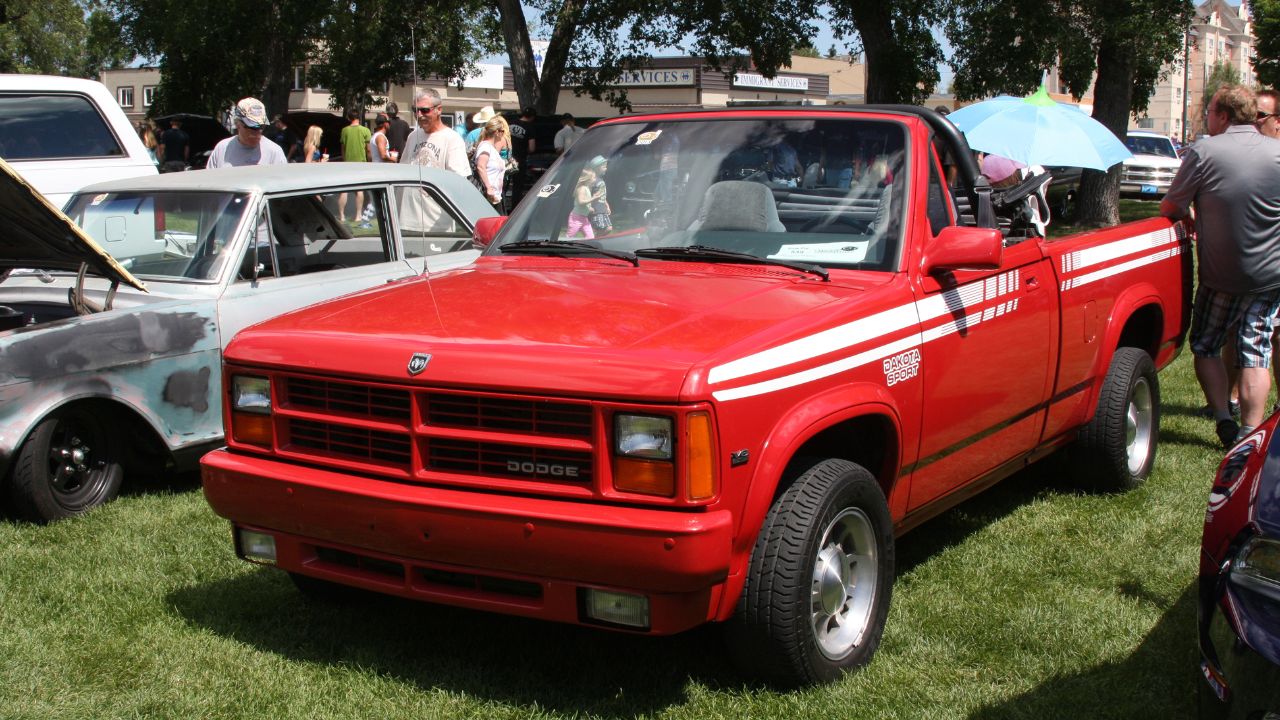
The Dodge Dakota Convertible stands as one of the more interesting truck experiments of its era. Produced from 1989 to 1991, it was the first modern convertible pickup sold in the U.S., and while it was unconventional, the idea itself wasn’t entirely far-fetched.
Developed with American Sunroof Corporation (ASC), the Dakota Convertible took Dodge’s midsize pickup and replaced the fixed roof with a power-operated soft top. Underneath, it remained a standard Dakota, offered with either a 2.5-liter four-cylinder or a 3.9-liter V6. Performance wasn’t the focus, but for buyers drawn to lifestyle-oriented trucks, the concept had clear appeal.
In many ways, the Dakota Convertible wasn’t a radical departure from vehicles like the Jeep Wrangler or Ford Bronco, which had long embraced open-air driving. A pickup with a removable roof made sense on paper, especially for buyers interested in performance or recreational trucks rather than pure workhorses.
Where it may have struggled was in execution. Without a prominent roll bar or the rugged visual cues associated with open-top SUVs, the Dakota Convertible felt less purposeful than its off-road counterparts. It looked like a truck missing something, rather than a truck designed around open-air driving from the start.
As a result, it occupied a narrow niche, appealing to a small group of buyers who appreciated the idea more than the compromises. Today, it remains a fascinating example of how close an unconventional truck can come to making sense—and how small details can ultimately define how a vehicle is perceived.
Volkswagen Rabbit Pickup

In my view, the Volkswagen Rabbit Pickup is one of the most underrated trucks ever sold in the U.S.—a true “if you know, you know” vehicle. These little VW trucks were genuinely good at what they were designed to do, even if they never fit the traditional American idea of a pickup.
Volkswagen launched the Rabbit Pickup in 1979, adapting its compact economy car into a front-wheel-drive truck. Built in Westmoreland, Pennsylvania, it offered a simple, efficient alternative for buyers who needed light hauling capability without the size, cost, or fuel consumption of a full-size pickup.
I owned two diesel-powered examples in the early 2000s, both bought from a local farmer. One eventually sold to a buyer in California for more than I paid for both combined. That little diesel regularly returned 50-plus mpg and was an excellent runabout for everyday errands—running to the store, picking up feed, or grabbing parts for a tractor. It wasn’t fast, but it was dependable, economical, and easy to live with.
Gasoline versions made modest power—typically around 78 horsepower—but efficiency was the point. The Rabbit Pickup delivered just enough capability for people who didn’t need to tow heavy loads or haul construction equipment. It felt like a car adapted for utility, not a truck pretending to be something else.
Today, as modern pickups continue to grow larger, heavier, and more expensive, the Rabbit Pickup stands as a reminder that small, efficient trucks can still make a lot of sense.
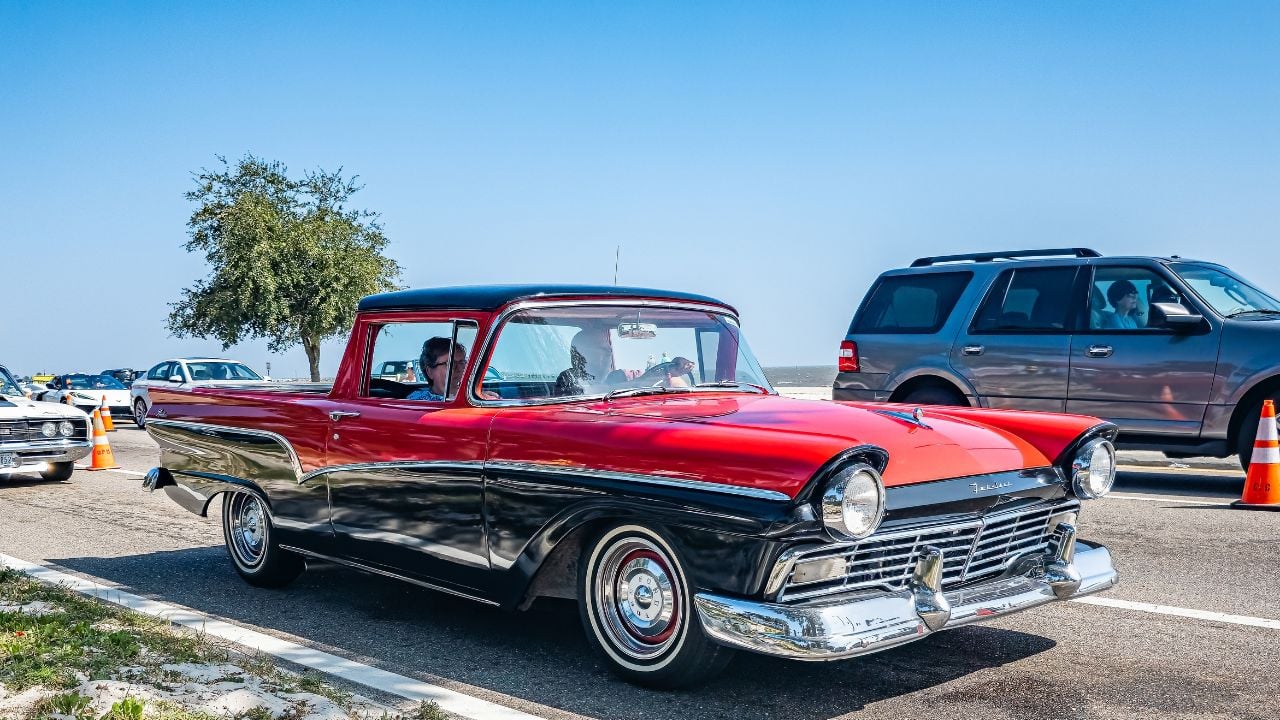
Ford Ranchero
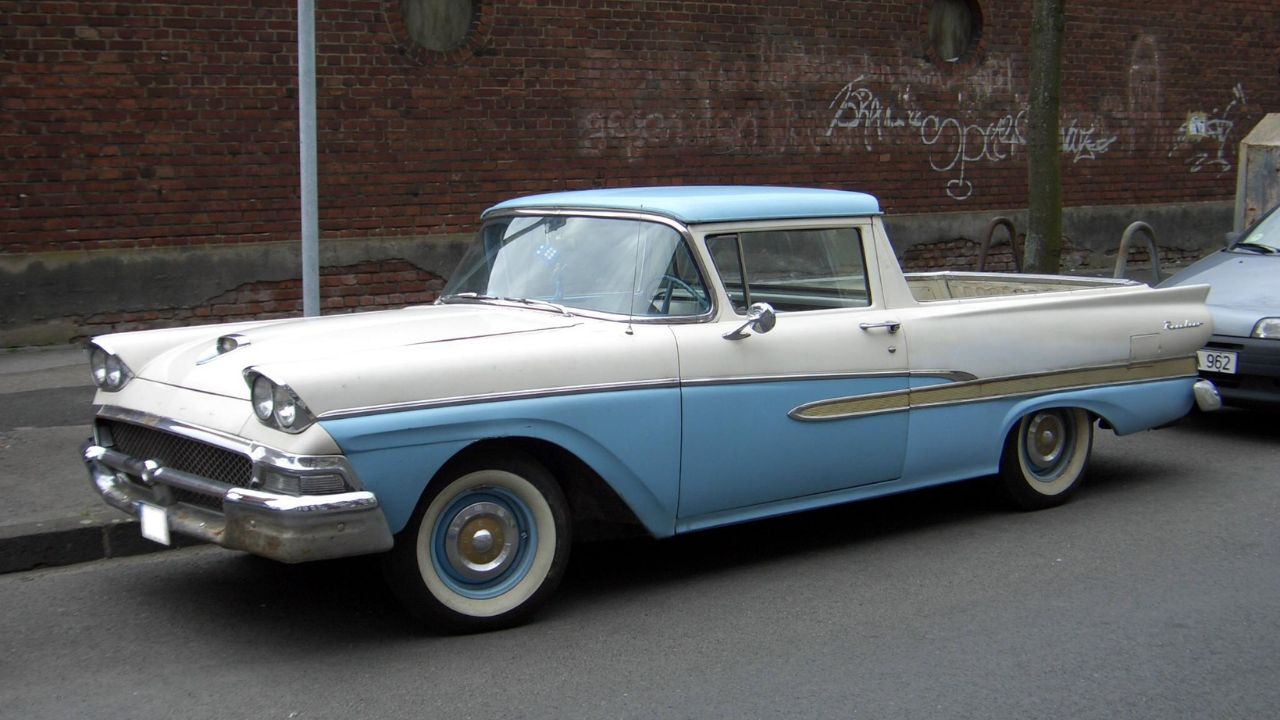
Before the El Camino became a household name, the Ford Ranchero established the template for the coupe utility segment. Introduced in 1957, it was unapologetically a car with a truck bed, built on Ford’s passenger-car platforms and intended to blend everyday drivability with light-duty utility.
Early Rancheros were based on station wagon architecture, prioritizing comfort and road manners. As the model evolved through the 1960s and into the early 1970s, it began borrowing more aggressively from Ford’s performance lineup. Later versions adopted muscle-car styling cues, stronger drivetrains, and available V8 power, including big-block options, transforming the Ranchero from a mild utility vehicle into something far more performance-oriented.
Despite its car-like ride and proportions, the Ranchero remained genuinely useful. The open bed could handle lumber, tools, or recreational gear, while the long hood and low seating position made it feel closer to a cruiser than a conventional pickup. That balance appealed to buyers who didn’t need a full-size truck but still wanted the flexibility that a bed provided.
The Ranchero carved out a clear niche for drivers who wanted utility without giving up comfort or style. It proved that truck usefulness didn’t require body-on-frame construction or towering ride height—just thoughtful design and a willingness to blur categories.
GMC Caballero Diablo
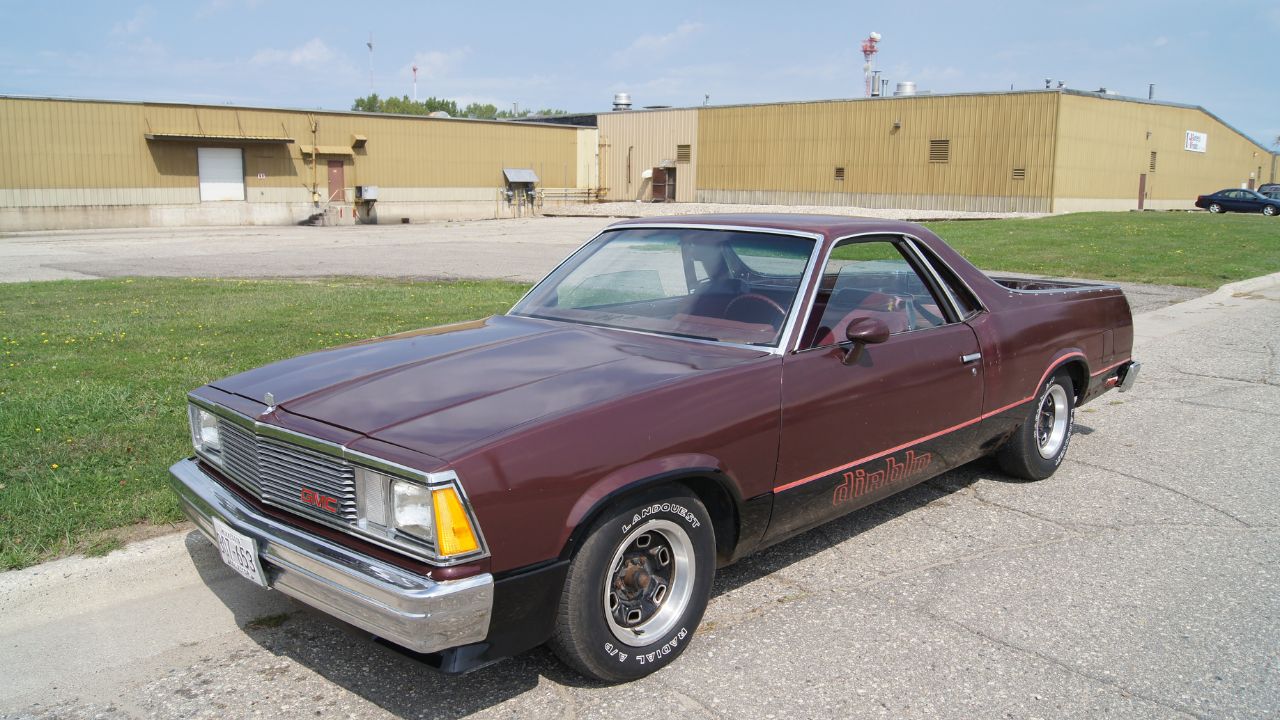
The GMC Caballero was GMC’s take on the ubiquitous El Camino concept, proving that if it ain’t broke, just slap a different badge on it. But the Diablo trim, available in the late ’70s, added a literal flame job and enough swagger to make Liberace blush. This was a truck for those who wanted to deliver drywall and also look like they wrestled alligators on the weekends, usually while listening to disco.
The Diablo was full of ’70s swagger, including flashy chrome bumpers, stylized badging, and enough decals to blind a fighter pilot. Under the hood, you could find anything from modest V6s to workhorse V8s (like the 5.0L or 5.7L), offering enough grunt for light hauling or just cruising.
It rode on a platform better suited to comfort than brawn, essentially a Monte Carlo with a pickup bed. The styling choices may have raised more than a few eyebrows, but that was kind of the point. In today’s sea of boring grays, whites, and silvers, the Caballero Diablo remains a spicy, flamboyant footnote in GM’s history. It was funky, flashy, and a whole lot of fun, proving that even a work-oriented brand could get down and boogie.
Studebaker Champ
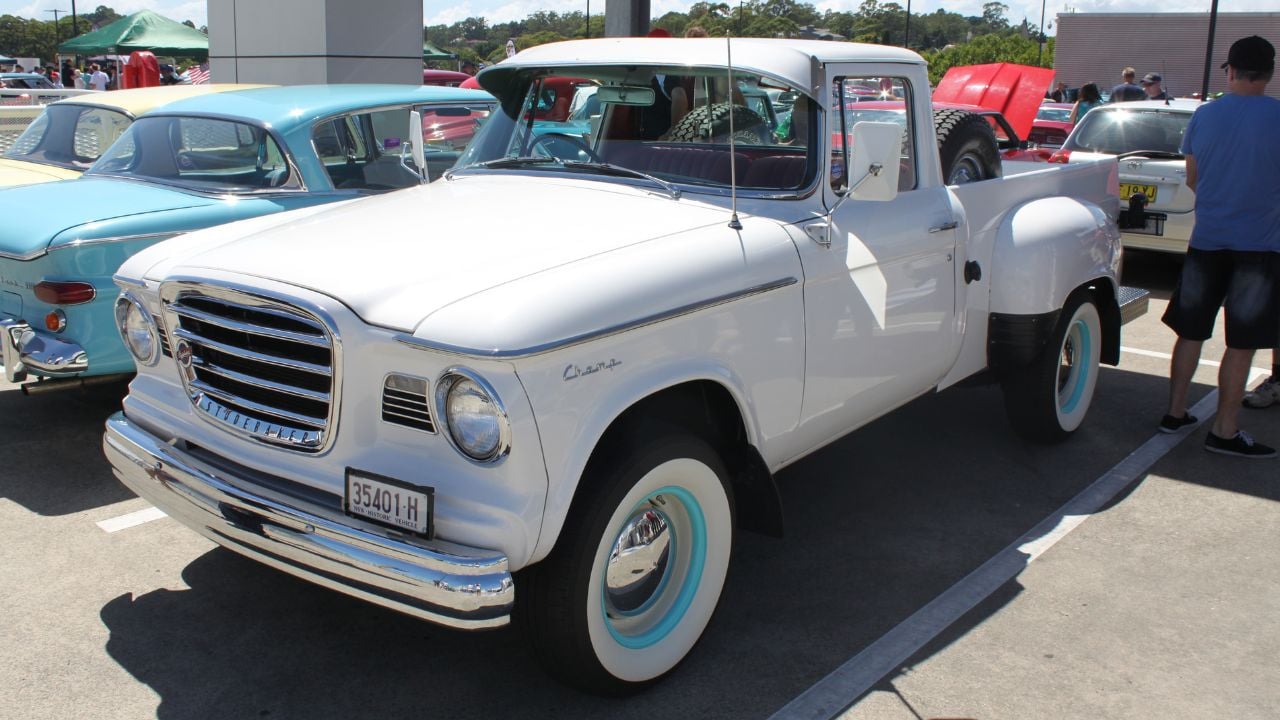
Studebaker never approached vehicle design in quite the same way as its larger competitors, often out of necessity as much as creativity. Introduced in the early 1960s, the Studebaker Champ was a clear example of that resourceful mindset. To control costs, Studebaker adapted the front end of its Lark sedan and paired it with a truck chassis, creating a pickup that looked different from anything else on the road.
That unconventional approach resulted in a cab that felt more car-like than most pickups of the era, prioritizing comfort and visibility. The Champ also offered features that were relatively advanced for a light truck at the time, including a sliding rear window and a more refined interior than many of its competitors. Powertrain options ranged from straight-six engines to available small V8s, giving buyers flexibility depending on their needs and budget.
On the road, the Champ delivered a more civilized driving experience than many contemporary pickups, with better ride quality and handling that reflected its passenger-car origins. While it never achieved widespread popularity, it filled a niche for buyers who wanted utility without sacrificing comfort.
Today, the Studebaker Champ stands as a reminder that innovation doesn’t always come from abundance. It represents a period when creative engineering and practical compromises could produce something distinctive—an unconventional pickup that valued efficiency, comfort, and originality over conformity.
Lincoln Blackwood
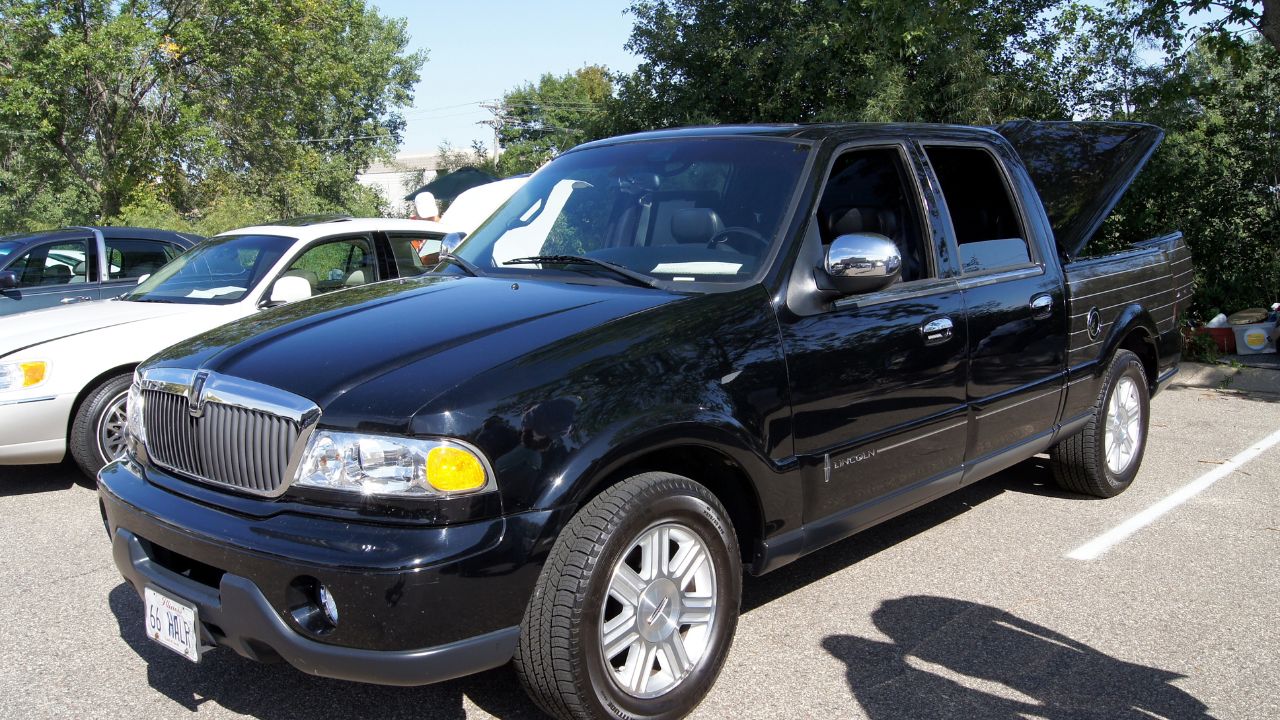
As much as we tend to find redeeming qualities in most vehicles—and we’re usually open to quirky or unconventional ideas—the Lincoln Blackwood is one of those trucks that never quite made sense to us. And that’s fine. Not every vehicle is meant for every buyer. But even at the time of its release, it felt difficult to understand what Lincoln was really trying to accomplish.
Introduced for the 2002 model year, the Blackwood was Lincoln’s attempt at a luxury pickup, built on the Ford F-150 platform but reworked for comfort and presentation rather than utility. It featured rear-wheel drive only and a highly finished, power-operated bed that was carpeted, paneled, and illuminated—designed more for presentation than for hauling anything remotely messy.
Inside, the Blackwood leaned heavily into early-2000s luxury cues, with leather upholstery, faux wood trim, and brushed metallic accents. Yet despite the upscale materials, it never quite carried the prestige you’d expect from a Lincoln. It didn’t feel like a natural extension of the brand so much as a front-end swap applied to a concept that hadn’t fully been thought through.
Practicality took a back seat throughout. The bed, while visually striking, was ill-suited for real truck use, and the overall package lacked the flexibility or capability buyers typically expect from a pickup—luxury or otherwise. That disconnect likely explains why sales were limited to roughly 3,300–3,500 units before production ended after a single year.
Today, the Blackwood stands as a reminder that luxury alone doesn’t define a successful truck. It wasn’t a failure of execution so much as a mismatch of identity—an experiment that proved how carefully brand, function, and expectation need to align, especially in the pickup world.
Cadillac Escalade EXT
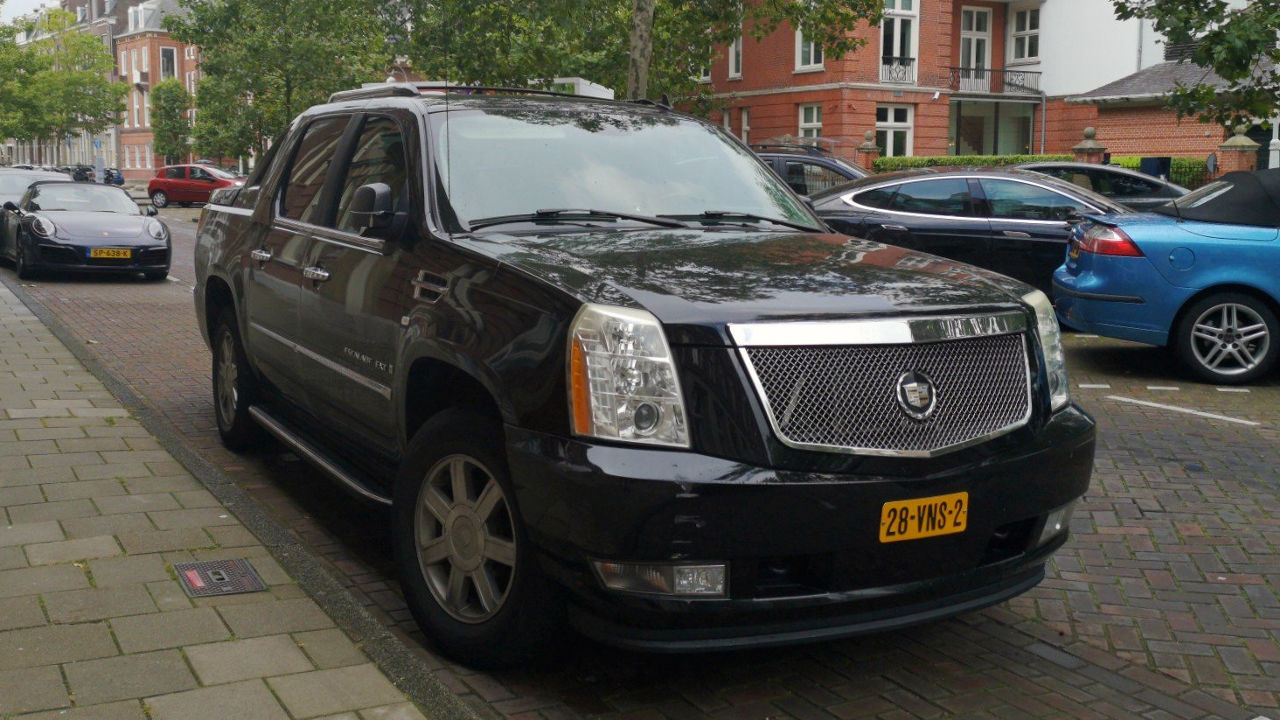
The Cadillac Escalade EXT took a different approach to the luxury pickup idea—one that leaned heavily on presence, comfort, and clever packaging rather than traditional truck priorities. Introduced in 2002, it combined the Escalade’s established luxury image with a pickup bed, using a mid-gate system that allowed the cargo area to extend into the cabin.
When the Chevrolet Avalanche introduced the mid-gate, the concept felt genuinely novel. Extending the bed into the cabin was a clever solution, though arguably one aimed at a problem many truck owners had already solved for decades by simply dropping the tailgate when extra length was needed. Still, the system offered flexibility without requiring a longer wheelbase, and for some buyers, that convenience mattered.
Power came from a 6.0-liter V8 in early models, followed by a 6.2-liter V8 in later versions, delivering smooth, effortless performance well suited to the EXT’s size and weight. The ride prioritized comfort over feedback, and the interior reflected Cadillac’s early-2000s luxury focus, with generous leather, upscale trim, and a clear emphasis on passenger experience.
The Escalade EXT wasn’t designed for traditional truck buyers, and it didn’t pretend to be. It appealed to customers who valued image, comfort, and occasional utility over work-focused capability. Importantly, it understood its audience, which helped it succeed where other luxury pickup experiments struggled.
Today, the Escalade EXT stands as a clear snapshot of its era—an example of how luxury, branding, and utility briefly intersected in a way that felt excessive to some and exactly right to others.
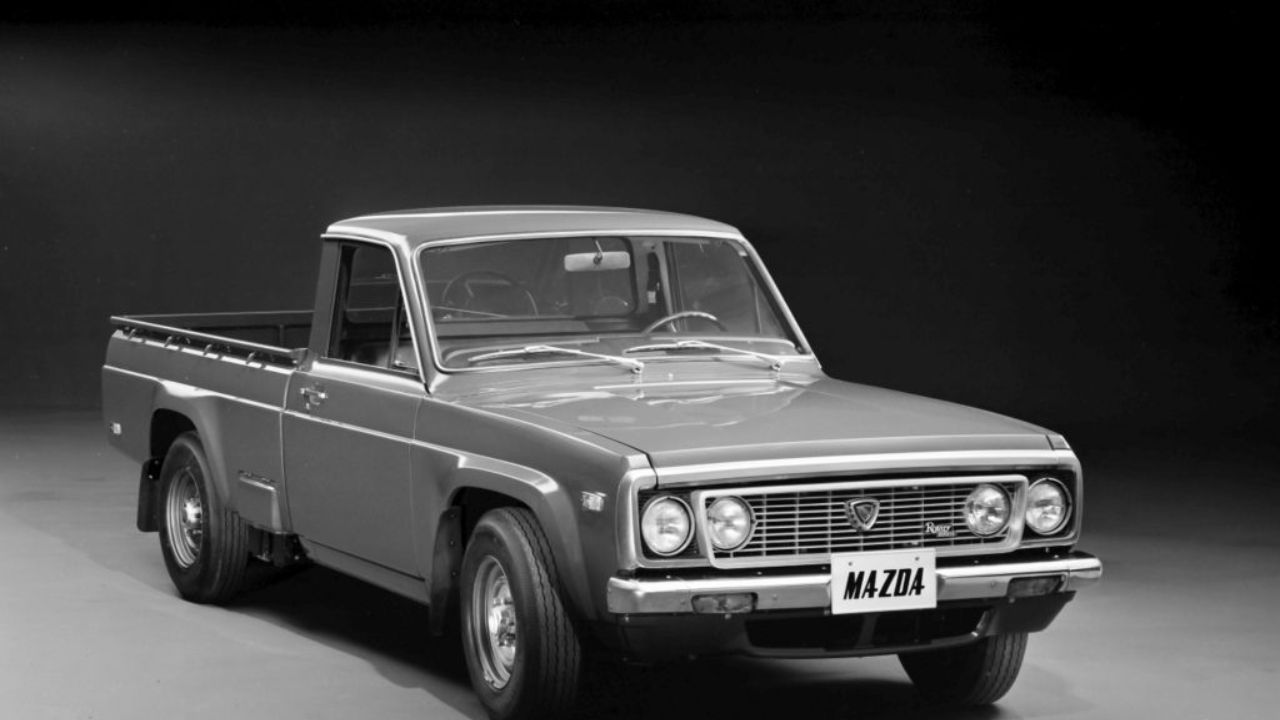
Mazda Rotary Pickup (REPU)
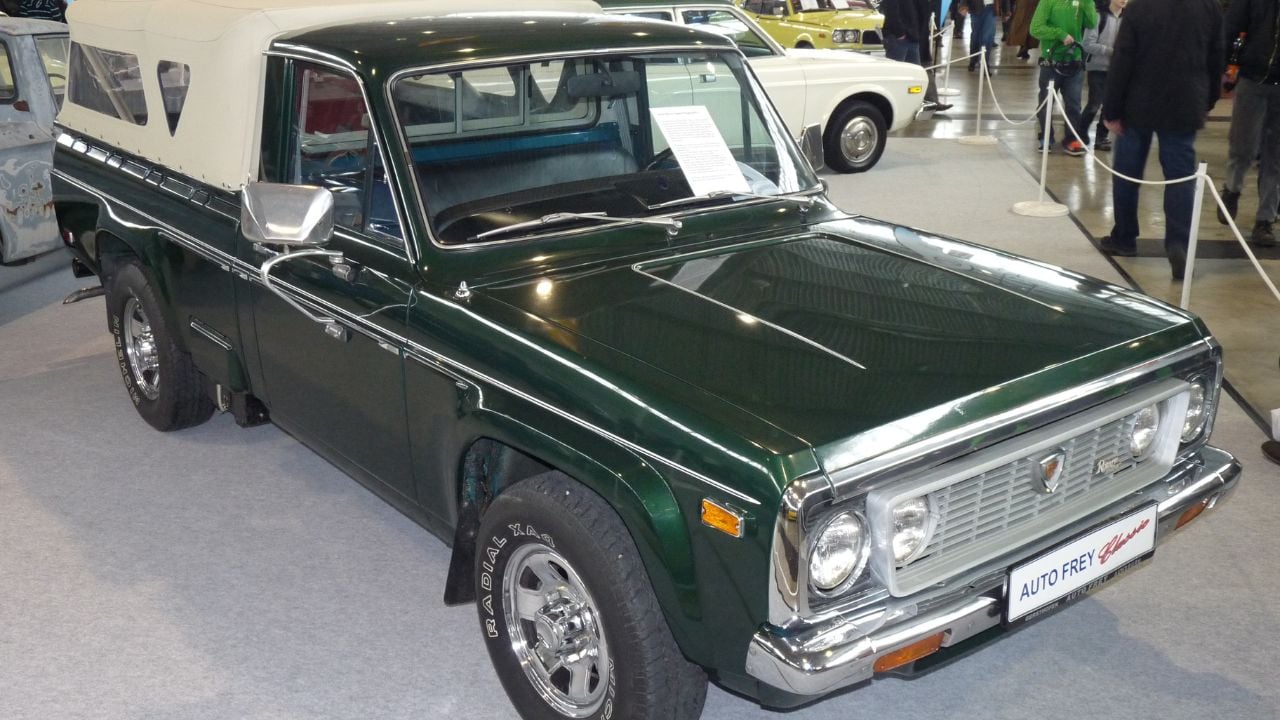
In 1974, Mazda applied its most unconventional engineering idea to an equally unconventional vehicle: a pickup truck powered by a rotary engine. The result was the REPU (Rotary Engine Pick-Up), the only production pickup ever sold in the U.S. with a Wankel rotary under the hood.
The REPU used Mazda’s 1.3-liter 13B rotary engine, producing roughly 110 horsepower. What it lacked in low-end torque compared to traditional truck engines, it made up for with smooth power delivery and a willingness to rev far beyond what pickup buyers were accustomed to. The driving experience felt more like a sports car than a utility vehicle, with a distinctive sound and character unlike anything else in the segment.
Despite its unconventional powertrain, the REPU retained genuine pickup functionality. The bed was capable of handling light-duty hauling, though many owners treated it more as a recreational vehicle than a work tool. Its appeal leaned toward enthusiasts who appreciated Mazda’s engineering philosophy rather than buyers shopping purely on utility.
The REPU’s production run was short. Emissions challenges and the fuel economy concerns of the 1970s made rotary engines increasingly difficult to justify, especially in a pickup application. As a result, the REPU quietly exited the market after only a few years.
Today, it stands as one of the most distinctive truck experiments ever offered—a reminder of a time when manufacturers were willing to apply unconventional technology to unlikely platforms, even if the result appealed to only a narrow audience.
Fiat Strada Adventure Locker
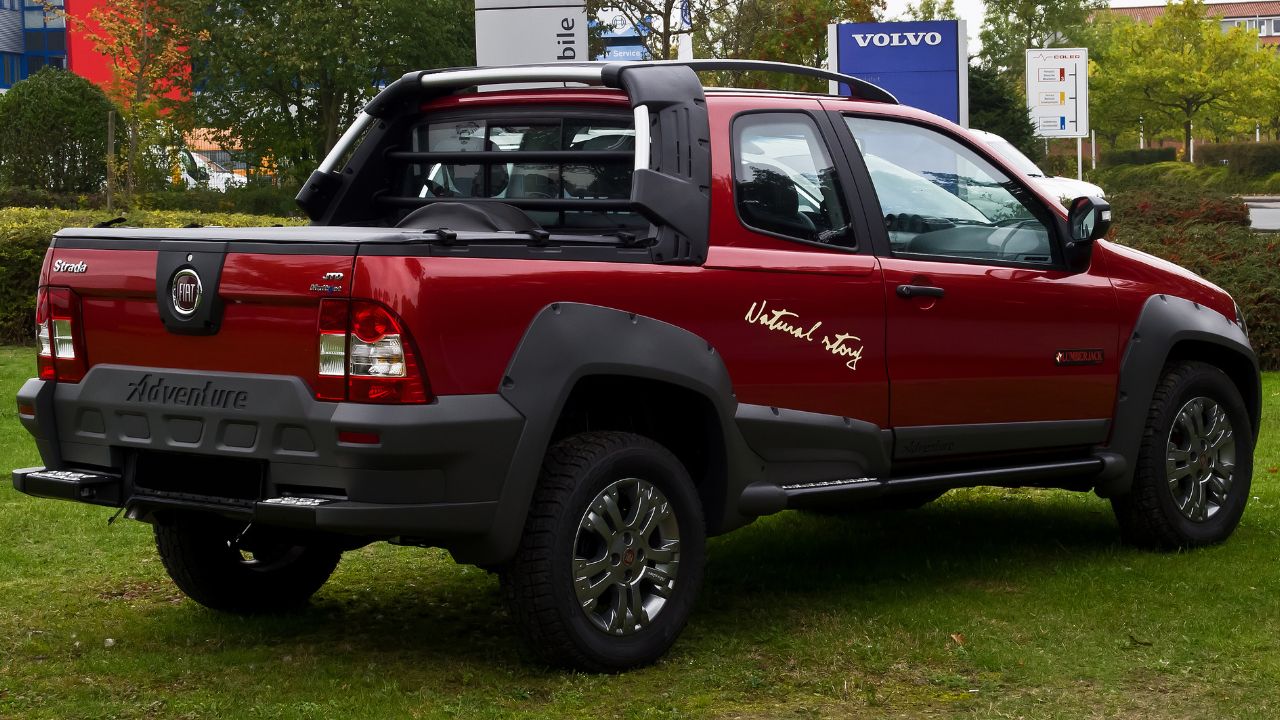
The Fiat Strada Adventure Locker may sound unfamiliar to American readers, but it represents a thoughtful approach to compact pickup design in markets where space, cost, and road conditions demand efficiency over excess. Introduced to the Brazilian lineup in the late 2000s, it was designed for urban workers and rural users who needed real capability in a small footprint.
What set the Adventure Locker apart was Fiat’s available “Locker” system—an electronic locking differential designed to improve traction on loose or uneven surfaces. For a front-wheel-drive compact pickup, this feature significantly enhanced off-road capability, allowing the Strada to handle dirt roads, mud, and rough terrain far better than its size suggested.
Power came from small four-cylinder engines focused on efficiency and durability rather than outright performance. The cabin was simple but thoughtfully arranged, offering seating for two or three depending on configuration. Fiat also offered versions with rear access doors, improving usability without increasing overall size.
In regions where full-size trucks are impractical, the Strada Adventure Locker filled an important niche. It combined manageable dimensions, low running costs, and genuine capability into a single package, proving that smart engineering can often matter more than sheer size.
The Strada stands as another reminder that pickup design looks very different outside the U.S.—and that compact, purpose-built trucks can still deliver meaningful utility when they’re designed with clear priorities.
A Tribute to the Trucks That Stand Out