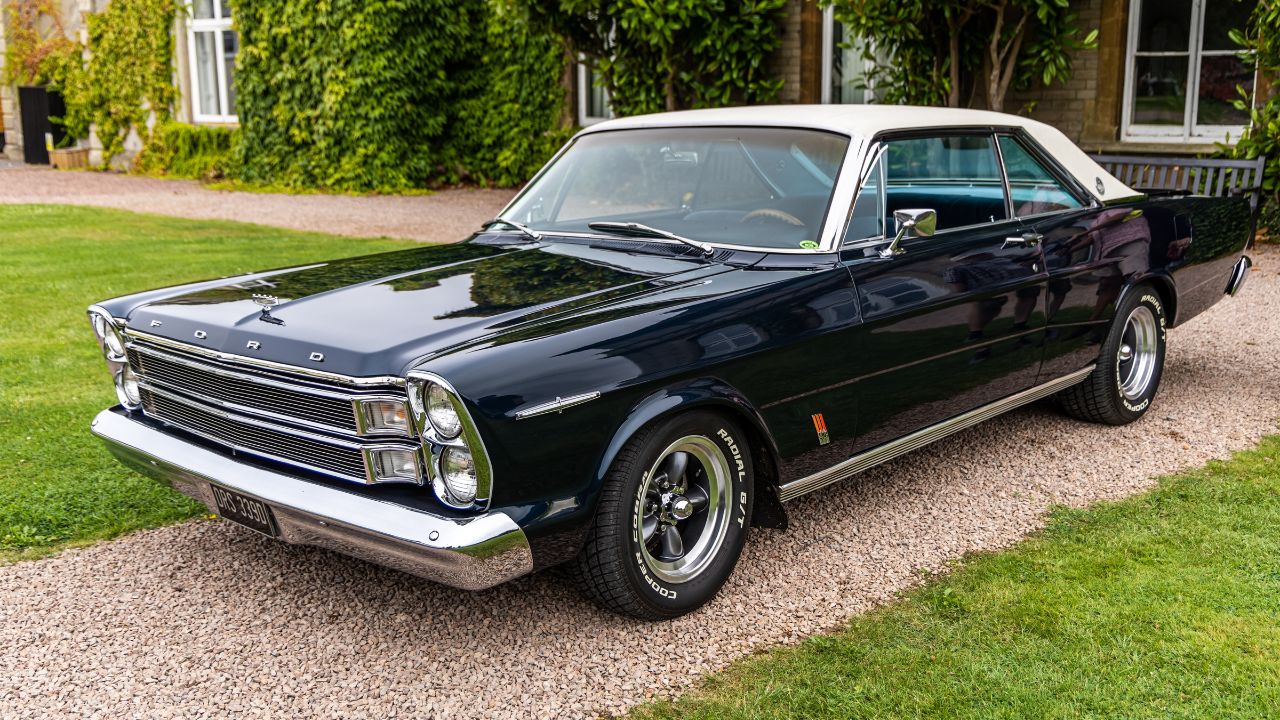
Ford has always held a special place in the hearts of American car enthusiasts. From Detroit’s assembly lines to drag strips nationwide, the Blue Oval cranked out machines that could turn heads and inspire passion among drivers of all ages. In the late 1960s and early 1970s, Ford’s engineers seemed to operate under the philosophy that there’s no replacement for displacement, and they weren’t wrong.
These cars were mechanical manifestos. They announced to the world that their owners had excellent taste, a bold sense of style, and probably knew their way around a toolbox. Each model carried enough personality to fill a Saturday night cruise-in and enough power to make your insurance agent take notice.
But then the regulatory tide shifted. Between rapidly rising insurance premiums in the early 1970s, the 1973 oil embargo, and tightening emissions rules that reduced performance, many of Ford’s greatest creations were cut short before their time. Some lasted barely three model years; others were gradually redesigned until they lost much of their original character.
What follows is a tribute to the Blue Oval’s most tragic cases. These muscle cars deserved better than they got.
Icons That Left Too Soon
Compiling this list meant looking beyond the usual suspects. Sure, everyone knows about the GT40 and the ’69 Boss 429, but what about the unsung heroes? The cars that could have been legends if they’d just been given a fair shake. Of course, we had to include Ford’s iconic muscle cars that should have had a longer lifespan due to shifting emissions standards, but we also included the muscle cars that you might have missed if you blinked too fast.
We considered factors beyond raw horsepower numbers, although performance certainly played a role. Cultural impact, design innovation, and that indefinable quality that made people take notice when one rumbled past all contributed to the selection. Some cars made the cut because they were technological marvels ahead of their time. Others earned their spots by being strikingly bold in design and execution, worthy of admiration decades later.
Each vehicle had to have that special Ford DNA: bold styling that aged like fine wine, engineering that prioritized fun over fuel economy, and enough character to make every drive feel like an event. Whether they were street brawlers or sophisticated bruisers, they all shared one common trait: they left the party way too early. Many were phased out due to changing market forces and regulations. So now, we celebrate them for the impact they made.
Ford Torino Cobra

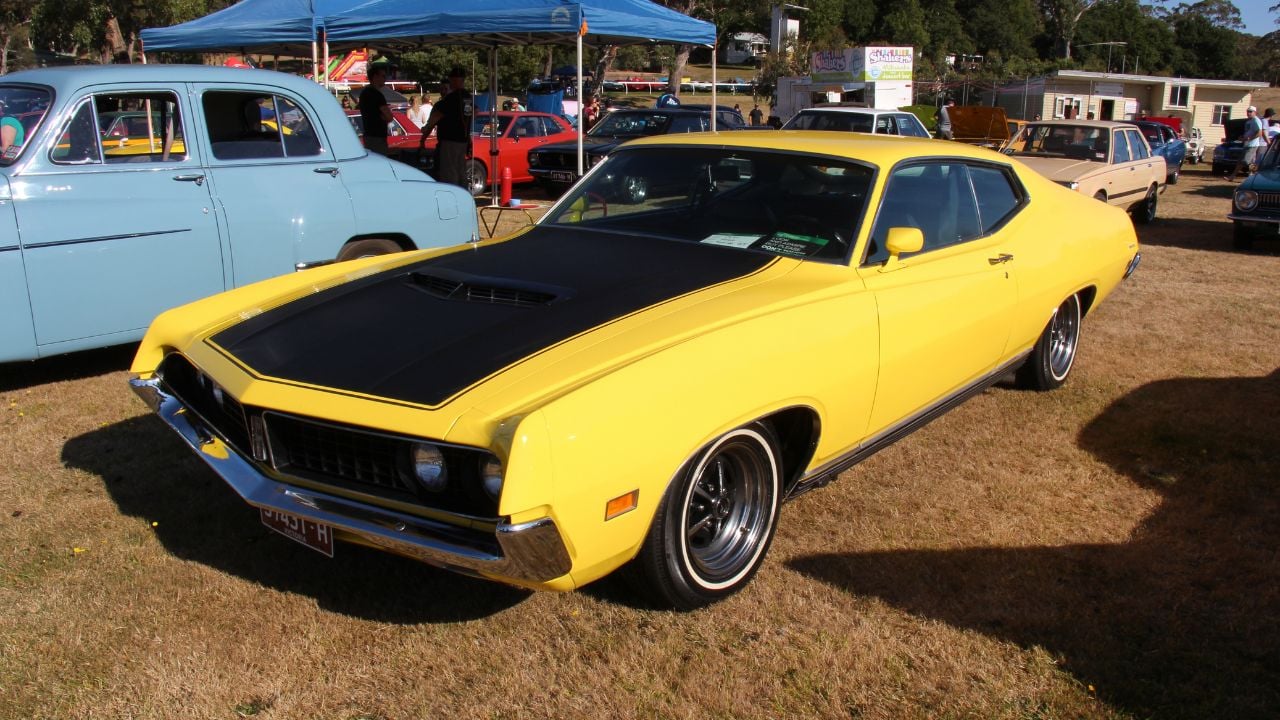
The Torino Cobra was Ford’s answer to the question: “What if we built a muscle car that combined executive styling with serious street performance?” This wasn’t some stripped-down street fighter with bias-ply tires and a prayer. The Cobra brought sophistication to the brawl, packaging serious performance in a body that even conservative buyers could appreciate.
On the 1969 Cobra (often called the Torino Cobra), the 428 Cobra Jet was standard equipment and was factory rated at 335 hp (SAE gross). Like many engines of the era, real world output could vary, and the published rating should be treated as a period figure rather than a modern measured number.
The Cobra package included a competition suspension, which helped the big intermediate feel more controlled than most muscle-era bruisers. The handling was confidence-inspiring enough that you didn’t need to white-knuckle the steering wheel every time you saw a curve.
Inside, the Cobra treated occupants to bucket seats, a floor-mounted shifter, and enough simulated wood grain to evoke upscale styling trends of the era. The instrumentation was comprehensive by 1969 standards, though “comprehensive” meant you got an oil pressure gauge rather than a basic warning light. It was a notable upgrade at the time.
Production ended in 1971 as insurance rates soared and buyers shifted toward safer, more economical alternatives. Today, finding a clean Torino Cobra is increasingly rare and highly prized among collectors.
Ford Mustang Mach 1

The Mach 1 was Ford’s attempt to give the Mustang a more aggressive and performance-oriented identity. It succeeded brilliantly. While the base Mustang was playing it safe, the Mach 1 showed up wearing racing stripes, hood scoops, and enough chrome to make a bold visual statement.
The early Mach 1s came standard with the 351 Windsor, though the real excitement started with the 428 Cobra Jet option. This was back when a high-performance air cleaner actually improved performance instead of just looking pretty. The shaker hood scoop wasn’t just for aesthetics: it fed the engine cool air while simultaneously announcing to everyone nearby that this was no ordinary Mustang.
The interior featured classic comfort-weave vinyl seats that would stick to your legs in summer and feel like ice cubes in winter. The rally gauges included an 8,000-rpm tachometer, which was optimistic considering most drivers would shift well before redline to avoid mechanical strain and costly repairs.
Peak Mach 1 performance lasted until 1973, when emissions regulations and the oil crisis significantly reduced engine output. The later 1974–1978 models carried the Mach 1 name but delivered performance numbers that fell short of earlier expectations.
Finding an early Mach 1 today means competing with collectors who remember when gas was affordable and muscle cars ruled the streets, and who often view anything made after the mid-1970s as lacking the classic spirit.
Ford Gran Torino Sport
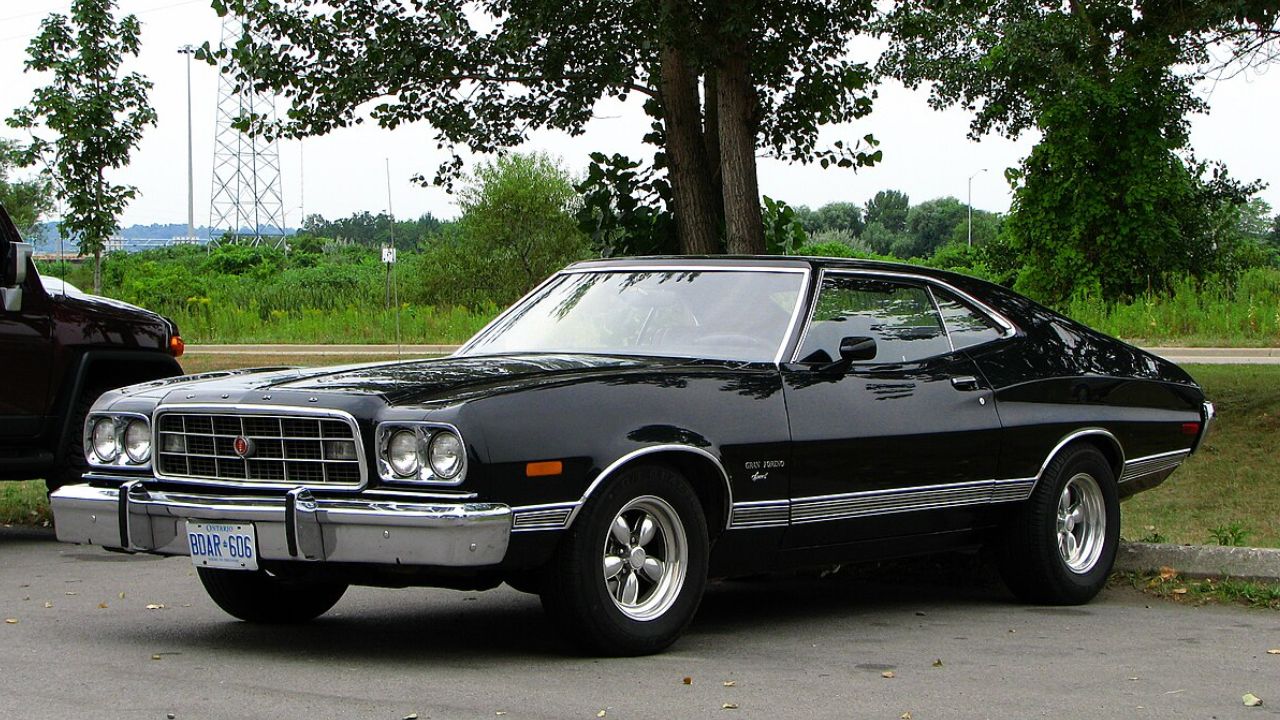
The Gran Torino Sport was Ford’s mid-size muscle car during the era when mid-size meant substantially larger than today’s standards. This was a car built for the American highway system, back when speed limits were more loosely enforced and gas mileage was less of a concern for performance-focused drivers.
The Sport package included dual exhausts, heavy-duty suspension, and enough ground effects to make it look like it was ready for NASCAR duty. The fastback roofline was pure 1970s cool, while the formal roof option was for buyers who wanted their muscle cars to blend performance with a touch of refinement.
Engine options ranged from the 302 (adequate for everyday driving) to the 460 big-block (designed for serious power and dramatic acceleration). The 351 Cleveland struck the perfect balance between power and practicality, producing enough torque to chirp the tires while maintaining modest fuel efficiency by the standards of the time.
Ford continued building the Torino and Gran Torino through the 1976 model year, and the Gran Torino Sport was discontinued for 1976. For 1977, Ford replaced the Torino line with the Ford LTD II, while the Ford Fairmont arrived for 1978 as a smaller compact model.
Today’s collectors appreciate the Gran Torino Sport for what it was: the last hurrah of full-size muscle, built during a brief window when engineers could still prioritize fun over emissions compliance.
Ford Torino Talladega

The Talladega was Ford’s one-year-only homologation special. It was a street car built solely to qualify as a race car for NASCAR competition. Sources typically cite roughly 750 built, with published totals ranging from 743 to 754 depending on whether prototypes and special cars are included, making it rarer than most limited-edition models from the era.
To improve aerodynamics, Ford extended the nose by about 5 inches and smoothed the front end, creating a profile that could slip through air with less drag than the standard Torino. The modifications were subtle but effective: wind tunnel testing revealed a significant improvement in high-speed stability, which was crucial when running over 180 mph at Talladega Superspeedway.
Every Talladega came with the 428 Cobra Jet engine, C6 automatic transmission, and 3.25:1 rear gears. The combination was optimized for top speed rather than quick acceleration off the line. The suspension was tuned for high-speed stability, which meant it rode like a luxury car on the highway but could get unsettled on choppy pavement.
The interior was basic Torino fare, though buyers did get special Talladega badges to remind them they owned something special. The exterior color choices were limited to Wimbledon White, Presidential Blue, or Royal Maroon.
NASCAR success was immediate, and by the end of the 1969 season Ford had won 26 Grand National races and the Manufacturer’s Cup. Street success was less impressive, mainly because most buyers had no idea what they were looking at. Today, Talladegas are among the most sought-after Ford muscle cars, commanding prices that reflect their rarity and racing pedigree.
Ford Fairlane GT
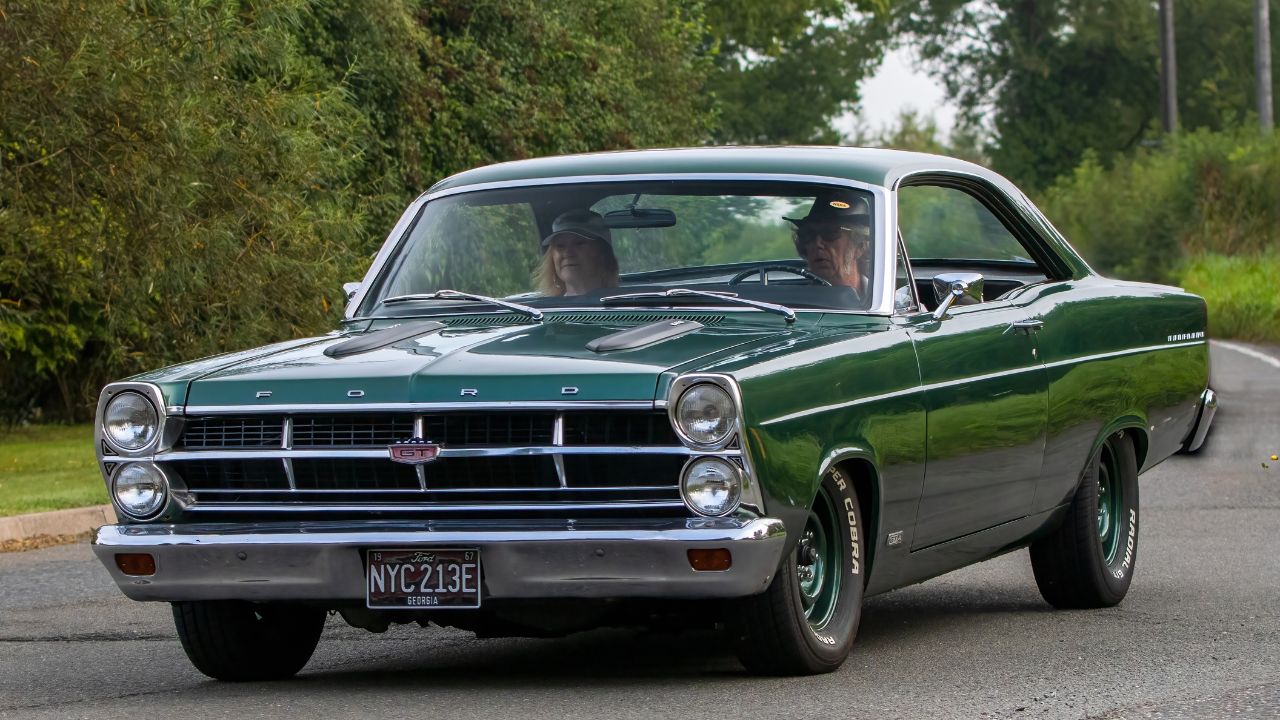
The Fairlane GT was Ford’s attempt to bring muscle car excitement to the intermediate market segment, a time when intermediate referred to a vehicle size that still fit comfortably in a standard garage. This was performance for the masses, assuming the masses had the budget and enthusiasm for spirited driving.
The GT package transformed the mild-mannered Fairlane into something with actual personality. Bold striping, bucket seats, and console-mounted shifters announced serious intent. For 1966, Fairlane GT models came with the S-code 390 four-barrel V8 rated at 335 hp, while 1967 GT and GTA cars could be ordered with several V8s and the 390 ratings varied by application.
For 1967, the 427 was available in very limited Fairlane 500 and 500XL models, and it was not part of the GT option package. The R-code dual-quad 427 was factory rated at 425 hp, and these cars used heavy-duty cooling, axle, and suspension hardware to cope with the power.
The GT’s handling was surprisingly competent for a mid-sized car of the era, though competent was relative. It could hold its own in spirited driving but wasn’t going to be mistaken for a sports car. The steering required a firm grip, and the brakes required thoughtful anticipation.
Production ended in 1967 as Ford shifted focus to the Torino platform, leaving the Fairlane GT as a brief but memorable chapter in Blue Oval performance history. Today, 427-equipped examples are highly collectible, while 390 cars offer classic muscle car thrills without the premium price tags often associated with rare performance models.
Ford Galaxie 7-Litre
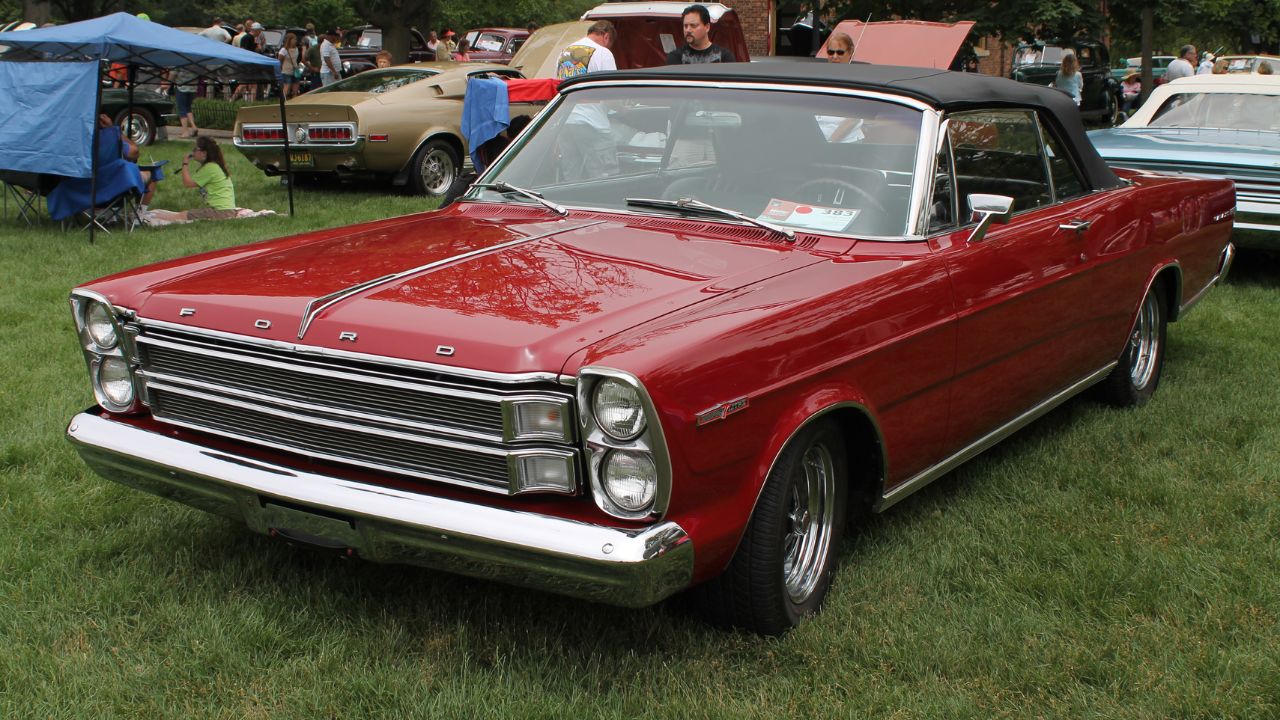
Muscle car? That’s open to interpretation. Cool? Undeniably. The Galaxie 7-Litre demonstrated that size can be a statement, especially when paired with a 428 cubic-inch engine and a generous helping of chrome. This was Ford’s full-size performance entry, designed for buyers seeking both comfort and the ability to outperform smaller, sportier cars in straight-line acceleration.
The “7-Litre” badge referenced the 428’s displacement in metric terms, a nod from Ford’s marketing team to international flair. It proved effective: the 428 delivered 345 horsepower and substantial torque, propelling the Galaxie with surprising authority despite its size.
Interior accommodations were upscale by muscle car standards, offering seating for six adults and ample luggage space. The seats provided comfort on long journeys, the ride was smooth, and the trunk could easily accommodate gear for extended travel. This was a performance with refinement.
Handling reflected the car’s 4,000-pound curb weight and comfort-oriented suspension, which was stable in straight lines but less composed in corners. Power steering was essential, given the vehicle’s dimensions, although it provided limited road feedback.
Ford discontinued the 7-Litre after just two model years as consumer interest shifted toward smaller, more agile muscle cars. The Galaxie nameplate continued, but its performance credentials faded, evolving into a conventional full-size sedan. Today, surviving 7-Litre models are valued for their blend of luxury and performance, provided one can find parking spaces suited to their generous proportions.
Ford Boss 351 Mustang

The Boss 351 was Ford’s final high-performance Mustang before tightening emissions regulations and rising insurance costs began to reshape the muscle car landscape. It marked the last evolution of the original Mustang formula: accessible performance paired with striking design.
At its core was the Cleveland-built 351 cubic-inch V8, producing 330 horsepower and delivering a distinctive, thunderous exhaust note. Unlike the more common 351 Windsor found in standard Mustangs, the Cleveland variant featured enhanced cylinder heads, a performance-oriented camshaft, and an induction system optimized for high-RPM output.
Visually, the Boss 351 stood out with its aggressive front spoiler, functional hood scoops, and bold graphics that conveyed its performance intent. Rear window slats added aerodynamic benefits while contributing to the car’s unmistakable presence.
The suspension was engineered for spirited driving, with stiff springs, heavy-duty shocks, and anti-roll bars that helped maintain composure through corners. Steering was precise enough for autocross events, and the brakes were appropriately sized to manage the car’s considerable power.
Inside, the Boss 351 offered high-back bucket seats, comprehensive instrumentation, and woodgrain trim that added a touch of period style. A Hurst shifter connected to a close-ratio four-speed manual transmission, delivering a tactile and engaging driving experience.
Production lasted only one model year, as market forces shifted away from high-powered vehicles. Today, the Boss 351 is among the most sought-after Mustangs, symbolizing the end of an era when performance was a priority and driving enjoyment was uncompromised.
Ford Torino GT
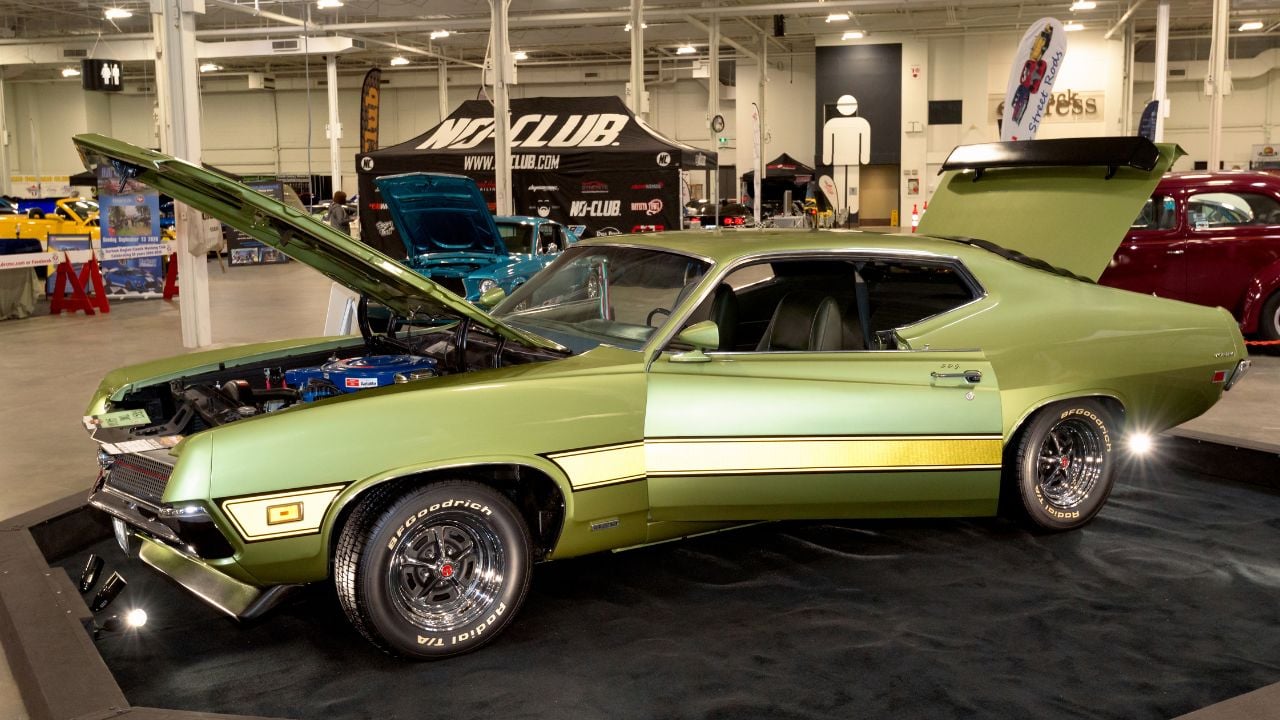
The Torino GT balanced performance and practicality, offering enough capability to satisfy driving enthusiasts while remaining refined enough for daily use. It was a diplomatic take on the muscle car formula, appealing to both thrill-seekers and those seeking comfort.
The GT package came standard with a 302 Windsor V8, though many buyers opted for the more powerful 351 or 390 engines. For those seeking maximum performance, the 428 Cobra Jet was available, while the 429 Super Cobra Jet catered to drivers who prioritized raw power over subtlety.
Styling was purposeful and restrained, making the Torino GT a muscle car that could blend into everyday settings. The optional hidden headlights added a touch of sophistication, and the fastback roofline delivered classic proportions that echoed the era’s performance aesthetic.
Inside, the Torino GT struck a balance between sportiness and comfort. Bucket seats were optional, and the dashboard featured a logical layout with intuitive controls. Air conditioning was available and effective, a notable feature for a performance-oriented vehicle of the time.
Handling was competent, with enough precision to manage winding roads confidently. The ride quality supported long-distance travel, and power steering made low-speed maneuvering manageable for drivers of all skill levels.
Production ended in 1971 as Ford shifted focus to the Gran Torino platform, which emphasized luxury over performance. Today, the Torino GT is appreciated by collectors for its well-rounded approach to muscle car design, offering spirited driving without sacrificing everyday usability.
Ford Mustang Boss 429

The Boss 429 was Ford’s ultimate response in the muscle car era. It was a limited-production model developed to homologate the 429 cubic-inch semi-hemispherical V8 for NASCAR competition. Only 1,359 units were produced across two model years, making authentic examples exceptionally rare and highly valuable.
Each Boss 429 was assembled by Kar Kraft, Ford’s specialized engineering partner, due to the extensive modifications required to accommodate the oversized engine. The shock towers were repositioned, the inner fenders were reworked, and the battery was relocated to the trunk, effectively reengineering the Mustang chassis around the powerplant.
Officially rated at 375 horsepower, the 429 semi-hemi was widely believed to be underrated to avoid insurance penalties. Contemporary road tests treated the factory 375 hp rating as conservative, with at least one period test estimating about 400 hp based on performance, and recorded quarter-mile results in the mid-14-second range rather than consistent 13-second runs.
The suspension was competition-ready, featuring heavy-duty springs, shocks, and anti-roll bars. Period road tests list power-assisted steering, while braking performance was modest by modern standards but acceptable for the period.
Inside, the Boss 429 was Spartan, with vinyl seating and minimal luxury features. Instrumentation was thorough, though most owners were more focused on the engine’s performance than dashboard readings.
Today, the Boss 429 is considered one of the most collectible Mustangs ever built, often commanding prices comparable to real estate in many markets. It represents the pinnacle of American muscle car engineering, a time when performance was paramount and design constraints were secondary to speed.
Closing the Chapter on Ford’s Untamed Muscle

These cars represent more than just transportation. They are automotive time capsules, capable of transporting enthusiasts to an era when horsepower was abundant, fuel was inexpensive, and emission controls were as simple as opening a window. Each model reflects a period when manufacturers competed to build the most audacious street machines, often with little regard for long-term consequences.
In retrospect, it’s remarkable how much personality these vehicles delivered through relatively straightforward engineering. There were no computer-controlled transmissions, no electronic stability systems, and no rearview cameras. There were just powerful engines, driven wheels, and a bold attitude. They demanded skill to operate at speed and dedication to maintain, but they rewarded both with visceral experiences that modern vehicles, despite their technical superiority, often struggle to replicate.
Today, surviving examples are celebrated at car shows and command premium prices at auctions. They’ve transitioned from used vehicles to cultural icons, representing a brief but unforgettable moment when American automakers prioritized excitement over efficiency.
For those fortunate enough to own one, the connection goes beyond utility. These cars invite engagement. They are meant to be driven, not merely admired. They serve as reminders that some of the most memorable automotive experiences stem from a simple formula: pair a lightweight chassis with a powerful engine, and let the machine speak for itself.
The muscle car era was short-lived, spanning less than a decade before regulatory and economic realities reshaped the industry. Yet the vehicles from that time continue to stir emotions and attract collectors, even half a century later. That’s a lasting legacy for cars marketed initially to young enthusiasts and middle-aged drivers seeking performance and style.
Some chapters in automotive history deserve to resonate indefinitely, ideally through dual exhausts and at wide-open throttle.