
Some cars are meant for Nürburgring but find themselves doing grocery runs, driving through stoplight-infested cities, and sticking to 60 miles per hour on the highway. That’s because they were sold as regular production cars with some secrets just beneath their big wing and streamlined bodies. At Guessing Headlights, we have driven all kinds of vehicles, but these select few offer a different kind of experience.
At first glance, they looked familiar, even… practical. But take the wheel, push a little harder, and their true, brutal purpose comes alive. Regulators may not have caught on, but we have. Turn a corner, feel the suspension tighten like a drum, and suddenly it all makes sense. Who says a car needs a number on the door to be ready for battle? It’s inside that matters.
Born to Race

What qualifies a car as a race car? Every Guessing Headlights writer would probably have their own personal criteria, and some would be wrong, I’m sure. But there’s one true definition we went by: the vehicles that carmakers were forced to make when they wanted to enter a race.
So, manufacturers sometimes faced a challenge that led to automotive brilliance due to many races’ iron-fisted rulebooks, particularly in series like the World Rally Championship (WRC), Deutsche Tourenwagen Meisterschaft (DTM), and the infamous Group B, which demanded a certain number of street-legal versions before a car could even sniff a competition starting grid. This “homologation” requirement turned engineers loose, resulting in road cars built with parts and tuning lifted directly from the circuit. These models came equipped with gear that served a purpose far beyond daily driving, like a weapon poorly hidden inside a raw chicken to get it through customs (yes, this happened).
Stiffened suspensions that could shatter dental fillings, revised aerodynamics designed to keep you glued to the tarmac at speeds that would make most modern drivers soil themselves, and reinforced components built to withstand repeated assaults on curbs and gravel traps were not added for style. They were answers to real problems faced under brutal track conditions. And now they are in the hands of everyday drivers and can be spotted sitting in the suburbs amongst SUVs.
Lancia Delta Integrale Evoluzione II

It looked like a compact hatchback your aunt might own, but its heart was forged on gravel stages and snow-covered mountain roads. The Delta Integrale Evoluzione II wasn’t just a tribute to Lancia’s six consecutive WRC Constructors’ Championships; it carried the very hardware that made those victories possible. Born from Group A WRC homologation rules, it featured massively widened arches covering a wider track, aggressive geometry, a redesigned intake, and a turbocharged 2.0L I4 cranking out 215 horsepower, modest by today’s standards, but a weapon on loose surfaces.
Its natural habitat was a muddy forest, not your local Starbucks drive-thru. On public roads, it responded with uncanny grip and crisp feedback, practically judging your driving with every corner. In the right hands, it became far more than a road car; it became an extension of the rally gods themselves.
BMW M3 E30 Sport Evolution

This was not a luxury coupe with sporting intentions; it was a thinly disguised DTM Group A race car that slipped into showrooms. The E30 M3 Sport Evolution came straight from the pages of motorsport rulebooks. Born to meet the strict demands of racing regulations, it featured purposeful upgrades from a larger, adjustable front splitter to a multi-position rear wing. Its engine displacement was increased to 2.5L (from 2.3L), delivering 238 hp, paired with lighter weight components and a higher rev limit.
This was BMW’s way of saying, “Yeah, we make luxury cars, but we also build street-legal weapons.” Steering felt immediate, body control stayed tighter than a drum, and the connection to the road remained utterly unfiltered. With only around 600 units built, those lucky enough to drive it were sucked into a machine crafted solely to compete. It looked calm at idle, but moved like it had something to prove. And it always did.
Ford RS200

With lines that seemed pulled from a concept sketch that escaped Area 51, the RS200 was not built for daily errands. It was built because it had to be, shaped by the insane Group B regulations that required manufacturers to sell road-going versions to enter rally competition. Underneath its bold, almost alien shell sat a mid-engined, all-wheel-drive layout designed for balance, traction, and razor-sharp response. Its Ford-Cosworth 1.8L turbo I4 churned out 250 hp in street trim (and over 450 hp in race spec).
Nothing about this car felt accidental; everything had a purpose, its very existence was an act of homologation defiance. Built to satisfy Group B homologation, which required at least 200 road-legal cars; Ford contracted Reliant to build 200, it behaved on the street, but came alive in motion, like a machine that never fully left the race course. This was a racer trying its best to behave in public, and often failing.
Porsche 911 GT1 Strassenversion

Porsche built the 911 GT1 Strassenversion with one reason in mind: if they wanted to race the 911 GT1 in the FIA GT1 class, they had to sell a version that could wear plates and pass through neighborhoods without causing mass panic. The result was a car that barely kept its racing identity hidden. From its low-slung stance to its aerodynamic curves that screamed “downforce,” it spoke in whispers of top speeds and endurance laps. It was essentially a mid-engined, water-cooled flat-six race car (3.2-litre twin-turbo flat-six, 544 PS (536 hp) in 1996/1997 form) … built in very small numbers to meet GT1 homologation (the rules targeted 25, but counts vary depending on whether you include prototypes and the single 1998 road car).
This thing had less in common with a regular 911 than your average human has with a chimpanzee. Driving it to the grocery store meant you were either a billionaire or incredibly delusional (or both). Behind the wheel, it offered the precision and force of something that lived for finish lines. Few drivers ever saw one. Fewer still had the chance to unlock what it could do without a pit crew on standby.
Toyota Celica GT-Four ST205

This was the shape of Toyota’s rally dominance during the mid-nineties. The ST205 version of the Celica GT-Four wore its WRC heritage with quiet pride. It looked like a sensible Celica, but secretly fantasized about sliding sideways through a Finnish forest. Underneath, it carried the tools that led to podium finishes: a sophisticated all-wheel-drive system, unique Super Strut suspension, a larger turbo, and a water-to-air chargecooler (air-to-water) system, with output varying by market (commonly cited around 242 PS in many export specs and 255 PS in Japan) from its 2.0-litre turbocharged I4. It delivered performance in a way that felt focused, never forced.
On the road, it offered stability and control that exceeded expectation, proof that Toyota could make something exciting, even if they had to be forced by rally rules. It didn’t shout for attention but always felt prepared for action. For those who followed rally history, it stood as proof that success on the stage could travel calmly through traffic.
Mitsubishi Lancer Evolution VI Tommi Mäkinen Edition

Another rally car turned relaxing city driver, this version of the Lancer Evolution wasn’t an imitation of racing success; it was the distilled essence of it. Named after its four-time WRC champion driver, the Tommi Mäkinen Edition sharpened every response. Built with lessons earned through brutal competition, it featured a unique front bumper for improved cooling, lighter 17-inch Enkei wheels, quicker steering, a titanium-alloy turbocharger, and a lower ride height. Its 2.0L turbo I4 was officially rated at 276 hp (though widely believed to be much higher in reality).
The ride felt firm enough to expose any loose fillings, the handling razor-like, and the control reassuring even on difficult roads. If this car had a personality, it would be “aggressively efficient.” Each drive became a reminder of what pure focus and discipline could create. It wore a name with meaning and delivered on every promise that name suggested.
Mercedes-Benz 190E 2.5-16 Evolution II

Few sedans looked as serious as this one, but if there was one that would fire you for taking a 31-minute break, this would be the sedan to do it. The towering rear wing (big enough to land a small drone) and aggressively flared arches weren’t there for style; they existed solely to meet DTM racing demands that pushed this Mercedes far beyond luxury. One of only 502 units built, the 190E 2.5-16 Evolution II packed a Cosworth-developed, short-stroke 2.5L I4 making 235 hp.
On the road, it felt more alert than refined, more focused than relaxed. Mercedes’ middle finger to BMW in DTM, it was dressed like a banker but fought like a cage fighter. Every control spoke with directness; it moved with determination, always hinting at what it had been built to achieve. In the hands of the DTM drivers, it fought for victories. On public streets, it brought that same spirit, just dressed in a sharper, intimidating suit. This was precision-engineered for performance, not pretense.
Nissan Skyline GT-R R34

The R34 Skyline GT-R arrived with a reputation already forged on the circuits. Known among those who followed Group N and FIA GT racing, it brought with it systems and structure designed to conquer corners at ludicrous speeds. Its legendary RB26DETT twin-turbo I6 (officially 276 hp in Japan, but notoriously underrated), the sophisticated ATTESA E-TS Pro AWD system, and HICAS 4-wheel steering made it feel as if it studied the road as much as it attacked it. This car had a digital display that could tell you more about the car’s vitals than your doctor tells you about your own.
Driving it was never casual; each input came alive, every reaction felt planned and purposeful. If you didn’t know, you probably thought it was just an old Nissan. But real ones knew, the R34 was a track star that just happened to wear a license plate, often imported into the U.S. only after it qualifies under the 25-year exemption, because vehicles under 25 years generally must comply with U.S. FMVSS (and emissions requirements) to be lawfully imported.
Audi Sport Quattro

Created as a direct response to the rising, frankly insane, demands of Group B rally, the Sport Quattro looked like an Audi coupe in fast-forward. Shortened by 32 cm compared to the standard Ur-Quattro, stiffened, and packed with racing potential, it had no intention of being subtle. This was the original “loud and proud” rally refugee. Built with lightweight Kevlar and fiberglass panels, and powered by a furious 2.1L 20V turbo I5 producing 302 hp (and over 450 hp in race trim), it moved like it was chasing a clock.
With fewer than 220 road cars ever made, each element served a purpose, each panel helped meet a regulation, and every mile behind the wheel felt sharpened by brutal competition. It could navigate daily roads, but it preferred being challenged. This car was no tribute; it was a rule-bound champion dressed for traffic and built to sprint at every opportunity.
1998 Dodge Viper GTS GT2 Champion Edition
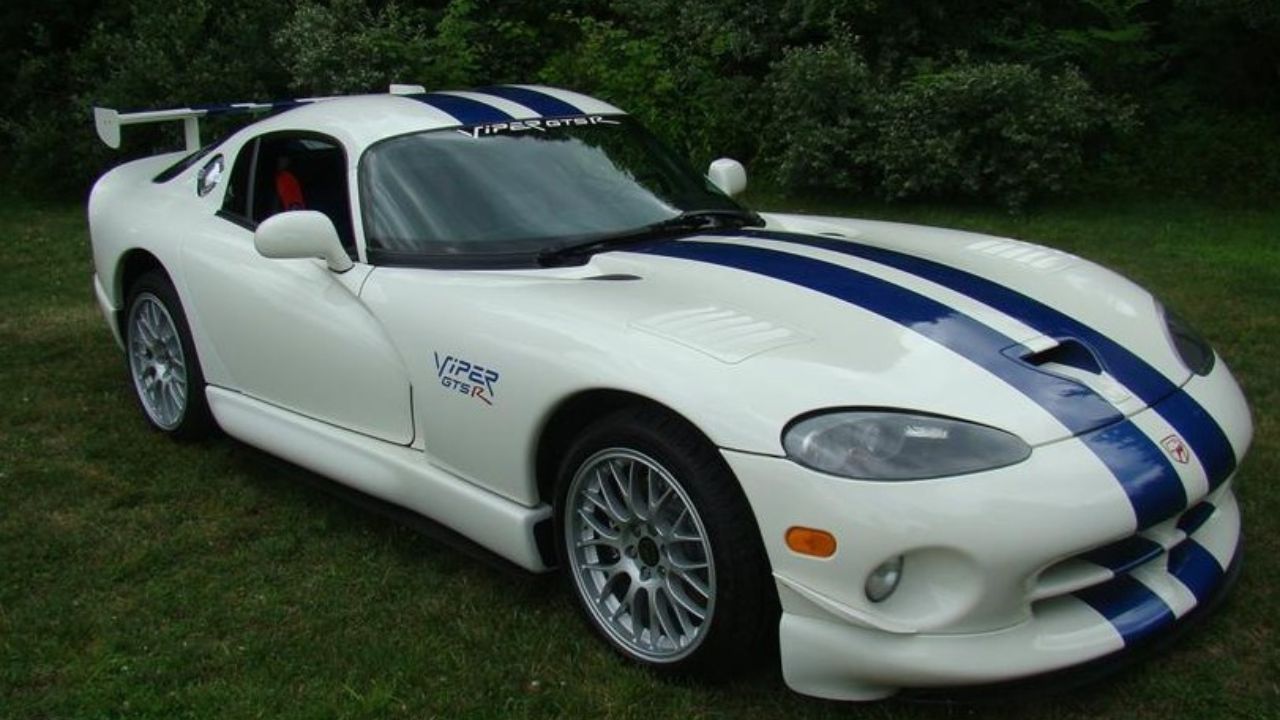
America’s answer to European track heroes came not from homologation rules, but from celebration. The Dodge Viper GTS GT2 Champion Edition was built to commemorate Dodge’s dominant success in FIA GT2 endurance racing, not to legalize a race car. Produced in 1998 and limited to 100 units, it was based on the standard Viper GTS but dressed with distinctive, competition-inspired touches. Unique aerodynamic elements such as a prominent rear wing, front splitter, and dive planes gave it a more aggressive presence, while special badging and trim made its purpose unmistakable.
Powered by the GTS’s 450-horsepower 8.0-liter V10, it relied on brute force and driver commitment rather than refinement or electronic safety nets. There was no pretense of comfort here, this was a machine that rewarded confidence and punished hesitation. While it never existed to satisfy homologation paperwork, every drive still felt like a lap that mattered, a reminder that Dodge’s racing success wasn’t confined to the circuit, even if this car proudly wore its trophies rather than its rulebook.
Where the Finish Line Meets the Street

Not every car is content with ordinary roads and casual drives. Some carry a rhythm that belongs on the podium, a pulse that beats faster when the road bends or the pavement changes. These machines may wear license plates and sit in parking lots, but their design tells another story, one of engineers pushing limits and regulations. Every curve, every setting, every decision made by their creators pointed toward something greater than your morning commute. Although we’d love to take one of these on a work commute any day.
For those who listen closely, these cars speak in the language of racing: a glorious symphony of turbo whistles, snarling engines, and suspension feedback. That energy doesn’t fade when the engine cools. It waits patiently for the next stretch of open road to come alive again, ready to remind you that some cars are just built different. And probably require a better chiropractor.