Ever seen a luxury car that looks like a minivan? Or a tiny coupe that accidentally started a design trend? From the late 1990s through the 2010s, European automakers got brave (and weird) in the best possible way. They started tossing the rulebook out the window, experimenting with design, engineering, and ideas that felt more like brainstorms on a pub napkin than boardroom-approved plans. Some of these cars looked odd. Some were odd. But quite a few turned out to be surprisingly brilliant under all that quirk.
These weren’t just gimmicks for the sake of being different. They were bold attempts to do something new, to stand out in a market full of sameness, and sometimes, they worked. In fact, several of these oddball cars turned out to be good. Like, really good.
Sometimes, these oddball cars paved the way for features we now take for granted: panoramic roofs, modular seating, and aerodynamic bodies that started as someone’s wild idea. So let’s take a closer look at some of the most wonderfully weird cars Europe gave us, and why a little strangeness might just be the secret ingredient to greatness.
Our Methodology

To make this list, a car had to do a few things right, and at least one thing very weird.
First off, it needed to be built by a European manufacturer. That includes brands like Ford of Europe, which operates separately from its American counterpart and is based in Germany. Many of these cars were never sold outside Europe, which only adds to their offbeat charm.
Second, it had to break from the norm, whether in how it looked, how it was engineered, or how it fit into the brand’s usual lineup. These weren’t your typical hatchbacks or sedans. They were experiments. Outliers. Sometimes, the kind of cars that made people stop and do a double-take in the showroom.
And finally, it couldn’t just be weird for weird’s sake. The car had to bring something genuinely good to the table, whether that was clever packaging, a fun driving experience, or a concept that was just ahead of its time. That’s why you won’t see cars like the Peugeot 1007 on this list. Sure, it was unconventional, but most reviewers, like the Auto Express team, didn’t particularly enjoy the experience behind the wheel
This list is all about those rare moments when automakers threw caution to the wind, and ended up landing on something great.
Renault Vel Satis

Why make a typical luxury sedan when you can make one with awkward proportions and a lot of extra headroom? That seems to have been the reasoning behind the Renault Vel Satis, the de facto replacement for the automaker’s far more normal Safrane that was offered throughout the 90s.
The bottom half is standard luxury sedan fare, but the top half and the greenhouse area are unusually tall, resembling a hatchback or a minivan. This meant more room inside, but most people found it a little ungainly to look at. Despite the ungainliness, it was pretty good as a luxury car, as the Auto Express team found out years ago, and it was, and still is, incredibly cheap.
Ford B-Max

One of the last hurrahs of an old European favorite, the subcompact minivan or mini MPV, the Ford B-Max was actually a pretty genius idea. Unfortunately, it arrived a little too late, and it was unlike anything the minivan world had seen up until that point.
Based on the Fiesta, the B-Max was relatively small for a minivan, although it featured sliding rear doors, which were uncommon in this class. Still, it had ample room on the inside and an interesting, unique selling point (USP), as explained by Bogdan Popa of Autoevolution: no B-pillar. Opening the front and rear doors would offer you uninterrupted access to the interior; Ford engineered reinforced doors and high-strength structure to replace the missing B-pillar, and the B-Max earned a five-star Euro NCAP rating.
The Fiesta underpinnings also meant a pretty fun experience behind the wheel, as the Top Gear team found out. While this gamble didn’t really pay off financially for Ford, it was still a very brave idea, and we commend Ford for it.
Peugeot RCZ

This is one of a few concept car stories with a happy ending. Originally debuting as the Peugeot 308 RCZ concept, there were no plans to put this very stylish two-door coupe into production, as Tim Pollard of Car Magazine reported. Peugeot then decided to put the concept car on the assembly line, badged simply as the RCZ and virtually unchanged from its concept form. The production model would be revealed two years later in 2009, as reported by Florin Profir and Delia Donea of Autoevolution.
If this sounds familiar, it’s basically the same story as the Audi TT, which would end up being the RCZ’s chief rival. The RCZ definitely helped Peugeot shake some of the bad styling rep that it had gotten throughout the 2000s, and the driving experience also backed up the good looks. Sadly, this would be the first and only time that Peugeot would try something like this. In a lineup of otherwise mundane family cars, the RCZ definitely stood out, but for all the right reasons.
Alfa Romeo 156 Crosswagon

Alfa Romeo has almost always done things in its own unique way, but in the early 2000s, it decided to target a market that seemed to hold a lot of promise: the lifted station wagon. Alfa’s entrant into this battle was the 156 Crosswagon.
Based on the regular 156 wagon, the Crosswagon added a good suspension lift, chunkier tires, some subtle body cladding, and, of course, AWD. It somehow managed to retain the 156’s good looks even after the transition to a durable off-road wagon. While this breaks all sorts of Alfa Romeo traditions, the 156 Crosswagon had the performance to back up its gutsiness, as Richard Aucock of Auto Express reported back in the day; however, Alfa would ultimately never attempt something like this again.
Opel / Vauxhall Meriva

Another one of the last gasps of the compact minivan segment in Europe, the first-generation Opel Meriva was a pretty uninspired and lame affair. Users on the r/CarTalkUK subreddit really dislike it and its reliability problems. But things changed for the second generation. In a bid to offer extra versatility and practicality, Opel decided to look at the world of luxury cars for inspiration.
The second-generation Meriva has regular doors in the front, but the rear doors are also hinged at the rear, so they open backwards like on a Rolls-Royce or a Mazda RX-8. As you might expect, this provided easier entry and more access to the cabin, while also giving it some cool design flair. What’s more, the second-generation Meriva, odd as it was, was actually really good to drive, and a big improvement over the soggy first generation. Jonathan Crouch of RAC praised the steering feel and the grip.
Renault Avantime

Renault and Matra’s scientists were so preoccupied with whether or not they could, they didn’t stop to think if they should. Dr. Ian Malcolm’s famous quote summarizes the Renault Avantime quite well. Nobody ever thought to make a minivan with three doors and a coupe-inspired exterior, so Renault thought to give it a try.
The Avantime (literally “ahead of its time”) is unequivocally one of the biggest flops in European car history. The Avantime sold poorly, and it contributed to Matra’s exit from car production soon after its short run. Despite its non-existent target audience, the Avantime still had a lot of good qualities. It was well-equipped, easy to drive, offered some pretty good powertrains, and absolutely guaranteed endless staring from passersby. The legendary Jason Torchinsky of The Autopian absolutely loved it.
Citroen C6
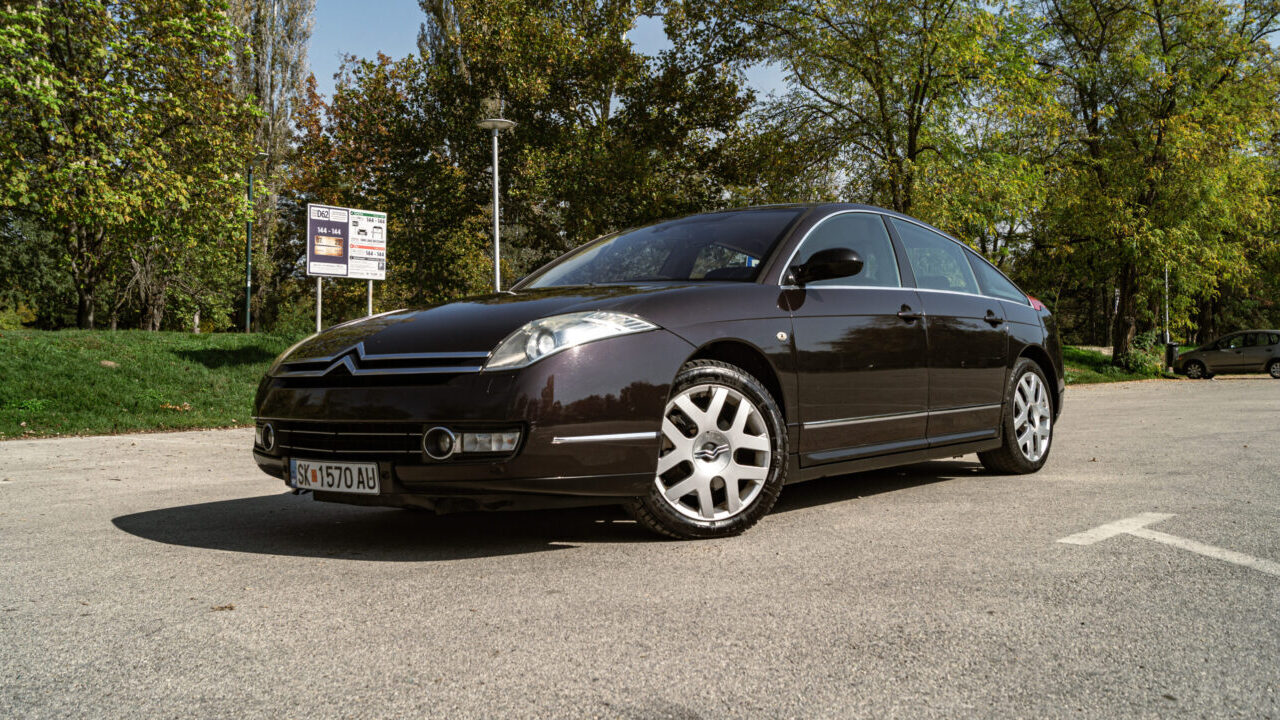
Despite a renewed focus on small, affordable cars in the 2000s, Citroen decided to try its hand at a luxury sedan one last time. Taking heavy inspiration from the wonderful DS and the XM, the C6 came out in the mid-2000s to take on executive sedans like the Mercedes-Benz E-Class, BMW 5 Series, and Audi A6.
The shape of the rear window, the pointless but distinctive rear quarter windows, the crazy proportions, and the Hydractive suspension that would make a magic carpet jealous, it was all there. We already told you what life is like with the last true Citroen, and it’s not exactly smooth sailing. This car is difficult to keep going, but when it works, it’s absolutely fantastic. Super comfortable, great to drive, and pretty fast.
Skoda Roomster

Guess what! We have another compact minivan on the roster. Skoda wanted in on the action, joining in right at the peak of the segment’s popularity in the mid-late 2000s. The Roomster was a pretty conventional compact car, with one massive distinction: it looked like a giant came down and pulled the roof upwards.
The result was a car with ridiculous proportions and mismatched side windows. The driver and passenger windows form a Lancia Stratos-esque greenhouse, while the rear windows are unusually massive. Despite its showstopping appearance, the Roomster was quite similar to the Fabia or any other Skoda model, making it quite good to drive and immensely practical, as the Auto Express team found out.
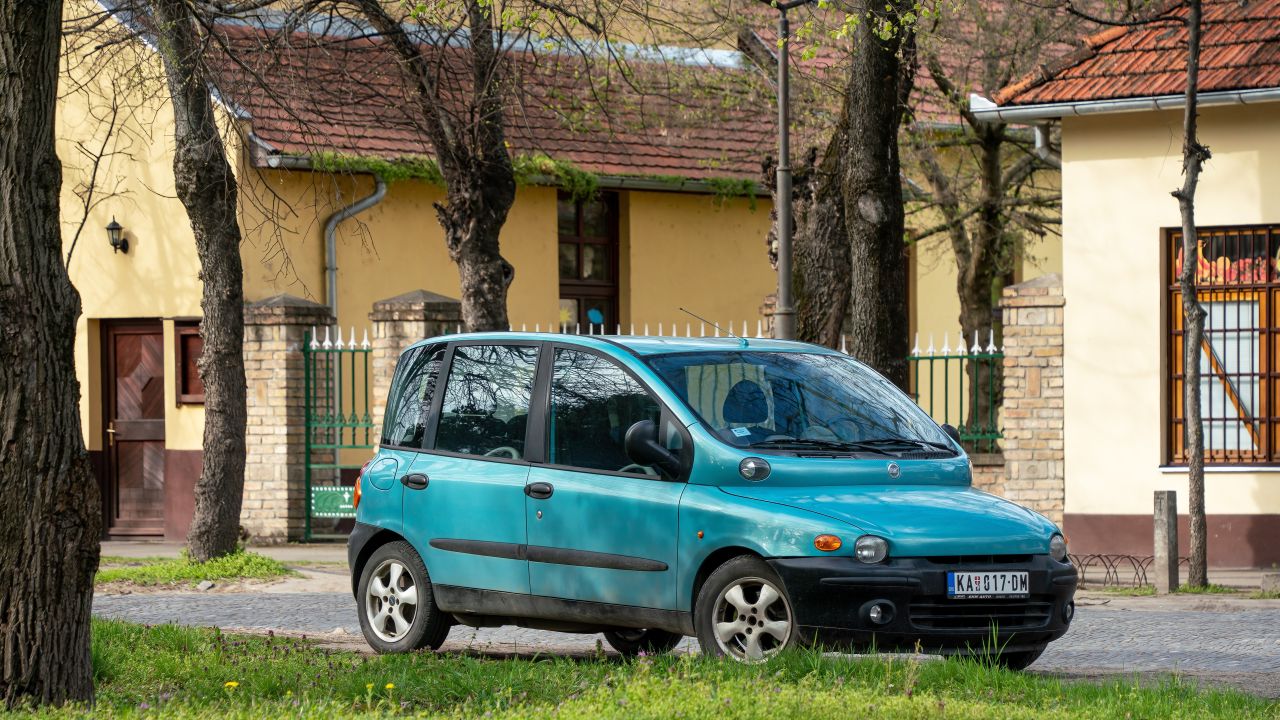
Fiat Multipla

If there was ever a car that fit this bill, it’s the Fiat Multipla. Arriving at the very beginning of the compact minivan segment, Fiat had the idea to build a car that could carry more people and more stuff within the footprint of a regular family hatchback.
While this did mean that the Multipla was aesthetically challenged, Fiat made it work. No other car of this size offered seating for six people and a usable cargo area at the same time. Incredible visibility, all the headroom you could ever want, and it would turn heads… probably for the wrong reasons. What’s more, being more car-like than van-like, the Multipla felt perfectly fine to drive, as Adrian Clarke of the Autopian confirmed.
Citroen C4 Cactus

After playing it safe for the better part of two decades, Citroen decided to go back to its quirky, convention-bending roots as the 2010s rolled around. The first evidence of this move came in the form of the C4 Cactus, a subcompact crossover with one of the most unusual styling details the car industry had ever seen.
Most of the C4 Cactus’ doors were covered in a bumpy textured plastic called Airbump. As well as looking cool and funky, the Airbump also had a functional element, as explained by James Mills of The Sunday Times: the thermoplastic polyurethane construction made the Airbumps very absorbent in the event of dings and scratches.
We can also thank this car for being among the first to market with upside-down headlights, the trendiest of trendy styling details today. While initial reactions to the C4 Cactus were pretty divided, it turned out to be a perfectly good small car in practice, as Gavin Braithwaite-Smith of Petrolblog discovered.
Audi A2

Another excellent case of an ingenious car that was let down by its appearance. The Audi A2 was launched in the late ’90s as what can only be described as a technology showcase wrapped up in a small car. Audi thought, “What if we made an impossibly efficient subcompact?”
As Mike Duff of Autocar explains, that styling wasn’t there just to upset people. It was all done in the name of aerodynamics. Further helping the A2’s pursuit of maximum fuel economy was the aluminum construction, which includes both the body and the chassis. This, of course, made it incredibly expensive at the time, but it all paid off in the end, as the A2 achieved some pretty ridiculous fuel economy numbers.
Fun fact, as Simran Rastogi of Overdrive reports, the mastermind behind the A2’s exterior design, Luc Donckerwolke, also did the Lamborghini Murcielago, the Bentley Continental GT, and the Genesis G90.
Skoda Felicia Fun

Another fantastic and rare example of a concept car making production with essentially no changes. The Felicia was the first Skoda model that was released after the VW Group took over the Czech automaker. The Felicia Fun was based on the pickup version of the Felicia, but it had a few minor changes.
Minor is actually an understatement here. As well as being bright orange, including the wheels, the Fun also hid a pair of seats in the bed. Of course, they can be folded away for extra room, but if that’s not enough, there is also a foldaway midgate. While this is a weird car in every way, it’s also incredibly cool. Plus, Felicia’s revised underpinnings made it a surprisingly good car on the move, as the Autocar team found out back in the day.
BMW Z3 Coupe (“Clown Shoe”)

If ever a car had a nickname that perfectly matched its vibe, it’s this one. The BMW Z3 Coupe earned the affectionate title “Clown Shoe” thanks to its unmistakable shape: a low-slung sports car with a shooting brake roof that made it look like someone stretched the back half with cartoon logic.
But here’s the twist: this oddball turned out to be a brilliant driver’s car. Built with BMW’s straight-six engines and a rigid chassis, the Z3 Coupe had sharp handling, excellent balance, and the kind of road feel that today’s tech-heavy cars struggle to replicate. For all its visual weirdness, it was built for purists.
And while it didn’t sell in huge numbers, the Z3 Coupe’s cult status has only grown over time. It’s a reminder that sometimes, weird is exactly what makes a car great.
Renault Twizy

Now this one? This one’s really out there. The Renault Twizy looks like something a Pixar character would drive, and we mean that as a compliment!
Technically a quadricycle in many markets, the Twizy is an ultra-compact electric two-seater that feels like part scooter, part go-kart. It’s narrow enough to make a Smart car look bloated, with tandem seating and optional scissor doors. Designed primarily for urban environments, it’s more about clever commuting than long-haul comfort, though the ride is surprisingly peppy and undeniably fun.
The Twizy isn’t for everyone. But if you’re measuring a car’s greatness by how many people stop and stare, it just might top the list.
Saab 9-5 Aero Wagon

Saab always danced to the beat of its own turbocharged drum, and the 9-5 Aero Wagon was one of its final, glorious flourishes.
The styling was all over the place: jet-inspired design cues, a wraparound dashboard, and proportions that leaned more spaceship than station wagon. It was odd, yes, but it was also bold, and unmistakably Saab. Underneath the drama was a genuinely good car: turbocharged performance, loads of cargo space, and a highway ride that felt stable and planted.
Before the brand’s unfortunate end, Saab left us with this gem. One last reminder that being different can still mean being really, really good.
Weird Doesn’t Necessarily Mean Bad

Some people might be quick to label things as bad simply because they’re weird or don’t exactly follow conventional rules or trends. The same applies to cars: if they’re unusual or weird, they might not be as good.
These misfit cars may have puzzled showroom visitors, but they weren’t flukes, they were flashes of brilliance. Proof that sometimes, strange ideas are the ones that move the whole industry forward.