
A hotel room can feel effortless from the guest side. Fresh towels appear, the bed gets remade, trash disappears, and the bathroom resets while you are out sightseeing or grabbing dinner.
Recent reporting from Travel + Leisure and BuzzFeed shows that housekeepers tend to ask for the same basic courtesies again and again: less clutter, fewer hazards, and clearer communication. The strongest etiquette advice is usually simple, not theatrical.
You do not need to strip the bed like you are clocking in for a shift. You do not need to scrub the bathroom before checkout, either.
What seems to matter most is making the room easier and safer to service. That usually comes down to a few small habits that are easy to fix.
1. Leave the Room Looking Like a Room, Not a Disaster Zone

The biggest complaint is also the most obvious one. Travel + Leisure’s January 27, 2026 etiquette guidance says guests should pick up their trash instead of leaving garbage around the room.
A March 3, 2026 Travel + Leisure piece based on housekeeping interviews says staff appreciate it when used cups, bottles, and other waste are gathered neatly or placed in the bin. That does not mean the room has to look untouched.
A respectful middle ground works best. Toss obvious trash into the bins, keep the floor reasonably clear, and avoid turning checkout into a mini disaster recovery project.
2. Stop Scattering Wet Towels and Used Linens All Over the Room
Wet towels are a small detail that can create a bigger problem than guests realize. Travel + Leisure’s housekeeping interviews say staff appreciate it when damp towels and beachwear are hung up instead of left spread around the room.
The January 2026 Travel + Leisure etiquette piece also says wet towels should not be left on furniture or carpet because they can damage surfaces, leave stains, or contribute to mildew. The same March reporting says used linens are easier to handle when they are left in one obvious spot.
The easiest version of this is simple. Hang wet towels, swimsuits, or beachwear properly, or leave used towels in a neat pile in the bathroom.
3. Do Not Assume Skipping Housekeeping for Days Automatically Helps Staff

A lot of travelers assume refusing housekeeping is the considerate move. Hotel-worker advocates at UNITE HERE argue the opposite, saying guests often think skipping service helps when it can actually cut hours and make rooms dirtier and harder to clean later.
BuzzFeed quoted a former housekeeper making the same basic point. She said rooms left untouched for multiple days become much dirtier and harder to clean by the end of the stay.
That does not mean every guest needs full service every day. It does mean the old idea that no service automatically equals less work is not as generous as it sounds.
4. Stop Making Housekeeping Guess When You Want Service

Another habit that slows everyone down is vague timing. Travel + Leisure’s March 3, 2026 reporting says rooms are cleaned on a specific schedule, especially at larger or higher-end hotels.
That same piece quotes housekeeping staff saying that a quick note about when you want privacy or when you want service helps the team plan efficiently. It also says the Do Not Disturb tag works best when guests remember to remove it once they are ready for service.
Instead of saying “come back later” over and over, give the front desk or housekeeping a realistic window. Clear timing is more useful than repeated delays.
5. Don’t Leave Your Personal Stuff Spread Across Every Surface

Housekeepers cannot properly clean around a room if every counter, table, and chair is covered with personal belongings. Travel + Leisure’s March 2026 housekeeping interviews say staff appreciate it when guests keep vanities, desks, and other surfaces relatively clear.
The same reporting says that makes it easier to sanitize, restock, and refresh the room without moving a guest’s things around. That lowers the chance of something getting misplaced, damaged, or left behind.
This is not about making the room look pretty for its own sake. A suitcase, drawer, or closet is still the simplest storage system in the room.
6. Stop Asking for Extra Towels and Amenities You Are Not Going To Use
One former housekeeper told BuzzFeed that she would not request extra towels unless she actually needed them. Her reason was blunt: it creates waste and makes an already hard job harder.
That same BuzzFeed piece frames towel overuse as a basic respect issue. Use what you need, reuse what you can, and do not ask for extras just because they are available.
Once people start ordering piles of extras out of habit, convenience starts turning into pointless labor. The simpler move is using what you actually need and leaving the rest alone.
7. Never Leave Dangerous Messes for Someone Else To Discover
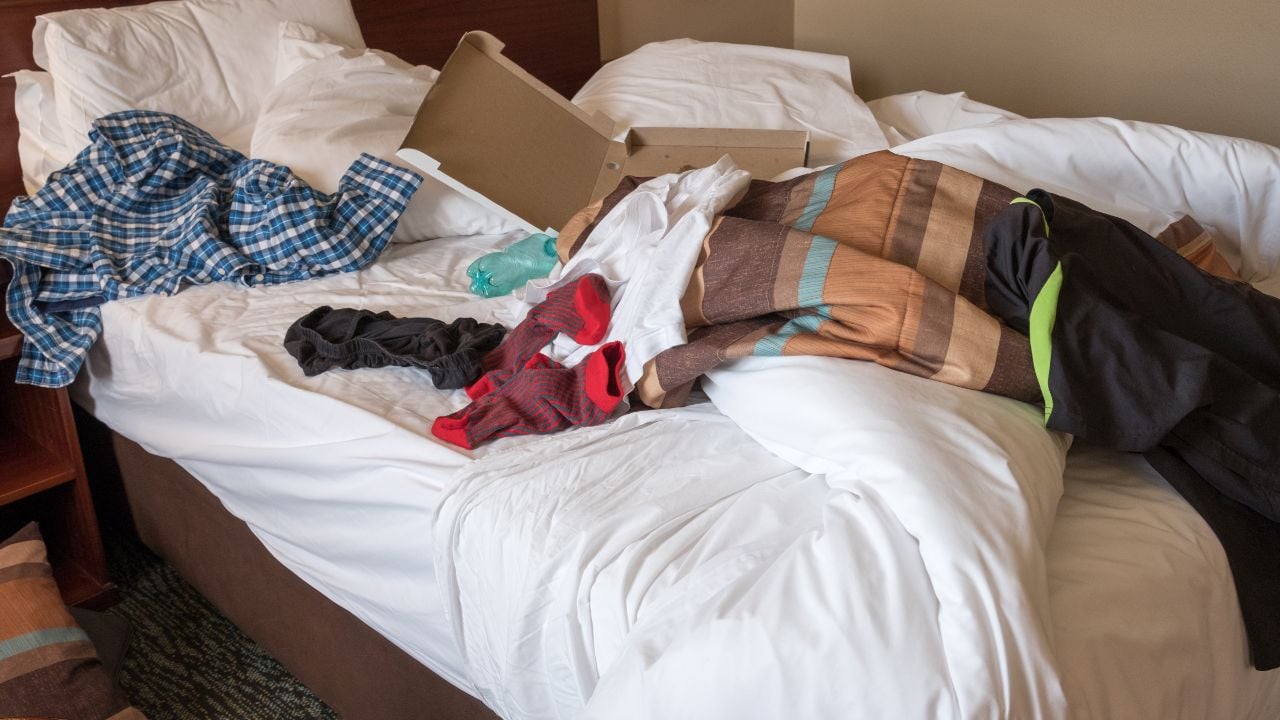
Some habits go past annoying and into unsafe. Travel + Leisure’s January 2026 etiquette guidance says guests should clean up broken glass as best they can instead of leaving shards for staff to find later.
The same piece also says dirty room-service trays should not be left in the hallway because they create both odor and tripping hazards. It advises calling housekeeping or room service to collect them from the room instead.
The rule gets even more serious with hazardous messes. BuzzFeed quotes a cleaning professional saying blood or bodily fluids should not be handled without proper protective equipment and reporting, while AHLA’s 2024 staff-safety guidance shows that hotel worker safety remains a live industry issue.
Housekeepers do not expect perfection from guests. They do expect not to walk into avoidable hazards.