The first hour of a trip matters more than people admit. If you leave the station or drop your bags and immediately find a good square, a canal, a café table, or a waterfront walk, the whole trip starts to feel easier.
That does not mean every destination has to impress you with one giant monument right away. Sometimes the better welcome is smaller: bikes along a canal, students around a fountain, gold gates in a square, a sloping Tuscan piazza, trams crossing the center, or a market hall by the water in northern Finland.
These six places are not the same obvious city-break names that appear everywhere. They are easy to enter, easy to walk, and interesting before the itinerary gets serious.
Arrive, take the first walk, and let the place show you where to go next. A good meal, a river view, a museum, a square, or a beach can come later. The important thing is that the trip starts well before the schedule has time to become work.
1. Leeuwarden, Netherlands
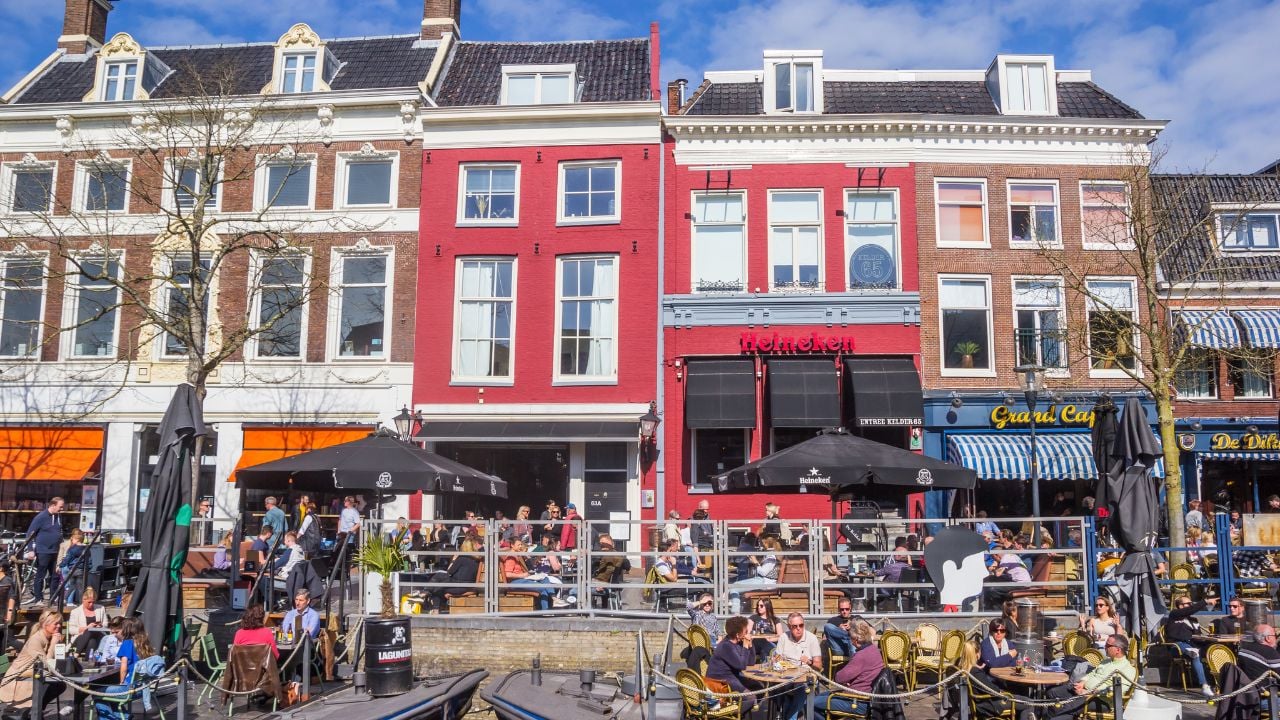
Leeuwarden is at its best when you get close to the canals. Café tables sit near the water, brick facades line the streets, and little bridges keep pulling you a few steps farther than you planned. It has the Dutch details people want from a city break, but without the feeling that everyone else had the same idea at the same time.
Holland’s official tourism site describes Leeuwarden as one of the eleven Frisian cities, with canals, shopping streets, terraces, and green city parks. It also notes that Frisian, the Netherlands’ second official language, is spoken here, which gives the city its own identity rather than making it feel like a smaller copy of Amsterdam.
The water makes the first afternoon easy. Walk until you reach Nieuwestad, where terrace boats sit in the canal, then stop for coffee or a drink if the weather is kind. Visit Leeuwarden says the canals through and around the center can be explored by Frisian barge, canoe, or stand-up paddleboard, but you do not need to start that actively. Sitting by the water already does half the work.
After that, wander through the compact center and let the side streets decide the route. Leeuwarden is not trying to overwhelm you with one famous attraction after another. Its charm comes from canals, terraces, shopfronts, small bridges, and the feeling that you can understand the city without studying it first.
2. Tartu, Estonia
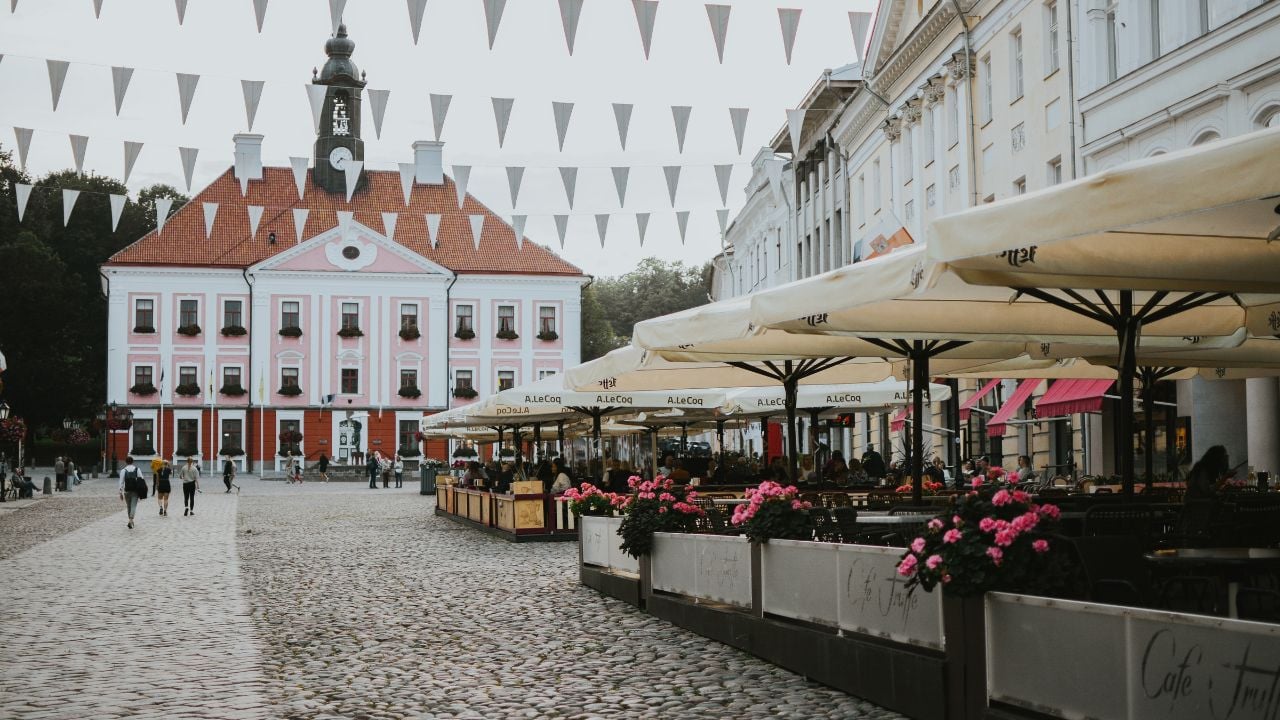
Tartu starts well if you begin at Town Hall Square. The pastel buildings, café terraces, and 18th-century Town Hall give the center a soft, easy first impression, and the Kissing Students Fountain keeps the square from feeling too formal.
Visit Tartu says the Kissing Students Fountain is the focal point of the square’s classicist architecture and has become a symbol of the city. Visit Estonia also notes that the fountain has stood in the same place since 1948, while the sculpture by Mati Karmin was completed in 1998.
Do not rush away from the square too quickly. Sit for coffee, watch people cross the open space, then walk toward the Emajõgi River. The city changes nicely near the water: fewer hard edges, more room to breathe, and paths that make the first day feel calm without turning boring.
Tartu is a university city, and you notice it in normal street details rather than big speeches about culture. Students move through the center with backpacks, bikes wait outside cafés, bookshops and bars sit close to the main streets, and the city stays active after the first sightseeing walk is done.
If you want one indoor stop, choose something that fits your mood instead of trying to “do” the whole city. AHHAA Science Centre works for something playful and interactive, while the old university atmosphere gives the center enough bookish character for a slower wander. Tartu is small enough to settle into quickly, but it does not feel empty once the first square is behind you.
3. Nancy, France
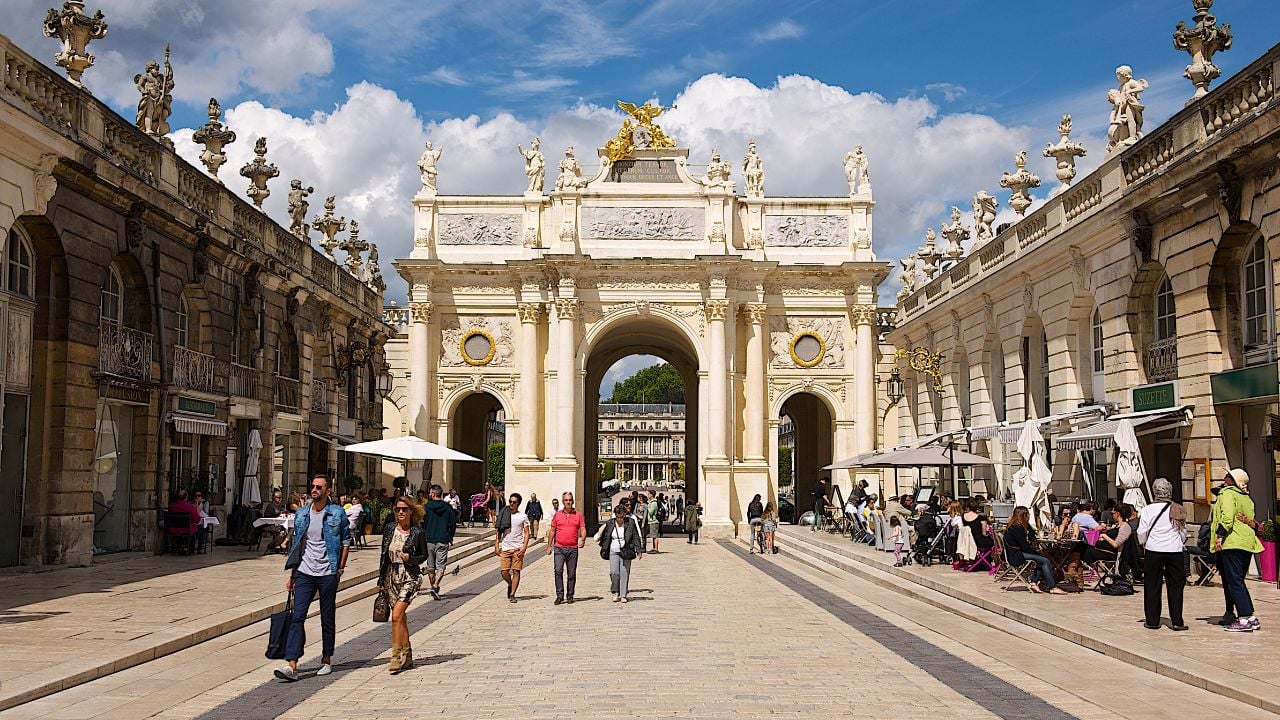
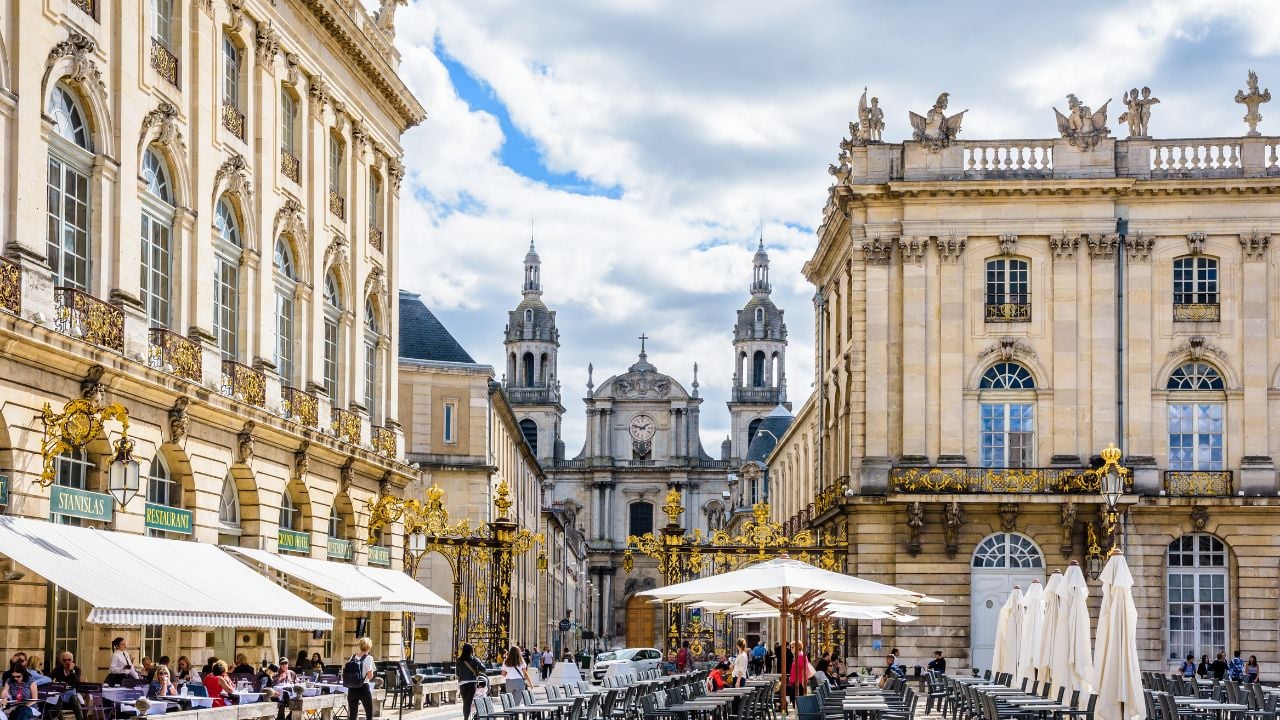
In Nancy, go straight to Place Stanislas. The pale stone, gilded gates, fountains, and wide open square give the city a grand welcome without making the first walk complicated. You can stand there for the architecture, then sit nearby for coffee before the place starts feeling too ceremonial.
UNESCO lists Place Stanislas, Place de la Carrière, and Place d’Alliance together, describing the squares as a monumental urban space built between 1752 and 1756. The center feels planned and polished, but it is still easy to use as a visitor. You do not need a long route to feel like the trip has begun properly.
After the first look, move between the formal and the relaxed parts of the city. Walk through the Héré Arch, return to the square from a different angle, or cross into Parc de la Pépinière for trees, paths, benches, and a slower hour away from the stone and gold.
Nancy also has its Art Nouveau side. If you like decorative details, Villa Majorelle and the Nancy School Museum are worth adding, but not in a rushed way. The fun is in looking at curves, glass, ironwork, wood, and the kind of design that makes even a doorway feel considered.
The best first day here can be very simple: Place Stanislas, a park walk, something sweet, and one Art Nouveau stop if you still have energy. Nancy looks elegant, but it does not force you to behave like the whole trip is a formal cultural assignment.
4. Arezzo, Italy
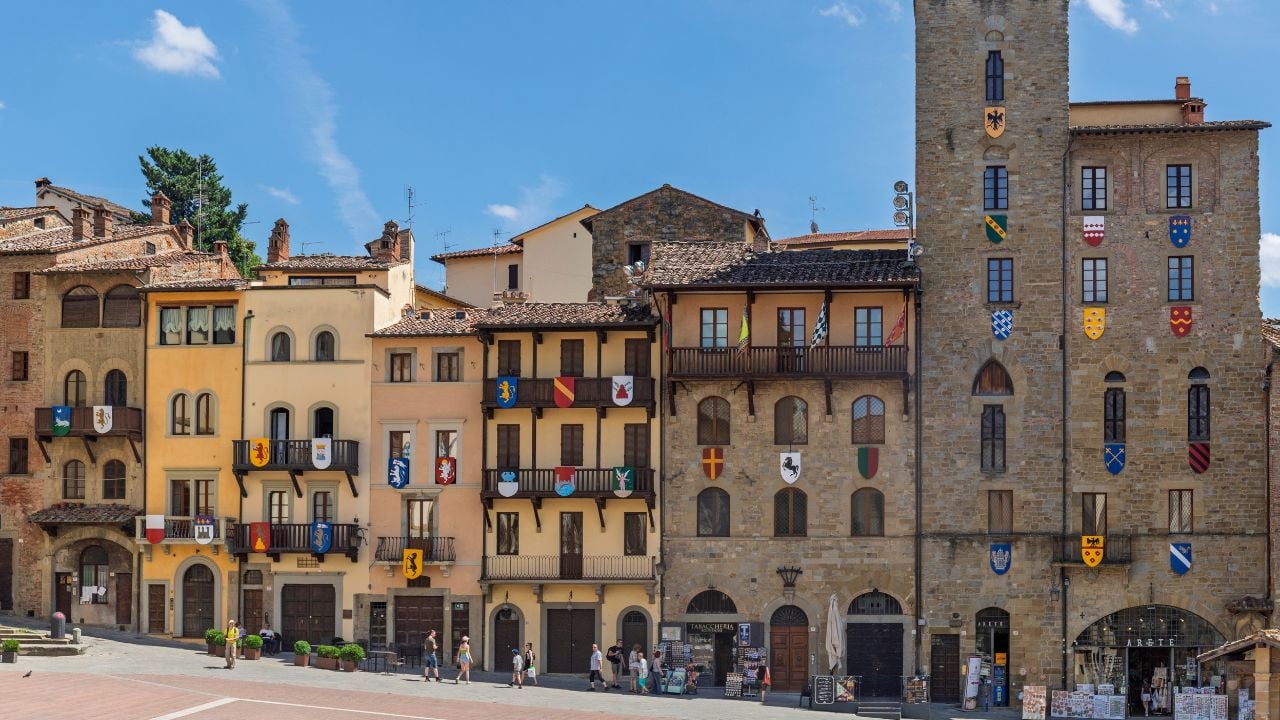
Arezzo has the Tuscan look without the Florence pressure. Walk into Piazza Grande and the city immediately gives you sloping stone, arcades, towers, old facades, and that slightly theatrical feeling Italian squares can have when every side looks like it belongs in a painting.
The square is the first place to slow down. Do not just cross it for a photo. Stand near the slope, look at the arcades and buildings, then choose one of the lanes leading away from it. Arezzo works well when the main square becomes a base you return to instead of a sight you tick off and leave.
The art stop is the Basilica of San Francesco. Visit Tuscany says the church is home to Piero della Francesca’s fresco cycle, “The Legend of the True Cross,” with fifteen scenes finished in 1466. That is a major reason to come, but the city around it keeps the day from becoming too heavy.
After the frescoes, go back outside and let Arezzo become normal again. Find lunch, climb a lane, step into another church if the door is open, or sit near the square with a glass of wine. This is the good version of a Tuscan city break: real art, real streets, but less of the crowd pressure that can make more famous places feel like a queue with scenery.
5. Brno, Czechia
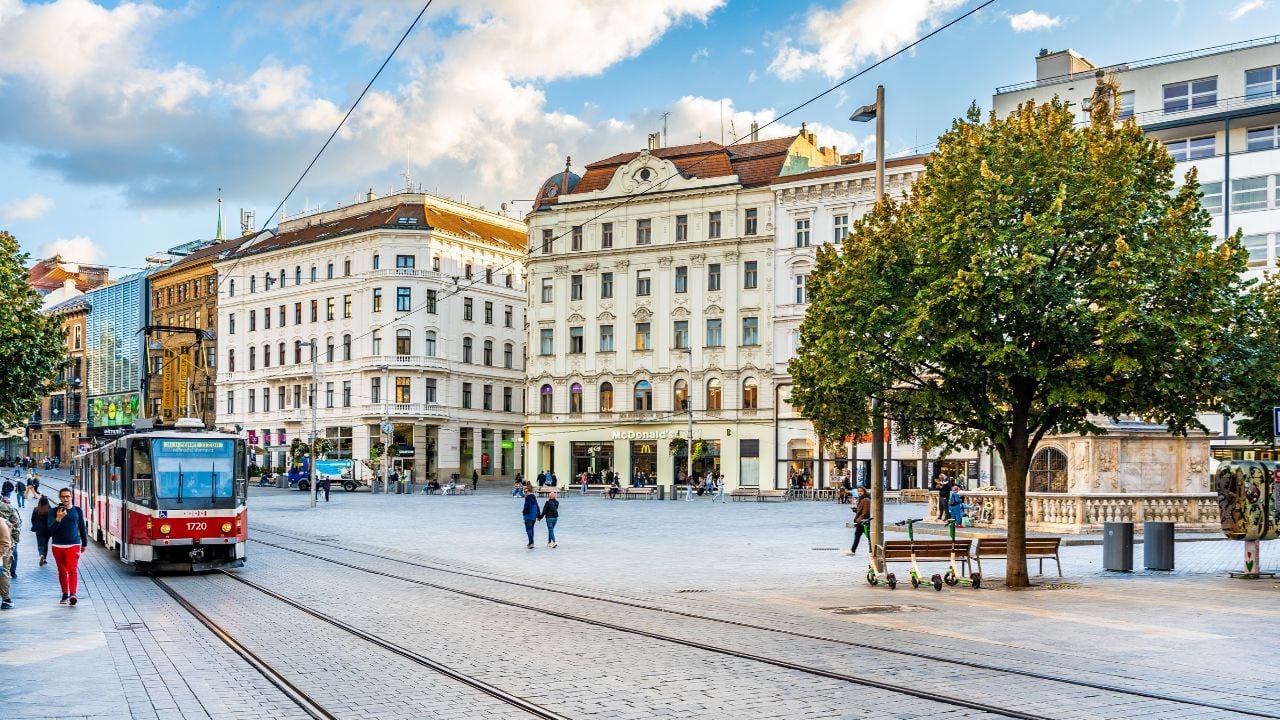
Brno is a good surprise if you want Czech streets, cafés, trams, beer, markets, and viewpoints without feeling like you are walking through someone else’s Prague itinerary. Start around Freedom Square, where trams pass, people cut across the center, and the surrounding streets quickly give you somewhere to eat, drink, or keep walking.
The city has two landmarks that help you get your bearings fast. Look up for the Cathedral of Saints Peter and Paul, then toward Špilberk Castle above the city. Visit Czechia notes that Špilberk Castle and the cathedral are two of Brno’s dominant skyline features, and they are useful for visitors because the center starts making sense once you can spot them.
Villa Tugendhat is the famous architecture ticket. UNESCO calls it a pioneering work of modern 20th-century residential architecture with innovative spatial and aesthetic concepts. Book ahead if you want to go inside, because this is not the kind of place where you should assume same-day luck will save you.
Even without that ticket, Brno is still enjoyable. Walk to a castle view, sit in a café, look for a market, or let the trams and side streets pull you away from the main square. The city feels practical in a good way. It has culture, but it also has normal life moving through it, which keeps the first day from feeling staged.
6. Oulu, Finland
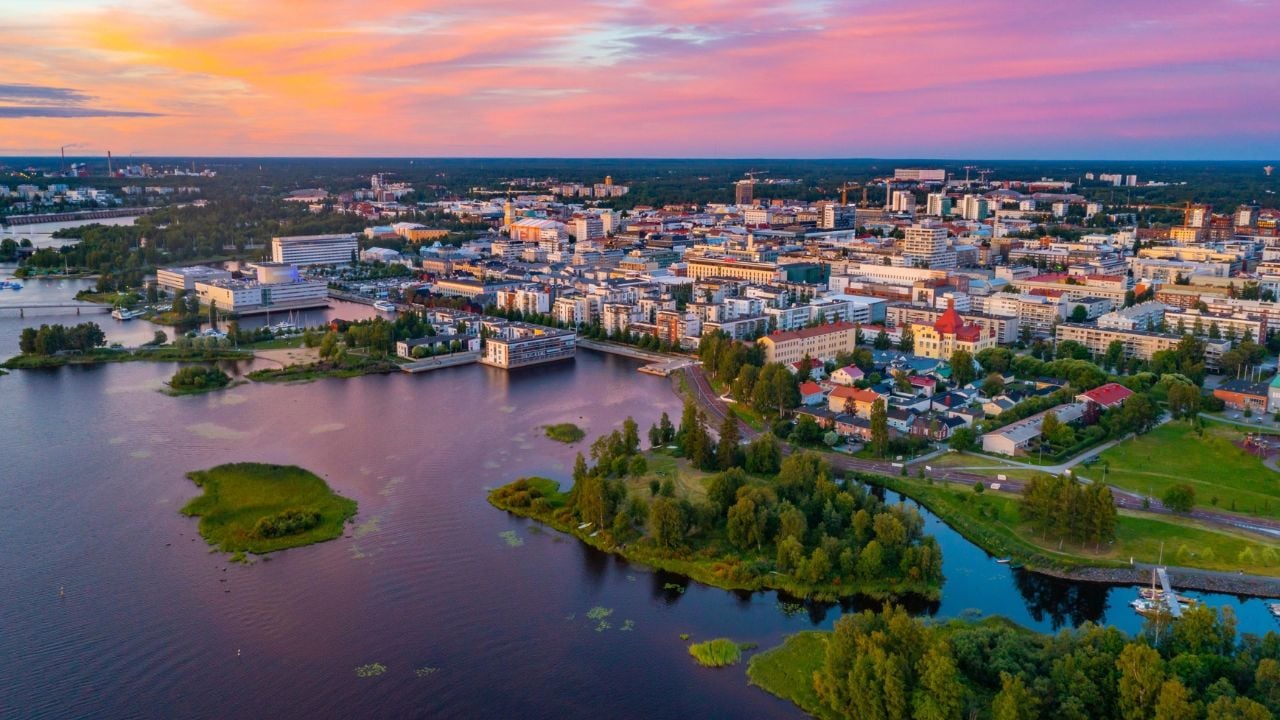
Oulu does not welcome you with old southern-European drama. It feels northern from the start: open air, big sky, water nearby, cycling routes, and a center that leaves space around you. That can be refreshing if your idea of a city break is not standing shoulder to shoulder in a famous square.
Start at the Market Hall. Visit Finland says Oulu Market Hall has served customers since 1901 and is one of the city’s important cultural-history buildings. It is the right kind of first stop: food, local life, a historic building, and the waterfront area close by.
From there, head toward the water or Pikisaari. The city feels better when you let the outside space into the day. You can walk, cycle, look toward the sea, or go out to Nallikari Beach if you want the trip to feel less urban after lunch.
Oulu is also getting major cultural attention in 2026. Oulu2026 says Oulu, together with 39 municipalities, is the European Capital of Culture 2026, with events across the region. The European Commission also lists Oulu and Trenčín as the European Capitals of Culture for 2026.
Do not treat that as a reason to overpack the day. Use it as a bonus. Start with the Market Hall, walk by the water, check what events are on, and leave time for fresh air. Oulu is at its best when the city part and the northern nature part are both allowed into the same day.