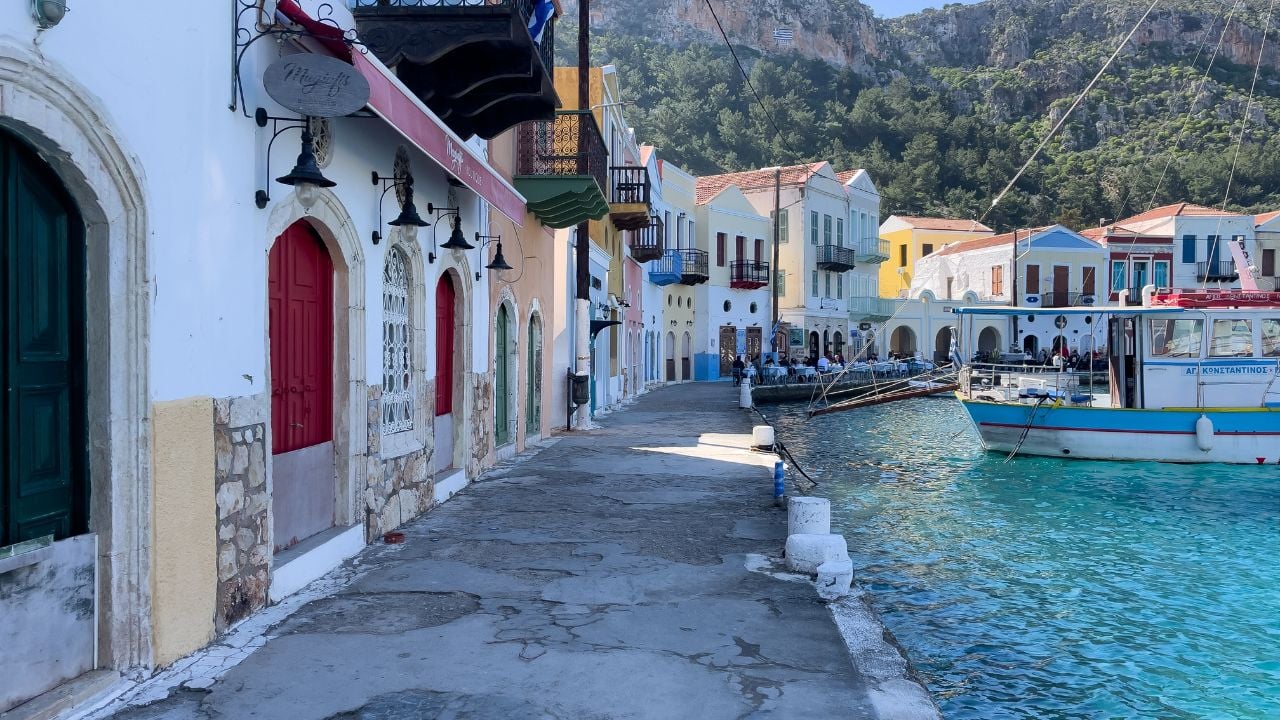
A Greek island trip can look simple from a distance: blue water, ferries, white villages, seafood, and sunsets. The booking stage gets messy when travelers choose hotels before checking routes, assume every island connects easily, or build a trip around places that sit in completely different island groups.
The first decision is not the prettiest hotel. It is the shape of the route. Santorini, Naxos, Paros, Milos, and Mykonos can fit naturally inside a Cyclades trip. Corfu, Kefalonia, Zakynthos, and Lefkada belong to a different travel pattern in the Ionian Sea. Rhodes, Kos, Patmos, and Symi point toward the Dodecanese, while Crete is large enough to fill a full vacation on its own.
Ferries, seasons, ports, local fees, and entry rules all matter before the rooms are locked in. A route that works smoothly in July may be awkward in April. A ferry may arrive at a port far from the village in the photos. A longer island stay can count toward the same Schengen limit as time in Italy, France, Spain, or other Schengen countries.
A good Greek island plan still leaves room for beach mornings, long lunches, boat rides, and late dinners by the water. The difference is that the practical pieces are checked before the trip depends on them.
1. Choose an Island Group Before Choosing Hotels

The easiest way to ruin a Greek island itinerary is to collect famous names without checking where they sit. A Santorini, Naxos, and Paros route makes more sense than Santorini, Corfu, and Rhodes in one short trip. The first group belongs to the Cyclades; the second spreads the trip across different parts of Greece.
Visit Greece organizes the country’s islands into groups such as the Cyclades, Ionian Islands, Dodecanese, Sporades, North Aegean, Saronic Islands, Evia, and Crete. That matters because ferry routes, airports, weather patterns, and travel times often make more sense inside one region than across several.
The Cyclades work well for travelers who want classic Aegean scenery, whitewashed villages, beaches, and popular island-hopping routes. The Ionian islands sit on the western side of Greece and are greener, with a different travel pattern. The Dodecanese can suit travelers interested in Rhodes, Kos, Patmos, Symi, or nearby history-heavy islands.
For a first island trip, two or three islands in one group usually work better than four scattered places. The route should feel like a line travelers can actually move through, not a folder of pretty screenshots from different corners of the country.
2. Check Ferry Schedules Before Locking in Nights

Ferries are part of the Greek island experience, but they also control the pace of the itinerary. A route that looks simple on a map may require a long crossing, a limited seasonal service, a specific weekday, or a connection through Athens.
Ferryhopper lets travelers compare available ferry routes, schedules, companies, and prices, which makes it useful before booking nonrefundable rooms. Search the actual travel dates, not just the island names. Some routes run far more often in peak season than in spring or autumn, and some island-to-island links may not work on the exact day travelers need.
Ferry days need space around them. Wind, port traffic, ship changes, and seasonal schedule shifts can affect plans, especially on routes with several islands. Do not book an expensive dinner, a tight tour, or a same-day international flight close to a ferry arrival.
The safer plan is to treat ferry movement as part of the day. Arrive, get to the hotel, handle luggage, eat nearby, and keep the evening simple unless the boat schedule gives plenty of margin.
3. Match the Island to the Season

Summer brings the strongest beach scene, the most ferry options, and the busiest island towns. It also brings higher hotel prices, heat, packed sunset spots, busy ports, and restaurants that may need planning ahead in the most popular places.
Beach-first trips usually work best when the water is warmer and seasonal services are fully running. That often points travelers toward late spring, summer, or early autumn, depending on the island and the kind of trip they want.
Walking, food, history, villages, and photography can be better outside the hottest weeks. May, early June, September, and early October can be excellent for travelers who want warmth without the worst peak-season pressure, but smaller islands may have fewer restaurants, tours, buses, or beach services outside the main summer window.
Larger islands such as Crete, Rhodes, and Corfu usually have more year-round life than tiny seasonal islands. A lively August island can feel half-asleep in April, while a bigger island may still offer museums, old towns, hikes, food, and local transport beyond the beach season.
4. Budget for Local Fees, Port Transfers, and Small Surprises

The hotel price is not always the full cost of an island stay. Greece’s Independent Authority for Public Revenue explains that the climate crisis resilience fee replaced the former accommodation tax and applies per daily use and per room or apartment.
Travelers may see this charge collected separately from the first booking total, depending on the property and booking setup. It is not usually the largest cost of the trip, but it belongs in the budget before arrival.
Port logistics can cost more than first-timers expect. A ferry may arrive at a port that is nowhere near the village in the photos, and a taxi queue after the last boat of the day is a bad time to start figuring out transport. On some islands, the prettiest towns sit uphill, inland, or on the opposite side of the island from the ferry dock.
Add room for port transfers, local buses, occasional taxis, luggage storage, beach beds, bottled water, late check-in arrangements, and short boat trips. Greek island travel gets easier when the budget includes the in-between moments, not only hotels, ferries, and dinners.
5. Know the Entry Rules Before Planning a Longer Island Stay

Greece is part of the Schengen Area, so longer island stays and multi-country Europe trips need a date check before booking. EU guidance says short stays in the Schengen Area are generally limited to 90 days in any 180-day period. That usually does not affect a one- or two-week island vacation, but it can matter for longer trips or repeat visits.
The important detail is that the clock usually counts across the Schengen Area, not only Greece. Time spent in Italy, France, Spain, Portugal, Germany, or other Schengen countries can count toward the same short-stay limit as time on the Greek islands.
Future paperwork is changing too. The official EU ETIAS site says ETIAS will be the new travel authorization for visa-exempt travelers entering 30 European countries and is scheduled to start operations in the last quarter of 2026.
Check the official rules close to the travel date, especially for trips booked far ahead. For most travelers, the practical work is simple: confirm the Schengen limit, watch the ETIAS start date, then book the islands, ferries, and hotel nights around a route that actually works.