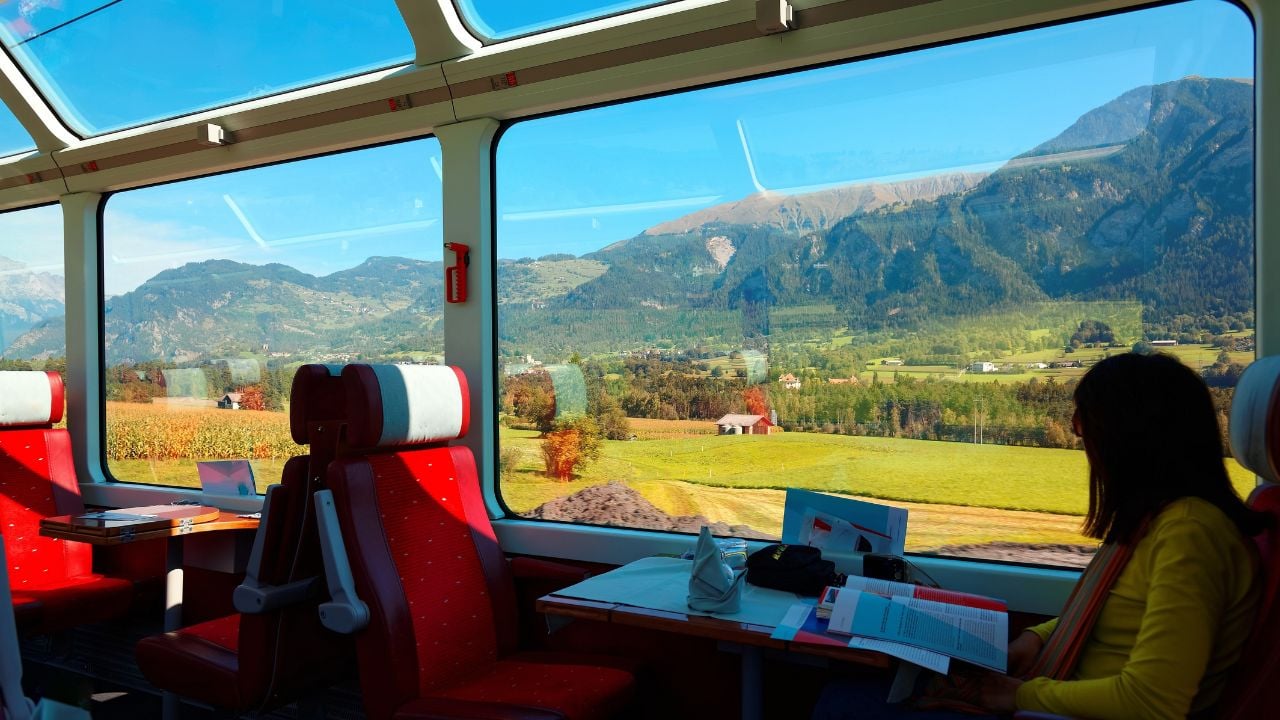
A rental car can help in remote countryside, but it is the wrong tool for some European routes. The problems start with parking garages, city traffic, narrow coastal roads, fuel stops, rental counters, and the person driving instead of watching the landscape.
These five trips are stronger by rail because the stations sit close to the places travelers actually want to reach. London to Edinburgh connects two capital-city centers. Oslo to Bergen crosses mountain plateaus without putting anyone behind the wheel. Porto to the Douro follows the river. Koblenz to Mainz runs beside castles and vineyards. Nice to Menton links Riviera towns without the parking fight.
1. London to Edinburgh, United Kingdom
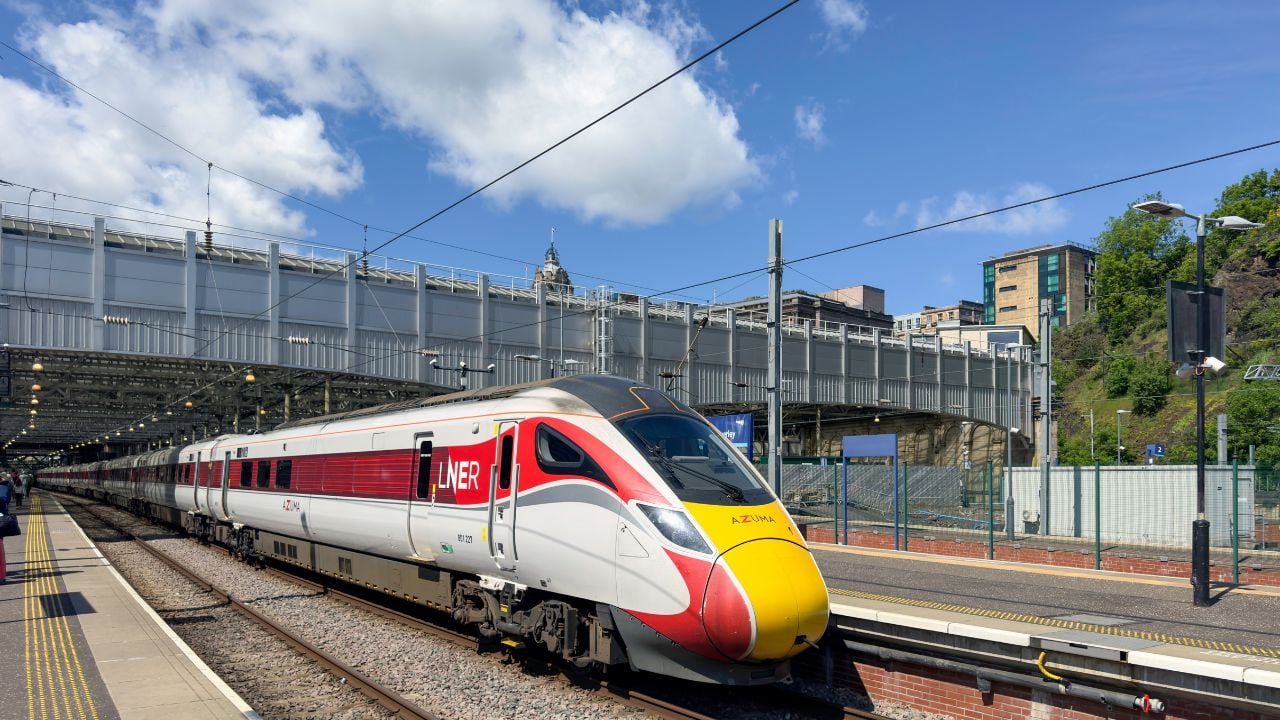
London to Edinburgh is one of the easiest long-distance routes in Britain to do without a car. LNER says direct trains run between London King’s Cross and Edinburgh Waverley, with the journey usually taking just over four and a half hours and trains running every half hour at peak times during the week.
King’s Cross connects with the Underground, nearby hotels, buses, taxis, and other rail lines. Edinburgh Waverley sits below the Old Town, close to Princes Street, the Royal Mile, trams, buses, restaurants, and central hotels. A car adds motorway hours, fuel, parking, congestion, and a city-center arrival that still leaves travelers looking for somewhere to leave it.
On board, passengers have seats, luggage racks, power sockets, Wi-Fi, food, toilets, and several hours away from road signs and lane changes. The route leaves London, passes through changing English countryside, moves north through major towns, and reaches Scotland without an airport transfer or rental desk.
This route suits travelers focused on London and Edinburgh. Anyone continuing into the Highlands or small rural villages can rent a car later. For the capital-to-capital leg, the train avoids dragging a vehicle through two busy cities.
2. Oslo to Bergen, Norway
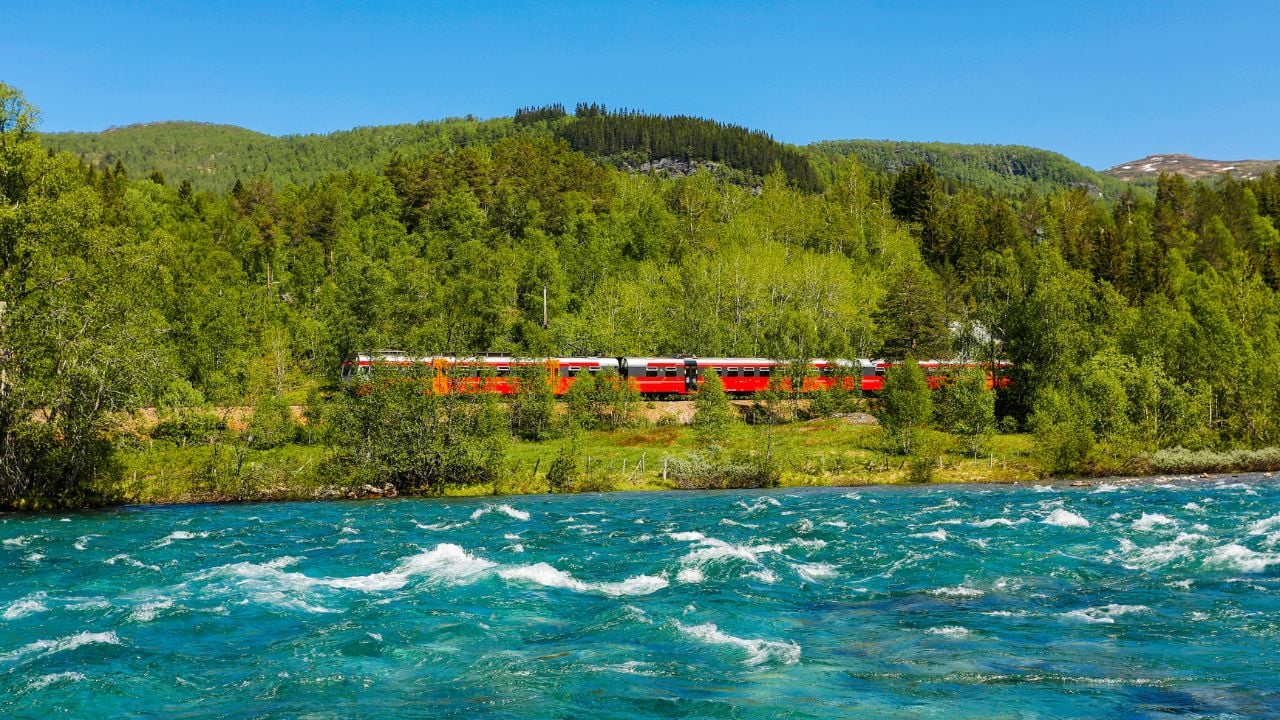
The Bergen Line gives every passenger the mountain route, not only the person in the passenger seat. Vy says the line crosses Hardangervidda National Park and the Hardangervidda plateau, Europe’s largest high mountain plateau.
Visit Bergen says the Bergensbanen between Oslo and Bergen takes about seven hours, with about 180 tunnels and 22 stops. The train moves from city platforms into valleys, mountain sections, high plateaus, lakes, snow patches in season, and the western approach toward Bergen.
Driving between Oslo and Bergen can be beautiful, but the road asks for tunnels, weather checks, fuel stops, speed limits, mountain stretches, and constant attention. On the train, the whole group can look out at the same landscape instead of dividing the day between driver and passengers.
Oslo and Bergen also work well without a car for many visitors. Oslo has trams, metro, buses, ferries, museums, waterfront areas, and rail links. Bergen has Bryggen, the harbor, the funicular, compact streets, and fjord connections close to the center.
3. Porto to the Douro Valley, Portugal
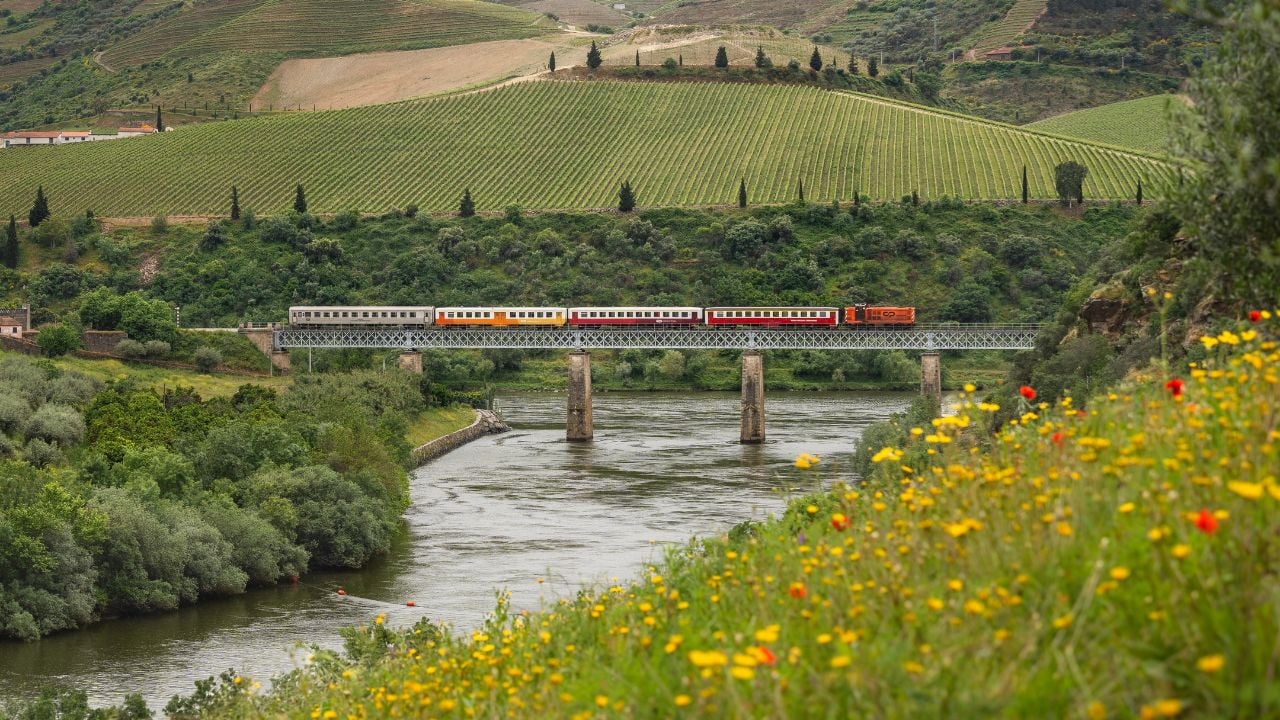
The Douro Valley can be done by car, but the river is easier to enjoy from the train. Regular Douro Line services connect Porto with river towns such as Régua and Pinhão, passing stations, bridges, vineyard terraces, stone walls, and bends in the Douro along the way.
CP’s Douro Historical Train is a separate seasonal service between Régua and Tua. CP says it runs between June and October, with historic carriages hauled by a diesel locomotive through the UNESCO-listed Douro Valley landscape.
A rail day from Porto can use regular trains to reach Régua or Pinhão. From there, travelers can add lunch, a river walk, a winery visit, a boat ride, or the historical train if the dates and schedule line up. The route keeps the focus on the river towns instead of on road bends and parking spaces.
The train is especially useful for wine-country travel. Nobody has to drive narrow valley roads after tastings, and no one has to skip the view to watch the next curve. A car can still help for remote quintas or multi-night countryside stays, but a focused Douro day from Porto does not need one.
4. Koblenz to Mainz Along the Rhine, Germany
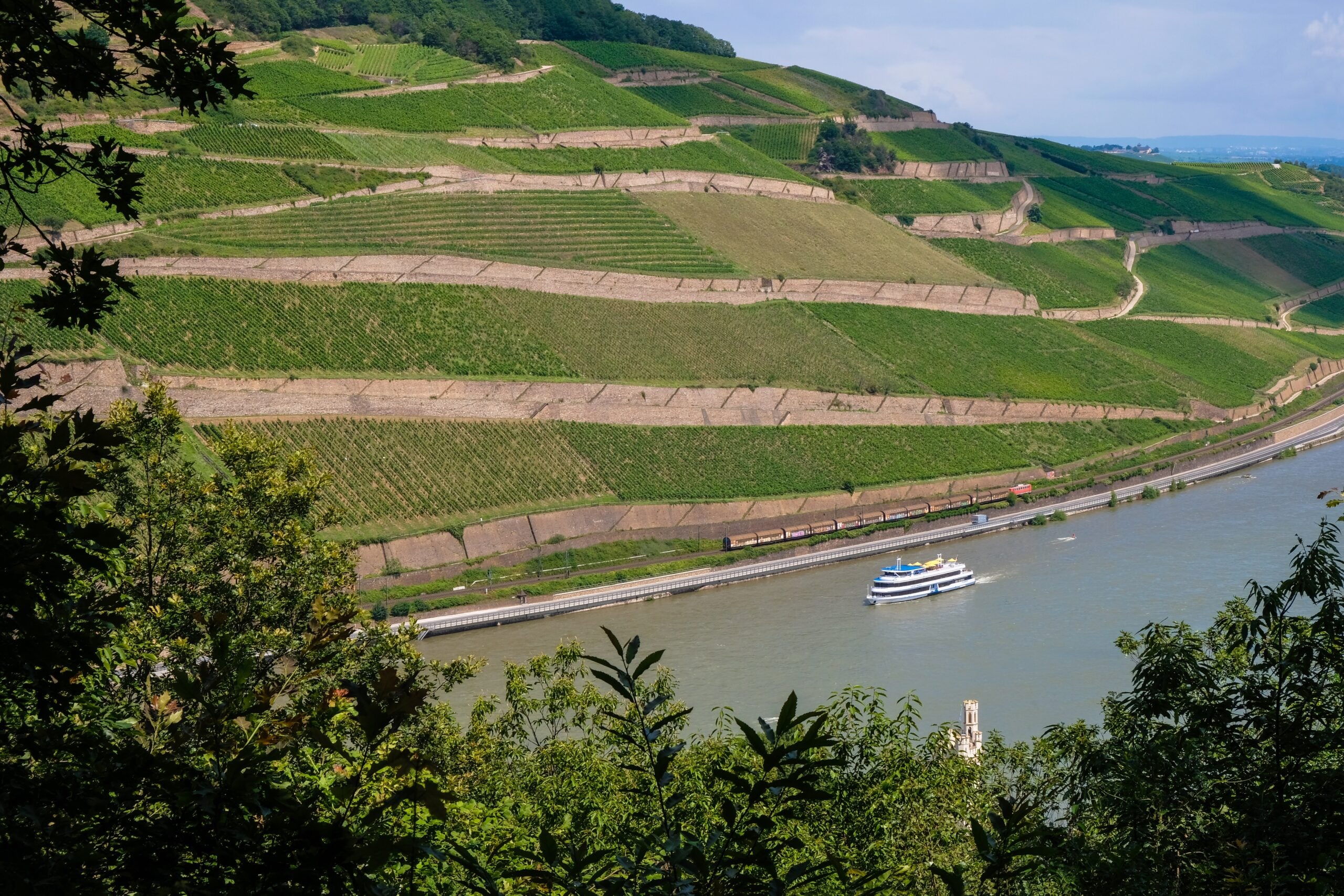
The Rhine Valley train keeps travelers beside the river for long stretches between Koblenz and Mainz. Eurail describes the Rhine Valley Line as a ride through German wine country, with Koblenz and Mainz among the key towns and riverside vineyards along the route.
Visit Koblenz says around 40 castles, fortresses, and fortifications can be found between Koblenz and Bingen. From the train, the day can include river barges, vineyards above the water, castle ruins, church towers, steep hillsides, and towns such as Boppard, Bacharach, Oberwesel, and Rüdesheim.
A car can follow parts of the valley, but the driver has to watch bends, traffic, signs, cyclists, and parking zones. The train lets travelers step off for lunch, a river walk, a castle stop, or a wine town, then continue without returning to a garage or roadside lot.
This route also pairs easily with a boat segment. Travelers can ride one direction by rail, take a river cruise for part of the valley, then continue by train. The car adds less freedom than it seems when the best parts of the day sit along tracks, docks, and compact river towns.
5. Nice to Menton Along the French Riviera, France
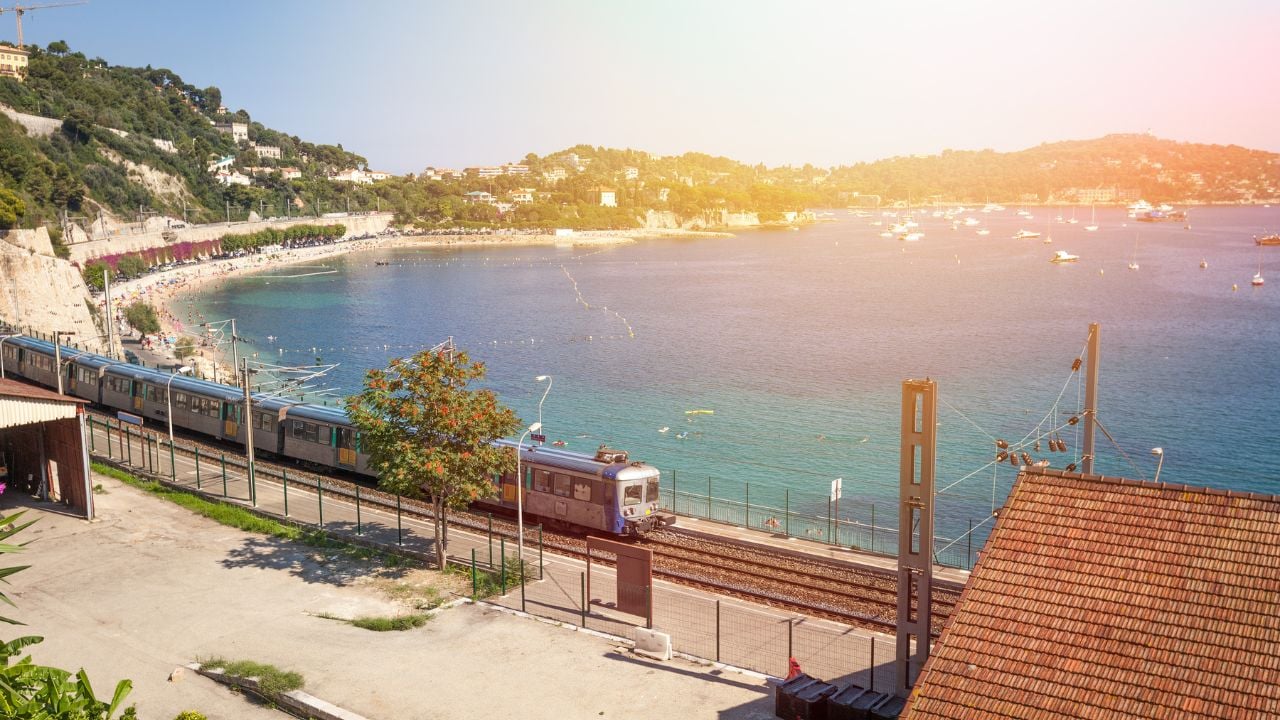
The French Riviera looks like a dream road trip until the day turns into traffic, tight streets, paid garages, and slow searches for parking near the water. The TER train gives the coast a simpler shape: station, town, harbor, beach, platform, next stop.
Nice Côte d’Azur Tourism says TER regional trains provide a fast link between Cannes and Ventimiglia for the main towns along the Côte d’Azur coast. It also says TER tickets are valid for the selected route on all trains running that day, so travelers can take a different TER from the one shown on the ticket.
A rail-based day can start in Nice, continue to Villefranche-sur-Mer for the harbor, stop in Monaco, then finish in Menton with pastel streets, gardens, and the Italian border close by. Nobody has to circle near the beach or return to a garage after every stop.
The train also works well with beach bags, light luggage, and short hops. Several stations sit close to town centers or waterfront areas, and the route lets travelers choose between a swim, a garden, a harbor walk, a museum, or a late lunch before boarding again.