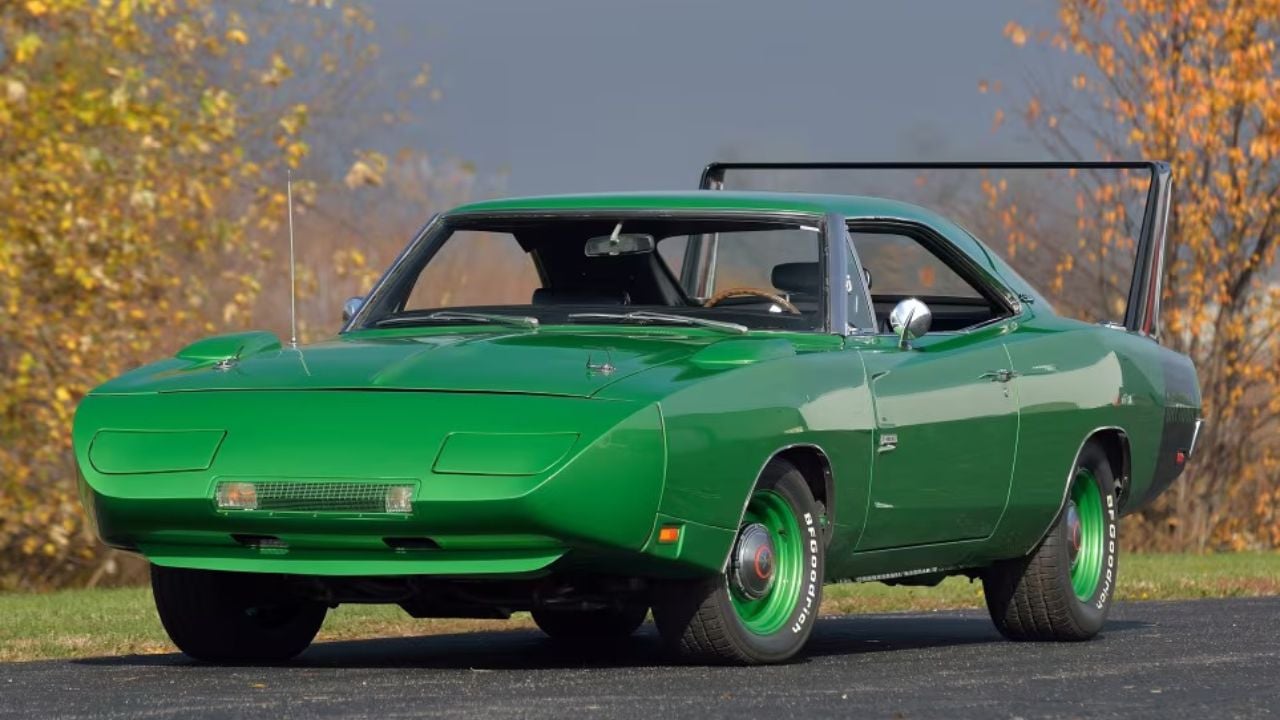
The 1969 Dodge Charger Daytona remains one of the most outrageous cars ever built by the American auto industry.
It was not created to be subtle. Dodge developed the Daytona as a NASCAR weapon at a time when aerodynamic speed mattered more than showroom elegance. The regular Charger needed help against slippery rivals such as the Ford Torino Talladega and Mercury Cyclone Spoiler, so Dodge gave its muscle car a pointed nose cone and a towering rear wing that stood roughly two feet high.
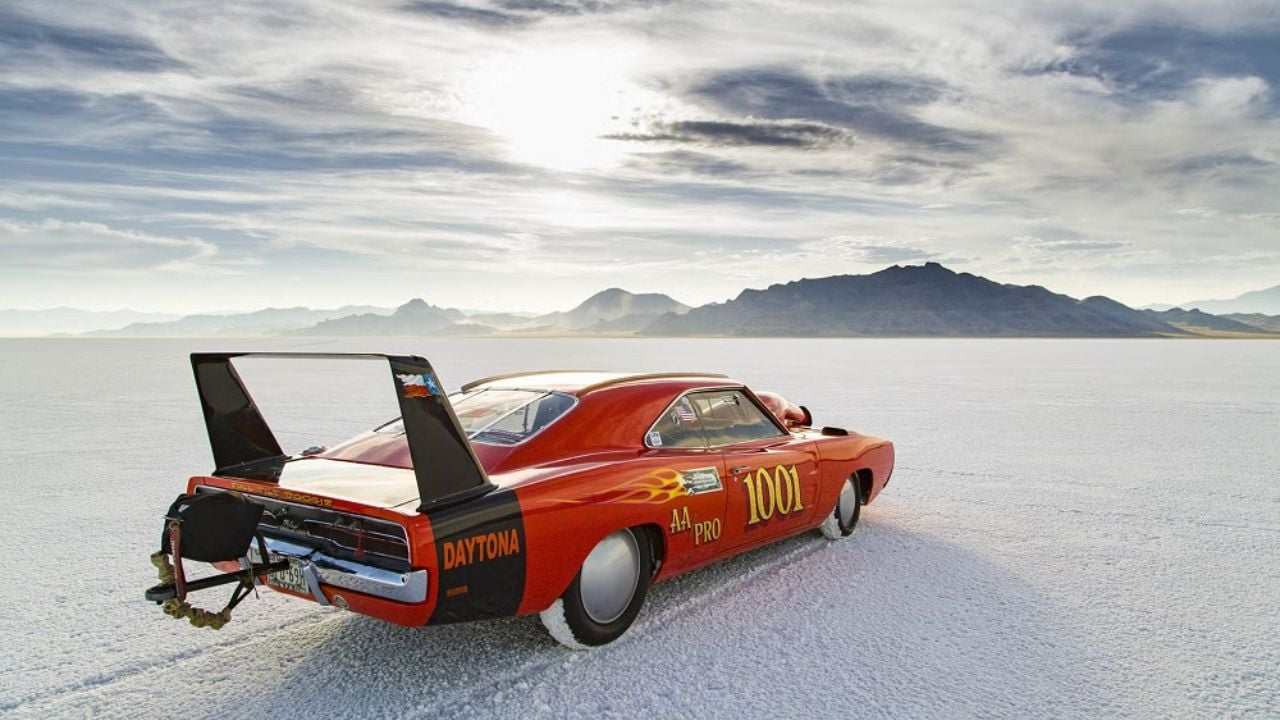
The result looked strange on the street, but it worked on the track. On March 24, 1970, Buddy Baker drove a Charger Daytona to an officially recorded 200.447 mph lap at Talladega, breaking a barrier that had once seemed almost unreachable for a stock car.
That wing-car history is suddenly relevant again. Recent reporting says Dodge has shown journalists a more aggressive Charger SRT behind closed doors, complete with a huge rear wing, darker front lighting, a hood intake, and gasoline-engine cues. Dodge has not confirmed the final powertrain, but the message was hard to miss: the new Charger may not be done chasing old-school muscle fans.
The Original Daytona Was Built For NASCAR
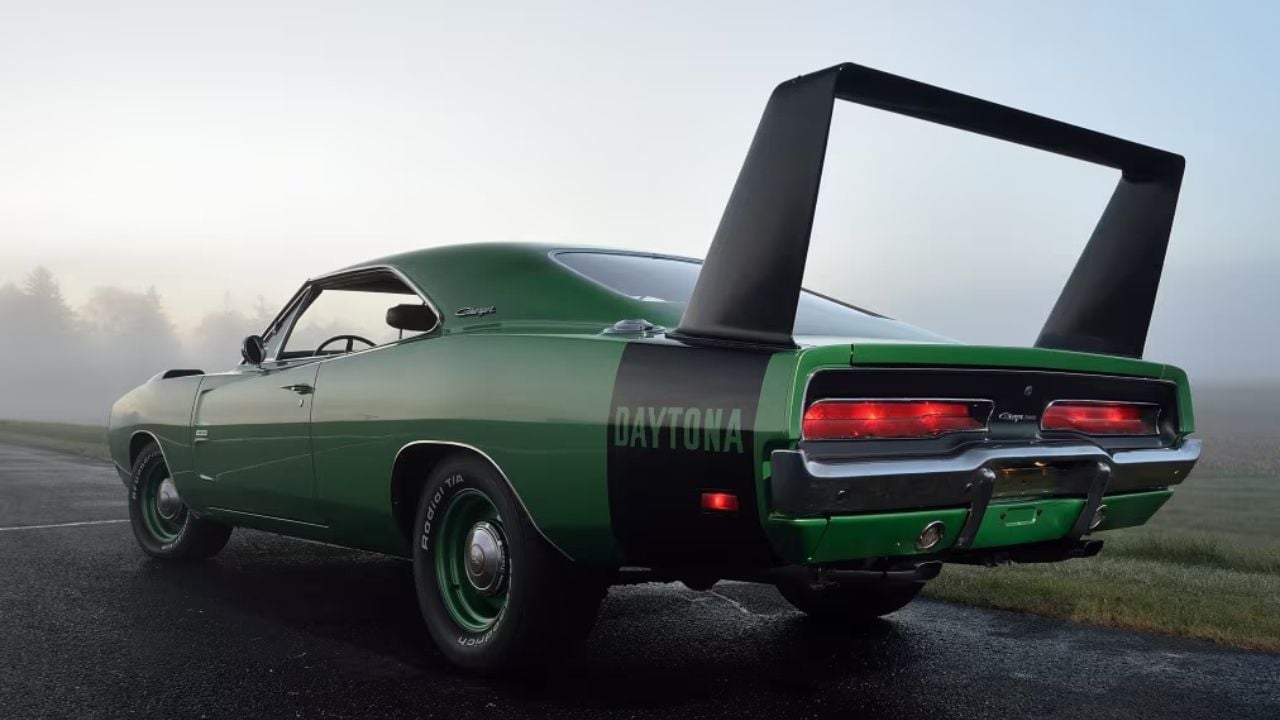
Dodge had to build road-going Charger Daytonas for NASCAR homologation before the car could compete. In 1969, the company produced 503 examples, giving buyers one of the strangest and most focused muscle cars ever offered through a dealership.
The Daytona’s long nose and high rear wing were not styling gimmicks. They were answers to a racing problem. Dodge needed better air penetration at high speed and more stability on superspeedways, where small aerodynamic advantages could decide races.
Plymouth followed with the related Superbird for 1970, using a similar wing-car formula. Both models looked extreme in period and even more memorable decades later. Their low production numbers, NASCAR connection, and cartoonish aerodynamic hardware turned them into collector icons.
Dodge still uses the Charger name today, but the formula has changed dramatically. The current generation arrived first as the electric Charger Daytona, while gasoline versions now use turbocharged 3.0L SIXPACK inline-six power instead of the old Hemi V8 lineup.
Dodge Is Already Preparing A Wilder Charger
Reaction to the new Charger has been divided from the beginning. Dodge gave the electric Daytona serious power, and the gas-powered SIXPACK models brought internal combustion back with strong numbers. The Charger R/T is rated at 420 horsepower and 468 lb-ft of torque, while the Charger Scat Pack gets a high-output version rated at 550 horsepower and 531 lb-ft.
Those figures are not weak. The problem is emotional. Many longtime Dodge buyers still connect the Charger name with V8 noise, tire smoke, SRT attitude, and Hellcat-era excess. A powerful EV or turbocharged six-cylinder can be quick, but it does not automatically replace that identity for traditional muscle-car fans.
According to The Drive, Dodge recently showed journalists an updated Charger and a more aggressive Charger SRT during a closed-door event in Detroit. Phones and cameras were not allowed, so the car has not received a normal public reveal yet.
The preview still gave reporters enough to work with. The SRT appeared to push the current Charger design in a much more aggressive direction, with sharper lighting details, a larger front splitter, a hood intake, wide wheels, fender vents, and a rear wing that immediately recalled Dodge and Plymouth’s wing-car era.
The New SRT Looks Meaner Than The Current Charger
Two cars were reportedly shown. One wore a striking green finish, while the other used a blue shade that called back to classic Dodge color history. The green car appeared to preview the SRT version.
The front end showed some of the biggest changes. Instead of the current Charger’s full-width LED light bar, the SRT preview reportedly used darker, more recessed lighting with orange daytime running lights along the lower edges of the headlight area.
That gave the car a more hostile expression than the standard Charger. A large front splitter filled out the lower bumper, while a hood intake suggested the car was not designed around a purely battery-electric powertrain.
Dodge has not released technical details, so the styling should not be treated as a confirmed engine announcement. Still, the visual cues point toward a gasoline performance model meant to look and feel more like the SRT Dodges that built the brand’s modern muscle reputation.
A Rear Wing With Wing-Car Attitude
The real surprise was at the back.
The reported Charger SRT preview used a huge rear wing mounted high above the decklid, with supports placed near the outer edges of the rear body. That layout naturally points back to the Charger Daytona and Plymouth Superbird era, when Chrysler’s wing cars used extreme aero hardware to dominate high-speed NASCAR tracks.
The new car is not a copy of the 1969 Daytona. It does not need a long nose cone or a period-correct NASCAR body. The idea is different: take the current Charger shape and give it enough visual force to remind buyers that Dodge still knows how to build something dramatic.
Vertical black fender vents and wide diamond-cut wheels reportedly added to the more serious look. The interior was not available for viewing, but the exterior already suggested a clear mission. Dodge appears to be trying to make the new Charger feel less like a cautious reinvention and more like a muscle car with a pulse.
The Engine Remains The Biggest Question
The styling may be loud, but the powertrain is still the real mystery.
The safest assumption is that the SRT preview points toward gasoline power. The hood intake, SRT positioning, and closed-door reaction all suggest Dodge is preparing something beyond the current Charger lineup. What Dodge has not confirmed is whether that means a more extreme version of the Hurricane-based SIXPACK inline-six, a hybridized performance setup, or a true V8 comeback.
Speculation around a Hellcat-level Charger has grown because Stellantis executives have acknowledged that some buyers still want a V8 before they will consider certain vehicles. At the same time, Dodge has also made clear that its engineers are not finished pushing the turbocharged inline-six.
That leaves two very different possibilities. Dodge could deliver a harder-edged SRT with a more powerful version of the Hurricane/SIXPACK family, or it could find a way to bring back V8 attitude at the top of the Charger range. A basic return of the old formula is not guaranteed.
For now, that uncertainty may actually help the story. The reported SRT preview gives Dodge fans something to argue about again, and that has always been part of the brand’s energy.
The new Charger already has speed. What many fans still want is theater. A Daytona-style wing, SRT bodywork, and a gasoline performance model could help Dodge move closer to that old feeling. The engine will decide whether buyers see it as a true comeback or just another tease.
This article was originally published by Autorepublika.com and is republished with permission. It has been reviewed and edited by Guessing Headlights.