
A fresh start sounds romantic until you remember the boring parts: deposits, flights, paperwork, and that first grocery run where you stand in the aisle like a confused tourist in your own life. Some governments have noticed the same thing and decided to sweeten the deal. If a region is losing people, workers, or young families, targeted support can be cheaper than watching schools, shops, and services slowly fade.
Still, “paid to relocate” almost never means free money for vibes. Most offers are tied to a real commitment, like taking a job in a target area, renovating an empty home, carrying eligible student debt into an understaffed region, or building a company that actually operates locally. Just as important, not every scheme is open to every kind of mover. Some are meant for people already living in the country, some are renovation grants rather than relocation cheques, and some are really founder programs with a landing pad attached. The upside can still be meaningful. The catch is that the fine print is the whole story.
1. Japan
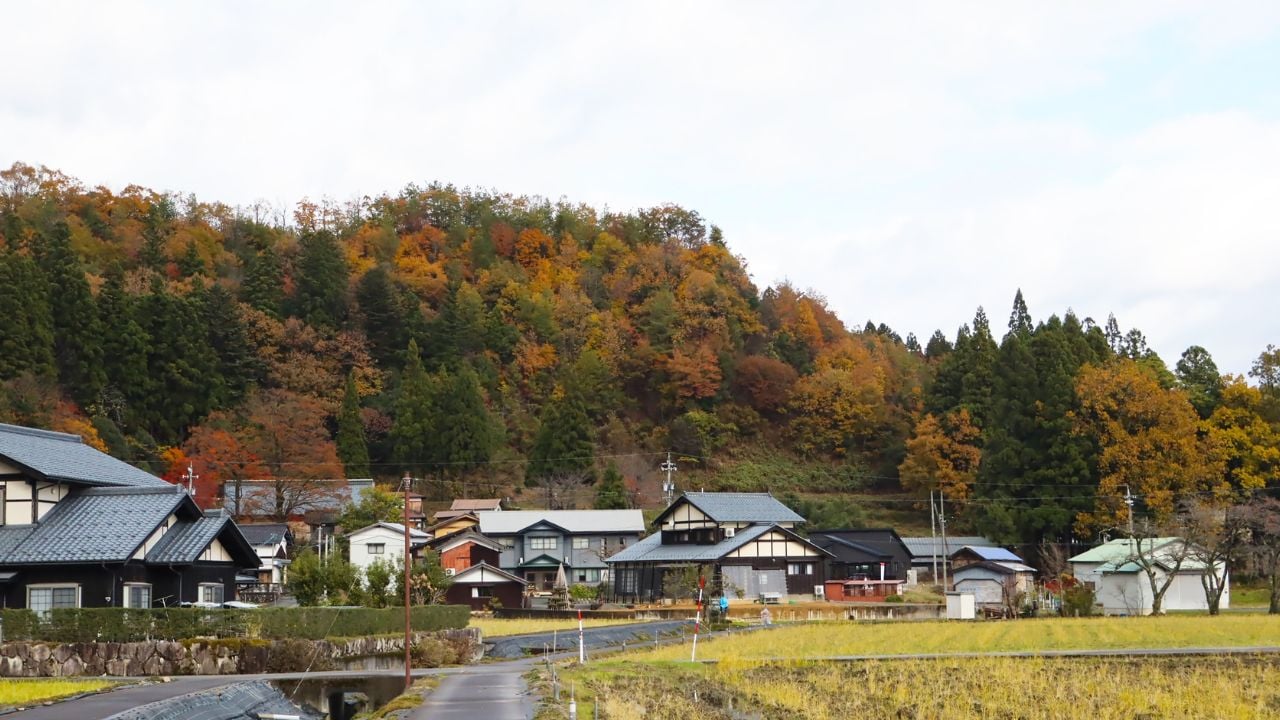
Japan’s best-known relocation support is real, but it is much narrower than the internet version. Under the government’s regional migration support framework, the target is mainly people who lived in Tokyo’s 23 wards or commuted there and then moved to eligible municipalities outside the greater Tokyo area. The headline amount is up to ¥1,000,000 for a household and up to ¥600,000 for a single person, with an additional child-related boost of up to ¥1,000,000 per accompanying household member under 18 in qualifying cases.
The structure is very Japan: the national government sets the framework, but prefectures and municipalities handle the operational details. That means the amount, deadlines, and paperwork can vary depending on where you land. The official guidance also ties eligibility to things like qualifying employment, telework, municipal conditions, or startup support, and applicants are generally expected to apply within a year of moving and intend to stay for at least five years. So yes, the money exists. No, it is not a generic “move to rural Japan and collect” cheat code.
2. Portugal

Portugal’s Emprego Interior MAIS is more surgical than the clicky versions make it sound. It is designed to support workers or self-employed people whose job move takes them into officially defined interior territories. In the current IEFP materials, the base support is 7 times the IAS for an open-ended contract or for creating your own job or company, and 5 times the IAS for a fixed-term contract of at least 12 months. With the 2026 IAS set at €537.13, that works out to roughly €3,759.91 or €2,685.65 before any extras.
There is also a household dimension, which is where the offer starts to feel genuinely useful rather than symbolic. The same scheme includes a 20% increase for each household member who relocates with the applicant and a complementary amount of 1.5 times the IAS for transporting goods to the new residence. The catch, as usual, is that this is not a “move anywhere in Portugal” deal. The interior-territory requirement is the whole point, so the smart move is to secure the contract or business plan first and then build the relocation around the paperwork instead of the other way around.
3. Ireland

Ireland’s Vacant Property Refurbishment Grant is one of the most tangible “start over somewhere else” supports on the list because it helps fund the home itself. The current structure still includes up to €50,000 to renovate a vacant property and up to €70,000 where the property is derelict. For qualifying offshore islands, the government says the higher support reaches up to €60,000 for vacant homes and up to €84,000 for derelict ones.
What makes Ireland especially interesting is that the scheme has expanded beyond the simple fixer-upper headline. Official government guidance says the grant can support refurbishing a property to live in or rent out, and the latest above-the-shop update adds a separate enhanced package that can reach up to €140,000 on more complex projects. So this is not a plane-ticket subsidy. It is Ireland saying that if you are serious about taking on a vacant building, especially in a smaller place that needs life put back into it, the state is willing to meet you part of the way.
4. Norway

Norway’s incentive is less “cash in your hand” and more “your future gets lighter,” which can honestly be better. Through Lånekassen’s Finnmark and Nord-Troms debt-cancellation scheme, people who live and work in approved areas can have up to NOK 60,000 of eligible student debt written off each year for accrual periods starting in 2025. There is also an additional NOK 20,000 per year for qualifying primary school teachers in that zone.
Norway has also launched a separate rural-municipality debt-cancellation scheme that allows up to NOK 25,000 per year in eligible student-loan cancellation for people who live in designated less-central municipalities, with accrual calculated from 1 January 2025 at the earliest. The important reality check is that this only helps if you actually have qualifying student debt to cancel. So it is not a universal relocation perk. But for people who do carry that debt, Norway is offering one of the clearest long-game incentives in the group.
5. Chile

Chile belongs on this list only if you define “relocation support” the founder’s way. Start-Up Chile is not a generic “move here and collect money” scheme. It is a public accelerator and funding platform for entrepreneurs who want to build from Chile. On its current program pages, Build lists 15 million Chilean pesos in equity-free funding for early-stage startups, while Growth lists 75 million Chilean pesos in equity-free funding for expansion-stage companies using Chile as a platform.
That distinction matters because the money is tied to execution, not relocation as a lifestyle experiment. Start-Up Chile also emphasizes acceleration, networks, and support for landing in Chile, including visa help for founders building through the program. So the appeal here is not “they’ll pay me to start over.” It is “they’ll help me relocate my startup chapter to Chile if I actually have something worth building.” For the right founder, that is powerful. For everyone else, it is just a very attractive program they probably do not qualify for.