
Some engines are built to make power. A smaller group of engines seems built to make you feel something.
The difference shows up the moment you turn the key, and it has very little to do with horsepower figures or lap times. It comes from the way combustion, displacement, engine layout, and exhaust tuning combine into something that lands more like music than machinery.
The cars on this list were chosen because their exhaust notes have a character that is hard to forget. A naturally aspirated flat-six screaming toward nine thousand rpm sounds nothing like an American V8 shaking the ground at idle, and neither of those sounds anything like a mid-engine V10 howling at full throttle just behind your shoulders.
That variety is the point. A great exhaust note is not one thing. It is whatever makes you want to hear it again.
Every car here uses a naturally aspirated engine. That detail matters more than almost anything else on the spec sheet.
Porsche 911 GT3

The Porsche 911 GT3 carries a 4.0-liter naturally aspirated flat-six that revs to 9,000 rpm. That alone tells you the car is chasing something more emotional than ordinary performance efficiency.
At idle, the GT3 sounds alert and slightly mechanical, like something wound tight and waiting. As the throttle opens and the revs climb, the note sharpens progressively instead of jumping suddenly from one tone to another.
By the top third of the rev range, it has turned into a hard, high-pitched scream that feels more race-bred than road-car polite. The engine makes 510 PS, but the sound it produces at full throttle feels like the more remarkable achievement.
Ferrari 458 Italia

The Ferrari 458 Italia used a naturally aspirated 4.5-liter V8 mounted directly behind the driver. That mid-engine placement gives the car an unusually immediate relationship between throttle input and what reaches your ears.
The note starts as a dense, textured growl low in the rev range. Then it climbs through distinct layers until it opens into the bright, sustained howl that made the 458 one of the defining soundtracks of its era.
When the 488 GTB replaced it in 2015, Ferrari’s mid-engine V8 berlinetta line moved to turbocharging. That only made the naturally aspirated 458 sound more special in hindsight.
Ford Mustang GT (5.0 V8)

The Ford Mustang GT makes the case for the traditional American V8 better than almost anything else still sold new. In current form, the 5.0-liter Coyote produces 480 horsepower, or 486 horsepower with the available active-valve performance exhaust.
At idle, it settles into a low, even rumble with enough authority that people nearby tend to look over. It does not try to sound refined. It sounds exactly like what it is.
Wide-open throttle brings a full, hard V8 roar that fills whatever space the car happens to be in. The factory system already gives it real character, which is why the Mustang GT remains one of the easiest modern performance cars to identify with your eyes closed.
Lamborghini Huracán
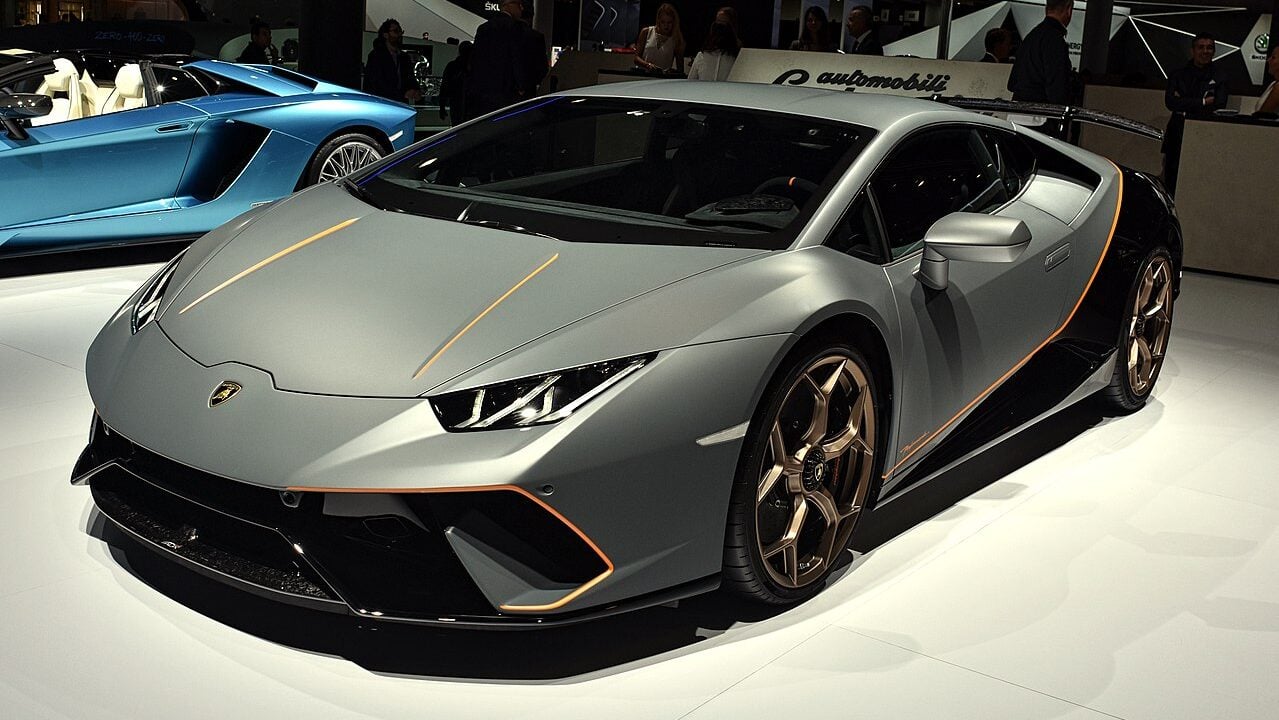
The Lamborghini Huracán family uses a naturally aspirated 5.2-liter V10 mounted in a mid-engine layout just behind the cabin. Even before you get into variant differences, that basic recipe gives it one of the most immediately dramatic sounds in the modern supercar world.
At lower speeds, the note already has a metallic edge that most production cars cannot approach. At full throttle, it turns into an explosive, high-pitched howl that rises sharply and keeps its intensity right to the top of the rev range.
Track-focused versions like the Performante and STO only push the experience further. The result is one of the most physical and least diluted naturally aspirated exhaust notes of the past decade.
BMW E46 M3
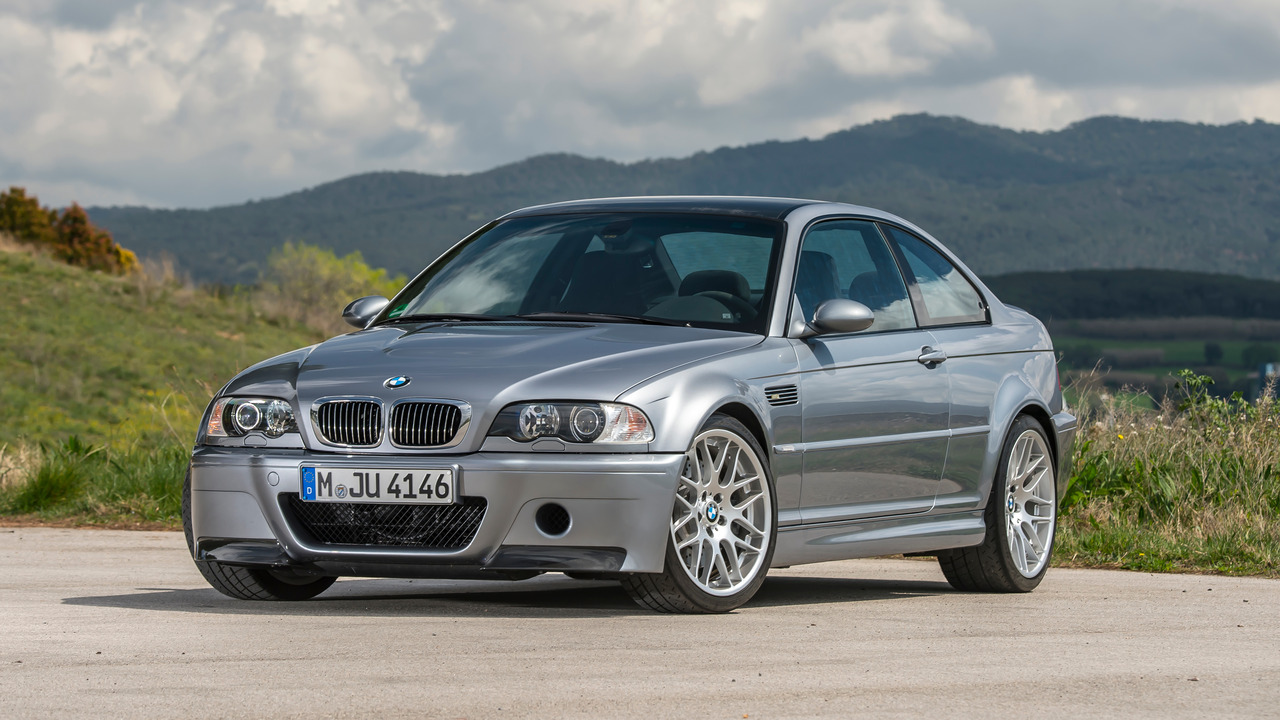
The BMW E46 M3 was built around a naturally aspirated 3.2-liter inline-six, and that engine remains a huge part of the car’s reputation. An inline-six is naturally smooth at high revs, and the E46 M3 takes full advantage of that character.
At lower revs, the engine has a controlled, purposeful growl. As it climbs toward its roughly 8,000-rpm redline, the note turns into a cleaner, higher-frequency wail that sounds more precise than brutish.
That clarity is what makes it so memorable. Plenty of faster cars have arrived since, but enthusiasts still bring up the E46 M3 whenever the conversation turns to engines that sound alive all the way to redline.
The Engine Is the Instrument

Every car on this list is naturally aspirated, and that is not a coincidence. Without turbochargers reshaping the sound on its way out, the relationship between throttle, revs, and exhaust note tends to feel more immediate and more expressive.
That does not automatically make every naturally aspirated car magical. But when the layout, displacement, and tuning all come together properly, the result can feel less like noise and more like an instrument being played in real time.
For drivers who care about the experience as much as the destination, that kind of sound is its own reward.