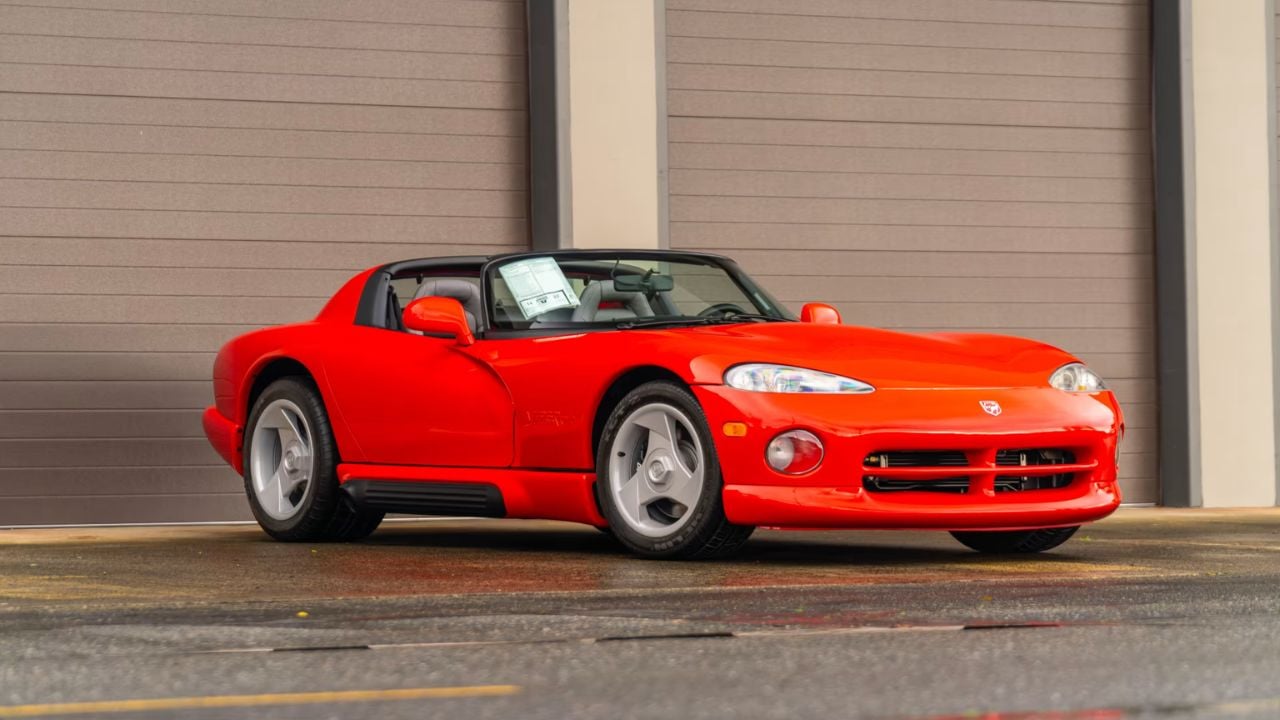
Early Dodge Vipers still feel extreme even now. Before stability systems, polished dual-clutch gearboxes, and carefully filtered performance modes became normal, the RT/10 offered something far more direct: a huge engine, a manual gearbox, rear-wheel drive, and very little standing between the driver and the consequences.
That is exactly why this Mecum Indy 2026 car matters. The auction listing shows a 1994 Dodge Viper RT/10 Roadster with an odometer reading of just 34 miles, no reserve status, and the kind of preservation that immediately pushes it out of “used sports car” territory and into collector-piece conversation.
It is also the right version of the Viper story for that kind of attention. First-generation RT/10s were the raw ones, the cars that built the model’s legend before later years added more creature comforts and softened some of the original brutality.
That makes this car more than just another low-mile 1990s performance collectible. It is a preserved example of the Viper at its most uncompromising, which is exactly what many buyers want when they go looking for an early RT/10 in the first place.
Built To Feel Like A Modern American Monster
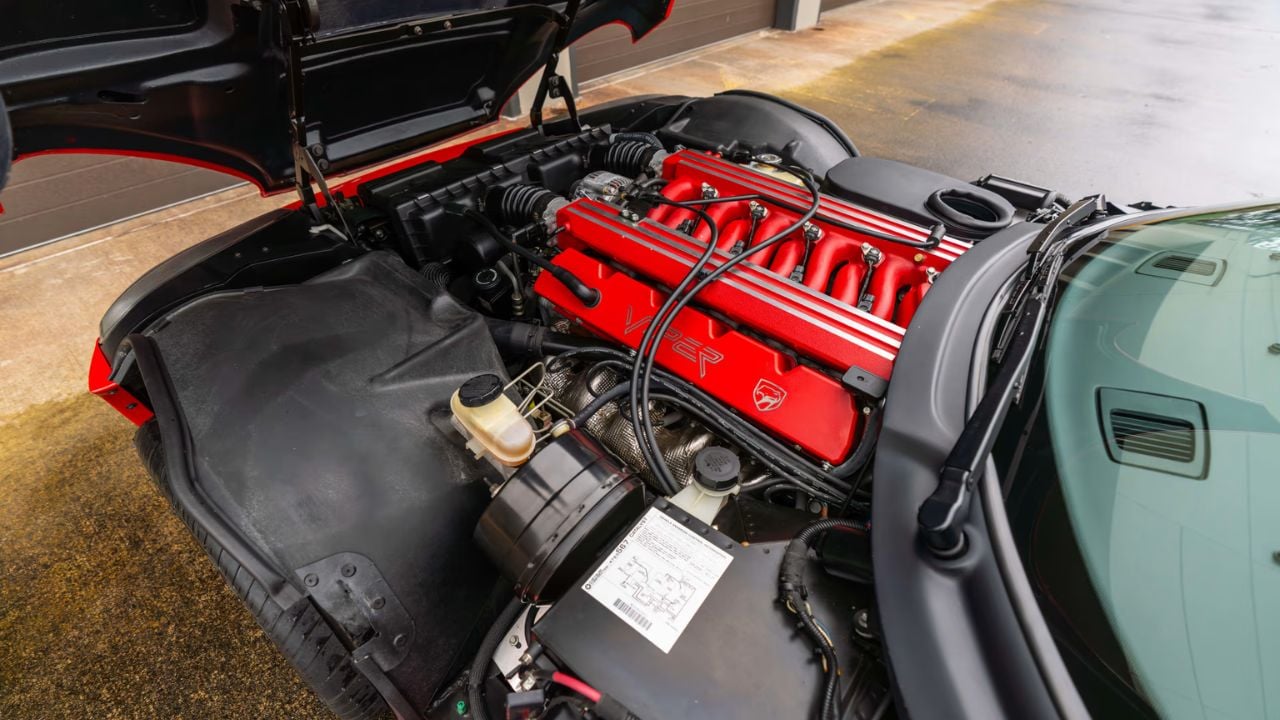
When Dodge developed the Viper, the goal was not subtlety. Chrysler’s team set out to create a modern American halo car with Cobra-like attitude, and the result was a long-hood roadster built around a massive 8.0-liter V-10, a 6-speed manual transmission, and a chassis philosophy that put spectacle and sensation ahead of comfort.
Mecum lists this example with the expected 8.0L/400 HP V-10 and 6-speed manual, while period Viper histories also note Chrysler’s use of Lamborghini expertise in developing the aluminum-block engine from the original truck-based concept. The important point for buyers is not just the displacement, but the fact that the car delivered enormous torque with almost no insulation from the experience.
That rawness defined the early RT/10. There was no ABS, no traction control, no airbags, and only minimal weather protection, which is a big part of why the original Viper earned such an outsized reputation so quickly.
Performance backed up the visual drama. Contemporary accounts put the early Viper at less than five seconds to 60 mph with a top speed around 164 mph, serious numbers for the early 1990s and more than enough to make the car feel outrageous in period.
Why 34 Miles Changes The Conversation
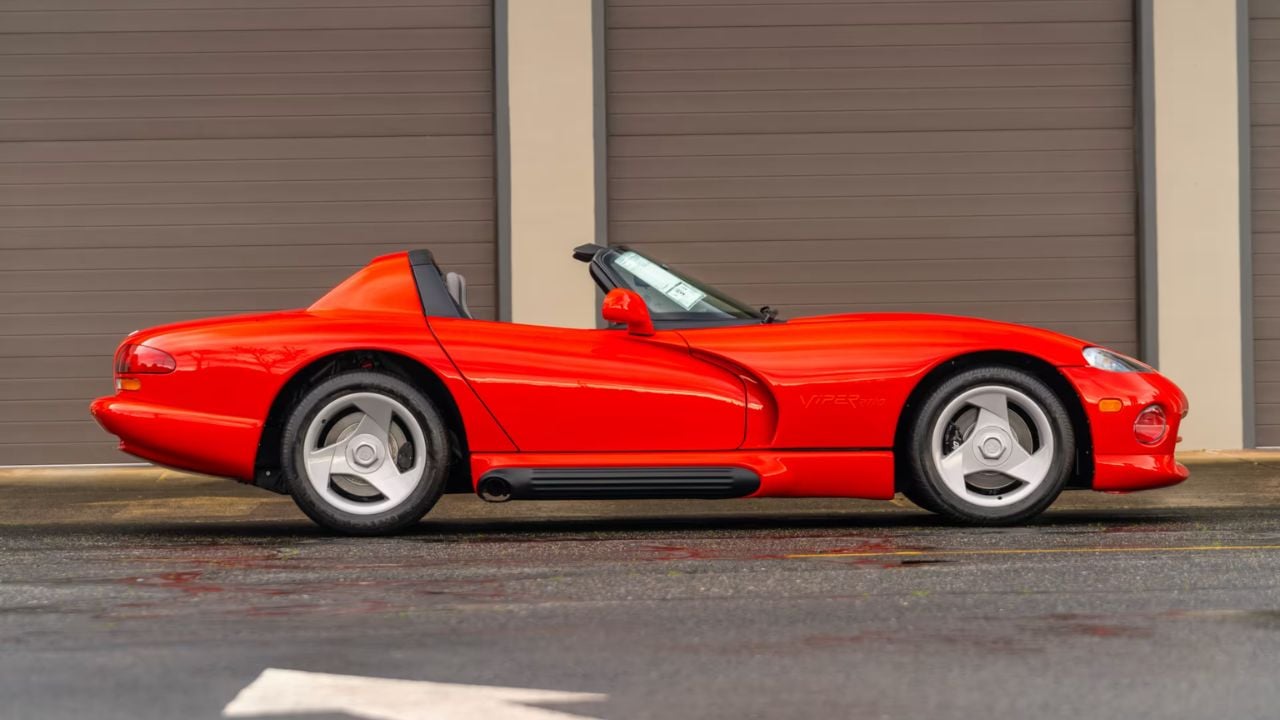
Normally, first-generation Vipers are discussed as cars to drive, not museum pieces. That is part of their appeal, because these were never delicate garage ornaments when new, and many were used exactly the way their image suggested.
This car is different because of its mileage. Mecum’s listing shows 34 miles on the odometer, which puts it in a tiny preservation-minded corner of the Viper world and makes condition, originality, and documentation every bit as important as the model’s usual performance credentials.
The 1994 production figure also helps explain the interest. Registry data shows 3,083 Vipers built for the model year, which is not microscopic volume in absolute terms, but it is low enough that truly delivery-mile survivors stand far apart from ordinary used examples.
That distinction matters more now that the Viper has been gone for years. Since production ended in 2017, the earliest cars have become more clearly defined as a separate kind of collectible: not just fast analog machines, but artifacts from a period when a major American manufacturer was still willing to build something this wild with almost no apology.
An Early Viper At Its Purest

Today’s performance cars are often easier, faster, and far more forgiving. The early Viper offers the opposite kind of appeal, asking the driver to manage the powertrain, the grip, the heat, and the car’s sheer attitude without much help.
That is precisely why collectors keep circling back to them. A first-generation RT/10 is not just another 1990s sports car, but one of the clearest surviving examples of the brief period when American performance could still feel mechanical, intimidating, and almost irresponsibly direct.
The market reflects that split between ordinary drivers and preserved survivors. Recent public sales tracked by Classic.com include a 222-mile 1994 RT/10 at $56,100 in January 2026, a 746-mile 1994 car at $55,055 in March 2026, and a 17,000-mile example at $40,700 in late 2025, showing how strongly ultra-low mileage can influence value.
Mecum lists this no-reserve Indy car as Lot R710, VIN 1B3BR65E9RV102193, and it should draw exactly the kind of attention a 34-mile early Viper deserves. For buyers who want the original RT/10 experience in its most preserved form, this is the sort of car that makes the whole room stop and look.