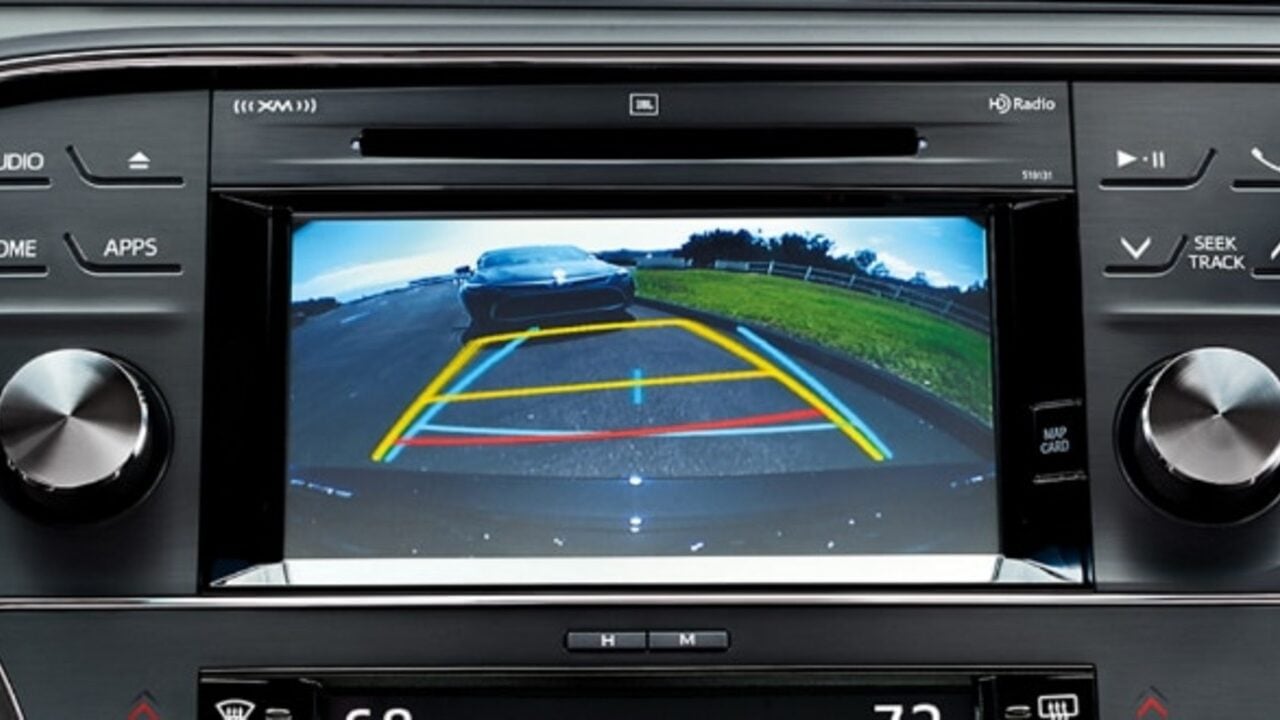
Backup cameras have been mandatory on new passenger vehicles in the United States for roughly eight years, giving drivers a much better view of children, bicycles, curbs, and other obstacles hiding behind their cars. They’ve also become responsible for a surprisingly large number of recalls.
Around 21 million cars have been recalled over backup-camera problems since the federal requirement took effect, according to a Bloomberg analysis of National Highway Traffic Safety Administration data. Include other affected vehicles such as RVs and small buses, and the total reportedly approaches 28 million.
The numbers have been moving in the wrong direction, too. Nearly 6 million vehicles were recalled for backup-camera issues during 2025 alone, while another 2.93 million had been recalled by July 1, 2026.
There is an important catch, however. The little camera mounted above your license plate often isn’t what’s failing. Increasingly, the problem lies somewhere in the complicated chain of computers, software, wiring, and displays required to put that image on the dashboard.
Backup-Camera Recalls Have Exploded
According to the NHTSA data analyzed by Bloomberg, 306,920 vehicles were recalled over backup-camera issues in 2018. That number jumped above 3 million in 2020 before falling temporarily, then climbed again to 2.88 million in 2023, 2.70 million in 2024, and 5.84 million last year.
Car owners have also submitted roughly 2,000 complaints to NHTSA involving camera glitches. Some describe screens simply going blank when reverse is selected, which is frustrating but relatively straightforward.
Other reported failures are potentially much more dangerous. Displays can freeze or show an outdated image rather than a live view, creating the possibility that a driver believes the area behind the vehicle is clear when something has actually moved into its path.
Backup cameras have become something drivers naturally learn to trust. A black screen immediately tells you something is wrong; a perfectly convincing image from several seconds ago might not.
The Camera Often Isn’t What Breaks
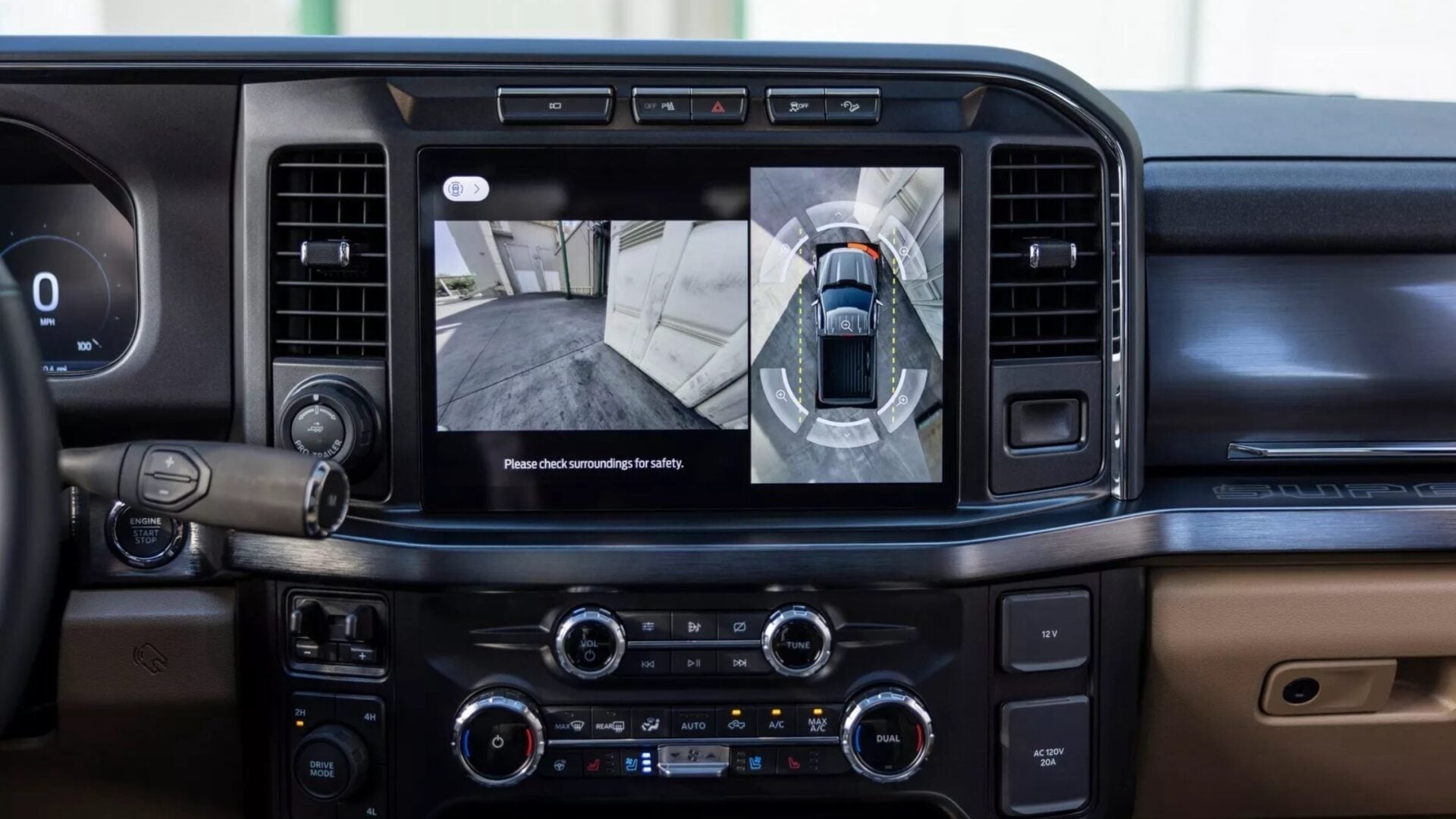
Calling these “backup-camera recalls” can make the problem sound simpler than it really is. Capturing the image is only the first step in getting a usable picture in front of the driver.
The camera, wiring, control modules, processors, vehicle software, and infotainment display all have to communicate correctly. A fault anywhere along that chain can make the legally required rear view disappear, freeze, become distorted, or otherwise malfunction.
Recent recalls illustrate how varied those failures can be. Ford recalled approximately 1.7 million vehicles across two campaigns in March, with one involving rear-camera images that could appear reversed and another involving a component that could overheat and cause the infotainment display to go blank.
Honda followed in May with a recall covering nearly 60,000 EVs over cameras that could potentially allow water or debris intrusion.
Modern Infotainment Adds More Ways To Fail
The reliability data suggests cameras aren’t alone in struggling with increasingly software-dependent vehicles. Bloomberg notes that backup cameras have appeared among the 10 most problematic vehicle features in J.D. Power studies every year since 2022.
Infotainment was also the only category to become more problematic in J.D. Power’s 2026 Initial Quality Study. That’s significant because the center display increasingly serves as the interface for everything from navigation and climate functions to safety systems such as the reversing camera.
Older systems could send a relatively simple video feed to a dedicated display. Modern vehicles may route that information through increasingly sophisticated electronic architectures, adding functionality while also introducing additional points where hardware or software can misbehave.
Backup Cameras Aren’t Going Anywhere
None of this makes backup cameras a bad idea. Rear visibility can be severely limited in modern vehicles, and cameras can reveal low objects or people that mirrors and rear windows simply cannot show.
Reliable camera systems are becoming even more important as automakers experiment with eliminating conventional rear glass altogether. Vehicles such as the Polestar 4 already rely heavily on cameras for rearward visibility, while other manufacturers are exploring similar concepts.
The bigger lesson from 21 million recalled cars isn’t that backup cameras have failed as a safety concept. It’s that something as seemingly simple as showing drivers what’s behind them has become dependent on an increasingly complicated electronic ecosystem, and automakers still have work to do to make that ecosystem as dependable as the camera itself.