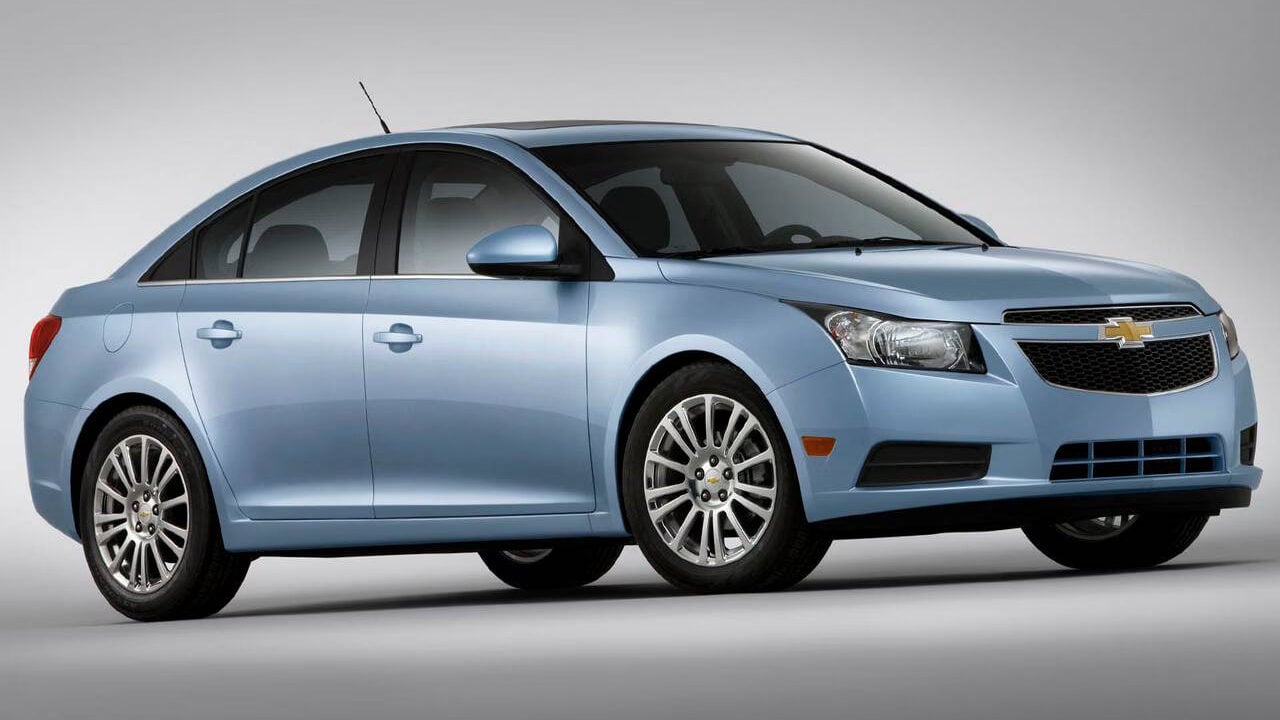
A 2012 Chevrolet Cruze is hardly the first vehicle that comes to mind when thinking about emergency home power. Yet one owner in northern Indiana managed to turn the compact sedan into a makeshift generator during a major outage, keeping much of his household running for nearly five days.
The unusual setup was detailed by the owner on the Dre Dan YouTube channel, where he explained how the Cruze supplied electricity while utility service was unavailable. Rather than relying on a conventional portable generator, he connected a high-output power inverter directly to the car’s electrical system and left the engine idling.
The arrangement powered two full-size refrigerators, an upright freezer, a television, lights, children’s electronics, and an office setup that included a laptop, monitor, and printer. The Cruze accumulated roughly 120 hours of near-continuous idling, shutting down primarily when it needed to be refueled.
The experiment took place after severe weather caused widespread outages around Valparaiso, Indiana, creating an unusually long interruption in electrical service for the household. What started as a backup method the owner had used during shorter outages ultimately became a five-day demonstration of just how much work a small car’s charging system can perform.
A 130-Amp Alternator Did The Heavy Lifting
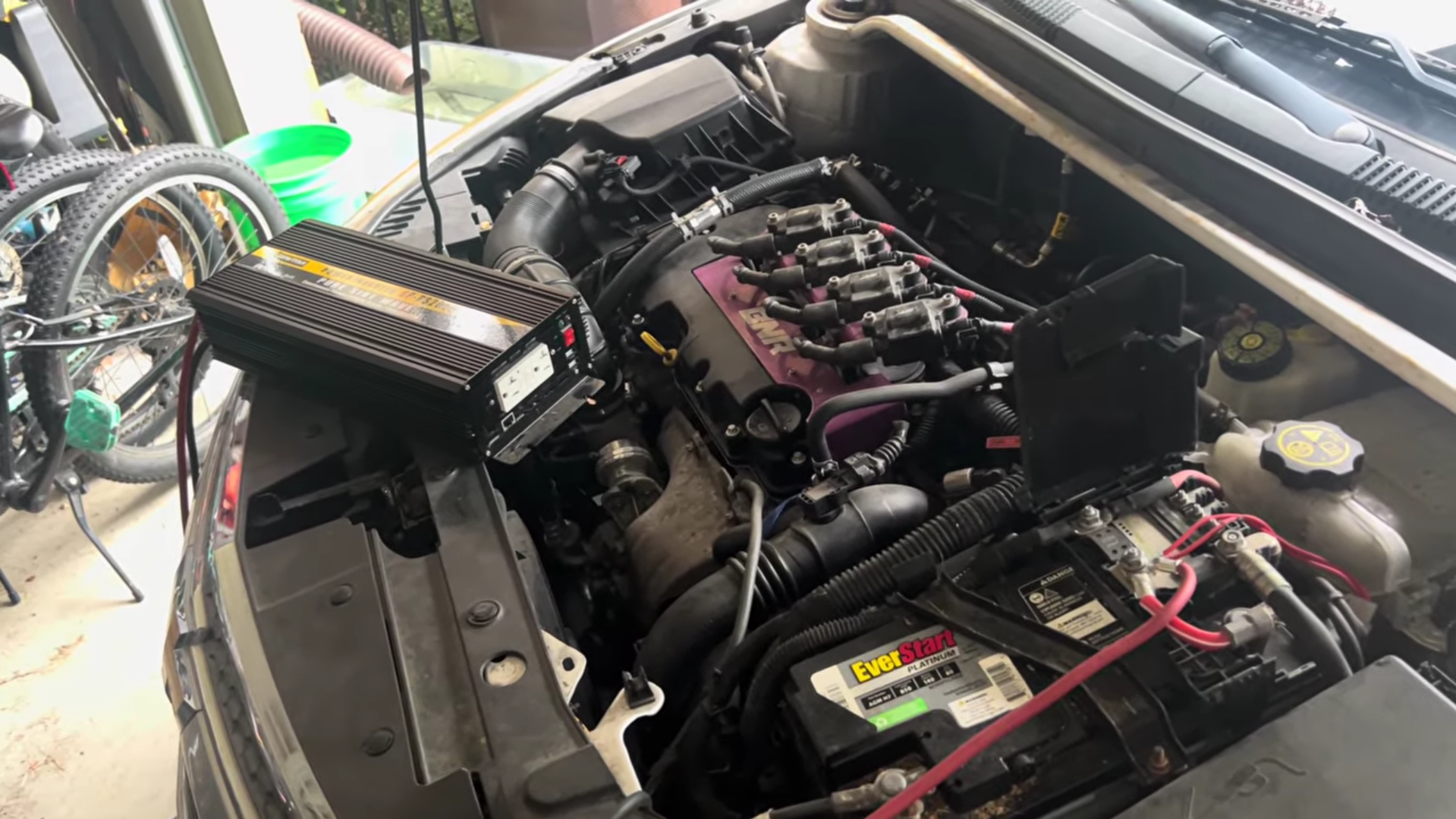
The Cruze involved is equipped with Chevrolet’s 1.4-liter turbocharged four-cylinder engine, though the engine itself was only one part of the equation. More important to the setup was the 130-amp alternator, which provided electrical energy while the engine remained running.
The owner had also upgraded the Cruze with an H7 AGM battery in place of its smaller conventional battery. He explained that the AGM battery effectively acted as a buffer, supplying additional current when household equipment briefly demanded more power than the alternator could comfortably provide at idle.
Heavy-gauge copper welding cable connected the vehicle’s electrical system to a 2,000-watt pure sine wave inverter with a claimed 4,000-watt surge capacity. Pure sine wave output is particularly useful for appliances containing electric motors and sensitive electronics, making the inverter an important component of the improvised backup system.
Refrigerators, Electronics, And Lights Were On
Rather than attempting to energize the home’s entire electrical panel, the owner ran extension cords from the inverter to individual appliances and devices. Two refrigerators and an upright freezer represented some of the biggest continuous loads, while lighting, entertainment equipment, and office electronics added to the demand.
Temporary spikes were another challenge because appliances such as refrigerators and freezers can draw significantly more electricity during compressor startup or defrost cycles. In those situations, the battery could supplement the alternator before being recharged once electrical demand decreased.
System voltage generally hovered between approximately 12.2 and 12.8 volts. It occasionally fell to around 11.8 volts under heavier loads, with one brief drop to 10.9 volts, indicating that the setup was sometimes pushing the car’s charging system considerably harder than normal.
Interestingly, the Cruze apparently responded to some of those conditions on its own, as the engine management system occasionally increased idle speed to roughly 1,000 to 1,200 rpm, allowing the alternator to produce additional output before engine speed returned to normal.
The Cruze Idled For Around 120 Hours
Keeping a 14-year-old economy car running continuously for days might sound like a recipe for mechanical trouble, yet the owner said the Cruze completed the ordeal without a significant problem. It was switched off mainly for refueling and otherwise remained running for approximately 120 hours.
One minor issue involved condensation collecting in the exhaust system during the prolonged periods of idling. The owner occasionally raised the engine speed to clear accumulated water from the exhaust, after which the car continued operating normally.
Fuel consumption was estimated at approximately 0.22 gallons per hour. Sustained over 120 hours, that works out to roughly 26.4 gallons of gasoline based on the owner’s estimate.
The owner also said an oil sample was being sent for analysis following the extended idling period. That could provide an interesting indication of whether spending five straight days effectively serving as a stationary generator caused unusual wear inside the Cruze’s turbocharged engine.
There Were Still Some Major Limitations
The setup could handle many everyday 120-volt appliances, but it could not supply the 240-volt electricity required by the home’s well pump. With the well unavailable, the family instead collected rainwater in containers during the outage.
The arrangement also shouldn’t be viewed as a direct replacement for a properly installed home backup generator. Prolonged idling places unusual demands on an engine and charging system, while high-current electrical connections introduce additional risks if the wiring, inverter, fusing, ventilation, and load management aren’t appropriate.
Still, the little Cruze delivered an impressive performance under difficult circumstances. A compact Chevrolet designed for economical commuting ended up keeping refrigerators cold, lights illuminated, and electronics operating for days, proving that some emergency capability can come from surprisingly ordinary hardware.